





Pirot Woven Rug
A pirot woven rug brings rich Balkan folk art traditions into a room through flatweave textiles of striking geometric patterns.
Pirot Woven Rug
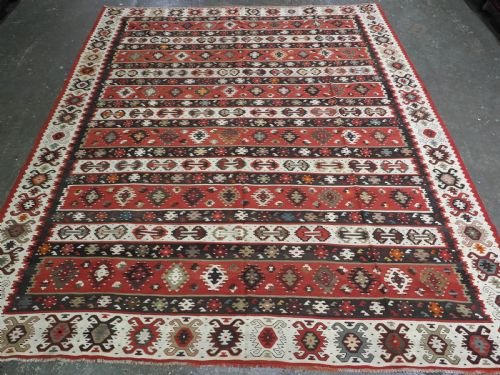
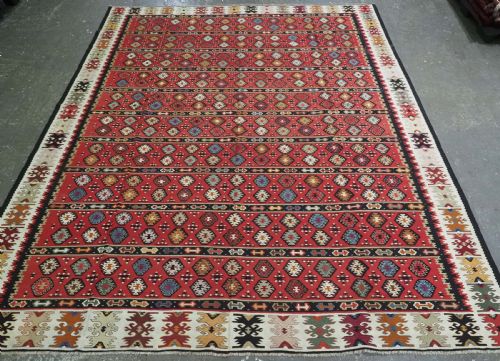
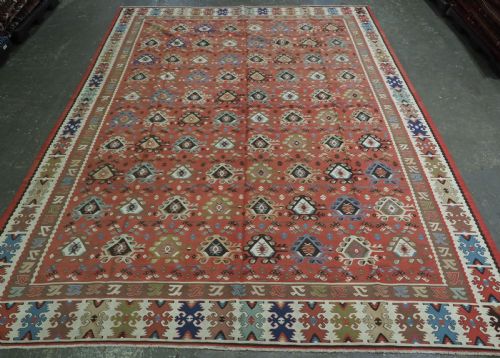
When you search for a pirot woven rug, you encounter flatweave carpets that embody Balkan folk art and traditional tribal designs. These flatweaves originate from the early decades of the twentieth century, specifically representing the 1920 and 1930 periods.
The pieces listed on this page predominantly take the form of kilim rugs and larger room-size area carpets. Their visual language relies on classic designs, banded arrangements, repeat medallions, and flowering tree motifs.
How They Were Made
These textiles employ wool and cotton as their primary materials, utilising traditional flatweaving techniques without a knotted pile. The construction yields a sturdy, reversible fabric with crisp pattern edges formed by interlocking the weft threads.
Weavers relied on natural dye traditions to create warm soft colours and outstanding hues across repeat lattice and banded layouts. The resulting structure combines durability with a flat profile suited to heavy use on floors.
Weavers often tucked hidden geometric symbols into the borders of these rugs, leaving secret signatures in the wool.
What Varies in Quality
Quality in these flatweaves rests upon the precision of the geometric layout and the visual impact of the colour palette. Examples displaying scarce lattice arrangements or flowering tree designs stand apart from standard repeat patterns.
The handling of wool and cotton yarns determines the overall crispness of the Balkan traditional motifs. Superior items maintain integrity of line and depth of hue across large room sizes.
The Pirot Woven Rug Glossary
- Kilim rug
- A flatwoven carpet produced without a pile, common in Balkan and Middle Eastern weaving traditions. These textiles serve as floor coverings or wall hangings.
- Balkan folk art
- Artistic output reflecting the cultural heritage and traditional designs of the Balkan region. This style encompasses geometric and floral motifs passed down through generations.
- Flatweave
- A textile constructed by interweaving warp and weft threads on a loom without creating a raised pile surface. This technique produces a thin, durable fabric.
- Band design
- A decorative arrangement featuring horizontal stripes or bands running across the width of the textile. These bands often contain repeating geometric elements.
Pirot Woven Rug: Frequently Asked Questions
What is a pirot woven rug?
A pirot woven rug is a flatwoven textile originating from the Balkan region, created using traditional folk art patterns. These pieces function primarily as decorative floor coverings.
They rely on wool and cotton construction to achieve durable, reversible carpets featuring classic, banded, and repeat medallion designs.
How do I clean a kilim rug?
Cleaning these flatweaves requires gentle vacuuming without a rotating brush to protect the wool and cotton fibres. Professional textile cleaning is advisable for deeper maintenance.
Avoid soaking or machine washing antique flatweaves, as moisture can alter the structure and affect the traditional dyes.
Where were these rugs made?
These textiles originate from the Balkan region, specifically associated with traditional weaving centres in areas like Pirot and Sarkoy. Local artisans produced them using regional folk motifs.
The surviving examples reflect the distinct aesthetic of Balkan tribal and traditional craft traditions from the early twentieth century.
How do I date a woven rug?
Dating these pieces involves examining the materials, dye types, and structural characteristics visible in the weave. Stylistic evidence from the 1920 and 1930 periods provides primary chronological markers.
Comparing the specific repeat or banded designs to documented regional examples helps establish the likely period of manufacture.