





1920s Pirot Rug
A 1920s pirot rug brings bold Balkan folk art into a room through flatweave textiles shaped by traditional designs.
1920s Pirot Rug
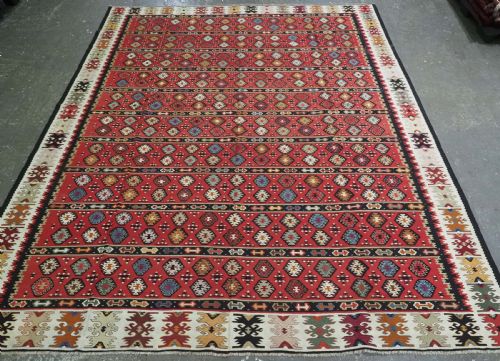
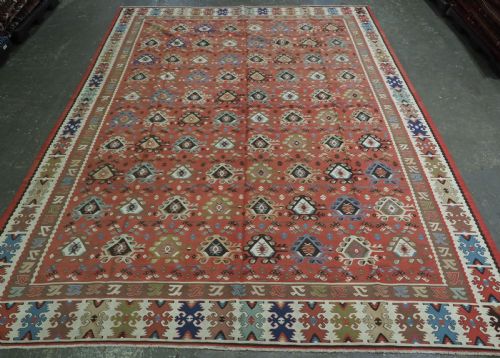
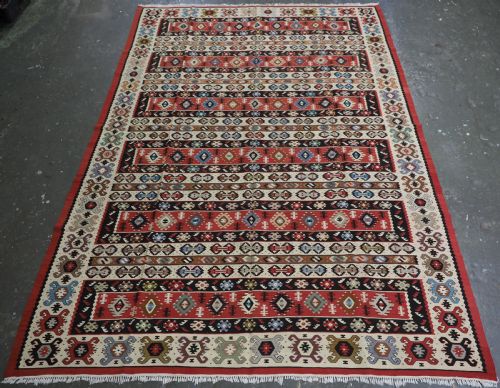
A 1920s pirot rug represents traditional Balkan weaving, specifically appearing as kilim rugs and flatweave carpets with distinct regional patterns. These pieces span classic, banded, and repeat medallion layouts that showcase Balkan folk art traditions from the period.
Buyers encounter flatweave wool rugs featuring flowering tree motifs, lattice work, and geometric bandings. These floor coverings bridge utility and folk expression, functioning as area rugs or large room size carpets.
How They Were Made
Production relies entirely on wool, woven into flat surface kilim structures without pile. The technique involves interlocking weft threads to build crisp geometric boundaries and flat pictorial motifs.
Weavers utilise traditional Balkan methods to construct large room size kilims alongside smaller area rugs. The textile structure remains consistent across banded and repeat medallion formats.
Current listings feature wool materials exclusively within the Balkan folk art and traditional styles from the 1920 period.
What Varies in Quality
Quality differences emerge through the complexity of the design, distinguishing standard repeat patterns from scarce lattice work and flowering tree compositions. Finer execution shows in the precision of the banded layouts and balanced medallion placement.
Colour expression alters the visual impact, ranging from warm soft tones to outstanding saturated hues. The preservation of the wool weave across large room sizes further separates standard utility pieces from exceptional survivors.
The 1920s Pirot Rug Glossary
- Kilim rug
- A flatweave textile produced without pile by tightly interweaving warp and weft strands. This method creates a lightweight rug suited for floors or wall hanging.
- Balkan folk art
- Artistic traditions originating from the Balkan region expressed through indigenous textile motifs. These patterns carry centuries of regional weaving heritage.
- Flatweave
- A textile construction technique that omits knotted pile in favour of a smooth surface. This results in a durable, reversible carpet structure.
- Medallion design
- A central or repeating ornamental motif anchored within the field of the rug. It forms the primary focal point of the composition.
1920s Pirot Rug: Frequently Asked Questions
What is a 1920s pirot rug?
A 1920s pirot rug is a flatweave wool kilim originating from the Balkan region during the 1920 period. These textiles are known for traditional folk art designs including flowering trees and geometric medallions.
They function primarily as decorative area rugs or large room size floor coverings. Each piece reflects regional weaving methods passed down through generations.
How do I style a kilim rug?
Kilim rugs work well on wooden floors or over neutral carpets to introduce texture and pattern to a room. Their flat profile makes them practical for placement beneath furniture or in high-traffic hallways.
Pairing a large room size kilim with simple furnishings allows the banded or repeat medallion designs to remain the focal point. Smaller examples serve effectively as wall art or distinctive hearth rugs.
Are these rugs reversible?
Most flatweave kilims feature a similar appearance on both sides due to the interlocking weft technique used in their construction. This lack of a traditional pile allows the textile to be flipped for even wear over time.
Checking the reverse side also reveals the clean execution of the wool weaving and pattern transitions. This dual-sided nature adds to the practical longevity of traditional flatweaves.
How do I clean a wool kilim?
Maintaining a wool flatweave involves regular gentle shaking and light vacuuming without a rotating brush head to protect the weave. Prompt attention to spills prevents moisture from settling into the natural wool fibres.
Professional textile cleaning tailored for antique flatweaves is recommended for deeper maintenance. Avoiding excessive water keeps the wool structure and traditional dyes stable.