

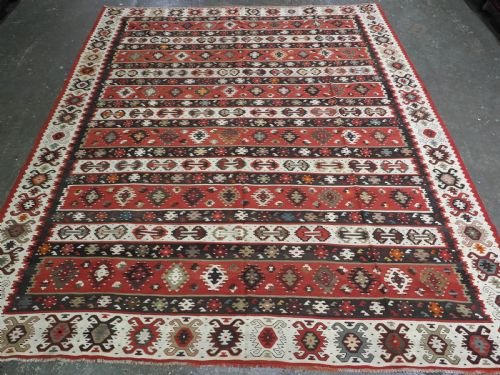
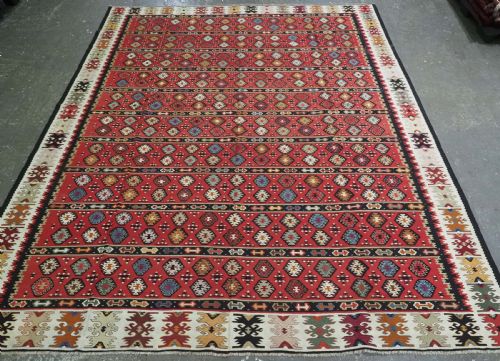


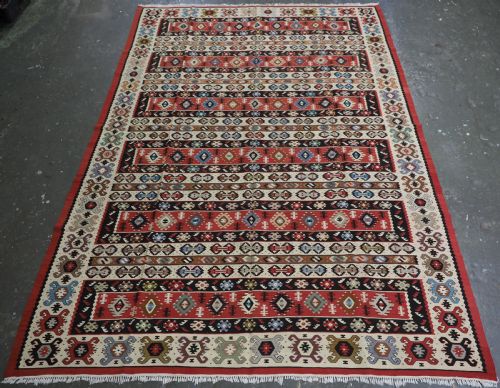


Pirot Oriental Rug
These pirot oriental rug examples are flatwoven textiles of traditional Balkan folk art origin that bring warmth and distinct geometric character to a floor.
Pirot Oriental Rug
When you search for a pirot oriental rug, you encounter flatwoven kilims originating from the Balkans, specifically associated with Pirot and Sarkoy traditions. These pieces date from the early decades of the twentieth century, largely around nineteen twenty and nineteen ten.
The designs span classic patterns, flowering trees, repeat medallions, and banded or lattice arrangements. They function primarily as area rugs and large room size carpets suited to traditional spaces.
How they were made
These textiles utilise wool and cotton materials woven into flat structures without a pile. The construction relies on traditional Balkan folk techniques passed down through generations of makers in the region.
Dyes produce warm soft colours that define the visual appeal of each piece. The flatweave method allows sharp geometric precision in motifs such as lattice and banded designs.
Many of these rugs share stylistic traits with Sarkoy kilims, bridging two distinct weaving traditions in a single textile.
What varies in quality
The visual strength of the design sets examples apart, with uncommon layouts like lattice or flowering trees holding particular interest. Colour richness and softness also determine the overall impact of a piece in a room.
Scale plays a role, as large room size carpets demand greater execution than standard area rugs. Preservation of the flatweave structure contributes significantly to the standing of an individual textile.
The Pirot Oriental Rug Glossary
- Kilim
- A flatwoven textile produced without a pile by interlocking horizontal and vertical threads. This method creates lightweight rugs with identical patterns visible on both sides.
- Flatweave
- A construction technique involving interlaced warp and weft threads rather than knotted piles. Such pieces lie flat on the floor and serve well in high-traffic zones.
- Balkan folk art
- Cultural handicraft traditions originating from the Balkan region incorporating local motifs and regional weaving methods. These styles reflect distinct historical design repertoires.
- Medallion
- A central ornamental motif placed within the field of a rug. This design focal point organises the surrounding geometric or floral patterns.
Pirot Oriental Rug: Frequently Asked Questions
What is a pirot oriental rug?
A pirot oriental rug is a flatwoven kilim originating from the Balkan region, produced during the early twentieth century. These textiles are known for traditional folk art designs and wool construction.
They serve as decorative floor coverings that bring regional character and historical interest to interiors.
How are these kilims structured?
These pieces are constructed using a flatweave technique that combines wool and cotton without a knotted pile. This method results in a durable textile with distinct reversible patterns.
The absence of pile gives them a flat profile that functions well across various floor surfaces.
What designs appear on them?
The patterns include classic layouts, flowering trees, repeat medallions, and banded or lattice arrangements. These motifs draw directly upon traditional Balkan folk art.
Variations in design scale range from compact area rugs to large room size carpets.
How do I care for a flatweave rug?
Regular gentle vacuuming without a beater bar helps remove dust and debris from the flat surface. Keeping the textile away from direct sunlight preserves the natural wool colours.
Professional cleaning tailored to flatwoven antique rugs ensures the materials remain intact over time.