

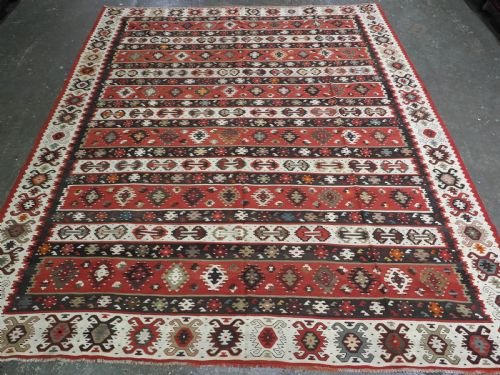


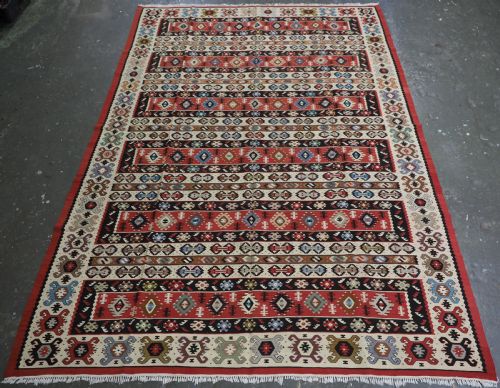

Serbian Pirot Kilim
These serbian pirot kilim examples are flat-woven rugs of distinct Balkan folk tradition, bringing warmth and heritage pattern into a room.
Serbian Pirot Kilim
When you search for serbian pirot kilim, you encounter flat-woven carpets that originate from the Balkan region and reflect traditional craftsmanship. The pieces available here date from around 1920, representing the classic weaving practices of that era.
The format of these textiles includes area rugs, larger room sizes, and specific kilim rug constructions. Their visual vocabulary draws heavily on Balkan folk art traditions, featuring distinct regional motifs.
Designs on these flat-weaves range from classic arrangements and flowering trees to lattice patterns, banded layouts, and repeat medallions. Buyers choose them to introduce structured geometric or botanical motifs into floorspace.
What varies in quality
Scale plays a part, with large room sizes requiring greater consistency in the weave across a wider surface area. The preservation of the wool and cotton fibres over time further influences the overall standard of the piece.
Every serbian pirot kilim listed on this page dates precisely from the year 1920.
The Serbian Pirot Kilim Glossary
- Kilim
- A flat-woven carpet or rug produced without a pile. This method creates a thin, durable textile that functions well on floors or as a wall hanging.
- Pirot
- A town in Serbia renowned for traditional flat-weaving traditions. Kilims originating from this centre display specific regional patterns and colour arrangements.
- Sarkoy
- A regional designation often linked with Balkan flat-weaves sharing stylistic traits with Pirot examples. These rugs typically incorporate banded or medallion layouts.
- Banded design
- A decorative arrangement featuring horizontal stripes of colour or pattern across the body of the rug. This layout structures the visual field into distinct horizontal zones.
- Repeat medallion
- A motif composed of symmetrical geometric or floral shapes repeated at regular intervals across the textile. This creates an orderly, rhythmic pattern.
Serbian Pirot Kilim: Frequently Asked Questions
How do I clean a serbian pirot kilim?
Gentle surface brushing and regular light vacuuming without a rotating head help maintain the wool and cotton fibres.
Professional specialist cleaning is recommended for deep maintenance to protect the traditional flat-weave structure.
Can I use these rugs in high traffic areas?
The flat-woven construction of wool and cotton makes these textiles durable for everyday placement on floors.
Using a quality underlay helps prevent slipping and reduces friction between the rug and the floorboards.
What rooms suit a large room size kilim?
Generous dimensions work well anchoring seating arrangements in living rooms or defining dining spaces.
Their flat profile ensures doors can clear the rug easily when placed near entryways.
How do I identify a classic design?
Classic examples typically feature established Balkan folk art motifs arranged in traditional symmetrical patterns.
Comparing the border work and central medallions against known regional styles helps confirm the type.