





1920s Pirot Kilim
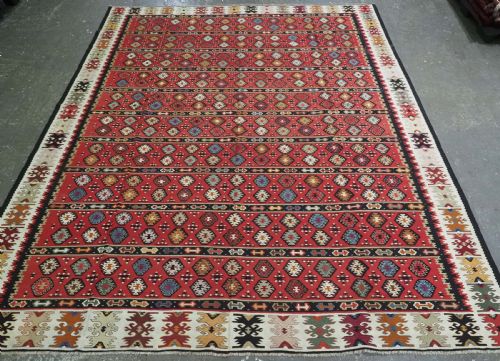
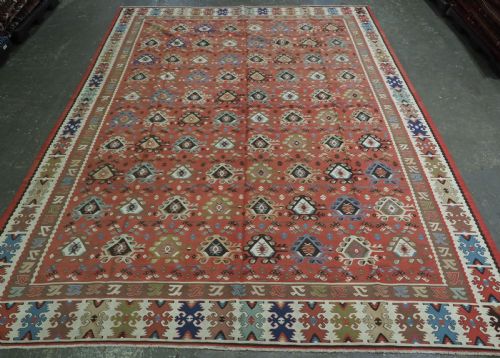
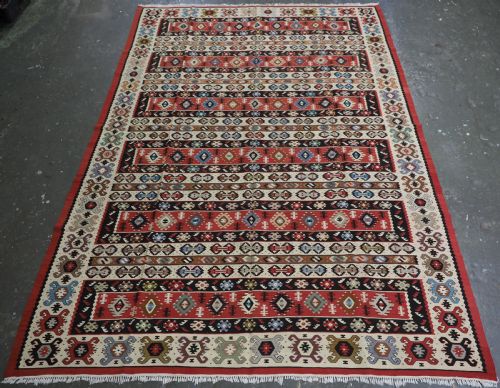
These 1920s pirot kilim examples bring flatweave Balkan folk art into modern interiors through striking geometric and flowering tree patterns.
1920s Pirot Kilim
A 1920s pirot kilim represents traditional Balkan weaving, originating from the region between Serbia and Bulgaria. These flatwoven rugs appear in specific decorative formats including classic designs, flowering tree motifs, and repeat medallions.
Buyers encounter these textiles as large room size carpets or smaller area rugs. The aesthetic draws heavily on Balkan folk art traditions, executed through symmetrical patterns and precise geometric layouts.
Materials and construction
Every piece relies entirely on wool as the primary material for both warp and weft foundations. This natural fibre takes dye deeply, producing the warm soft colours seen across the collection.
The flatweave technique creates a reversible textile without a pile, allowing intricate banded and lattice designs to appear with equal clarity on both sides.
All currently listed pieces originate from the year 1920, strictly utilising wool materials within Balkan folk art and traditional styles.
Assessing the work
The distinction between standard examples and finer pieces lies in the complexity of the chosen pattern, such as a scarce lattice or a detailed flowering tree. Precision in the repeat medallion structures dictates the visual balance of the weave.
Colour retention and the subtlety of the palette also separate individual rugs. Soft, harmonious dye lots contribute significantly to the overall presence of the carpet in a room.
The 1920s Pirot Kilim Glossary
- Kilim
- A flatwoven carpet or rug produced without a pile by tightly interlacing warp and weft strands. This method yields a lighter, thinner textile suited for floors or wall hangings.
- Balkan Folk Art
- Cultural design traditions originating from Southeast Europe, characterised by symbolic motifs and geometric patterns. These styles reflect local heritage in textile production.
- Flatweave
- A textile construction method that excludes knotting, relying instead on the interlacing of horizontal and vertical threads. The resulting surface remains completely flat.
- Medallion
- A central decorative motif placed within the field of a rug, often repeated symmetrically. It forms the primary focal point of the textile design.
1920s Pirot Kilim: Frequently Asked Questions
How do I clean a kilim?
Regular gentle vacuuming without a beater bar removes loose dirt from the wool fibres effectively. Professional textile cleaning remains the safest method for deeper maintenance.
Water washing can alter natural dyes if attempted at home, so specialist care is recommended for antique flatweaves.
Are these rugs reversible?
The flatweave construction method creates an identical pattern on both sides of the textile. This allows the rug to be flipped periodically to distribute wear evenly.
Reversibility is a defining characteristic of traditional kilims, distinguishing them from knotted pile carpets.
Where were they made?
Production centred around the town of Pirot and surrounding Balkan regions. Weavers utilised local wool resources to create distinctive regional floor coverings.
These textiles served practical functions in traditional homes while displaying sophisticated folk art motifs.
How do I style a large room size kilim?
Large room size examples anchor living spaces or dining areas by providing a flat, low-profile foundation. Their geometric patterns complement both modern minimalist and traditional interiors.
Using a quality rug underlay prevents slipping and cushions the thin wool structure against hard floors.