


Pink Painted Urns
Pink painted urns bring together vibrant colour and classical forms, offering a decorative focal point for any room.
Pink Painted Urns
Pink painted urns encompass porcelain vessels, lidded vases, and decorative urns finished in soft or vivid pink grounds. These pieces frequently appear in nineteenth-century European and Chinese export styles.
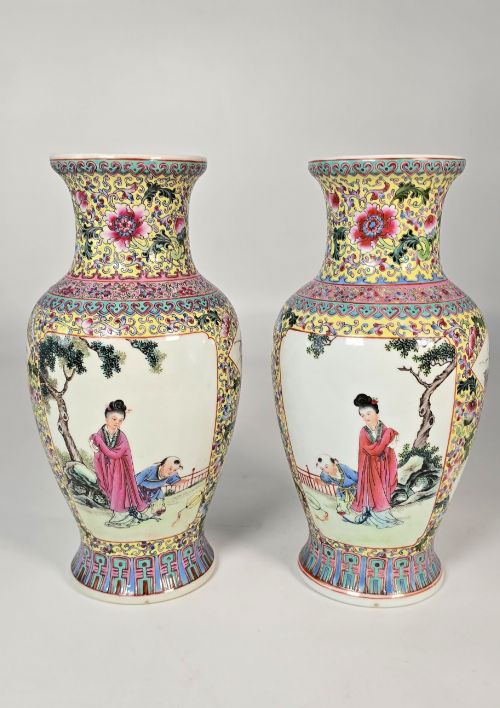
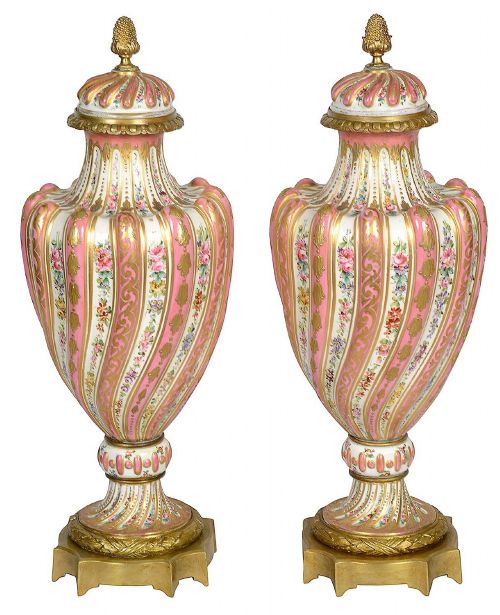
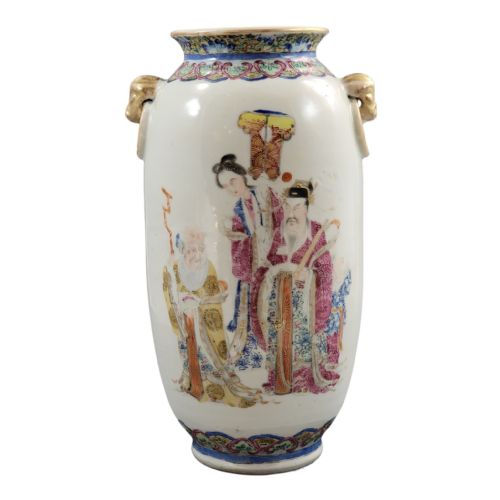
Buyers encounter French Sevres style pieces alongside Chinese Canton and Rose Medallion examples. English factories such as Worcester, Minton, and Coalport also produced notable pink ground vessels.
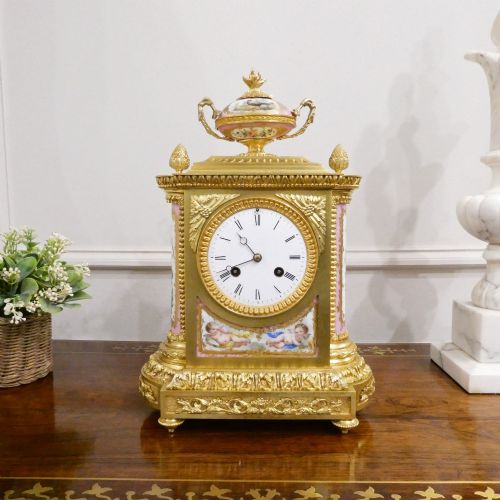
Forms range from twin-handled mantel vases to monumental floor standing pieces and converted lamps. Many incorporate classical mounts in gilt bronze or ormolu.
How they were made
The foundation of these pieces relies on hard or soft paste porcelain, shaped and fired before receiving a coloured glaze or enamel ground. Artisans applied hand-painted details directly over the pink surface.
Gilding with gold leaf or gilt accents frames the painted panels and highlights handles and rims. French and English makers frequently integrated cast ormolu mounts to secure the porcelain bodies.
Several Victorian pieces manage to combine strict classical dignity with enough pink paint to rival a West End sunset.
What varies in quality
The refinement of the hand-painted decoration determines the standing of an individual piece. Artisans who executed detailed figurative scenes or precise floral motifs achieved greater artistic merit than those producing repetitive factory patterns.
The weight and crispness of the bronze or ormolu mounts indicate the standard of manufacture. Well-cast mounts fit the contours of the porcelain precisely, whereas inferior examples show rough finishing.
Jean-Baptiste Delettrez·Flight Barr and Barr·Royal Worcester·Minton·Coalport
The Pink Painted Urns Glossary
- Ormolu
- Gilded bronze utilised for decorative mounts and handles on nineteenth-century vessels. This technique involves applying a mercury and gold amalgam to bronze.
- Famille rose
- A palette of Chinese porcelain enamels dominated by opaque pink. The style developed during the Qing dynasty and remained popular for export wares.
- Garniture
- A set of three or more matching vases or urns designed for display together on a mantelpiece or sideboard. These sets often comprise a central urn flanked by smaller matching vessels.
- Sevres style
- European porcelain decorated in imitation of the French royal factory. Pieces typically feature rich ground colours and gilt cartouches enclosing painted scenes.
- Rose medallion
- A distinct Chinese export porcelain pattern featuring segmented panels of figures, birds, and flowers. The design relies heavily on pink enamel highlights.
Pink Painted Urns: Frequently Asked Questions
How were pink painted urns used?
These vessels served primarily as ornamental display pieces in nineteenth-century drawing rooms and parlours. Wealthy homeowners placed them on mantelpieces, tables, or specialised stands to demonstrate taste and refinement.
Some larger examples functioned as floor vases or were later adapted into table lamps. Lidded versions occasionally held potpourri to scent the room.
How do I date a pink painted urn?
Dating relies on examining the factory marks on the base, the style of the hand-painted decoration, and the manufacturing materials. Nineteenth-century pieces often display specific aesthetic influences, such as Rococo Revival curves or Chinese Qing dynasty motifs.
The quality of the porcelain body and the composition of any gilt or ormolu mounts also provide strong chronological indicators.
What is the difference between Sevres and Sevres style?
Authentic Sevres pieces emerged directly from the royal French porcelain manufactory. These items command serious attention from advanced collectors and carry specific factory ciphers.
Sevres style describes nineteenth-century European pieces produced by other potteries that emulated the distinctive pink grounds, gilding, and romantic painted panels of the French factory.
Where were Chinese export urns made?
Many Chinese export pieces originated in Jingdezhen, the historic centre of imperial porcelain production. Canton also served as a major hub for decorating and shipping wares tailored for Western markets.
These workshops produced extensive ranges of famille rose and Rose Medallion vessels specifically for international trade.