



Pink Enamel Chinese Vases
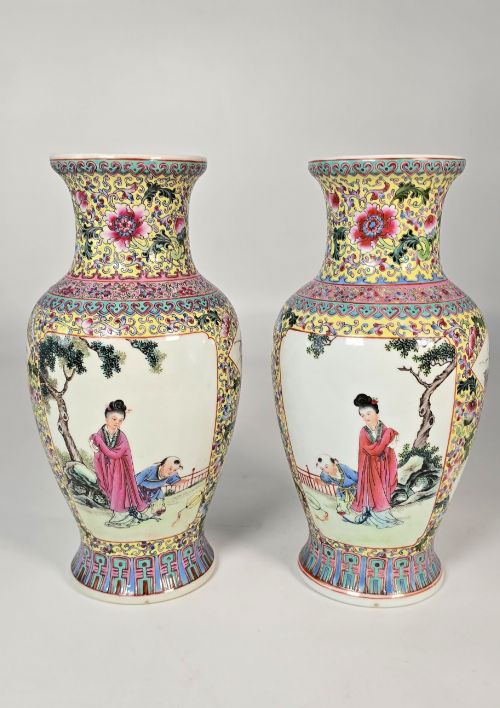
Pink enamel chinese vases bring vibrant ceramic artistry into a room, offering striking floral palettes and traditional figures that define classic interiors.
Pink Enamel Chinese Vases
When you search for pink enamel chinese vases, you encounter porcelain and ceramic vessels originating from the Qing Dynasty, the Republic period, and Victorian imports. The forms on this page include monumental floor vases, baluster shapes with covers, and pairs adapted into table lamps.
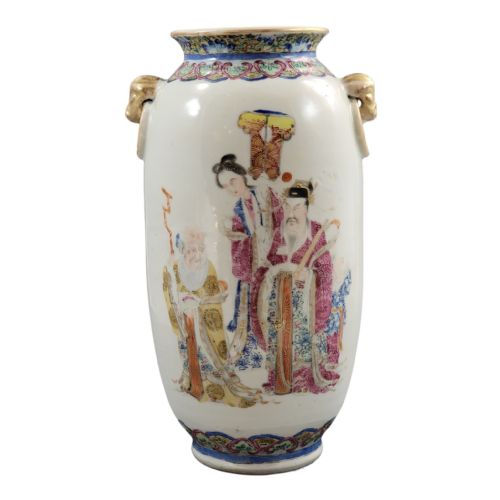
Famille rose and Rose Medallion designs dominate the selection, featuring characteristic pink ground enamels alongside hand-painted figural scenes. You will find both single display pieces and matched pairs spanning the eighteenth to the twentieth centuries.
How they were made
Potters shaped high-fired porcelain and ceramic bodies before applying detailed overglaze enamel decoration by hand. Artisans utilised opaque pink enamel alongside gold leaf and gilt accents to build rich, layered surfaces.
Many items incorporate traditional glaze techniques alongside brass fittings where pieces were later converted into lamps. The combination of delicate brushwork and durable ceramic creates both decorative impact and structural longevity.
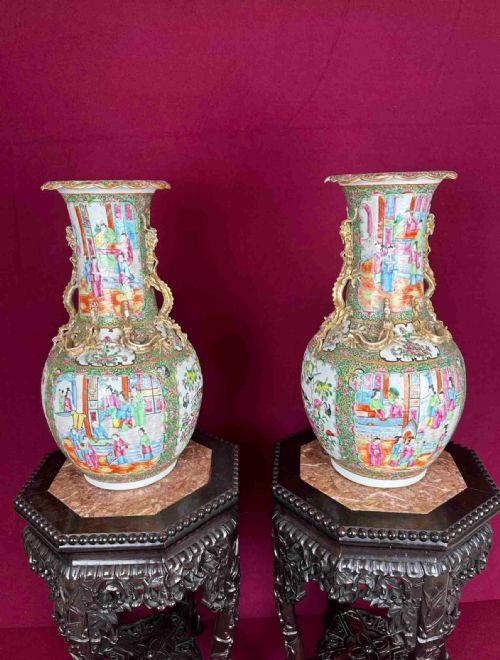
The listings show nineteenth-century Cantonese and Qing Dynasty porcelain decorated with overglaze pink enamels, gold leaf, and gilt accents.
What varies in quality
Quality rests in the precision of the hand-painted brushwork and the vibrancy of the enamel palette across the porcelain surface. Finer examples display meticulous detail in figural expressions and crisp application of the pink ground.
Scale and proportion also define the upper tier, particularly in monumental baluster vases and matched pairs that maintain symmetry. The execution of gilt highlights and the clarity of the ceramic body distinguish masterwork production from standard output.
The Pink Enamel Chinese Vases Glossary
- Famille rose
- A prominent palette of Chinese porcelain defined by an opaque pink enamel introduced in the eighteenth century. This colour allowed artists to create delicate tonal gradations in floral and figural motifs.
- Rose Medallion
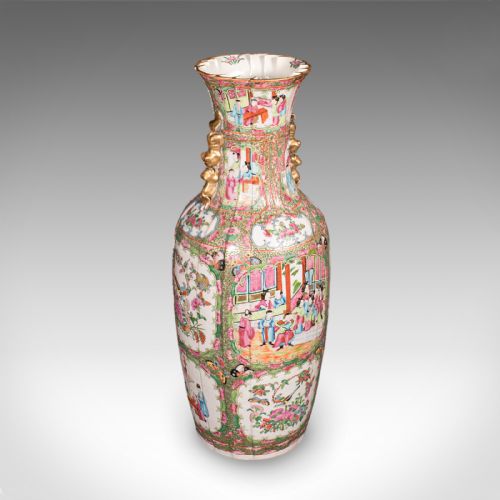
- A distinct style of Cantonese porcelain featuring panelled designs filled with figures, birds, and flowers. These compartments are typically arranged around a central medallion against a dense background of green and pink foliage.
- Baluster vase
- A tall vessel form characterised by a bulbous lower body that tapers towards a narrow neck and flared rim. This shape provides an expansive canvas for elaborate overglaze enamel painting.
- Overglaze enamel
- A low-firing decorative technique applied on top of a previously fired and glazed porcelain surface. The piece undergoes a secondary firing to fuse the coloured enamels to the glaze.
- Qing Dynasty
- The final imperial dynasty of China, spanning from the seventeenth to the early twentieth century. Ceramics from this era encompass many of the famille rose and Canton pieces seen today.
Pink Enamel Chinese Vases: Frequently Asked Questions
Are these vases suitable for everyday display?
These ceramic vessels function wonderfully as striking centrepieces or mantel displays in a traditional or eclectic interior. Their robust porcelain bodies make them straightforward to place on sturdy furniture.
Position them away from high-traffic household areas to protect delicate overglaze enamels and gilt highlights from accidental knocks.
How do I identify a Rose Medallion vase?
Rose Medallion pieces feature a recognisable layout of alternating panels filled with court figures and natural motifs like birds and butterflies. These sections radiate outward from a central focal point on the porcelain body.
The overall surface is densely populated with pink enamels and green foliage, leaving very little plain white ceramic exposed.
Can I use these vases as table lamps?
Several pieces in this selection have been thoughtfully adapted with electrical fittings to serve as functional table lamps. This conversion allows you to incorporate antique porcelain height and colour into domestic lighting schemes.
Many retain their original ceramic form, meaning the conversion can often be appreciated as a later addition to the object's history.
What is the difference between Canton and Qing pieces?
Canton porcelain refers specifically to items decorated in the southern port city for export markets during the nineteenth century. Qing Dynasty is the broader imperial era encompassing various imperial kilns, including Jingdezhen.
Export pieces often showcase the vibrant Rose Medallion or Rose Canton styles designed expressly for Western tastes.