




Pink Enamel Ceramic Urn
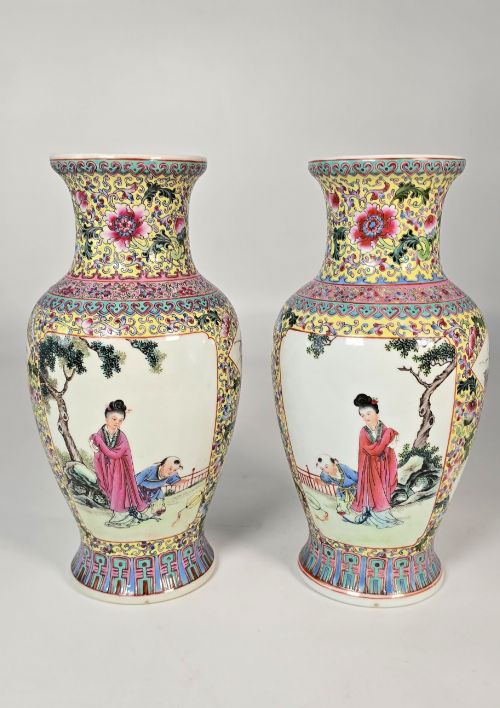
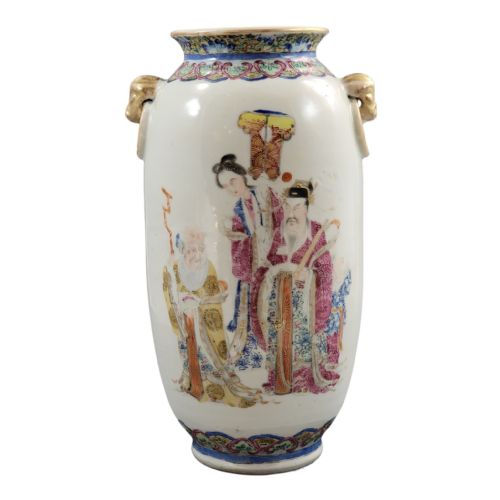
These pink enamel ceramic urn pieces are substantial Chinese export porcelain vases from the nineteenth century and the Chinese Republic period, prized for their hand-painted famille rose and Canton decorations.
Pink Enamel Ceramic Urn
When you search for a pink enamel ceramic urn, you are looking at large decorative vases originating from China during the nineteenth century and the 1930s Chinese Republic period. The selection on this page consists entirely of Chinese export porcelain and Cantonese wares rather than European urns, spanning forms such as floor vases, pairs of hand-painted vessels, and Rose Medallion designs.
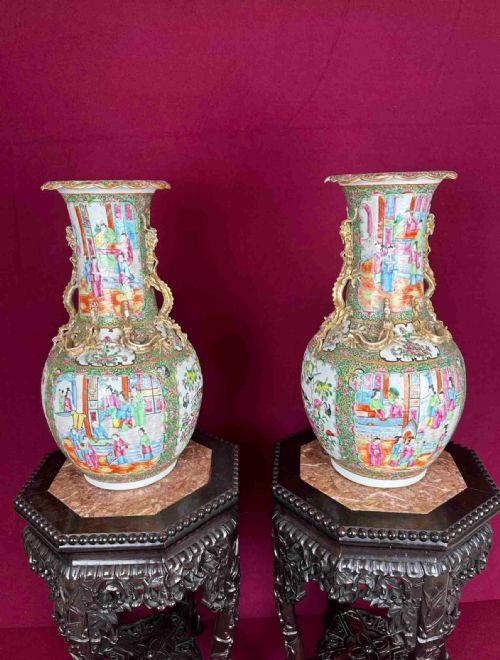
Buyers will most frequently encounter nineteenth-century Cantonese and Rose Medallion vases featuring characteristic pink enamel detailing alongside figurative scenes. These pieces include both single decorative vases and matched pairs, with some examples adapted into lamps while retaining their original porcelain bodies and vibrant enamel palettes.
Materials and construction methods
These pieces are built from Chinese porcelain bodies finished with vitreous enamel glazes and detailed hand painting. Artisans applied rose and pink enamel pigments alongside other polychrome colours to depict traditional figures, floral motifs, and narrative scenes across the ceramic surface.
Gold leaf and gilt highlights frequently accent the enamel work, adding contrasting metallic borders and detailing to the porcelain forms. Certain items incorporate gilt wood elements, particularly when pieces have been converted for use as lamps while preserving their nineteenth-century manufacture.
The listings show pieces spanning the nineteenth century, the Victorian era, and the 1930s Chinese Republic period, executed in porcelain with vitreous enamel and gold gilt.
Assessing quality in export porcelain
Quality in these vases rests upon the precision and complexity of the hand-painted enamel work, particularly the finesse of the figures and botanical borders in the famille rose and Rose Medallion patterns. Finer pieces demonstrate superior brushwork and more harmonious colour blending across the entire ceramic body.
The crispness of the gilding and the preservation of the original gold leaf highlights also distinguish superior examples from simpler production. Scale and proportion play a role, as monumental floor vases and well-matched pairs demand greater technical skill in firing and decoration than smaller single vessels.
The Pink Enamel Ceramic Urn Glossary
- Famille rose
- A major palette of Chinese ceramic glazes introduced in the eighteenth century, characterised by the predominant use of an opaque pink enamel derived from colloidal gold. This colour scheme allowed for subtle tonal gradations and shading.
- Rose Medallion
- A distinct style of nineteenth-century Chinese export porcelain featuring alternating panels of figures and birds or flowers, arranged around a central medallion. Pink enamel dominates the palette of these intricate designs.
- Vitreous enamel
- A material made by fusing powdered glass to a porcelain or metal substrate through firing, creating a durable and glossy coloured surface. It forms the vibrant pink and polychrome decorations seen on these vases.
- Qing Dynasty
- The last imperial dynasty of China, lasting from 1644 until 1912, encompassing significant periods of porcelain export production such as the Daoguang era. Pieces from this time often exhibit traditional reign-style decoration.
Pink Enamel Ceramic Urn: Frequently Asked Questions
What is a pink enamel ceramic urn?
A pink enamel ceramic urn in this context refers to nineteenth-century and early twentieth-century Chinese export porcelain vases decorated with distinctive rose pink enamels. These pieces range from large floor vases to pairs of hand-painted decorative vessels.
They are primarily associated with Canton and Rose Medallion styles, showcasing detailed figurative and floral artwork created for international markets.
How were these vases originally used?
These large porcelain vessels were created primarily as decorative display items for grand interiors in both China and the West during the nineteenth century. Their monumental scale and vibrant enamel palettes made them focal points in reception rooms and parlours.
Over time, some examples were later adapted into lamps while retaining their original hand-painted porcelain bodies and gilded accents.
How do I identify a 19th-century piece?
Nineteenth-century Chinese export vases are identified by their heavy porcelain bodies, characteristic hand-painted famille rose palettes, and specific decorative compositions like Rose Medallion panels. Details such as the style of the figures, the formulation of the pink enamel, and the application of gold leaf help distinguish them from later reproductions.
Examining the foot rim and the wear on the glaze also provides clues regarding the age and origin of the ceramic.
Are these vases always found in pairs?
While many nineteenth-century Cantonese and Rose Medallion vases survive as matched pairs, single vessels are also common in the export market. Pairs were originally intended for symmetrical placement on mantelpieces or pedestals in Victorian interiors.
Buyers will find both individual decorative vases and complete matching pairs represented among these nineteenth-century and Republic period items.
What is the Chinese Republic period?
The Chinese Republic period spans the years following the end of the Qing Dynasty in 1912 up to 1949, marking a distinct era of ceramic production. Porcelain from this time often continued traditional famille rose and polychrome enamel techniques while introducing new stylistic influences.
Pieces from the 1930s reflect the continuation of master porcelain painting traditions in centres such as Jingdezhen.