


Chinese Famille Verte Vase
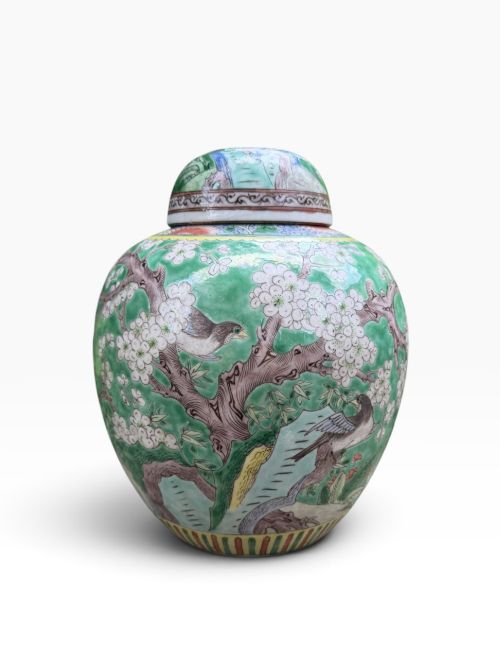
A chinese famille verte vase brings vibrant polychrome enamel painting to porcelain vessels, offering bold green palettes alongside floral and figurative motifs.
Chinese Famille Verte Vase
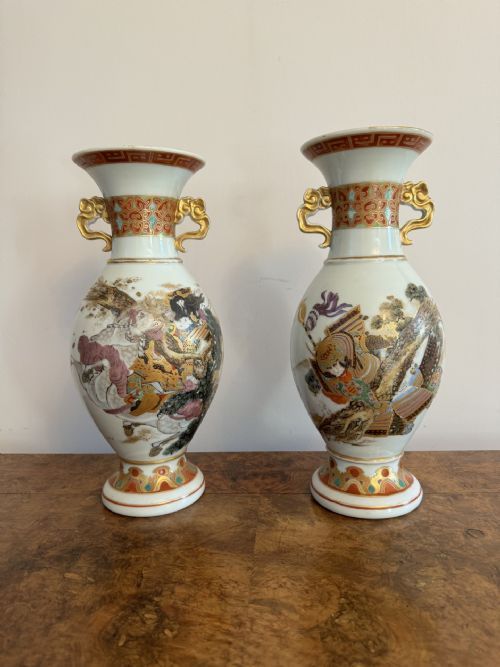
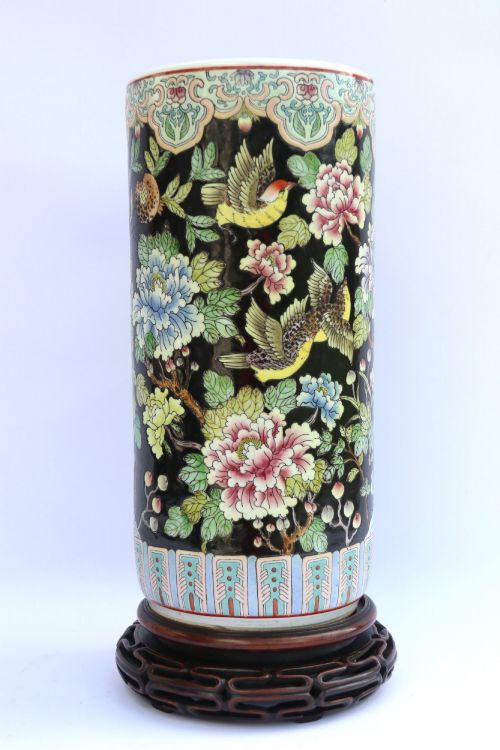
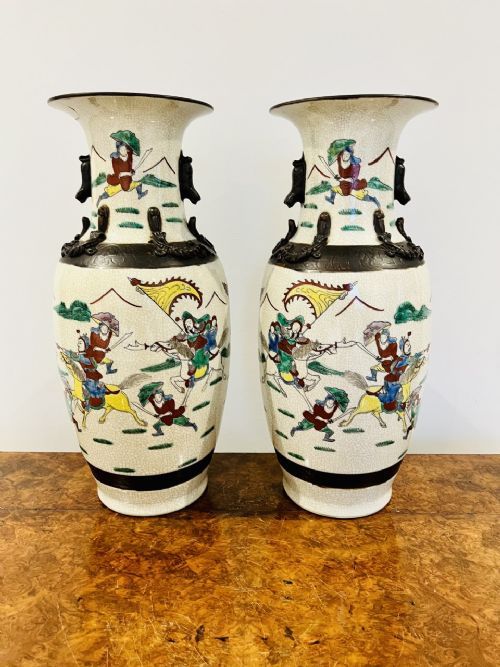
The chinese famille verte vase selection comprises items principally from the nineteenth century, alongside eighteenth century examples and later interpretations. Forms range from baluster vessels and ginger jars to square cong shapes and converted table lamps mounted in gilt bronze or ormolu.
Buyers encounter both direct period pieces from the Qing dynasty and later nineteenth century reproductions or style pieces. Many surviving examples have been adapted over time to function as lamps utilising silk shades and hardwood stands.
Vessels span standard decorative ceramics and large floor vases, occasionally incorporating mounts or covers. The decorative scheme relies upon dominant green enamels combined with contrasting pigments across various body shapes.
Materials and construction methods
Makers shaped these objects from white porcelain clay before applying coloured enamel pigments and transparent glaze. Hand-painted decoration is fused to the body through high temperature kiln firing.
Many vessels integrate secondary elements such as hardwood stands, gilt bronze mounts, or brass and fabric electrical fittings when converted for domestic lighting. Glaze treatments vary from standard clear surfaces to cracked glaze and powder blue grounds.
Listings incorporate nineteenth century items alongside eighteenth century pieces, featuring materials such as porcelain, enamel, gilt bronze, and hardwood.
Distinctions in craftsmanship and execution
The precision and detail of the hand-painted enamels separate standard production from superior work. Finer examples display meticulous brushwork across intricate floral bands, figures, and geometric borders.
The integration of metal mounts, such as ormolu or gilt bronze, influences the overall character of the piece. Original hardwood stands and matching covers also contribute to the integrity of surviving vessels.
The Chinese Famille Verte Vase Glossary
- Famille Verte
- A Qing dynasty porcelain palette dominated by green enamels. The term describes wares decorated principally in green alongside iron red, yellow, blue, and black pigments.
- Baluster
- A vase shape with a rounded body that tapers toward the base and flares slightly at the neck. This form provides a broad surface area for detailed enamel painting.
- Cong
- A tubular ceramic form with a square section and a circular inner aperture, derived from ancient jade prototypes. It represents a specific archaic shape replicated in later ceramic production.
- Ginger Jar
- A wide-shouldered storage jar with a domed cover, frequently decorated with prunus blossom motifs or general floral panels. These vessels often retain their original matching lids.
- Ormolu
- Gilt bronze mounts applied to the base, rim, or handles of ceramic vessels. European makers frequently added these decorative metal mounts during the nineteenth century.
Chinese Famille Verte Vase: Frequently Asked Questions
Are these vases functional or decorative?
These ceramic vessels served primarily as decorative display items in interiors rather than utilitarian containers. Many examples were subsequently wired as table lamps during later periods.
Their substantial porcelain bodies and painted surfaces make them suited for placement on tables or pedestals within period rooms.
How do I identify a period piece?
Distinguishing period pieces involves examining the characteristics of the porcelain body, the depth of the enamel colours, and the manner of the hand-painting. Marks on the base can also provide reference points.
Evaluating the wear on the foot rim and the consistency of the glaze helps clarify the age of the item.
Why are so many mounted as lamps?
Numerous antique vessels were converted into lighting fixtures by adding electrical fittings, wooden bases, and metal mounts during the nineteenth or twentieth centuries.
This adaptation allowed owners to incorporate antique ceramics into contemporary domestic lighting arrangements while retaining the original hand-painted body.
What does the term powder blue mean?
Powder blue refers to a speckled cobalt blue glaze applied by blowing powdered pigment through a bamboo tube onto the porcelain surface before firing. This technique creates a mottled backdrop.
Such blue grounds often feature reserved panels painted with famille verte enamels depicting floral or landscape scenes.