



Pink Dress Portrait Painting
A pink dress portrait painting captures fabric and personality in oil or watercolour across centuries of British and European art.
Pink Dress Portrait Painting
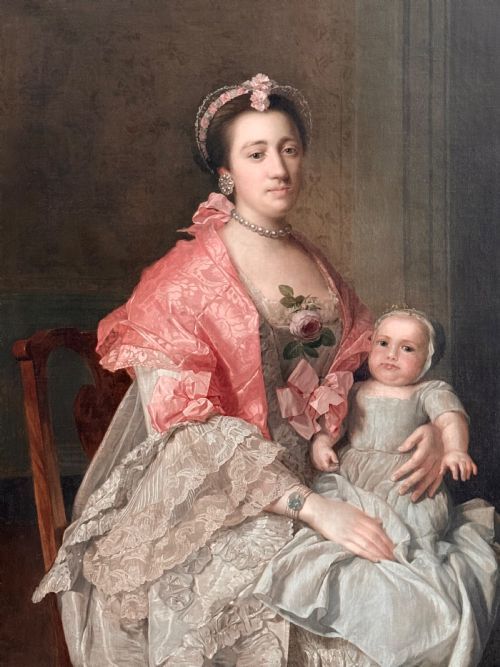
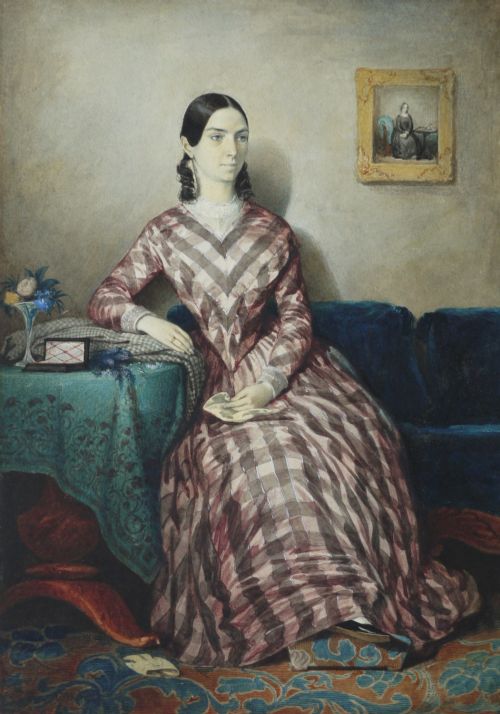
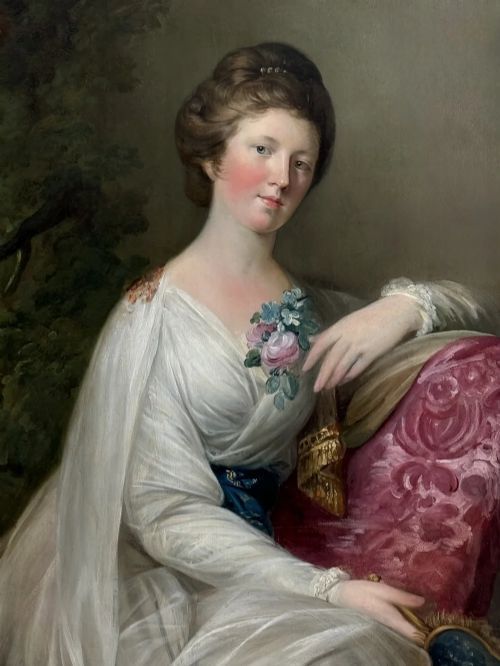
A pink dress portrait painting represents sitters ranging from seventeenth-century nobility to early twentieth-century flappers, captured in oils and watercolours. You will frequently encounter eighteenth-century canvases alongside Victorian and Edwardian works on this page.
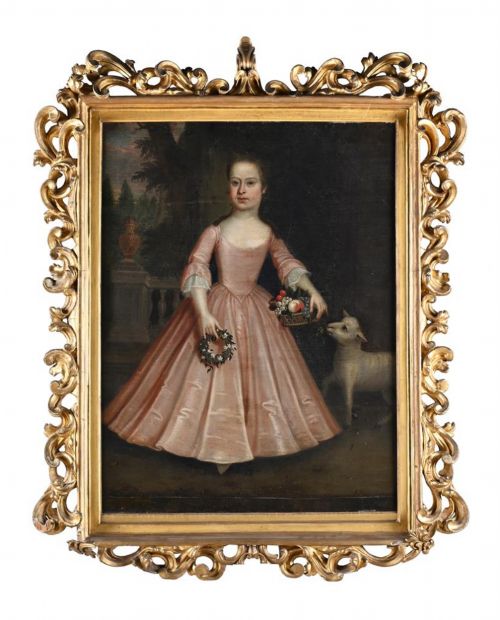
The subjects appear in various settings, from formal seated compositions with children to naive school depictions and informal coastal scenes with shrimp nets.
These works bridge social history and portraiture, recording the changing cuts of gowns, silks, mantles, and dressing gowns through distinct artistic eras.
Materials and Methods
Artists painted primarily in oil on canvas stretched over wood frames, applying pigments that rendered the rich sheens of silk and satin gowns. Watercolour on paper appears in specific pieces, often capturing softer domestic or botanical scenes.
Many surviving works retain their period frames carved from wood and finished with gold leaf or giltwood, preserving the visual context of the original presentation.
Pink Dress Portrait Painting Retail Price Guide 2026
Typical asking prices for pink dress portrait painting among the pieces listed under this phrase on Sellingantiques today, from the lower quarter to the upper quarter. They describe what is for sale here now, not the wider market.
Listings feature works spanning from the seventeenth century through the Victorian era up to nineteen-twenty.
Quality and Execution
The skill in handling fabric folds, the luminosity of skin tones, and the anatomical accuracy of the sitter's hands and face distinguish works by documented masters or accomplished circles from simpler naive school pieces.
The preservation of the original canvas and the depth of the pigment layers dictate the visual impact of the garment, particularly in how light interacts with the pink pigments over centuries.
George Willison·Sir Allan Ramsay·George Knapton·Alfred Seifert·Francis Alleyne·Nathaniel Hone·Harry John Pearson·Franz Xaver Winterhalter·John Theodore Heins·Henry Pickering·Michael Dahl·Sir Godfrey Kneller
The Pink Dress Portrait Painting Glossary
- Oil on canvas
- A traditional painting method using pigments bound with drying oil applied to a woven fabric surface stretched across a wooden frame. This medium allowed artists to build rich layers and depth.
- Giltwood
- Wood carved and covered with a thin layer of gold leaf or metallic gilt. It provided ornate framing that matched the status of the portrait sitter.
- Circle of
- A term indicating the work was produced by an unidentified artist closely associated with a master, often working in the same studio or style.
- English Naive School
- A category for works created by self-taught or provincial artists who worked outside the formal academic traditions of proportion and perspective.
- Gigot sleeves
- Large, puffed sleeves widening from the elbow to the shoulder, characteristic of nineteenth-century fashion seen in specific portrait subjects.
Pink Dress Portrait Painting: Frequently Asked Questions
How do I date a portrait painting?
Dating relies heavily on the clothing styles, hairstyles, and framing techniques visible in the artwork. Written inscriptions or signatures on the canvas reverse also provide firm chronological markers.
Comparison with documented works by the same artist or school helps narrow the decade of creation.
Are these paintings on canvas or panel?
The majority of these historical portraits utilise oil paint applied directly to woven canvas stretched over wooden frames. Watercolour variations appear on paper supports.
Canvas preparation changed over the centuries, offering clues to the era of production.
How should I hang an oil portrait?
Oil paintings on canvas require stable indoor humidity away from direct sunlight and heat sources to prevent cracking of the paint layer. Secure wall fixings are essential to support the weight of the original wooden frame.
Displaying them at eye level allows the detail of the costume and sitter's expression to be appreciated.
What is the English Naive School?
The English Naive School encompasses works by painters who lacked formal academy training, resulting in charmingly direct depictions without strict adherence to classical perspective.
These pieces offer a sincere record of sitters whose social standing was captured outside high-society portraiture.