28,361  PAGES BROWSED TODAY PAGES TODAY 227 ANTIQUES UPLOADED TODAYNEW ARRIVALS
227 ITEMS ADDED TODAY
Sort Order
Items Per Page
Browse Categories
Sort order
Relevant Links
Items per page
ID #SA1233582
FOR SALE
£22,000
Email Buy
Save
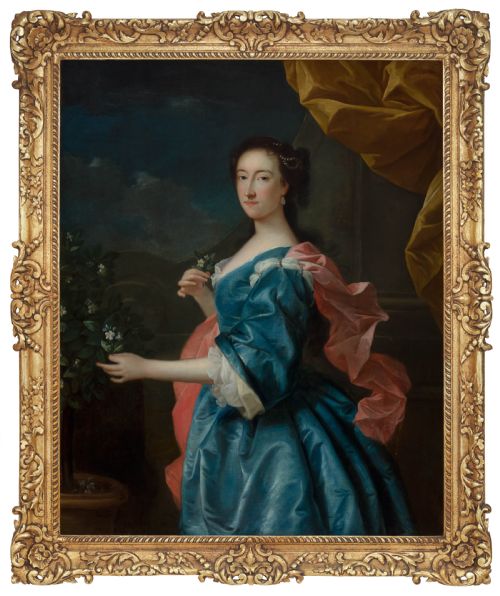
George Willison (1741-1797) - Portrait of Henrietta Fordyce (Nee Cumming).
Period Portraits
for sale €25,740     $27,940
£22,000
Period Portraits

Period Portraits

Sellingantiques Verified Since Jan 2017
View Dealers Stock Page
  • About Us
    Specialist dealer in portraits from the 17th century to the 20th century. Our stock includes quality oil paintings, drawings, and mezzotints
Id #SA1233582
PDF SHARE
SAVE

George Willison (1741-1797) - Portrait of Henrietta Fordyce (Nee Cumming).

18th century
For Sale by Period Portraits
Description

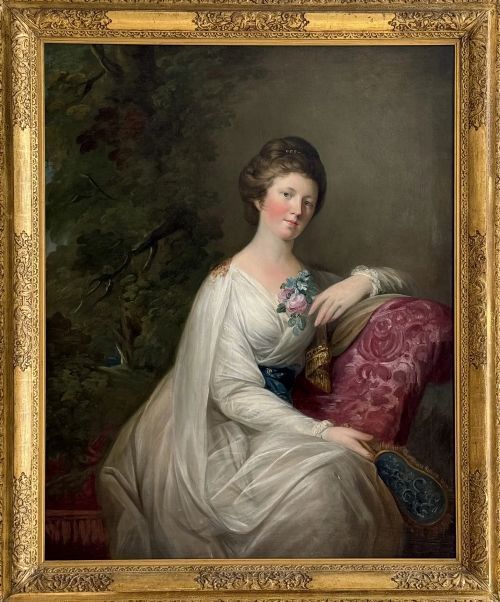
Fine and graceful 18th century portrait of Henrietta Fordyce (nee Cumming) by the celebrated Scottish portrait artist George Willison (1734-1823).

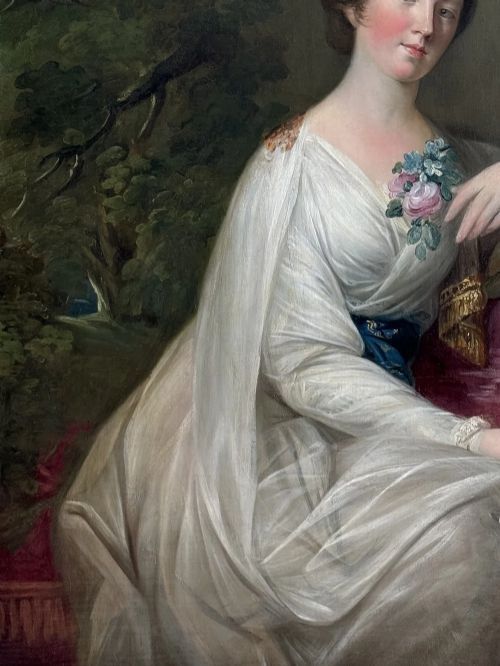
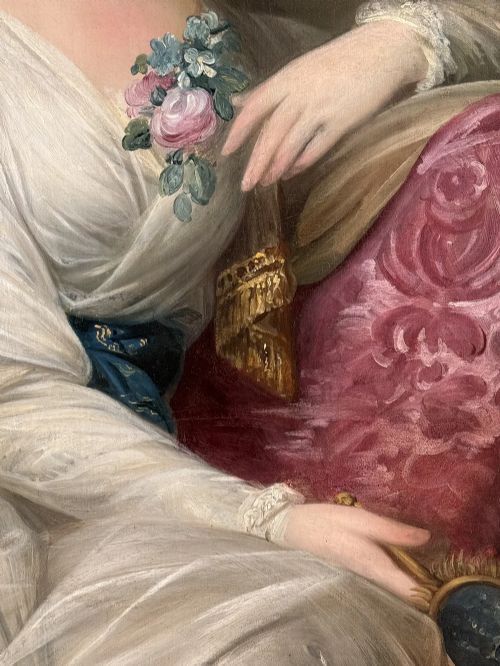
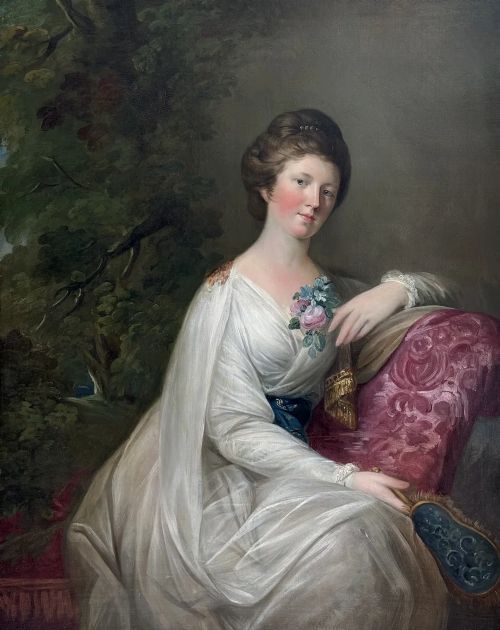
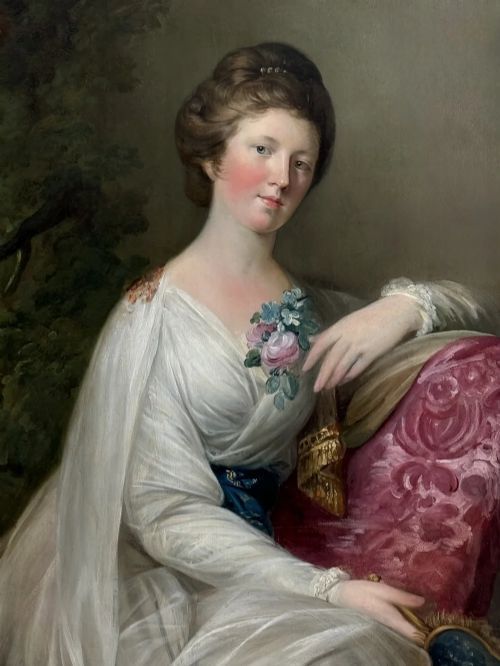
The elegant sitter is depicted three-quarter length reclining on a claret coloured chaise, amidst foliage. Wearing a white draped silk dress, she holds a fan in one hand and clasps a corsage to her busom with the other. Her hair is piled elegantly upwards and secured by pearl ornaments.
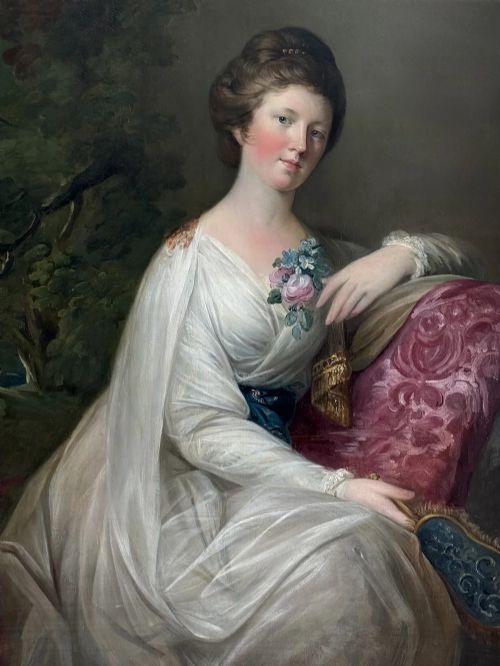
Henrietta Fordyce (1734–1823)

Praised for her beauty and virtue. Henrietta Fordyce (née Cumming) was a governess renowned for her educational role in aristocratic households, and later for being the wife of Reverend James Fordyce, DD (1720–1 October 1796) Scottish Presbyterian minister and poet.
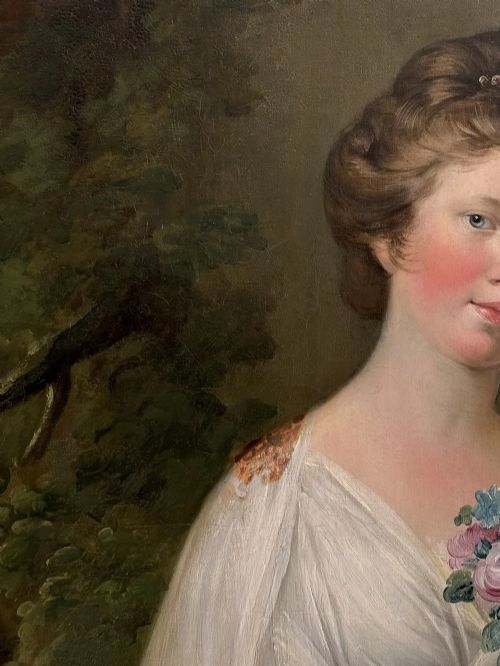
Born into a Scottish family, Fordyce received her early education in a French convent. Later in youth she began to be embedded in literary and social networks, and progressed to maintaining friendships with figures such as General Henry Seymour Conway and the poet Alison Cockburn. This exposure to Edinburgh's vibrant cultural milieu, amid the Scottish Enlightenment, shaped her developing interests in literature and moral philosophy.
Later working as a governess, Fordyce educated Lady Anne Barnard and her sisters in a period marked by informal yet influential domestic instruction. She married James Fordyce in 1771 after which the couple resided primarily in London, he was already recognised for his influential Sermons to Young Women (1765) which shaped contemporary views on female conduct. In fact in Pride and Prejudice, Mr. Collins chooses to read Fordyce’s Sermons for Young Women aloud to the Bennet sisters.
After James Fordyce's death in 1796, Henrietta became the subject of Kelly's Memoir of the late Mrs. Henrietta Fordyce (1823), an anonymous biography that highlighted her character, family life, and connections through letters, anecdotes, and poetry, portraying her as an exemplary figure of resilience and piety.
Fordyce was also a celebrated figure within the cultural milieu of Enlightenment Scotland and England, and she is depicted in several notable portraits from the late eighteenth century. One of the earliest of which is a 1774 red chalk drawing by Scottish artist Alexander Nasmyth, titled Henrietta Fordyce Cummyng Holding a Bird. In this work, Fordyce is portrayed in a delicate, intimate pose, ad this graceful portrait highlights her poise and refinement.
Her close friendhsip with celebrated Swiss neoclassical painter Angelica Kauffman resulted in Henrietta being depicted as ‘Mrs. Fordyce, at the Grave of Fingal’ it shows her in a full-length, almost profile view, showering flowers from a basket onto the grave of the legendary hero Fingal amid a mountainous Highland landscape. This work was likely commissioned within Kauffman's circle of friends, including the Fordyce family, whom she affectionately termed "the all harmonious Triad" comprising Henrietta, her husband James, and his brother William.
George Willison (1741-1797) Edinburgh-born George Willison was primarily a painter of portraits, although examples of mythological subjects are also known. The artist was much aided in his career by his wealthy uncle, George Dempster, who sponsored his nephew's training in Edinburgh and, from 1760 to 1767, in Rome.
A pupil of Mengs in Rome (before Mengs left for Madrid in 1761) Willison painted James Boswell, 1740 - 1795. Diarist and biographer of Dr Samuel Johnson in Rome in 1765 and this portrait is now on display in the Scottish National Portrait Gallery.

The artist returned to work in London from 767 and exhibited at the Scottish Academy between 1767 - 1770, and at the Royal Academy in 1771 and 1772.

Full note visit www.periodportraits.co

Physical Dimensions
Height
145cm (57.09")
Width
120cm (47.24")
Depth
5cm (1.97")
Declaration

Period Portraits has dated this Georgian Oil Portrait Painting to the 18th Century.

Reference Numbers
Sellingantiques Reference
SA1233582
Description
Fine and graceful 18th century portrait of Henrietta Fordyce (nee Cumming) by the celebrated Scottish portrait artist George Willison (1734-1823).
The elegant sitter is depicted three-quarter length reclining on a claret coloured chaise, amidst foliage.
Period Portraits

Wearing a white draped silk dress, she holds a fan in one hand and clasps a corsage to her busom with the other. Her hair is piled elegantly upwards and secured by pearl ornaments.

fig 1. An 18th-century oil painting depicting a young woman in a draped white gown resting her arm on a pink patterned cushion against a dark background.
fig 1. George Willison (1741-1797) - Portrait of Henrietta Fordyce (Nee Cumming).

Henrietta Fordyce (1734–1823)

Praised for her beauty and virtue. Henrietta Fordyce (née Cumming) was a governess renowned for her educational role in aristocratic households, and later for being the wife of Reverend James Fordyce, DD (1720–1 October 1796) Scottish Presbyterian minister and poet.

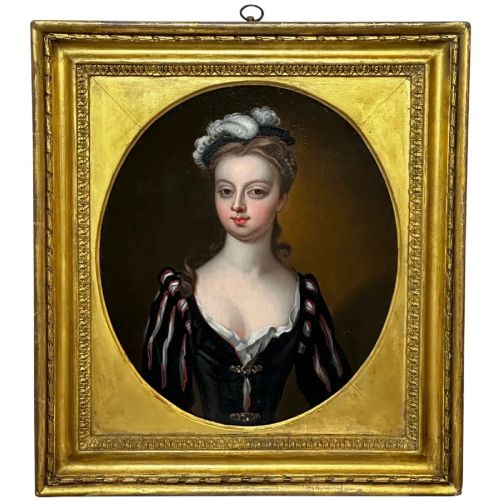
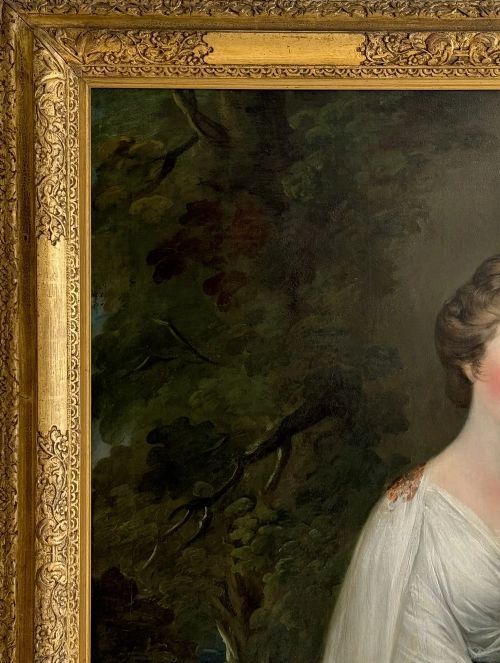
fig 2. An 18th-century oil painting depicting a young woman in a draped white gown resting her arm on a pink patterned cushion against a dark background.
fig 2. George Willison (1741-1797) - Portrait of Henrietta Fordyce (Nee Cumming).

Born into a Scottish family, Fordyce received her early education in a French convent. Later in youth she began to be embedded in literary and social networks, and progressed to maintaining friendships with figures such as General Henry Seymour Conway and the poet Alison Cockburn. This exposure to Edinburgh's vibrant cultural milieu, amid the Scottish Enlightenment, shaped her developing interests in literature and moral philosophy.

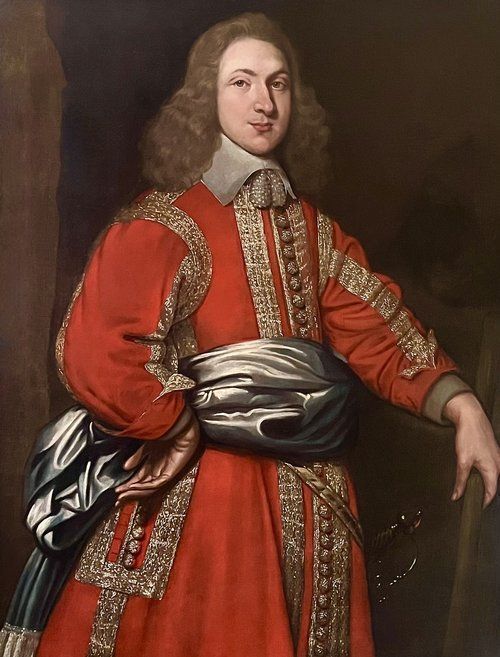
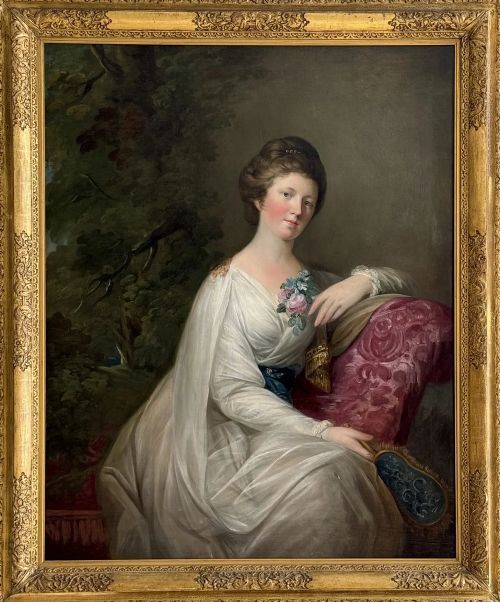
fig 3. An 18th-century oil painting depicting a young woman in a draped white gown resting her arm on a pink patterned cushion against a dark background.
fig 3. George Willison (1741-1797) - Portrait of Henrietta Fordyce (Nee Cumming).

Later working as a governess, Fordyce educated Lady Anne Barnard and her sisters in a period marked by informal yet influential domestic instruction. She married James Fordyce in 1771 after which the couple resided primarily in London, he was already recognised for his influential Sermons to Young Women (1765) which shaped contemporary views on female conduct. In fact in Pride and Prejudice, Mr. Collins chooses to read Fordyce’s Sermons for Young Women aloud to the Bennet sisters.

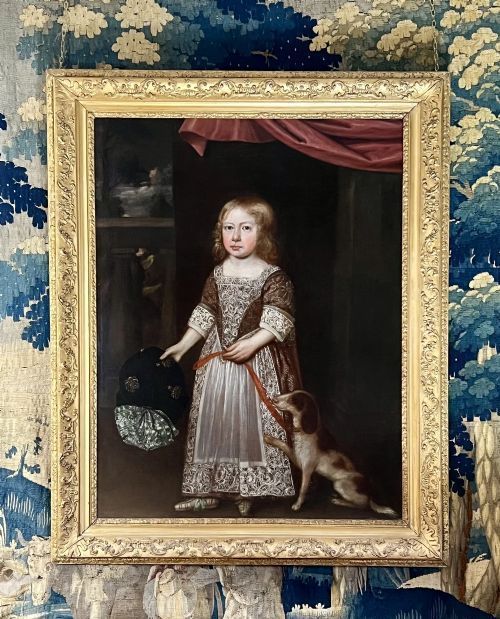
fig 4. An 18th-century oil painting depicting a young woman in a draped white gown resting her arm on a pink patterned cushion against a dark background.
fig 4. George Willison (1741-1797) - Portrait of Henrietta Fordyce (Nee Cumming).

After James Fordyce's death in 1796, Henrietta became the subject of Kelly's Memoir of the late Mrs. Henrietta Fordyce (1823), an anonymous biography that highlighted her character, family life, and connections through letters, anecdotes, and poetry, portraying her as an exemplary figure of resilience and piety.

fig 5. An 18th-century oil painting depicting a young woman in a draped white gown resting her arm on a pink patterned cushion against a dark background.
fig 5. George Willison (1741-1797) - Portrait of Henrietta Fordyce (Nee Cumming).

Fordyce was also a celebrated figure within the cultural milieu of Enlightenment Scotland and England, and she is depicted in several notable portraits from the late eighteenth century. One of the earliest of which is a 1774 red chalk drawing by Scottish artist Alexander Nasmyth, titled Henrietta Fordyce Cummyng Holding a Bird. In this work, Fordyce is portrayed in a delicate, intimate pose, ad this graceful portrait highlights her poise and refinement.

fig 6. An 18th-century oil painting depicting a young woman in a draped white gown resting her arm on a pink patterned cushion against a dark background.
fig 6. George Willison (1741-1797) - Portrait of Henrietta Fordyce (Nee Cumming).

Her close friendhsip with celebrated Swiss neoclassical painter Angelica Kauffman resulted in Henrietta being depicted as ‘Mrs. Fordyce, at the Grave of Fingal’ it shows her in a full-length, almost profile view, showering flowers from a basket onto the grave of the legendary hero Fingal amid a mountainous Highland landscape. This work was likely commissioned within Kauffman's circle of friends, including the Fordyce family, whom she affectionately termed "the all harmonious Triad" comprising Henrietta, her husband James, and his brother William.

fig 7. An 18th-century oil painting depicting a young woman in a draped white gown resting her arm on a pink patterned cushion against a dark background.
fig 7. George Willison (1741-1797) - Portrait of Henrietta Fordyce (Nee Cumming).

George Willison (1741-1797) Edinburgh-born George Willison was primarily a painter of portraits, although examples of mythological subjects are also known. The artist was much aided in his career by his wealthy uncle, George Dempster, who sponsored his nephew's training in Edinburgh and, from 1760 to 1767, in Rome.

fig 8. An 18th-century oil painting depicting a young woman in a draped white gown resting her arm on a pink patterned cushion against a dark background.
fig 8. George Willison (1741-1797) - Portrait of Henrietta Fordyce (Nee Cumming).

A pupil of Mengs in Rome (before Mengs left for Madrid in 1761) Willison painted James Boswell, 1740 - 1795. Diarist and biographer of Dr Samuel Johnson in Rome in 1765 and this portrait is now on display in the Scottish National Portrait Gallery.

The artist returned to work in London from 767 and exhibited at the Scottish Academy between 1767 - 1770, and at the Royal Academy in 1771 and 1772.

Full note visit www.periodportraits.co

Height
145cm (57.09")
Width
120cm (47.24")
Depth
5cm (1.97")
Date of Manufacture

Period Portraits has dated this Georgian Oil Portrait Painting to the 18th Century.

Reference Numbers
Sellingantiques Ref
SA1233582
Period Portraits
Period Portraits
Sellingantiques verified Since Jan 2017

Specialist dealer in portraits from the 17th century to the 20th century. Our stock includes quality oil paintings, drawings, and mezzotints

Dealer Profile

You can view the stock and full dealer information on the Period Portraits Profile Page
PDF SHARE
SAVE
An 18th-century oil painting depicting a young woman in a draped white gown resting her arm on a pink patterned cushion against a dark background.
1 / 10
Archive I An 18th-century oil painting depicting a young woman in a draped white gown resting her arm on a pink patterned cushion against a dark background.

George Willison (1741-1797) - Portrait of Henrietta Fordyce (Nee Cumming).
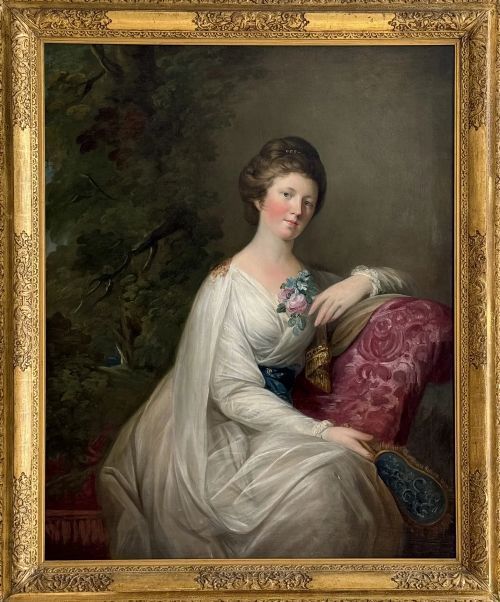
Archive II An 18th-century oil painting depicting a young woman in a draped white gown resting her arm on a pink patterned cushion against a dark background. View II
Archive III An 18th-century oil painting depicting a young woman in a draped white gown resting her arm on a pink patterned cushion against a dark background. View III
Archive IV An 18th-century oil painting depicting a young woman in a draped white gown resting her arm on a pink patterned cushion against a dark background. View IV
Archive V An 18th-century oil painting depicting a young woman in a draped white gown resting her arm on a pink patterned cushion against a dark background. View V
Archive VI An 18th-century oil painting depicting a young woman in a draped white gown resting her arm on a pink patterned cushion against a dark background. View VI
Archive VII An 18th-century oil painting depicting a young woman in a draped white gown resting her arm on a pink patterned cushion against a dark background. View VII
Archive VIII An 18th-century oil painting depicting a young woman in a draped white gown resting her arm on a pink patterned cushion against a dark background. View VIII
Archive IX An 18th-century oil painting depicting a young woman in a draped white gown resting her arm on a pink patterned cushion against a dark background. View IX
Archive X An 18th-century oil painting depicting a young woman in a draped white gown resting her arm on a pink patterned cushion against a dark background. View X
FURTHER BROWSING

Visitors also looked at these ⇣

Enlarged Archival View
Telephone 07889 859729
Location
North Yorkshire
United Kingdom
Verified Since Jan 2017
Items For Sale 47
Items Sold 61
Period Portraits
Period Portraits
Verified Since Jan 2017
View Dealer Info
Location: North Yorkshire, United Kingdom
Verified
Jan 2017
For Sale
47
Sold
61
An 18th-century oil painting depicting a young woman in a draped white gown resting her arm on a pink patterned cushion against a dark background.
GEORGE WILLISON (1741-1797) - PORTRAIT OF HENRIETTA FORDYCE (NEE CUMMING).
Ref: SA1233582
An 18th-century oil painting depicting a young woman in a draped white gown resting her arm on a pink patterned cushion against a dark background.
Detail View 1
Detail View 2
Detail View 3
Detail View 4
Detail View 5
Detail View 6
Detail View 7
Detail View 8
Detail View 9
Archival Detail
Every single antique dealer on our platform is individually approved by our internal team. We verify their professional trade history, ethical standards, and photographic quality to ensure a secure, high-standard buying environment. Upon joining, every dealer agrees to a strict 9-point code of conduct. While issues can occasionally arise, our dealers typically resolve them swiftly and directly with the buyer. In fact, since our founding in 2002, Sellingantiques has only had to step in to help resolve an issue on roughly five occasions—a true testament to the quality of our dealers and their dedication to your happiness.
Our dealers are highly experienced in packing and shipping fragile, high-value antiques. Because you are in direct contact with the dealer, you will be able to easily go through all available shipping and insurance options together to ensure your item arrives safely.
Antiques are the ultimate green purchase. By choosing historical pieces over newly manufactured goods, you completely eliminate the carbon footprint of modern mass production while preserving exceptional, timeless craftsmanship.

Georgian portraiture typically features sitters depicted with refined elegance, classical drapes, soft directional lighting, and subtle landscape or interior backgrounds popularised during the 18th century.

Portrait artists in the 18th century typically painted using hand-mixed oil pigments applied to stretched linen or cotton canvas, often prepared with double lead grounds.

Authentic Georgian oil paintings often exhibit natural surface craquelure, historical stretcher marks, hand-spun canvas weave, and signs of period varnish oxidisation.

Hang a Georgian portrait as a focal point above a mantelpiece or sideboard, pairing it with neutral wall tones and contemporary furniture to create a curated contrast.

Keep oil paintings away from direct sunlight, extreme humidity, and heat sources, dusting gently with a soft, dry microfibre brush rather than liquid cleaners.
items
Add keywords to the filter
Price
£100
£250000
Era
Movements
Material
Origin
Stock Location
Freshness
Online Payments
Categories