
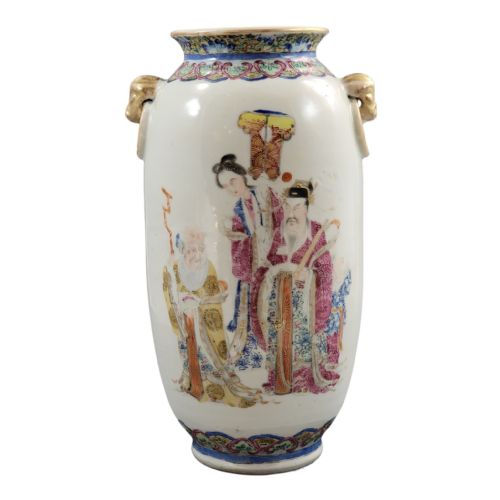


Pink Ceramic Urns
Pink ceramic urns are striking display pieces that bring warmth and colour to a room through hand-painted florals and rich gilding.
Pink Ceramic Urns
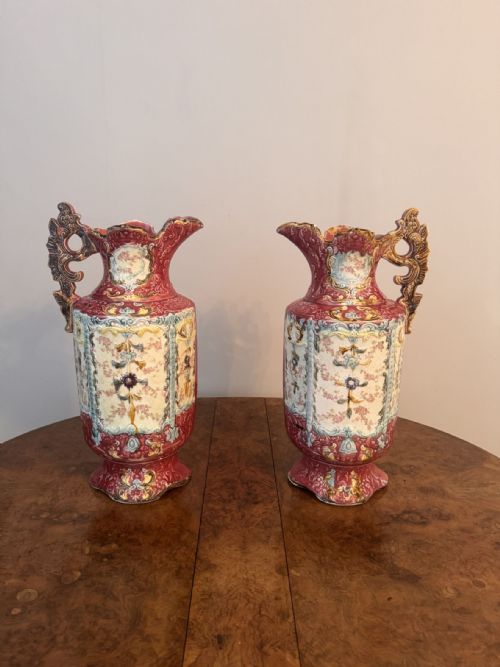
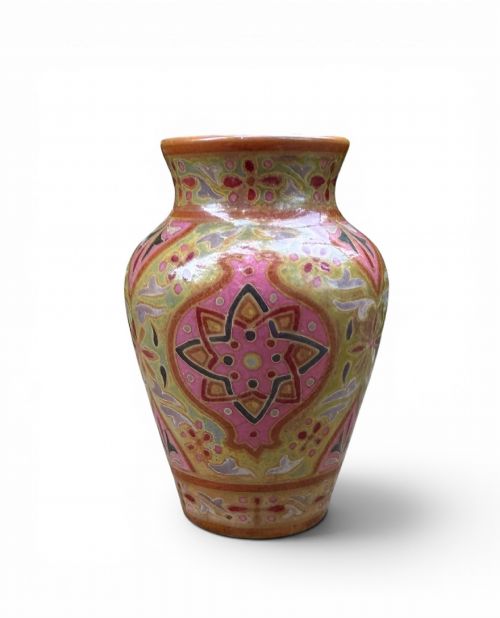
Pink ceramic urns encompass a diverse selection of decorative vessels created across the nineteenth and early twentieth centuries in both European and Chinese workshops. When searching for pink ceramic urns, buyers encounter forms ranging from monumental floor vases and lidded pails to twin-handled ewers and table lamps. These pieces demonstrate varied stylistic influences, from Chinese export porcelain to Victorian, Regency, and Art Nouveau designs.
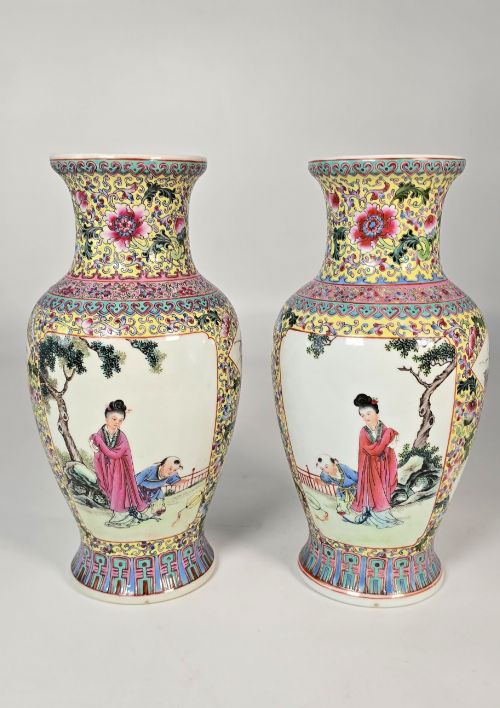
The nineteenth century yields the highest concentration of examples, particularly Victorian productions alongside Qing Dynasty Chinese wares. English factories such as Worcester, Coalport, and Minton sit alongside continental European pieces and Canton porcelain. Buyers most frequently meet large pairs of lidded vases, Rose Medallion vessels, and ewers set upon pink grounds.
How they were made
Potters shaped these vessels from earthenware and fine porcelain before applying coloured grounds and glazes. Many pieces utilise hand-painted decoration, often featuring pictorial scenes, figural motifs, and botanical studies rendered directly onto the pink surface.
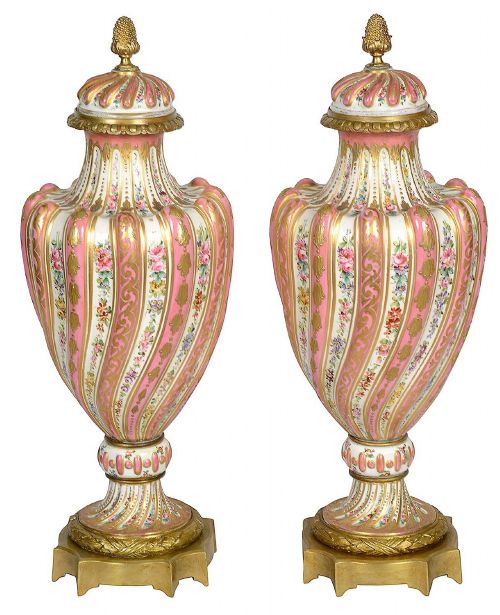
Gilding forms an essential component of manufacture across these items. Craftsmen applied gold leaf and gilt bronze mounts to accentuate handles, rims, and panel borders, frequently combining rich metallic accents with intricate enamelling.
Listings feature pieces spanning the nineteenth century up to the 1930s, incorporating earthenware and porcelain with gilt bronze and gold leaf.
What varies in quality
The refinement of the hand-painted decoration largely distinguishes the standard of an urn. Superior pieces display delicate brushwork in figural and floral scenes, whereas simpler items rely on stencilled or heavier transfer-printed patterns.
Material preparation and firing technique also define the tier of a piece. Finer porcelain bodies, even glaze distribution, and crisp execution of gilding elevate the status of an urn, while mounting details such as gilt bronze work reveal the ambition of the original maker.
Flight Barr And Barr·Royal Worcester·Zsolnay Pecs·Minton·Coalport
The Pink Ceramic Urns Glossary
- Famille rose
- A major palette of Chinese ceramic glades introduced in the Qing dynasty, distinguished by opaque pink enamel derived from colloidal gold. This palette dominates many nineteenth-century Canton vases.
- Ewer
- A large jug with a wide spout and shaped handle, originally designed for pouring water but frequently produced in ceramic as a purely decorative urn or vase.
- Pâte-sur-pâte
- A method of ceramic decoration where slip is built up in successive layers upon a coloured body to create a low relief cameo effect. This technique appears on nineteenth-century English porcelain.
- Garniture
- A set of three or more matching vases or urns designed to be displayed together on a mantelpiece or sideboard.
- Rose medallion
- A distinct style of Chinese export porcelain featuring segmented panels filled with figures, birds, and flowers set against a pink and green ground.
Pink Ceramic Urns: Frequently Asked Questions
What were pink ceramic urns used for?
These vessels served primarily as decorative ornaments for mantelpieces, reception rooms, and grand hallways during the nineteenth and early twentieth centuries. Large pairs and garnitures provided symmetrical focal points for interior display.
Some forms, such as lidded pails and ice pails, had functional origins at the dining table, while ewers and floor vases remained purely ornamental statements of wealth and taste.
How do I tell Chinese export urns from European pieces?
Chinese export pieces, particularly those from the Canton kilns and the Qing dynasty, typically feature dense famille rose or Rose Medallion enamelling with specific figural narratives. The paste and glaze weight often differ from European porcelain.
European factories like Sevres, Worcester, and Minton adopted distinct neoclassical or revivalist shapes, often pairing pink grounds with European gilt highlights and specific factory marks.
How should I clean a hand painted urn?
Hand-painted and gilt ceramic surfaces require gentle maintenance to preserve delicate enamel and gold leaf. Dusting with a soft, dry cloth prevents the accumulation of dirt without risking the pigments.
Harsh chemical cleaners and abrasive cloths must be avoided entirely, as they strip away the enamel and wear down the historic gilt bronze or hand-applied gold leaf.
How do I identify a Victorian pink urn?
Victorian examples frequently combine deep pink ceramic grounds with elaborate handles, rich gilding, and romantic or botanical painted panels. Many incorporate eclectic styles such as Rococo Revival or Victorian Gothic.
Checking for factory ciphers, impressed numbers, or specific nineteenth-century registration marks on the base helps narrow down the exact period of production.