
Pine Wooden Seat
Pine wooden seat search results bring forward solid benches, pews, and stools built from softwood and hardwood timber across multiple centuries.
Pine Wooden Seat
A pine wooden seat encompasses practical domestic and ecclesiastical furniture, ranging from simple milking stools to long chapel pews and high-back settles. Buyers search this phrase to find functional seating shaped by vernacular traditions in homes, churches, and farmhouses.
The pieces appearing on this page span the 18th, 19th, and early 20th centuries, including Victorian, Edwardian, and Georgian eras. Examples originate from English, Swedish, Austrian, Spanish, and Eastern European workshops.
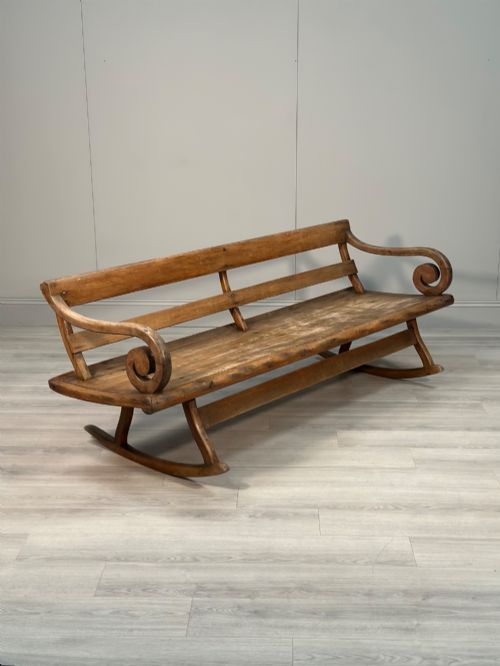
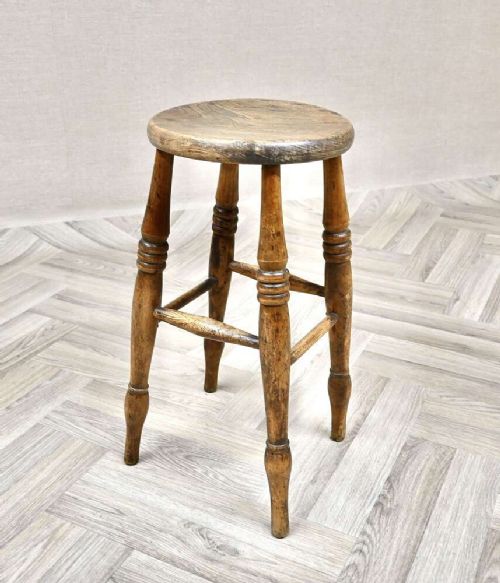
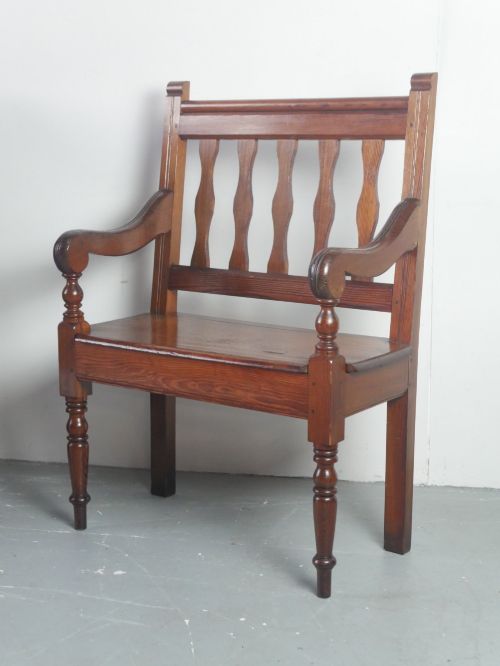
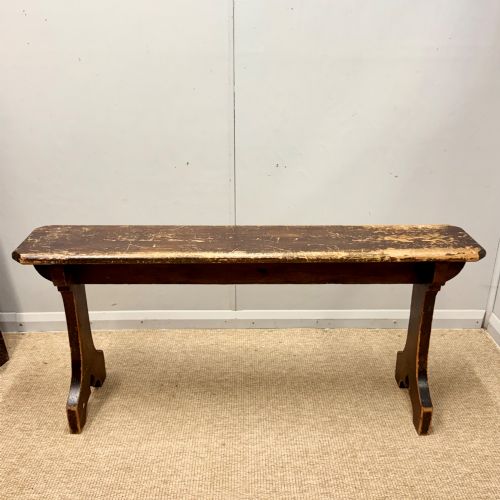
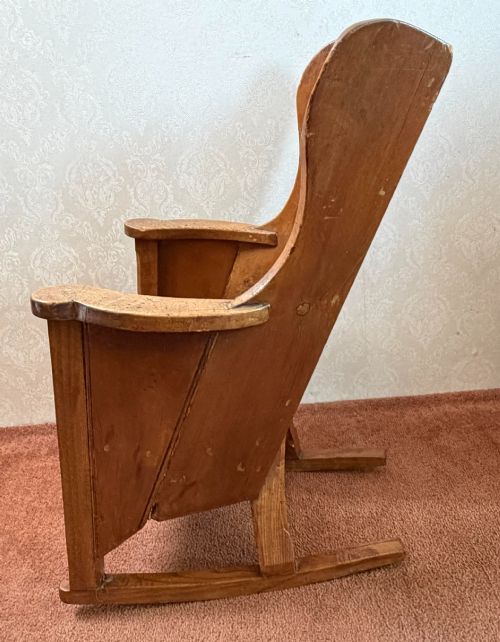
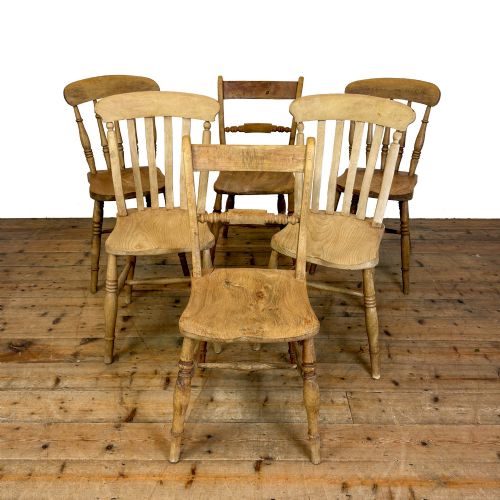
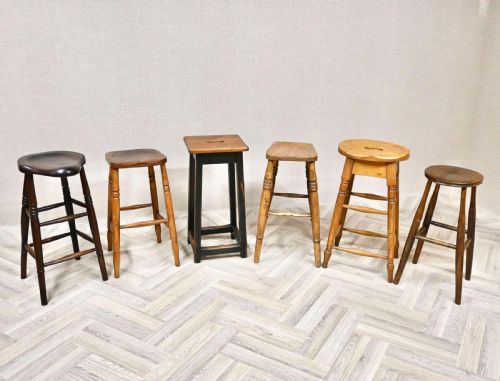
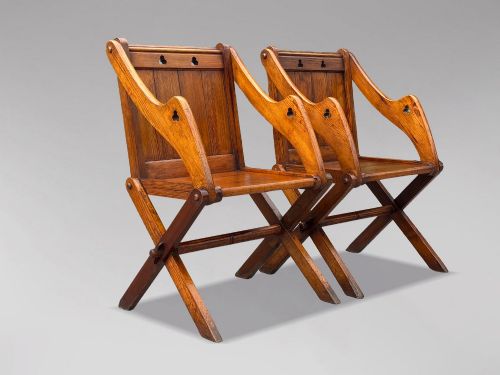
The most common forms on this page are benches and pews, often designed for halls, chapels, and kitchens, alongside occasional armchairs, rocking chairs, and stools.
How they were made
Construction relies primarily on pine and pitch pine, frequently combined with elm, beech, or iron reinforcement for structural strength. Surfaces are finished with wax, paint, or left in natural honey brown patinas.
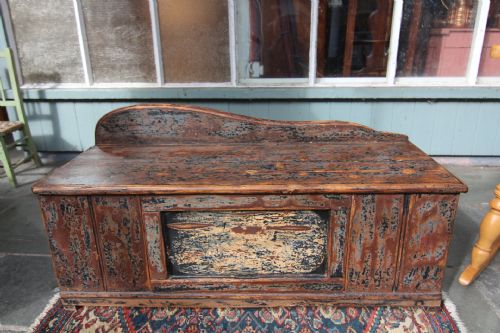
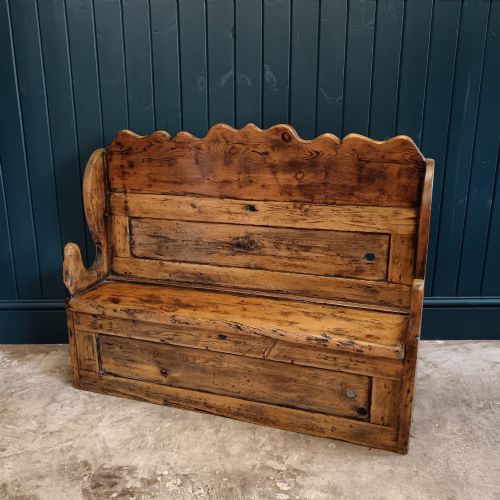
Makers utilised traditional joinery suited to utilitarian furniture, shaping timber into dug-out seats, spindle-backed settles, and paneled church pews. Painted finishes in ochre, green, and black appear alongside stripped and waxed surfaces.
One listed hall seat arrives complete with a novel twist in its design.
What varies in quality
Quality in these pieces rests on the integrity of the timber and the depth of the surface patina. Original painted finishes or rich waxed surfaces distinguish pieces with preserved character from later alterations.
Proportion and construction solidity define the better examples, whether in the turned legs of a clerk's stool or the architectural joinery of a church pew.
The Pine Wooden Seat Glossary
- Settle
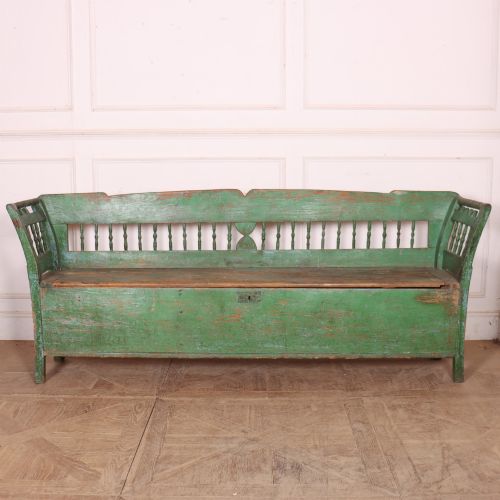
- A wooden bench with a high back, solid arms, and often a storage compartment beneath the seat. These were designed to block drafts in domestic halls.
- Pew
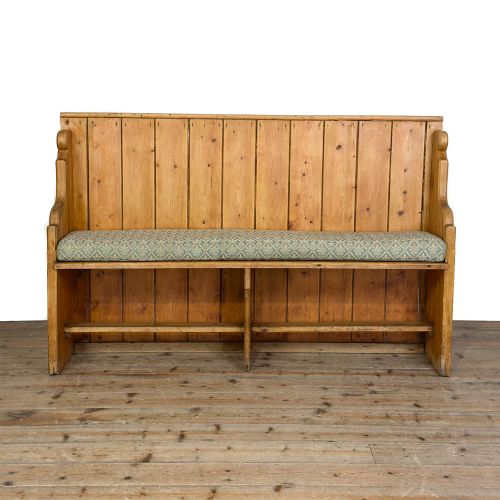
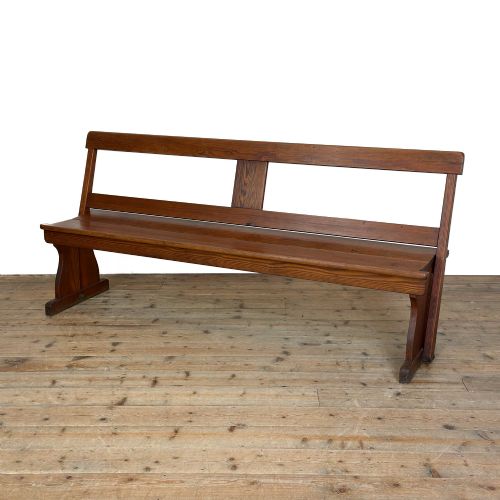
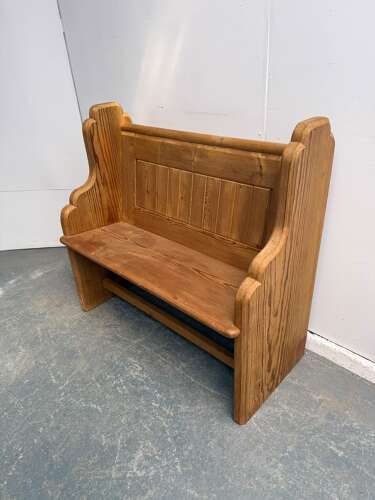
- A long wooden bench traditionally used for seating congregations in churches and chapels. They are frequently constructed from solid pine or pitch pine.
- Milking stool
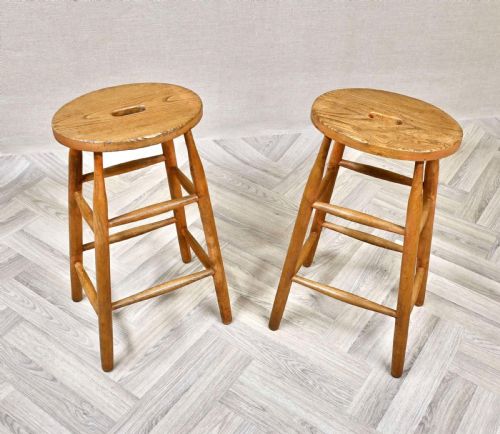
- A small, simple three-legged or four-legged seat used by agricultural workers. They often feature carved wooden tops and peg legs.
- Pitch pine
- A durable, resinous variety of pine timber often utilised in heavy-use institutional and domestic seating. It yields a distinct grain pattern.
- Patina
- The surface sheen and colour developed on wood through age, handling, and repeated waxing. This quality indicates long use.
Pine Wooden Seat: Frequently Asked Questions
What is a pine wooden seat used for today?
These pieces serve as practical hallway benches, kitchen dining seating, or focal points in living spaces.
Their robust construction suits everyday domestic use while adding rustic character to modern interiors.
How do I identify a church pew?
Church pews are characterised by their elongated length, solid ends, and often fixed backs designed for ecclesiastical spaces.
Many examples retain book ledges or numbered plaques from their original chapel settings.
Are painted finishes original?
Many eastern European and farmhouse pieces retain original coatings such as ochre, green, or black paint.
Close inspection reveals natural wear and age beneath the pigment, distinguishing early finishes from later decoration.
How do I care for a waxed pine bench?
Maintain waxed surfaces by applying a traditional beeswax polish sparingly and buffing with a soft cloth.
Avoid placing antique pine seating in direct sunlight or near heat sources to prevent timber splitting.