

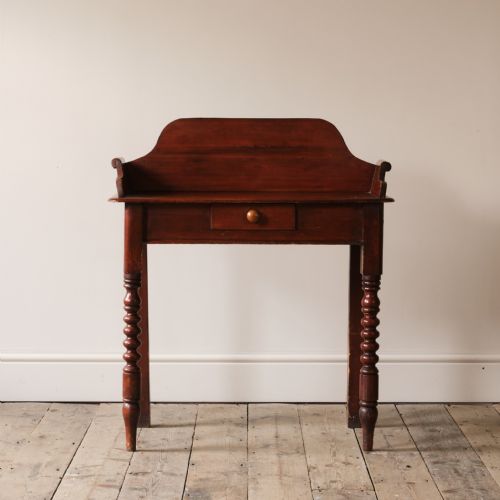


Pine Hallway Console Table
Pine hallway console table pieces provide practical narrow surface space in corridors, formed from scrubbed timber and painted finishes across multiple periods.
Pine Hallway Console Table
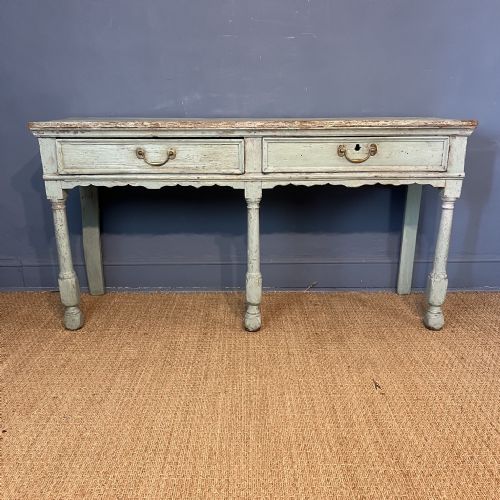
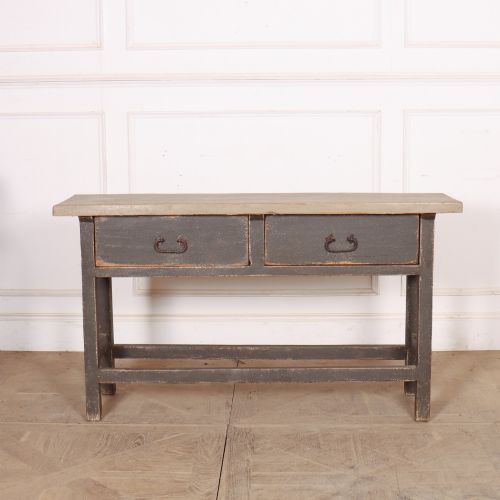
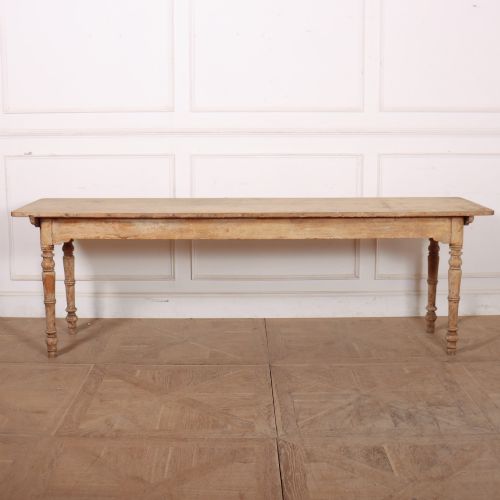
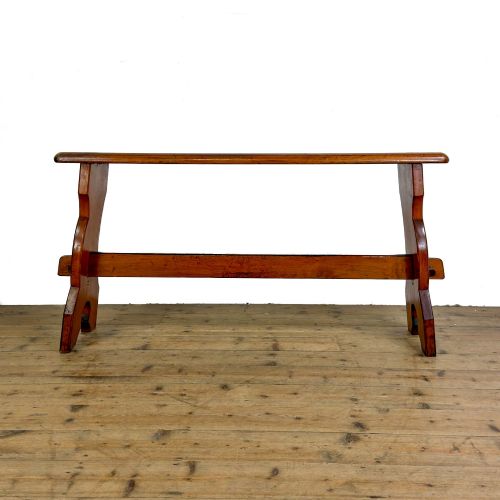
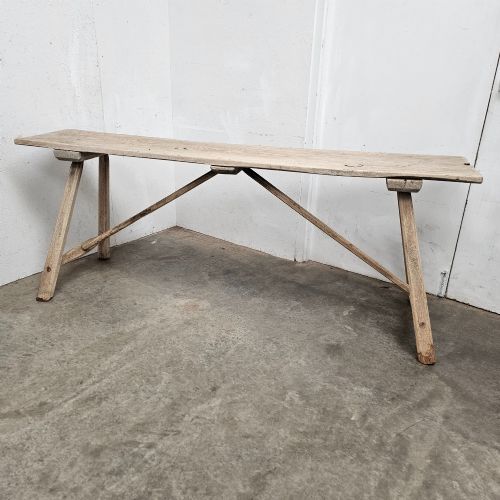
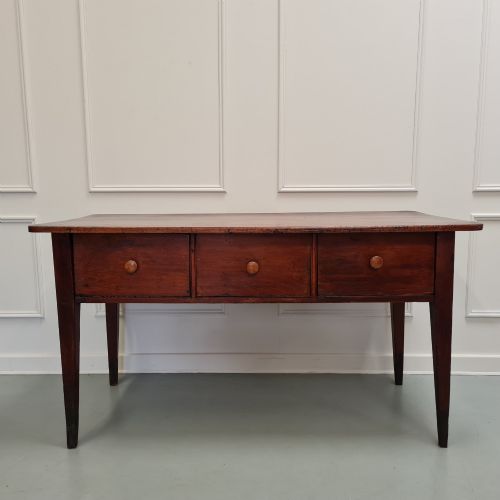
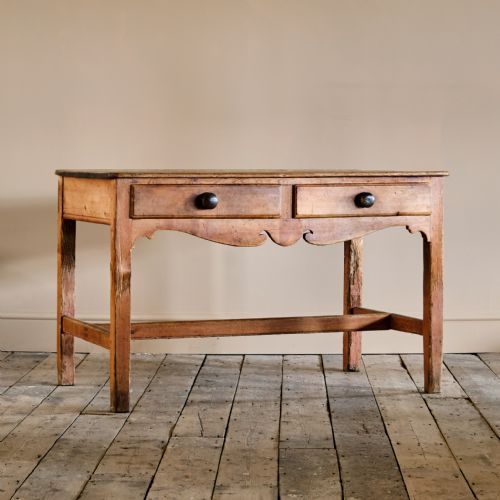
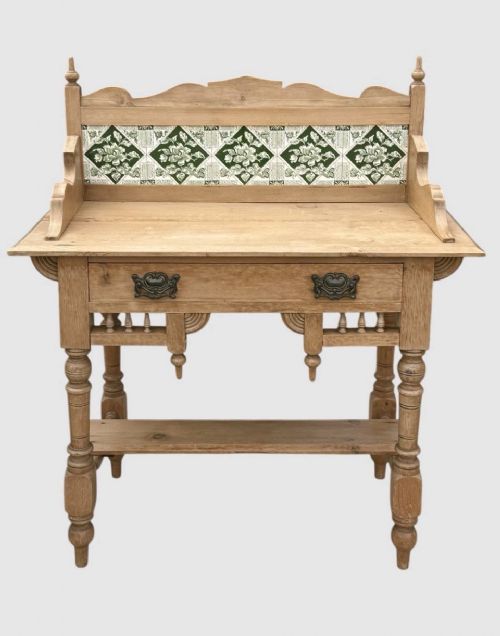
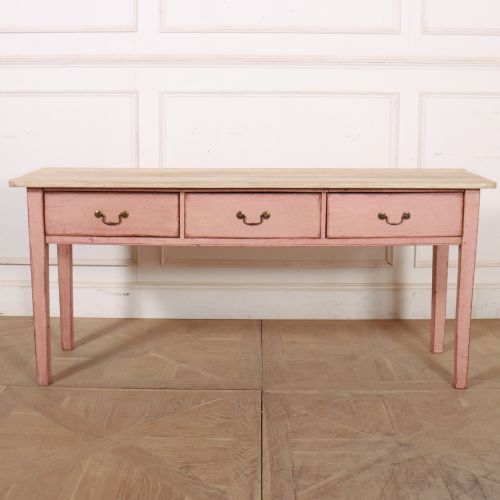
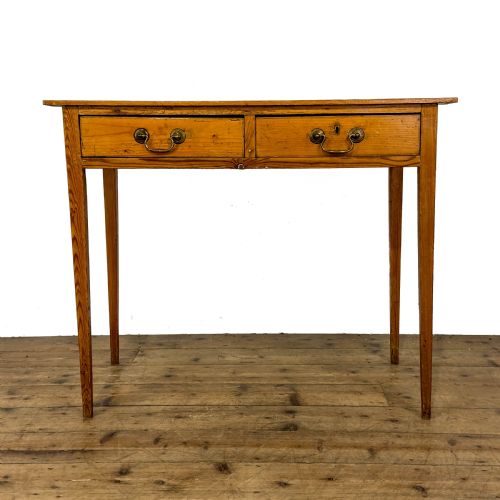
A pine hallway console table brings narrow wooden surfaces into narrow spaces, drawing on forms originally built as washstands, server tables, dairy tables and side tables. Buyers seeking a pine hallway console table will find pieces adapted from domestic utility furniture alongside purpose-built servers and console tables.
The selection ranges from eighteenth-century Queen Anne and Georgian designs to nineteenth-century Victorian pieces and early twentieth-century examples. Common formats include scrubbed tops, painted finishes, and occasional marble insertions.
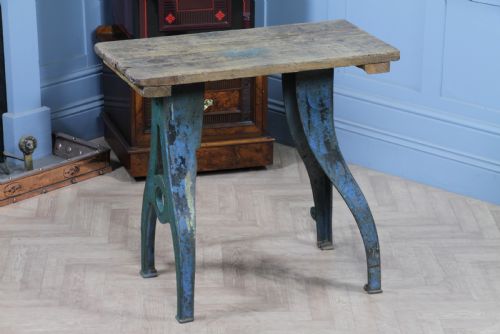
Origins span English, French, Italian, Swedish, and Dutch workshops, reflecting diverse regional utilitarian traditions. Forms vary from simple trestle structures to drawer-fitted dresser bases and cast iron machine-based upcycled tables.
Materials and construction methods
Construction relies heavily on pine and pitch pine, selected for structural utility and worked with hand tools in earlier centuries. Secondary materials such as brass, iron, fruitwood, and marble appear on specific regional and period pieces.
Surfaces show various treatments, from scrubbed bare wood to layered historic paint and scraped finishes. Joinery methods align with the respective periods, utilising traditional framing and drawer construction appropriate for domestic utility tables.
Listings feature pine, pitch pine, and painted wood across eighteenth, nineteenth, and early twentieth-century periods.
Distinctions in build and finish
Quality depends upon the integrity of the timber, the honesty of surface patination, and the balance of proportions. Tables retaining their original painted or scrubbed surfaces present a more cohesive character than those with later surface alterations.
Structural soundness in legs, joints, and drawer runners separates durable working furniture from fragile examples. The integration of materials like marble tops or cast iron bases reflects specific stylistic ambitions within regional traditions.
The Pine Hallway Console Table Glossary
- Scrubbed pine
- Timber cleaned repeatedly with water and stone, leaving a pale, matte surface texture. This finish is typical of utilitarian tables used in dairies and laundries.
- Dresser base
- The lower section of a storage unit featuring drawers and cupboards. These pieces provide substantial surface space and storage capacity in narrow layouts.
- Pitch pine
- A dense, resinous softwood variety used for robust furniture construction. It yields distinct grain patterns and high durability.
- Washstand
- A domestic table designed to hold a basin and pitcher for personal hygiene. These units frequently convert well into narrow hallway tables due to their compact depth.
Pine Hallway Console Table: Frequently Asked Questions
What is a pine hallway console table?
A pine hallway console table is a narrow wooden surface piece adapted or built for placement in corridors and entryways. These items derive from various historical utility forms including washstands and servers.
They utilise pine or pitch pine timbers, often featuring painted finishes or scrubbed top surfaces suited to narrow circulation spaces.
How were these tables originally used?
These tables served practical daily functions in domestic, agricultural, and commercial settings across different centuries. Many operated as washstands in bedrooms, serving tables in dining areas, or dairy tables in work spaces.
Over time, their narrow proportions made them suitable for transitional hallway placement where surface space is limited.
How do I care for a scrubbed pine surface?
Scrubbed pine surfaces require gentle cleaning with dry or minimally damp cloths to preserve the dry timber texture. Avoid harsh chemical cleaners that strip the natural grain and historic patina.
Regular dusting maintains the dry, matte appearance characteristic of utilitarian nineteenth-century domestic furniture.
How do I tell an 18th-century table from a Victorian one?
Eighteenth-century examples often exhibit construction traits and proportions associated with Queen Anne or Georgian cabinetmaking. Timber selection and joinery details reflect hand tool methods of that era.
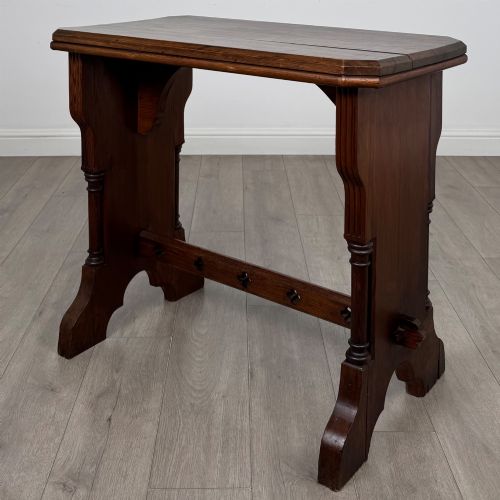
Victorian pieces introduce greater stylistic variety, including Gothic Revival influences and heavier pitch pine framing or industrial iron elements.