

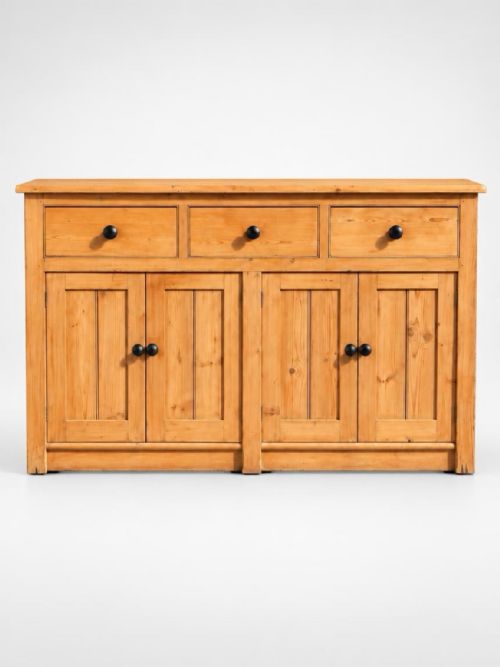
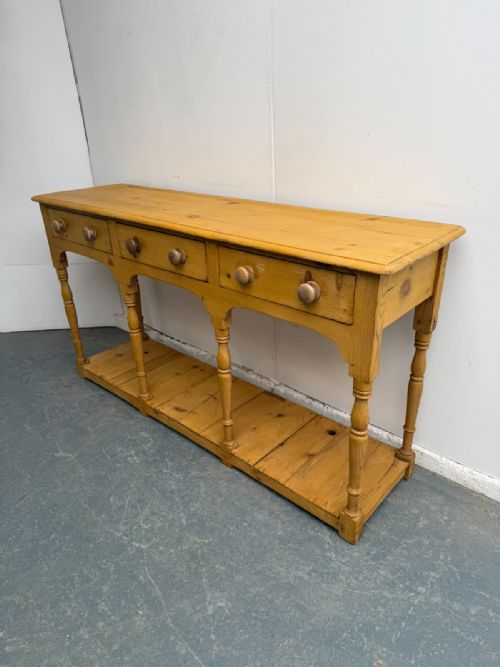
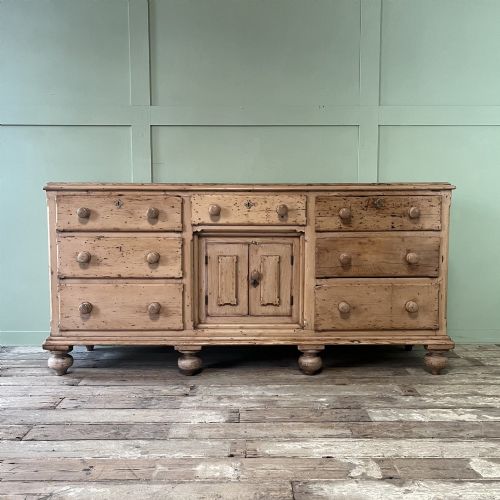
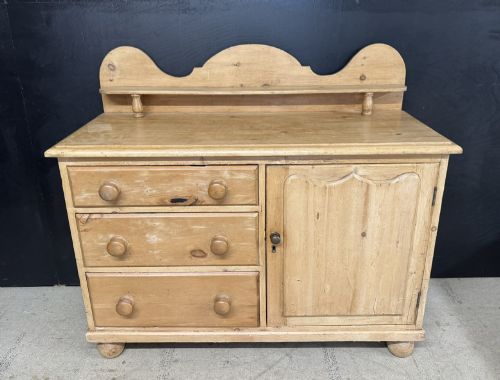
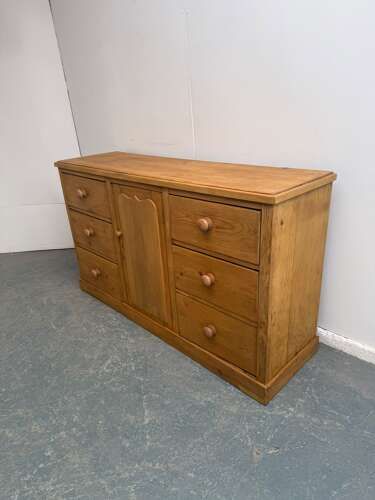

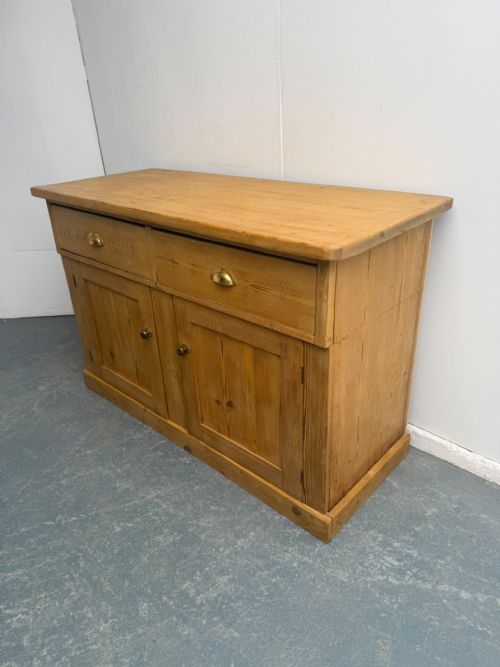
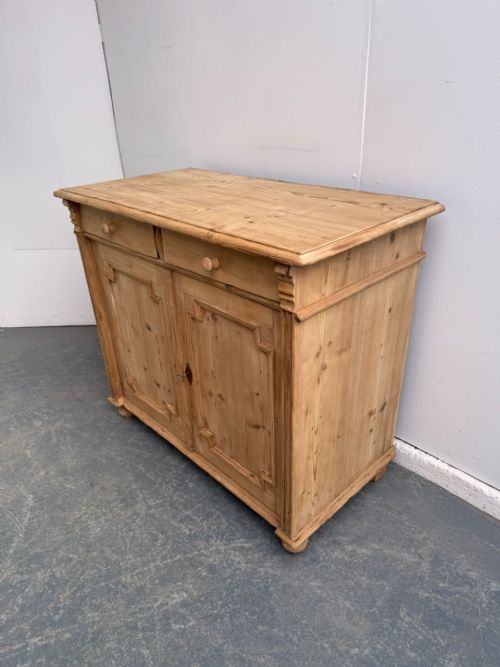
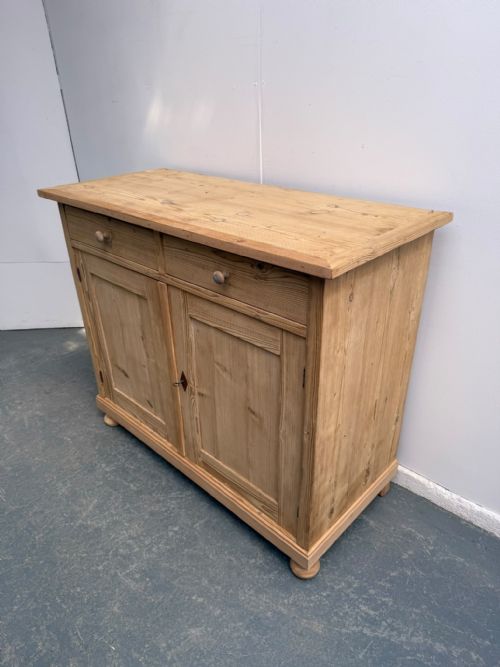
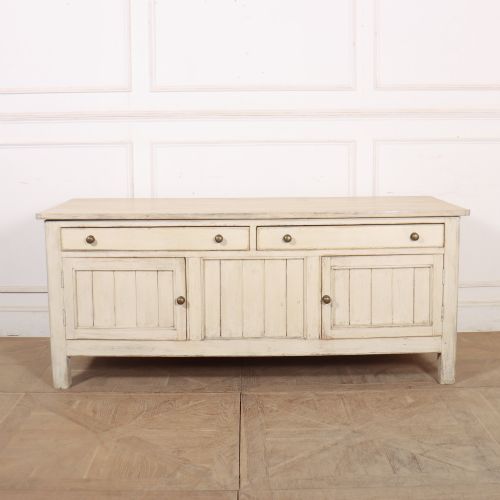


Pine Buffet Server
These pine buffet server pieces provide honest rural utility and warm domestic character for any home.
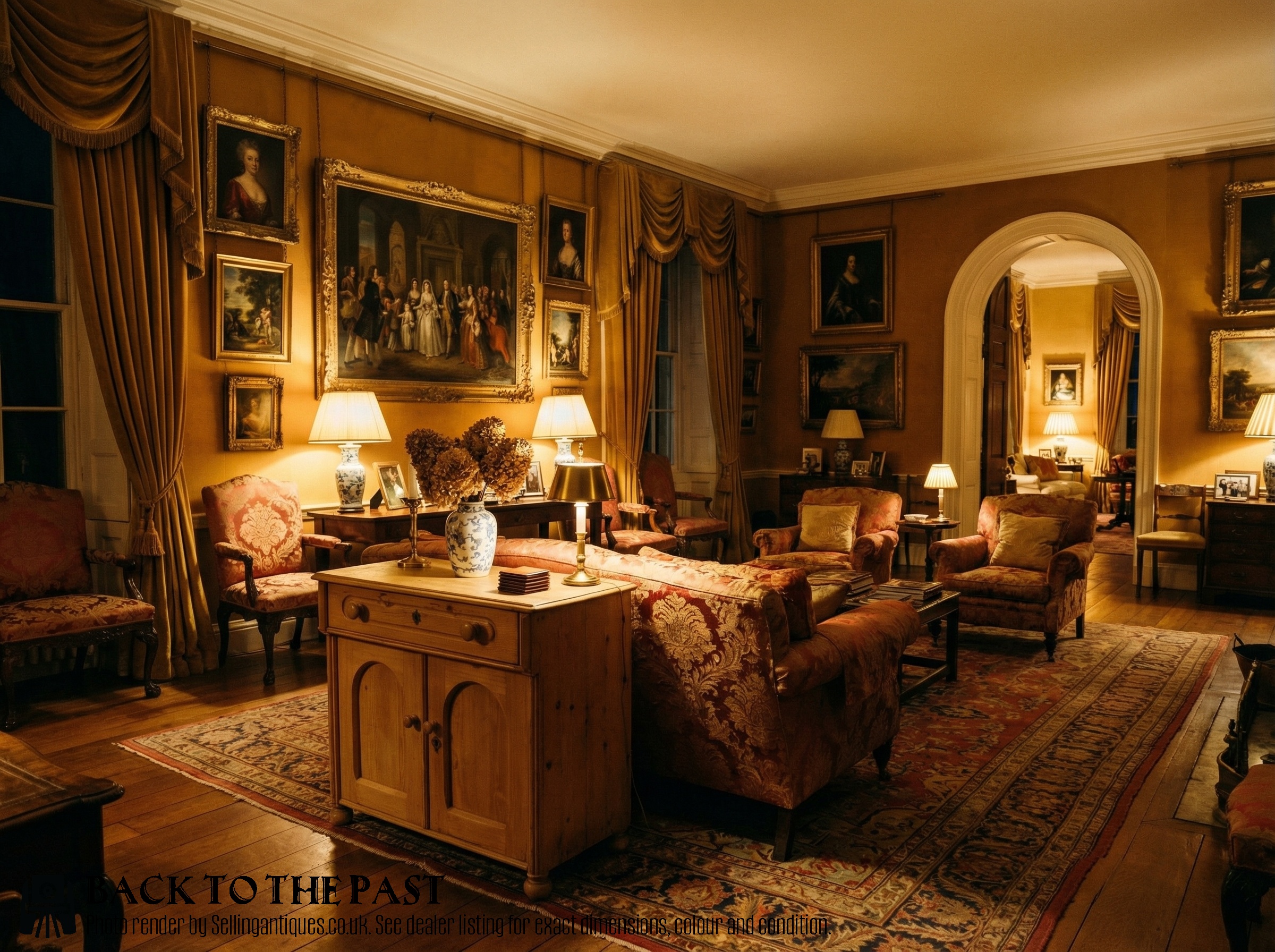
Pine Buffet Server
A pine buffet server serves as a practical surface and storage piece, often originating as a kitchen dresser base or sideboard from the eighteenth, nineteenth, or early twentieth centuries. These items embody the utilitarian traditions of English, Scottish, Swedish, and Hungarian country houses.
The version most commonly met on this page is the nineteenth century Victorian pine dresser base, frequently featuring two drawers and two doors, alongside open potboards or bread slides. Buyers select these items for daily kitchen use or dining room storage.
The selection ranges from waxed natural timber finishes to painted wood surfaces and folk art details, representing both Georgian proportions and later Victorian farmhouse forms.
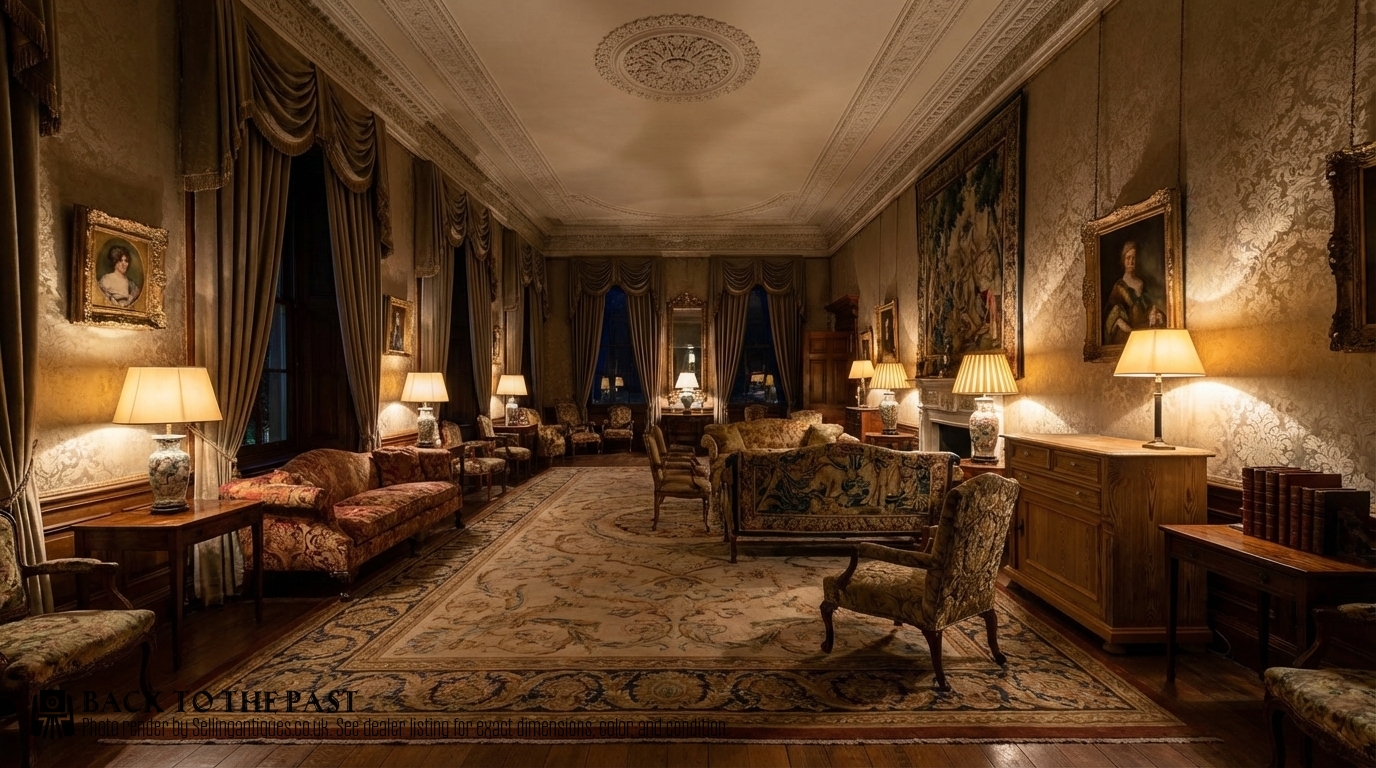
Materials and construction
Construction relies primarily on solid pine and pitch pine, shaped by regional carpenters to withstand heavy kitchen service. Secondary materials include brass handles, iron hardware, and ceramic elements.
Surface treatments vary from traditional wax finishes that highlight the grain of the wood to original paint, painted wood, and scumbled finishes.
Pine Buffet Server Retail Price Guide 2026
Typical asking prices for pine buffet server among the pieces listed under this phrase on Sellingantiques today, from the lower quarter to the upper quarter. They describe what is for sale here now, not the wider market.
A genuine bread slide still smells faintly of ancient flour if you pull it out on a damp morning.
Quality and character
Quality rests upon the integrity of the original timber, the survival of early or original paint finishes, and the proportion of the piece. Pieces retaining their original potboards, bread slides, and hardware stand apart from altered examples.
Construction details such as hand-cut joints and substantial timber thickness distinguish finer vernacular craftsmanship from simpler utility items.
The Pine Buffet Server Glossary
- Dresser base
- The lower section of a traditional kitchen dresser, typically comprising drawers and cupboards beneath a flat top surface.
- Potboard
- An open lower shelf built into a dresser base, historically used for storing heavy pots and culinary utensils.
- Bread slide
- A pull-out wooden shelf integrated into the cabinetry, originally utilised for cooling or preparing bread.
- Scumbled
- A decorative paint technique involving translucent layers dragged or textured over a base colour to imitate richer timber grains.
- Pitch pine
- A durable, resinous pine variety sourced largely from North America and utilised in nineteenth century joinery for its strength.
Pine Buffet Server: Frequently Asked Questions
How were pine buffet servers originally used?
These items functioned as workhorses in domestic kitchens and sculleries, providing a sturdy surface for food preparation alongside enclosed storage for crockery and provisions.
Lower shelves and drawers held heavy pots, linens, and everyday utensils close at hand for daily household tasks.
Are these pieces finished with wax or paint?
Examples appear in both traditional waxed pine and original historic paint finishes, including scumbled surfaces and folk art decoration.
Buyers choose between the warm golden tones of bare waxed wood and the distinctive character of untouched period paint.
How do I care for an antique pine surface?
Maintain waxed pine surfaces with a quality natural beeswax applied sparingly and buffed with a soft cloth to preserve the sheen.
Protect painted examples from excessive moisture and direct sunlight to safeguard the original pigment and finish.
How can I tell a Georgian piece from a Victorian one?
Georgian examples generally exhibit earlier proportions with restrained detailing, whereas Victorian pieces often display heavier construction and varied storage additions such as potboards.
Drawer construction methods and hardware styles also help indicate the approximate period of manufacture.