


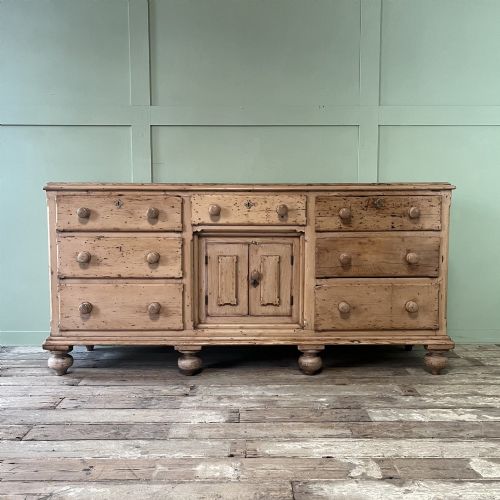
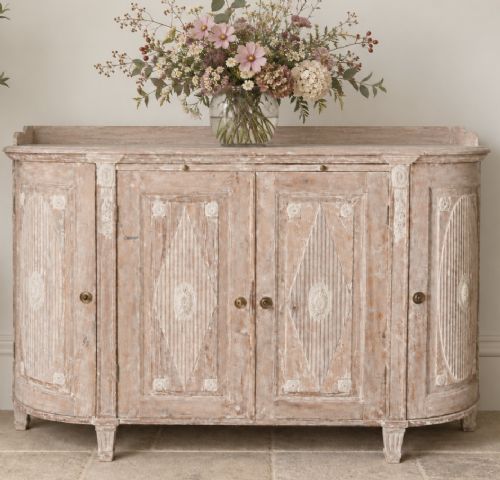
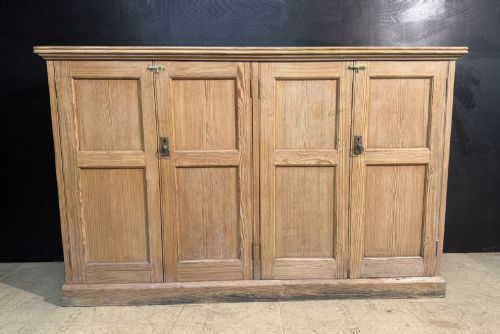
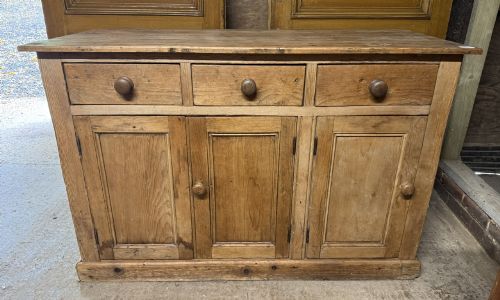
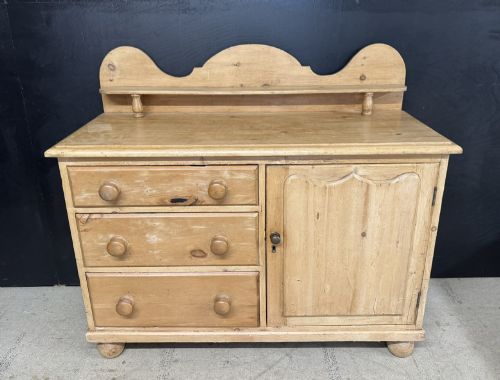
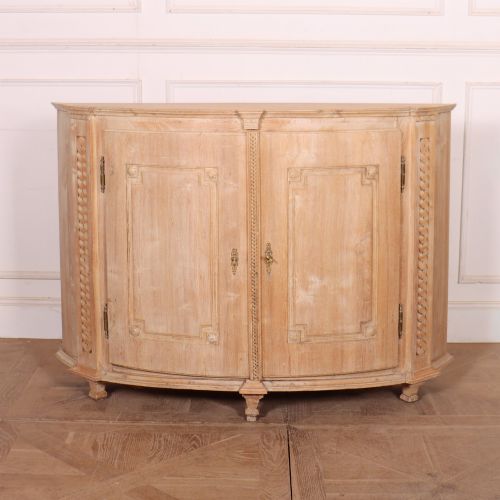
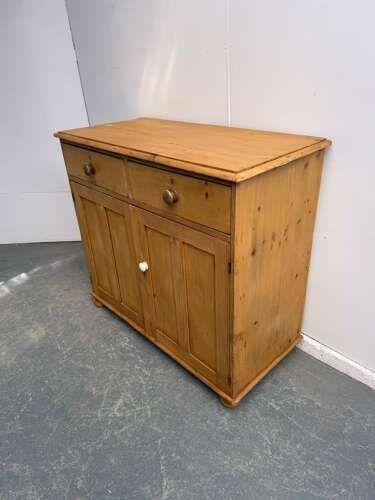
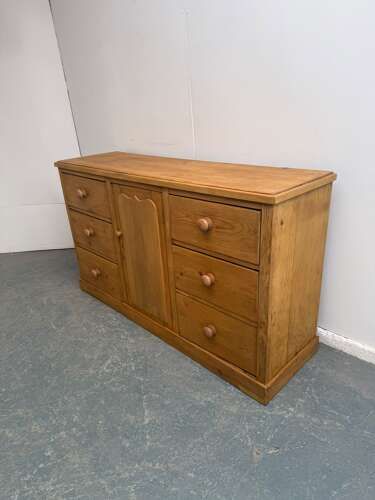

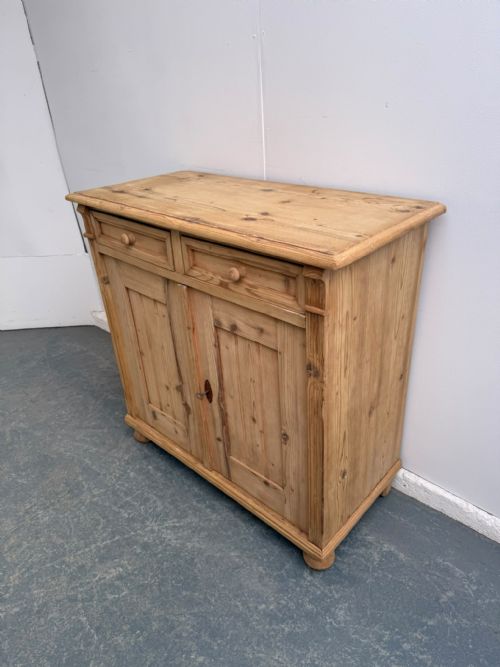
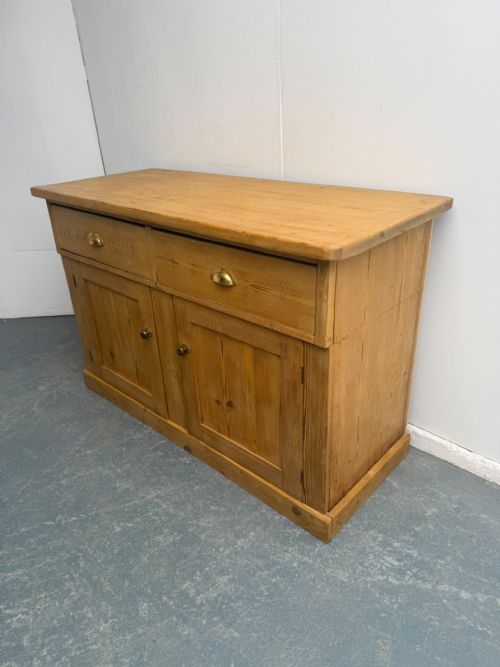
Pine Buffet Cupboard
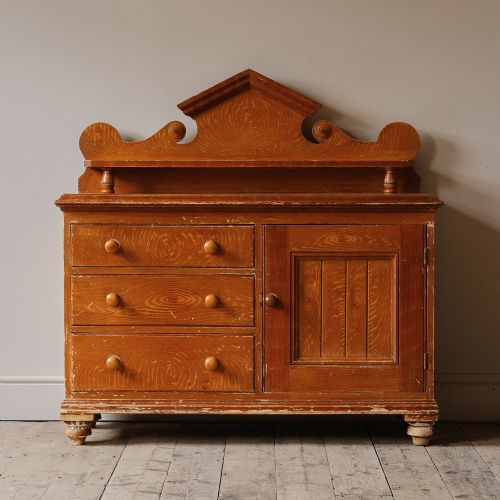
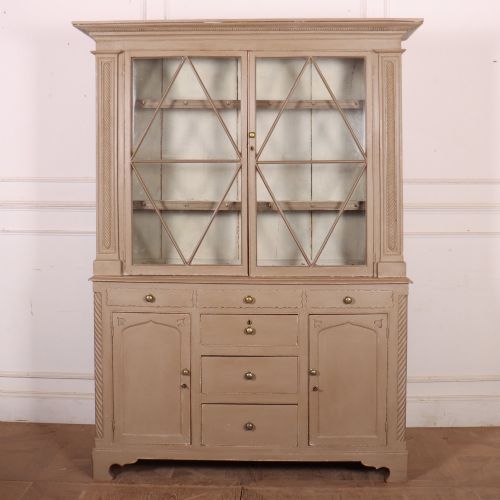
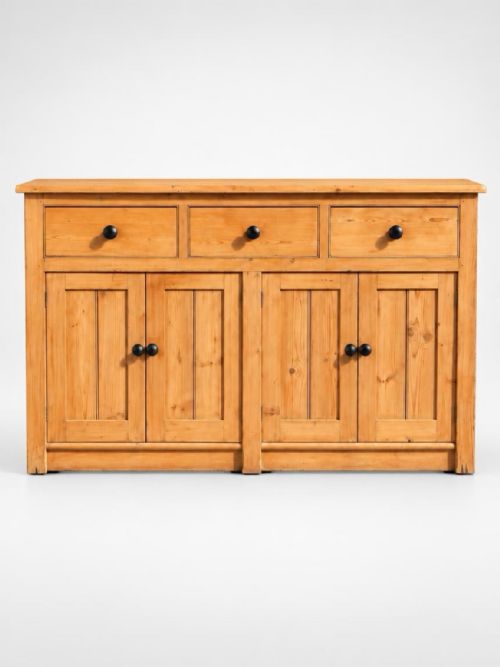
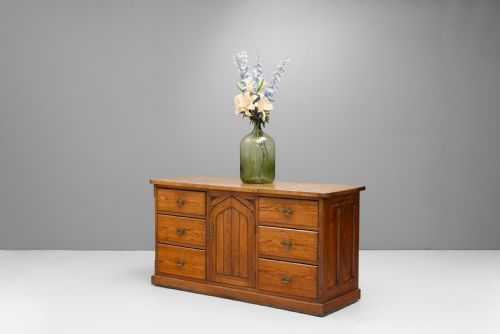
A pine buffet cupboard offers practical storage and country character, spanning Georgian, Victorian and nineteenth century periods in pine, paint and oak.
Pine Buffet Cupboard
A pine buffet cupboard provides robust utility for domestic spaces, functioning as a sideboard, kitchen dresser base, or storage cabinet. These pieces serve primarily to store tableware, dry goods, and household linens while offering a sturdy surface for preparation or display.
The selections available here lean heavily toward nineteenth-century Victorian and earlier Georgian examples, featuring regional English, Welsh, Scottish, and continental styles including Scandinavian and French country pieces. Buyers frequently encounter two-door and two-drawer dresser bases alongside tall cupboards and painted buffets.
Makers constructed these sturdy items from native and imported softwoods and hardwoods, finished either with waxed surfaces or original painted coatings. Each piece reflects the domestic requirements of country houses, dairies, and farmhouses.
How they were made
Cabinet makers built these pieces predominantly using solid pine, occasionally incorporating oak for structural elements or drawer linings, alongside brass and iron hardware such as hinges and drawer pulls.
Surface finishes vary between historic waxed treatments that highlight the grain and original scraped paint layers that preserve the vernacular aesthetic of Scandinavian, French, and English country workshops.
Pine Buffet Cupboard Retail Price Guide 2026
Typical asking prices for pine buffet cupboard among the pieces listed under this phrase on Sellingantiques today, from the lower quarter to the upper quarter. They describe what is for sale here now, not the wider market.
Some nineteenth-century kitchen bases secretly hoard decades of flour dust tucked firmly behind old drawer runners.
What varies in quality
Quality rests upon the integrity of the timber, the retention of original surface treatments like scraped paint or deep historic wax, and the preservation of original hardware including brass and iron pulls.
Construction methods and proportions distinguish standard utility items from finer regional examples, such as those with carved details, bread slides, tiled sections, or breakfront drawers.
The Pine Buffet Cupboard Glossary
- Dresser base
- A low sideboard or cabinet with cupboards and drawers, historically used for food preparation and storage in the kitchen. It forms the lower section of a traditional kitchen dresser.
- Bread slide
- A pull-out wooden shelf integrated into the cabinetry, historically used for cooling loaves of bread or preparing dough. This feature adds considerable utility and interest to period kitchen furniture.
- Pot board
- An open lower shelf built into a dresser base designed for storing heavy pots, pans, and utilitarian kitchenware off the floor. It is a common characteristic of earlier English country furniture.
- Waxed finish
- A protective treatment applied to timber using natural waxes, rubbed by hand to produce a soft sheen and highlight the grain of the pine. This finish develops a rich patina over decades of handling.
- Scraped paint
- A conservation term for paintwork that has been carefully revealed by removing later overcoats to expose the original historic colour. This technique preserves the authentic early appearance of painted country furniture.
Pine Buffet Cupboard: Frequently Asked Questions
How were pine cupboards used historically?
These cupboards served as central working and storage furniture in domestic settings, holding heavy crockery, linens, dry goods, and utensils. Their sturdy top surfaces doubled as preparation areas.
In agricultural and dairy settings, specialised variants helped manage daily food production and storage before modern fitted kitchens existed.
How do I care for a waxed pine finish?
Maintain waxed pine surfaces by periodically applying a quality bees-wax or furniture wax, buffing it gently with a soft cloth to preserve the sheen and protect the timber. Avoid placing these pieces near direct heat sources or damp areas.
Regular light dusting keeps the grain clear without stripping the historic patina built up over generations.
Are these pieces original or painted later?
Many pieces retain their original historic paint, scraped finishes, or traditional wax, while others present surfaces that were stripped or repainted during their working lives. Examining the integration of the paint layers with the timber helps determine its age.
Some examples are offered ready to wax or paint, allowing owners to adapt the finish to modern interiors.