


Pierced Silver Bread Basket
A pierced silver bread basket brings unmistakable elegance to a table, offering intricate metalwork designed to cradle a loaf or fruit.
Pierced Silver Bread Basket
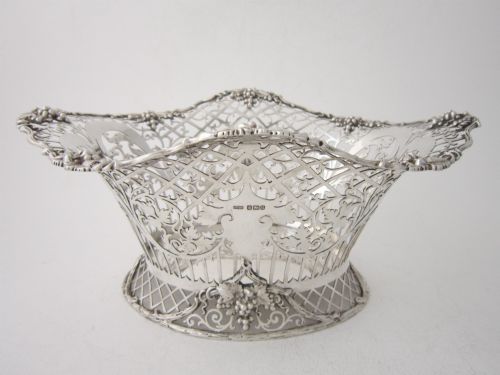
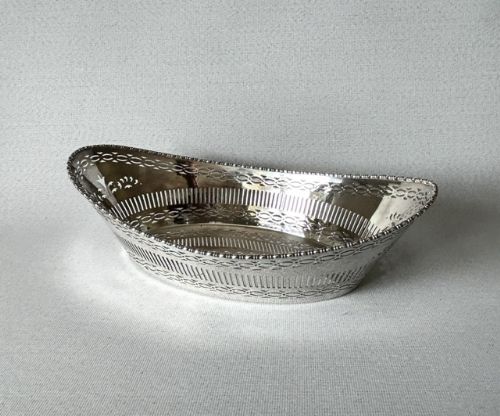
When searching for a pierced silver bread basket, buyers encounter an array of serving vessels originating from the eighteenth, nineteenth, and twentieth centuries. These pieces span formal Georgian designs, ornate Victorian and Edwardian examples, through to later twentieth-century forms.
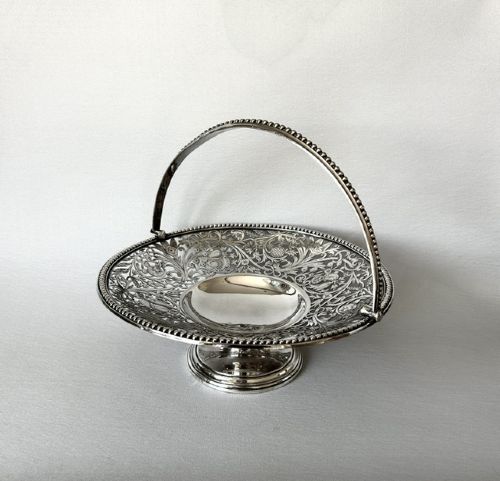
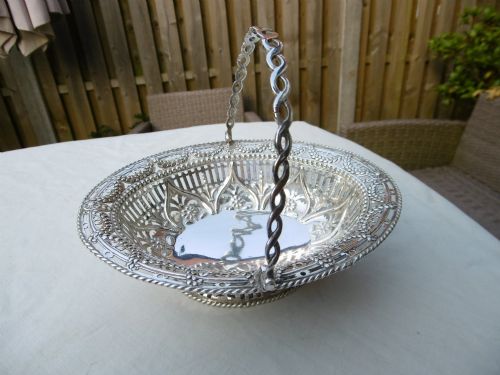
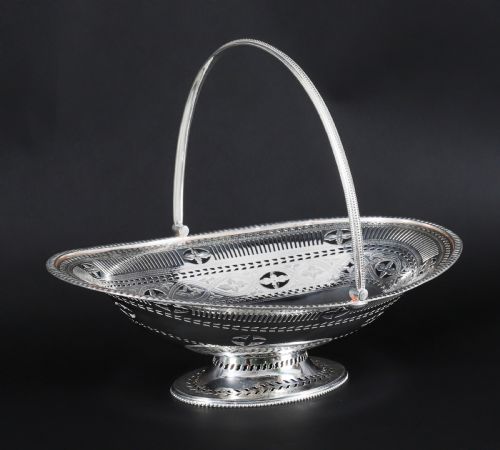
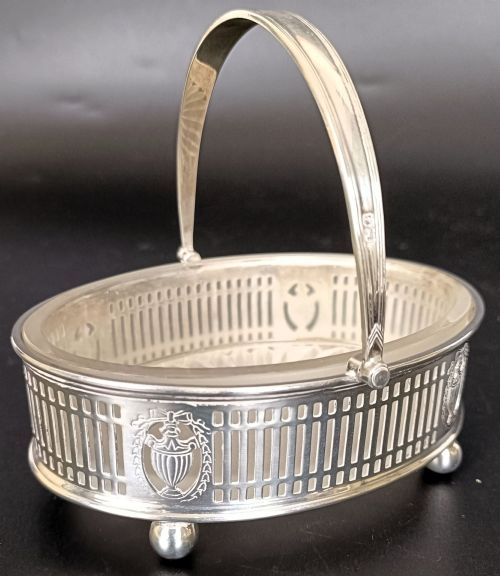
The objects take various shapes, predominantly oval or circular bowls and dishes featuring openwork patterns. Many incorporate swing handles or rest on small feet, serving function and display alike.
Makers produced these items in both solid sterling silver and silver-plated metals such as EPNS. Examples frequently emerge from prominent assay offices in London, Sheffield, and Chester, alongside continental workshops.
How they were made
Silversmiths constructed these vessels using sterling silver or base metals coated in a silver plate. Artisans shaped the metal bodies through hammering, casting, or rolling before applying detailed surface decoration.
Piercing and fretwork required meticulous hand-sawing or punching to create intricate geometric, floral, or neoclassical patterns. Repoussé work and embossing often complemented the pierced sections, adding raised relief details to the rims and bowls.
Even bread required proper architecture once.
What varies in quality
Quality rests heavily on the crispness and complexity of the pierced work. Piercing executed entirely by hand demonstrates superior craftsmanship compared to simpler mechanical punching.
The weight of the metal and the integrity of the construction distinguish finer pieces. Solid silver items by renowned makers display robust gauge metal and balanced proportions that hold up through generations of use.
Mappin & Webb·John Hunt·Samuel Herbert·William Comyns·Hammond, Creake And Co·William Hutton And Sons·James Dixon And Sons Ltd·Martin Hall·Woodside Sterling Co
The Pierced Silver Bread Basket Glossary
- Piercing
- The technique of cutting decorative openings through the metal sheet to form patterns. This openwork lightens the visual weight of the vessel.
- Swing handle
- A movable arched handle attached to the sides of the basket via pivots. It allows the vessel to be easily carried and laid flat when desired.
- EPNS
- Electroplated Nickel Silver. A base metal alloy coated with a layer of pure silver through an electrical process.
- Repoussé
- A metalworking technique where the artisan hammers the design from the reverse side to form raised relief on the front. It frequently frames pierced panels on Victorian and continental pieces.
- Assay office
- An official body that tests the purity of precious metals and stamps items with hallmarks. Towns such as London, Sheffield, and Chester operated prominent offices.
Pierced Silver Bread Basket: Frequently Asked Questions
How do I know if my basket is solid silver or plated?
Solid silver pieces typically bear clear hallmarks indicating the standard of the metal, such as a lion passant for British sterling, alongside maker marks and date letters. Silver-plated items generally feature marks denoting electroplate or maker initials without standard sterling guarantees.
Examining worn spots where the base metal shows through also reveals silver plating.
Which periods are most common for these baskets?
The majority of pieces encountered date from the Victorian and Edwardian eras, spanning the mid-nineteenth to the early twentieth century. These periods saw a surge in elaborate dining accessories and silver-plated wares.
Earlier Georgian examples and mid-century twentieth-century pieces also appear less frequently.
How do I care for antique silver baskets?
Gentle cleaning with a specialist silver cloth removes tarnish without harming the delicate pierced metalwork. Avoid abrasive pastes or harsh chemical dips that can strip away fine detail or antique patination.
Store pieces in dry environments away from direct sunlight to preserve the finish.