
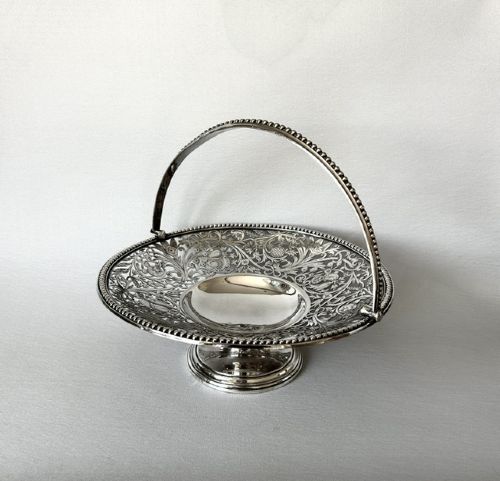
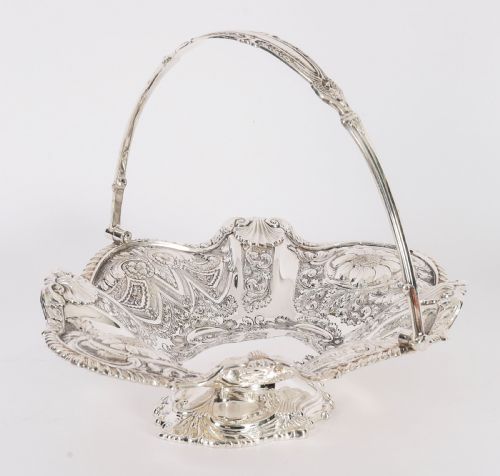
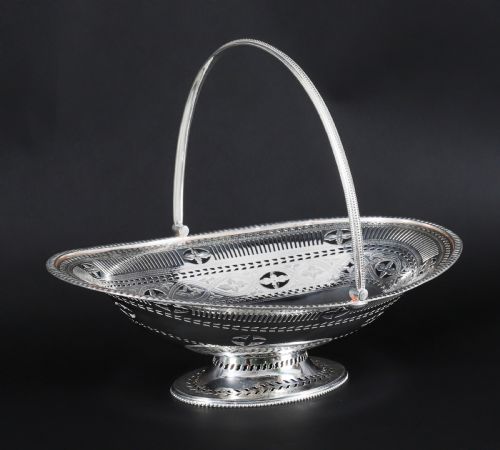
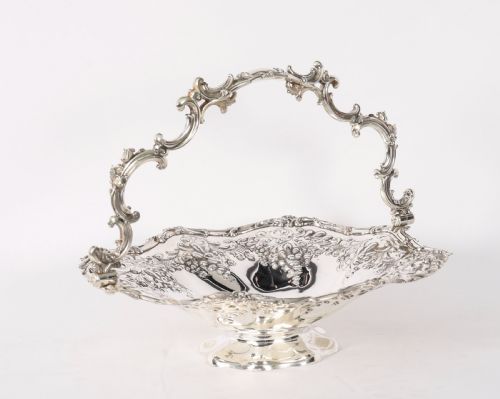




Victorian Silver Plated Basket
A victorian silver plated basket brings together mid-nineteenth-century metalwork and domestic table service, offering practical display for fruit, bread, and bonbons.
Victorian Silver Plated Basket
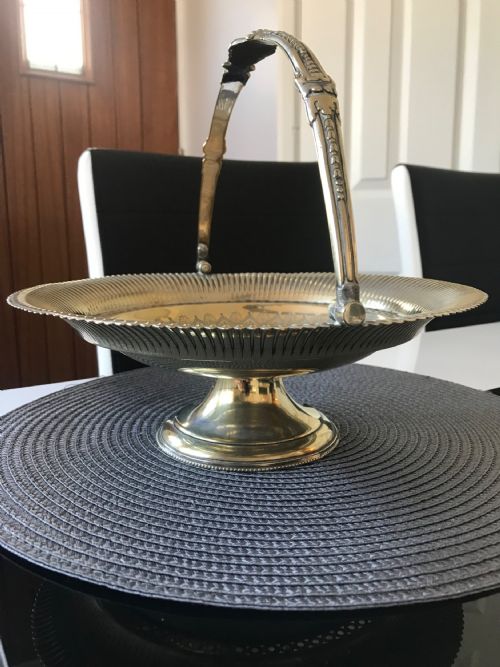
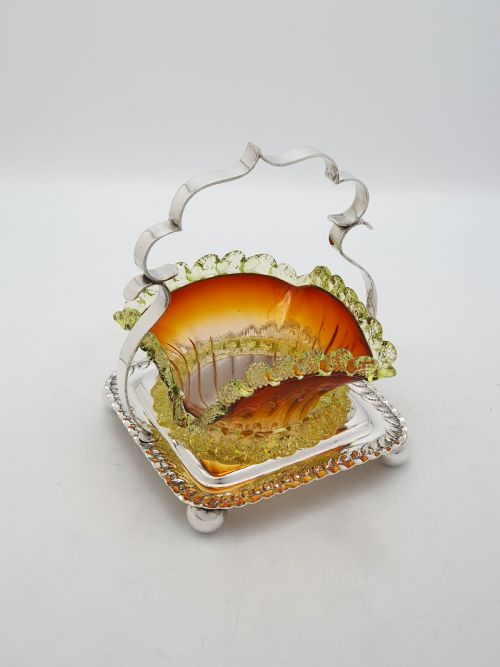
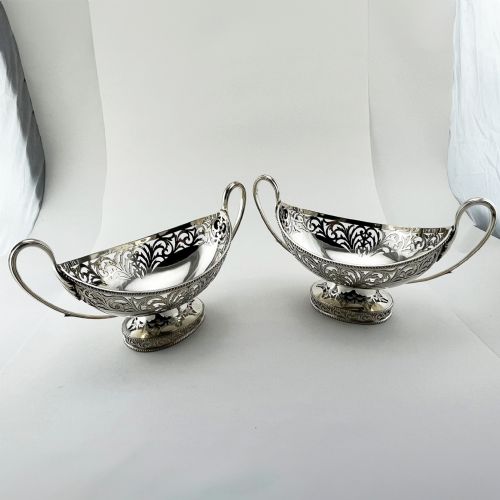
A victorian silver plated basket encompasses ornate serveware designed for fruit, bread, cake, and sugar, frequently paired with coloured glass inserts like cranberry, vaseline, and opaline glass. These domestic items span the nineteenth century into the Edwardian era, taking forms from swing-handled oval vessels to large centrepieces and small bonbon dishes.
The objects on this page reflect diverse stylistic revivals, including neoclassical, rococo, and aesthetic movement designs, alongside art nouveau pieces. Buyers encounter both all-metal pierced vessels and composite items featuring cut crystal or ceramic plaques.
How they were made
Makers utilised electroplated nickel silver or standard silver plate over base metals, combining casting, piercing, and embossing techniques to create structural frames and decorative borders. Many examples incorporate glass-blowing methods to produce coloured glass liners, such as vaseline, cranberry, and opaline glass.
Artisans applied floral engraving, cast scroll feet, and reeded handles to metal frameworks, securing glass components within pierced or woven wire baskets.
Listings feature items from the nineteenth century through the Edwardian period, uniting silver plate with cranberry, vaseline, and opaline glass.
What varies in quality
The distinction between standard domestic items and finer pieces rests on the depth of the casting, the crispness of pierced metalwork, and the weight of the silver plating. Heavier gauge metal and intricate hand-engraved detailing indicate superior workshop production.
The presence of original coloured glass liners, whether blue opaline, cranberry glass, or cut crystal, substantially elevates the integrity of the piece compared to later replacements.
George W. Scott & Sons Ltd·Roberts and Belk·Thomas Bradbury·Walker & Hall·Martin Hall·William Gallimore & Co·John Figg·Daniel & Arter·Elkington·James Dixon
The Victorian Silver Plated Basket Glossary
- Electroplated nickel silver
- A base metal alloy of copper, nickel, and zinc coated with a thin layer of silver through an electrolytic process. This technique became widespread in the nineteenth century for producing durable domestic tableware.
- Swing handle
- A movable arched handle attached to the sides of a basket via pivots. This feature allows the handle to drop flat against the rim for easy serving and storage.
- Vaseline glass
- A transparent or translucent yellow-green glass containing uranium dioxide, which glows under ultraviolet light. It appears frequently in late nineteenth-century decorative bowls and bonbon dishes.
- Sweetmeat dish
- A small pedestal dish or basket intended for serving small confections, nuts, or dried fruits. These vessels often feature delicate glass liners and ornate metal stands.
- Pierced work
- A decorative technique involving the cutting or piercing of patterns through sheet metal. In nineteenth-century serveware, this created intricate lattice and floral motifs.
Victorian Silver Plated Basket: Frequently Asked Questions
How were silver plated baskets used?
These baskets served practical functions on dining tables and sideboards, holding fresh fruit, bread, cakes, or sugar during meals and formal gatherings.
Smaller versions functioned as bonbon or sweetmeat dishes, presenting small confections and preserves to guests.
What is the difference between fruit and bread baskets?
Fruit baskets frequently incorporate watertight glass liners or solid bases to contain juices and moisture, often accompanied by ornate pierced decoration.
Bread and cake baskets generally feature lighter open wirework or broad flat surfaces designed for dry baked goods and pastries.
How do you date a silver plated basket?
Stylistic indicators such as neoclassical swags, rococo scrolls, or art nouveau curves help place pieces within specific decades of the nineteenth and early twentieth centuries.
Maker marks, registry numbers, and the transition from early electroplating to later standard manufacturing methods provide further chronological markers.
How do you care for antique silver plate?
Gentle cleaning with a specialised silver cloth prevents the removal of the underlying plating while maintaining the polished finish of the metal.
Removable glass liners should be washed separately in warm soapy water to protect both the glass and the adjoining metal mount.