



Pierced Rim Plate
A pierced rim plate brings openwork metal or ceramic borders to a table, offering lighter display pieces.
Pierced Rim Plate
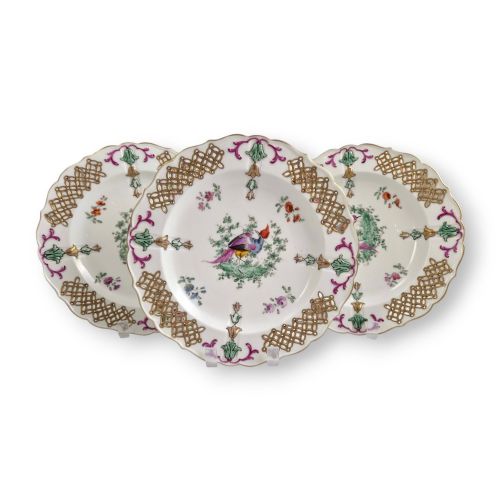
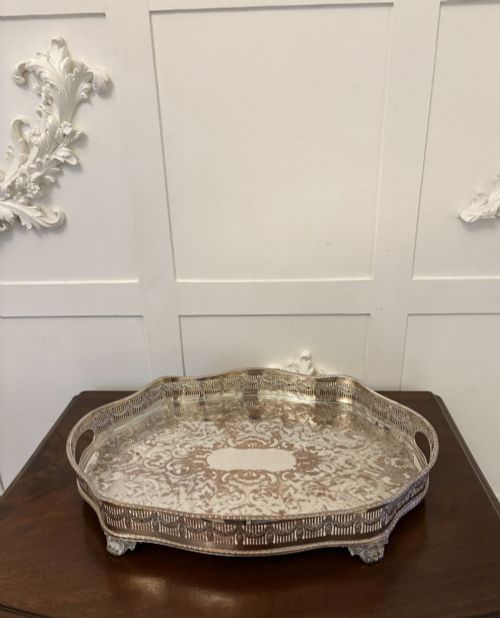
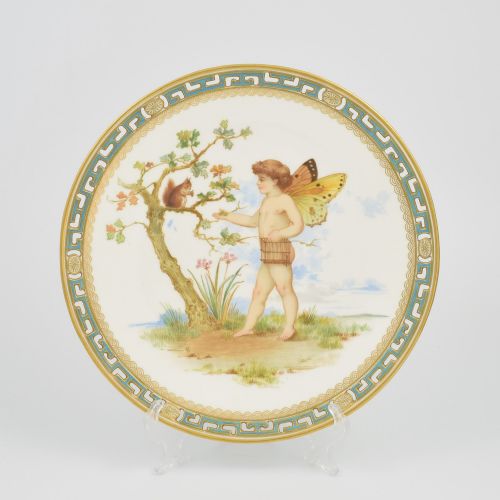
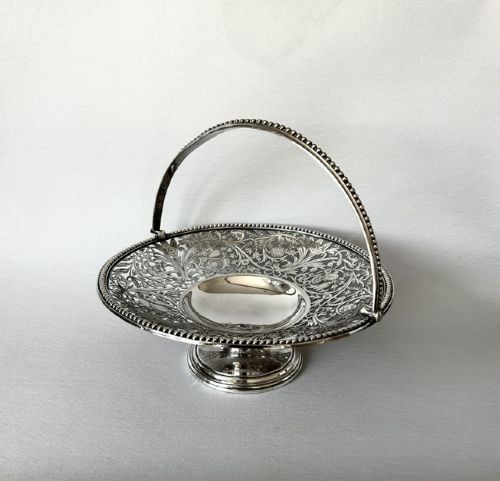
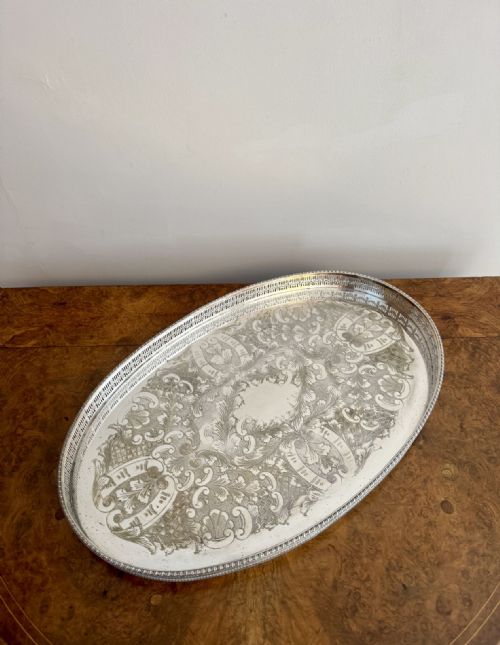
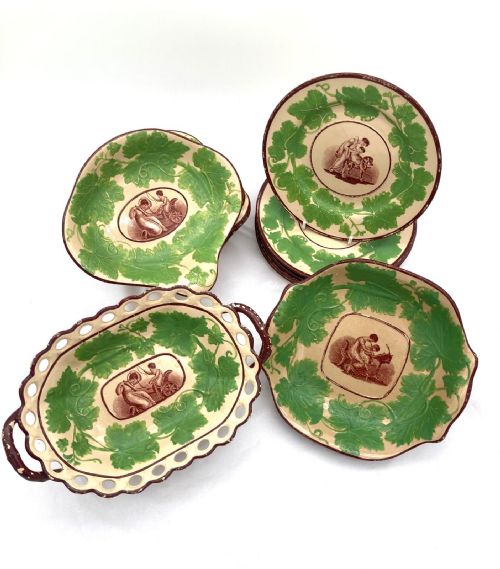
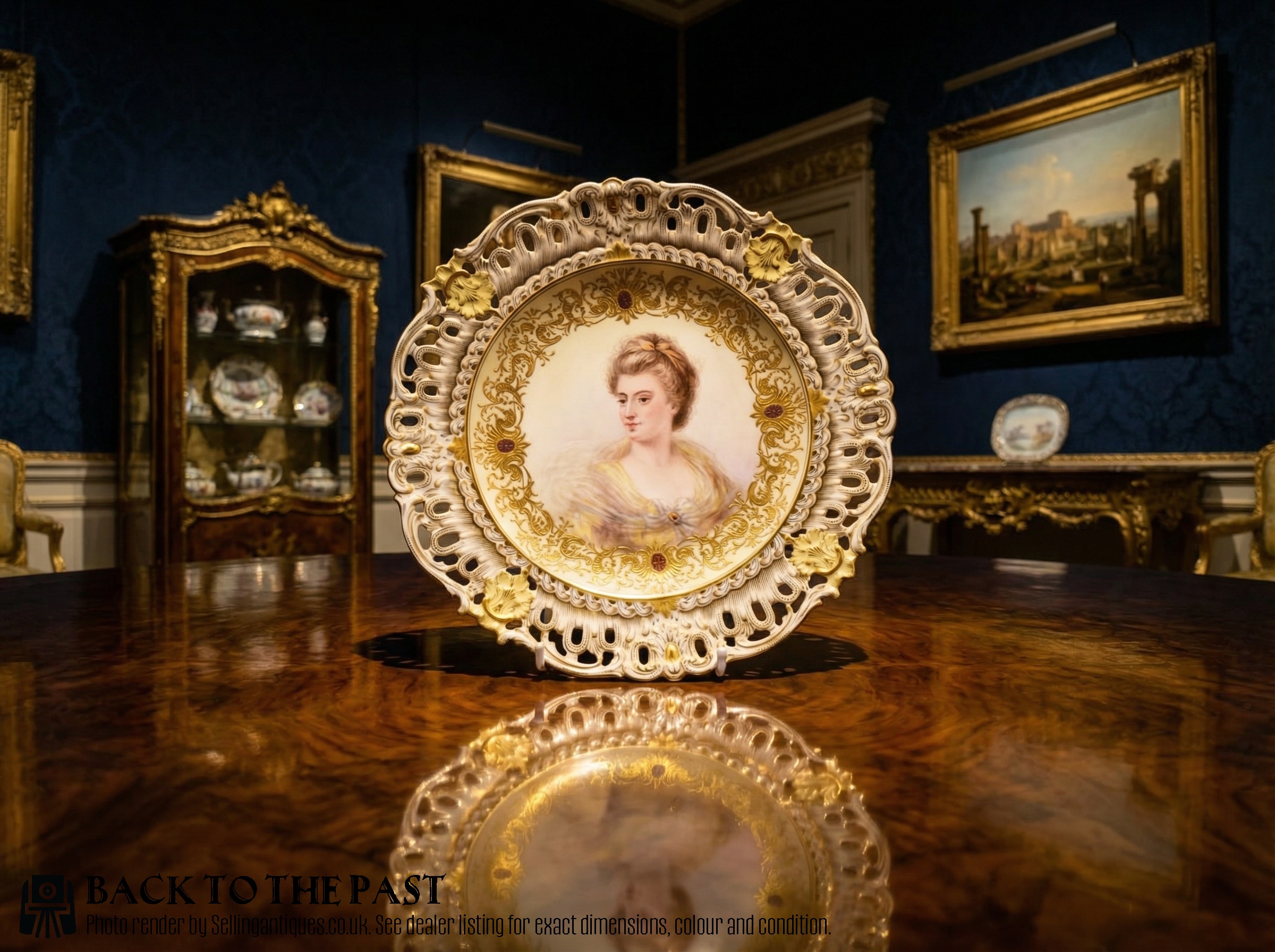
When you search for a pierced rim plate, you are looking at decorative plates, cabinet plates, trays, and serving pieces created across the nineteenth and twentieth centuries. These objects combine solid central surfaces with openwork borders, ranging from Victorian silver-plated fruit baskets to Minton aesthetic porcelain plates.
You are most likely to meet silver-plated serving trays and porcelain cabinet plates on this page, reflecting the main forms preserved from the Victorian and Edwardian eras. The selection moves from English electroplated nickel silver trays to continental porcelain reticulated plates.
The styles span Rococo revival scrolls, aesthetic movement motifs, and classical figures, showing how makers adapted open borders across centuries and materials.
What varies in quality
The standard of a pierced rim plate rests on the crispness of the openwork piercing and the depth of the embossing. Sharp, clean edges on metal scrollwork or porcelain reticulation require precise hand execution.
The balance between the solid centre and the pierced border dictates visual success. Superior examples maintain structural integrity alongside delicate open sections, whether executed in silver plate or painted porcelain.
Pierced Rim Plate Retail Price Guide 2026
Typical asking prices for pierced rim plate among the pieces listed under this phrase on Sellingantiques today, from the lower quarter to the upper quarter. They describe what is for sale here now, not the wider market.
A massive bronze centrepiece tips the scales at four kilograms, proving some tableware required serious muscle.
Minton·Meissen·Furstenberg·Royal Worcester·Coalport·J.H. Potter
The Pierced Rim Plate Glossary
- Pierced rim
- A border cut through with decorative apertures to create an openwork pattern. This technique lightens the visual weight of heavy metal trays and ceramic plates.
- Reticulated
- Having a network or net-like design, frequently applied to porcelain borders. It describes ceramic plates with pierced geometric or interlaced patterns.
- Cabinet plate
- A decorative ceramic plate intended for display rather than dining use. These pieces often feature hand-painted scenes by named artists.
- Electroplated nickel silver
- A base metal alloy coated with a layer of pure silver using an electrical process. This method became widespread for silver-plated trays and dishes.
- Basketweave
- A moulded ceramic texture imitating woven strips of osier or cane. It appears on Victorian earthenware and porcelain serving pieces.
Pierced Rim Plate: Frequently Asked Questions
What is a pierced rim plate used for?
These pieces served as serving trays, fruit baskets, or cabinet plates for display in nineteenth-century dining rooms and drawing rooms. Metal versions carried drinks and desserts, while porcelain examples sat on walls or furniture.
Today, they function as decorative accents or serving vessels for special occasions, bringing period craftsmanship into modern interiors.
How do I care for silver-plated trays?
Silver plate requires gentle cleaning with non-abrasive polishes to preserve the underlying metal plating and engraved details. Avoid harsh chemical dips that strip the character from vintage surfaces.
Store metal pieces in dry environments to prevent tarnishing, and use padded mats if placing objects on top of them.
How do I distinguish porcelain from metal examples?
Porcelain pieces utilise ceramic bodies with glaze, enamel, and sometimes hand-painted cabinet art. They are rigid and sound high when tapped gently.
Metal examples rely on silver plate, bronze, or electroplated nickel silver over base cores, offering heavier weights and tactile embossed scrollwork.
What periods do these plates come from?
The listings span the eighteenth, nineteenth, and early twentieth centuries, encompassing Victorian, Edwardian, and interwar periods. You will encounter Georgian influences alongside art deco designs.
Dates range from eighteenth-century continental pieces through to nineteen-thirties serving trays.