

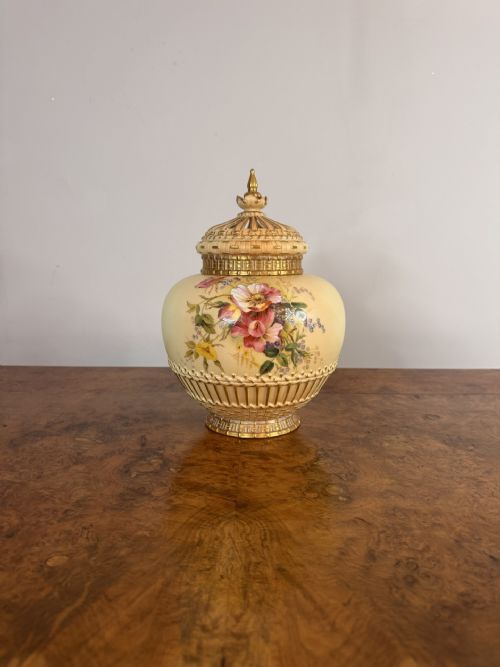


Pierced Lidded Vase
These pierced lidded vases are decorative vessels designed to hold fragrant pot pourri while adding ornamental elegance to a room.
Pierced Lidded Vase
When you search for pierced lidded vase, you encounter a variety of decorative vessels designed with perforated covers to release scent from dried materials held inside. The examples on this page span several distinct periods including the 18th century, Georgian era, Victorian period, Edwardian era, and mid-twentieth century.
Originating from British manufactories like Royal Worcester, Mason's, and Chamberlain Worcester, alongside continental makers from Germany and Hungary, these vessels showcase diverse artistic traditions. A buyer exploring this selection finds both painted floral designs and gilded accents across various historical periods.
Materials and methods
The makers of these vessels utilised fine ceramic bodies including porcelain, bone china, and ironstone, shaping them into urns, jars, and vases with fitted covers. Pierced patterns were meticulously cut into the lids or shoulders of the vessels before firing to allow the escape of fragrance.
Decoration relied heavily on hand painting, particularly botanical and fruit subjects executed by named artists, complemented by intricate gilding and gold leaf application. Enamel colours were fused to the ceramic surface through multiple kiln firings to achieve lasting brilliance.
Specialised techniques such as applied porcelain frills and moulded rococo scrollwork added sculptural texture to the bodies of the pieces, requiring advanced ceramic craftsmanship.
Pierced Lidded Vase Retail Price Guide 2026
Typical asking prices for pierced lidded vase among the pieces listed under this phrase on Sellingantiques today, from the lower quarter to the upper quarter. They describe what is for sale here now, not the wider market.
Certain Victorian makers added tiny porcelain flower petals by hand, ensuring that no two ruffled frills bloomed in precisely the same way.
Distinctions in quality
The finesse of the pierced work on the covers distinguishes standard production from superior examples, with clean, precise apertures showing greater technical skill. Hand-painted artistry by recognised ceramic painters adds considerable distinction compared to standard transfer-printed decoration.
The application of gilding and gold leaf reveals the tier of the piece, with burnished and detailed gold work indicating higher workshop standards. Furthermore, the crispness of moulded details such as rococo scrolls and applied ceramic frills demonstrates the quality of the original master moulds.
The reputation of the maker, from established porcelain works to specific studio artists, heavily influences the standing of an individual vase within its period.
Royal Worcester·Mason's·Chamberlain Worcester·Sitzendorf·Herend·Derby
The Pierced Lidded Vase Glossary
- Pot pourri
- A mixture of dried plant material and spices kept in a decorative jar to perfume a room. The perforated lids on these vases allow the scent to disperse gradually.
- Ironstone
- A heavy, durable type of ceramic developed in the nineteenth century as a robust alternative to porcelain. It takes enamel colours and gilding readily.
- Gilding
- The application of gold leaf or gold powder to the surface of ceramic or porcelain. This technique highlights moulded details and adds visual richness.
- Bone china
- A type of porcelain containing animal bone ash, producing a strong, milky-white body that transmits light. It permits thinner walls and refined vessel shapes.
- Frill
- A decorative ruffled porcelain edging applied by hand to the surface of a vase. This technique creates a distinct textured ornamentation popular in period ceramics.
Pierced Lidded Vase: Frequently Asked Questions
What is a pierced lidded vase used for?
These vessels were primarily created to hold and diffuse pot pourri within a domestic interior. The pierced lids allowed fragrant botanical mixtures to scent the surrounding air.
Over time, many of these pieces survived as purely decorative mantel or tabletop ornaments rather than functional fragrance containers.
How do I identify the period of a vase?
Dating relies heavily on maker marks, factory stamps, and stylistic cues inherent to specific eras. Georgian and eighteenth-century pieces often display hand-painted motifs and distinct paste compositions, while Victorian and Edwardian examples show differing moulding styles.
Comparing the decorative palette, such as blush ivory grounds or painted fruit scenes, helps place the object in its historical context.
Where were these ceramic vases made?
The pieces originate from prominent ceramic manufacturing centres in Britain, continental Europe, and Hungary. British factories such as Worcester and Mason's produced significant numbers of ironstone and porcelain vessels.
Other examples stem from continental European porcelain works including German and Hungarian manufactories.
How do I care for an antique porcelain vase?
Antique porcelain and ironstone require gentle handling to preserve delicate painted surfaces, applied frills, and gilding. Dusting with a soft, dry cloth is generally sufficient for routine maintenance.
Avoid exposing these fragile ceramics to moisture or harsh cleaning agents, which can damage historic enamels and gold leaf.