

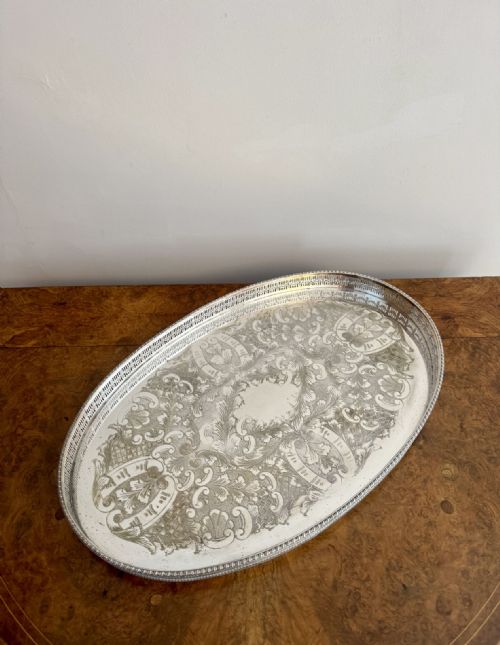


Pierced Gallery Drinks Tray
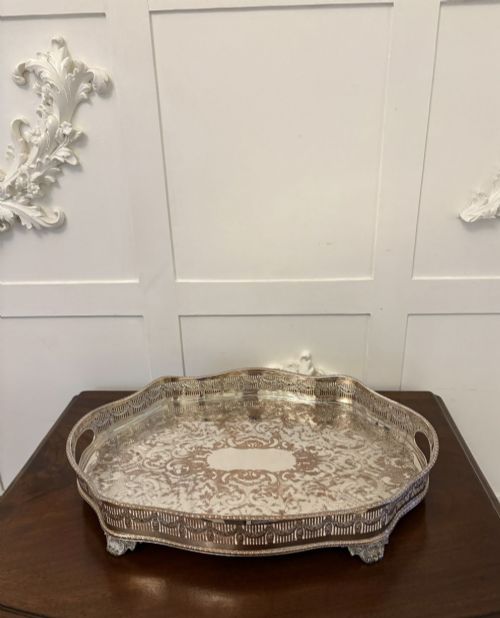
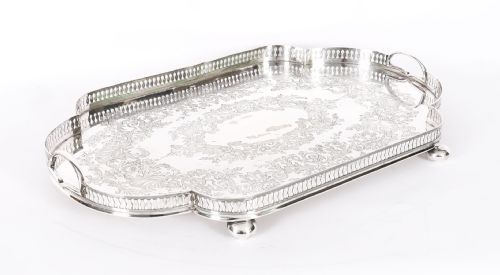
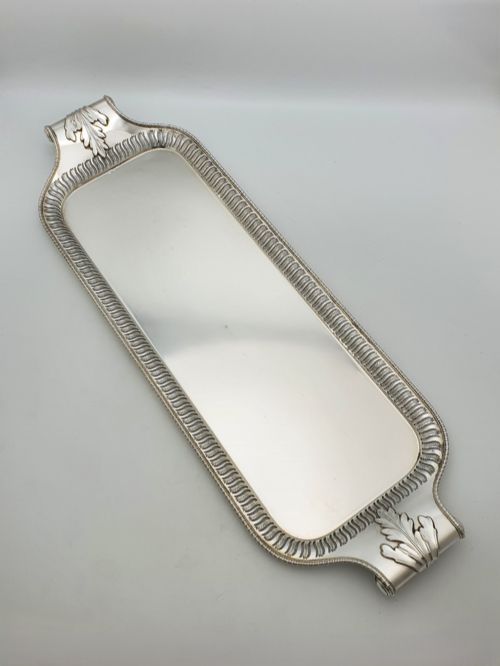
A pierced gallery drinks tray brings architectural metalwork to the table, combining a flat serving surface with a secure raised border.
Pierced Gallery Drinks Tray
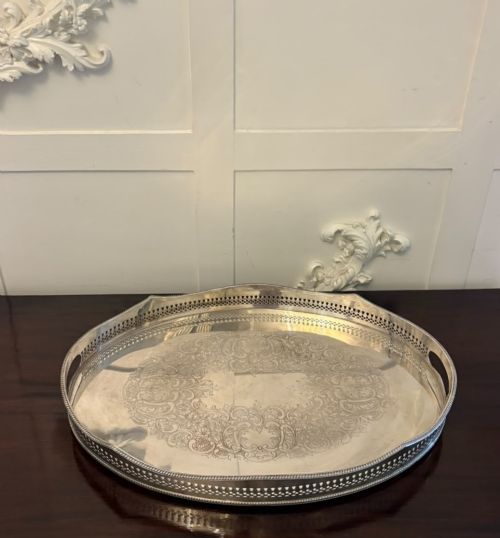
The form ranges from compact cocktail servers to monumental oval and circular tea trays with integrated handles. Most examples encountered on this page date from the Edwardian era and the late nineteenth century, reflecting the period's taste for elaborate domestic hospitality.
Materials and construction
Makers built these trays using a base metal such as copper, nickel silver, or oak, applying a layer of silver plating to achieve a lustrous finish. Sheffield plate and electroplated nickel silver predominate among the metal examples, while wooden versions utilise carved mahogany or oak.
The raised galleries involved piercing or reticulating the metal sheet by hand or machine before soldering it to the base. Engraved surface details often complement the openwork borders, showing floral scrolls and foliate motifs.
Listings span the nineteenth century through the interwar period, with Edwardian silver plate and oak forming the majority of the available material.
Assessing quality and execution
Quality rests upon the crispness of the piercing in the gallery and the weight of the metal used in the base. Finer specimens display deeply etched or engraved field patterns rather than shallow stamping, alongside substantial handles securely joined to the main body.
The durability of the silver plating and the integrity of the soldered joints dictate the longevity of the piece. Superior execution appears in clean structural lines and balanced proportions between the flat surface and the pierced border.
James Deakin·Mappin & Webb·Elkington·Lee & Wigfull·J.H. Potter
The Pierced Gallery Drinks Tray Glossary
- Gallery
- A raised ornamental border surrounding the edge of a tray, often pierced or reticulated. This element prevents items from sliding off during movement.
- Silver Plate
- A thin layer of silver bonded to a base metal such as copper or nickel silver. This technique provided the appearance of solid silver at a lower cost.
- EPNS
- Electroplated nickel silver, a common base material for metalware from the mid-nineteenth century onwards. It offers strength and stability beneath a silver coating.
- Reticulated
- Describes metalwork patterned with a network of open geometric or organic apertures. Makers achieved this effect through piercing and sawing.
- Sheffield Plate
- An early fusing method where a sheet of silver was melted onto a copper ingot before rolling. This process creates a durable dual-metal sheet.
Pierced Gallery Drinks Tray: Frequently Asked Questions
What is a pierced gallery drinks tray used for?
These trays served primarily for carrying tea sets, cocktails, or decanters between rooms while preventing glassware from sliding off the edge.
The raised border acted as a physical barrier during service in formal household settings.
How do I clean a silver plated tray?
Clean silver-plated surfaces gently using a specialised silver polish and a soft cloth to avoid wearing through the thin metal layer.
Avoid harsh abrasives and soaking, particularly on pieces with wooden bases or soldered gallery joints.
How can I tell an Edwardian tray from a Victorian one?
Victorian trays often feature heavier, more ornate embossing and substantial proportions, frequently dating from the late nineteenth century.
Edwardian examples tend toward lighter pierced borders and refined neoclassical motifs reflecting the tastes of the early twentieth century.
Are these trays suitable for daily use?
Many sturdy silver-plated and oak examples remain functional for serving drinks, provided they receive careful handling and prompt drying.
Heavily pierced galleries require gentle wiping to prevent moisture accumulation in the openwork gaps.