


Oval Tray Coffee Table
These oval tray coffee table pieces transform antique serving trays into practical low tables using folding or fixed stands.
Oval Tray Coffee Table
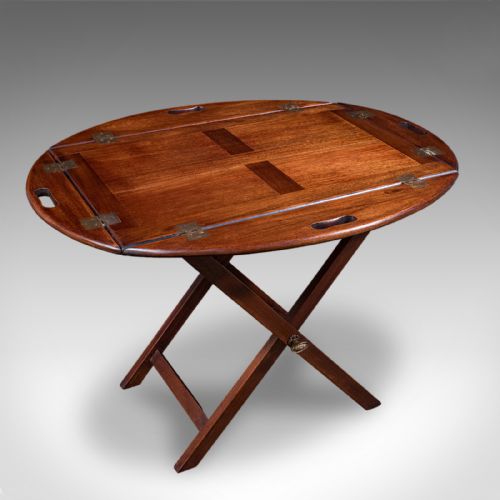
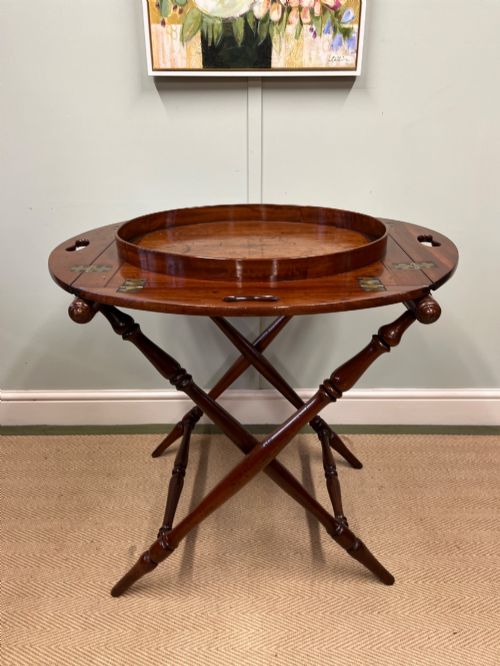
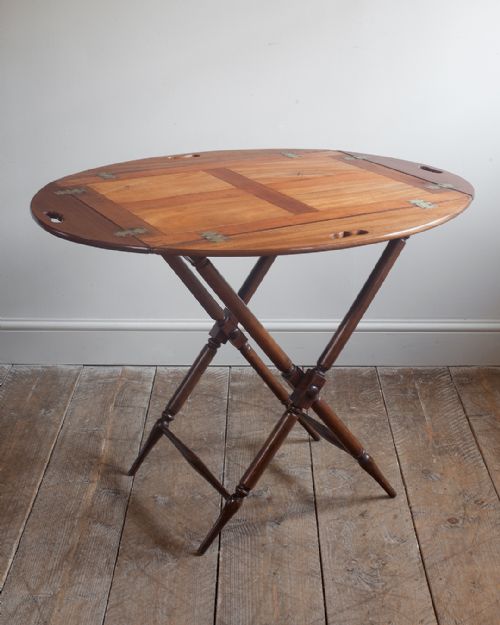
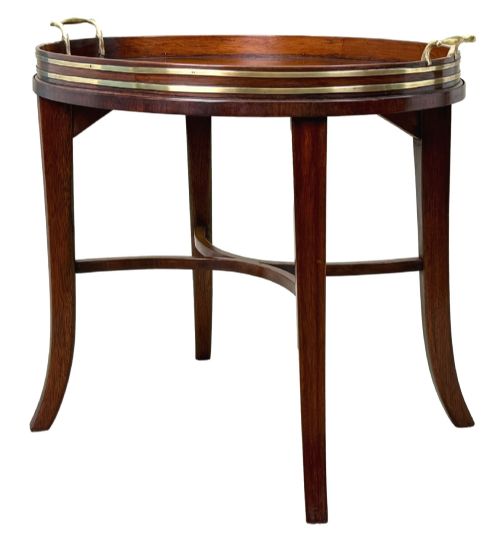
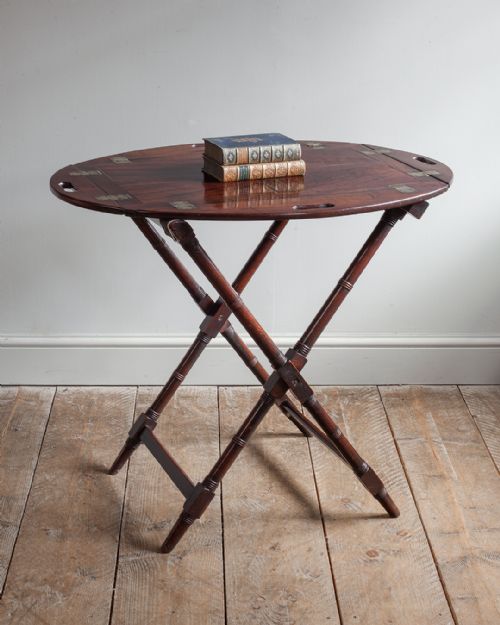
An oval tray coffee table combines a portable serving surface with a supportive base, drawing chiefly from 18th century, 19th century, Georgian, and Edwardian periods. Buyers encounter formats ranging from traditional butler's trays with drop flaps to galleried trays mounted upon timber stands.
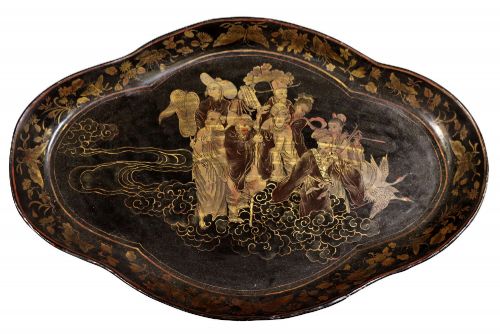
Makers adapted utilitarian dining service accessories into occasional tables, using mahogany, papier-mâché, and hardwood forms. The resulting furniture balances historical utility with domestic practicality for modern reception spaces.
How they were made
Craftsmen utilised solid timbers such as mahogany, satinwood, and macassar, frequently shaping raised galleries or rims directly from the board or applying steam-bent edging. Brass bound decoration and marquetry inlay provide structural reinforcement and visual detail along the perimeters.
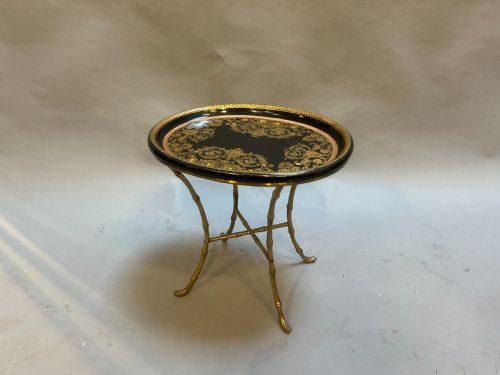
Papier-mâché examples required layered paper pulps compressed and dried before receiving lacquer, gold leaf, and Chinoiserie painting. Stands were constructed using folding mechanisms or turned legs designed to support the removable tray top securely.
Some butler's trays still bear faint ink stains from centuries-old breakfast service.
What varies in quality
The sophistication of the timber figure and the crispness of the hand-carved or inlaid detailing distinguish superior examples. Dense Cuban mahogany and finely preserved lacquer work reflect material choices that separate standard production from exceptional work.
Integration between the tray and its stand indicates construction standard. Stands built specifically to complement the proportions of the tray exhibit greater harmony than later or mismatched adaptations.
Henry Clay
The Oval Tray Coffee Table Glossary
- Butler's tray
- A portable serving tray featuring hinged drop flaps or carrying handles. These trays lift off their supporting stands for separate use.
- Galleried tray
- A serving tray fitted with a raised wooden or metal rim around the perimeter. This edge prevents items from sliding off during transport.
- Papier-mâché
- A composite material made from paper pulp mixed with glue and resin, pressed into moulds and dried. It forms a hard surface suitable for lacquer and paint.
- Chinoiserie
- European artistic style reflecting Chinese decorative motifs. Artisans applied these designs in lacquer and gold leaf on trays and furniture.
- Drop-flap
- A hinged section on the side of a tray that lowers or locks into a horizontal position. It extends the surface area when serving.
Oval Tray Coffee Table: Frequently Asked Questions
Are the trays removable from their stands?
Most historical butler's trays rest unattached on folding or rigid stands, allowing the tray to be lifted off independently. This design preserves the original function of carrying items between rooms.
Some later or adapted coffee tables fix the tray permanently to the base for stability during daily use. Checking the underside reveals whether the top sits loose or is screwed into the frame.
How do I care for a mahogany tray top?
Protect the polished timber surface from moisture and direct heat by using coasters and mats. Regular dusting with a dry cloth maintains the natural lustre of the wood.
Avoid chemical polishes that build up residue over time. Gentle waxing once or twice a year nourishes older mahogany without harming the finish.
What is the difference between Georgian and Edwardian trays?
Georgian trays typically feature dense mahogany construction, sometimes with brass bound edges or subtle inlay. They emphasise sturdy utility and classic proportions.
Edwardian interpretations often incorporate lighter woods like satinwood, marquetry decoration, or painted motifs. They reflect a more decorative approach to occasional furniture.
Can papier-mâché trays hold hot drinks?
Papier-mâché surfaces coated in traditional lacquer withstand moderate heat but remain vulnerable to boiling water and prolonged moisture. Using protective coasters prevents clouding on the decorative finish.
These pieces function best as display surfaces or for serving dry items. Careful placement preserves the delicate gold leaf and Chinoiserie artwork.