


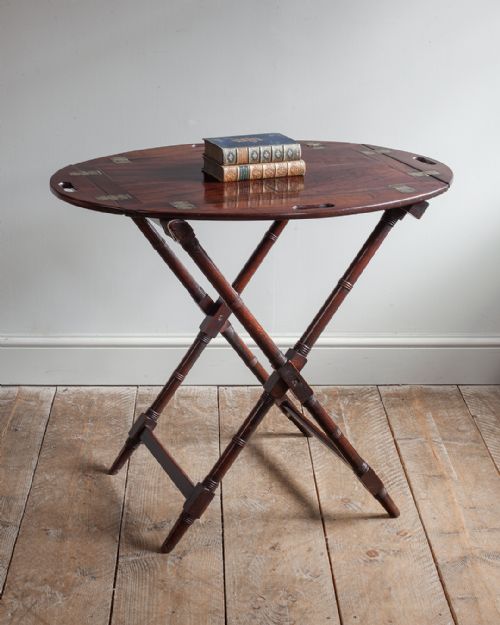
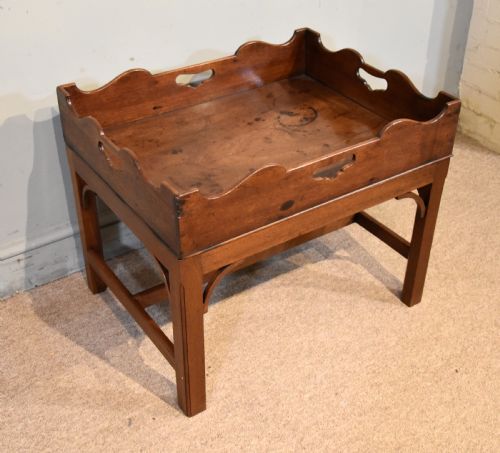
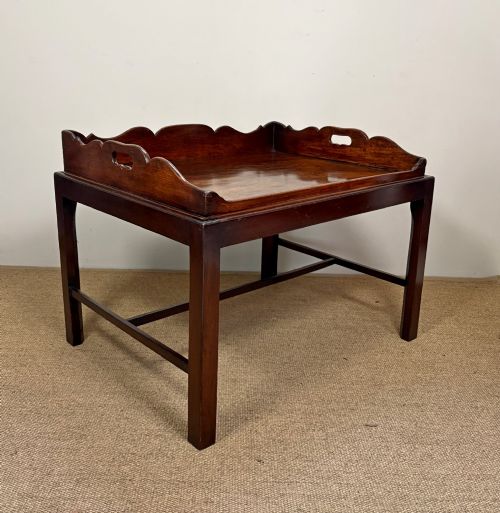
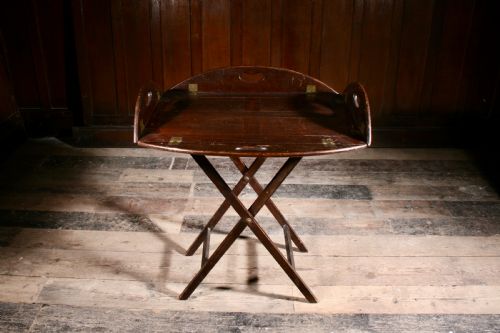


Butler Tray Coffee Table
A butler tray coffee table combines a portable serving surface with a sturdy stand to create a practical centrepiece.
Materials and construction
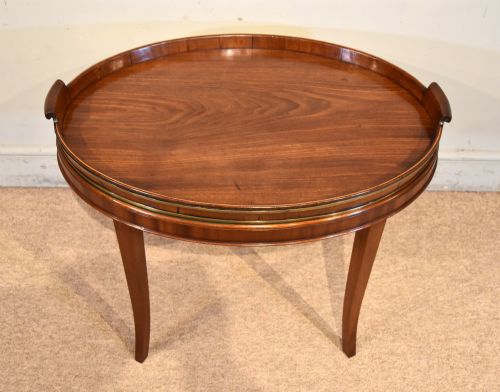
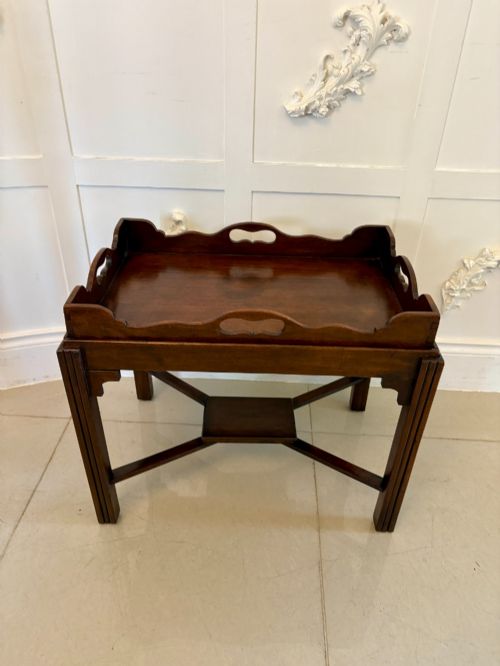
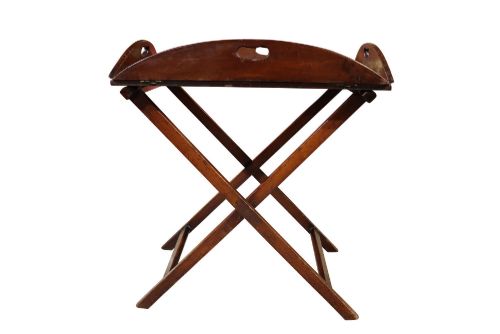
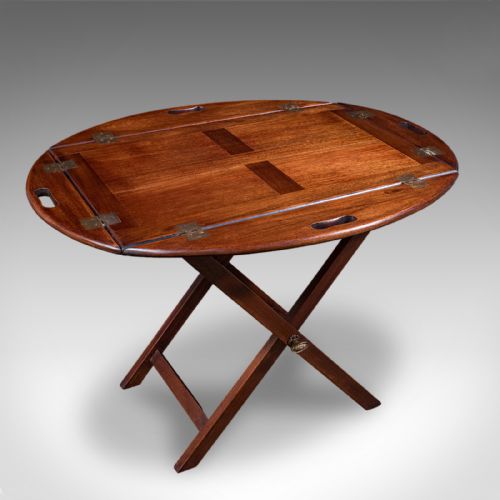
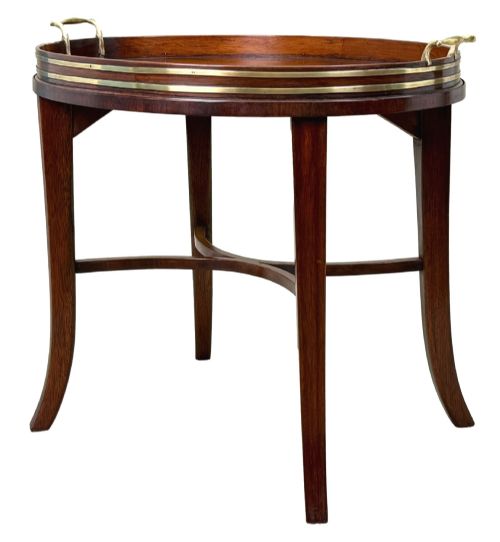
Cabinet makers relied predominantly on dense hardwoods like mahogany and oak, joining the tray bases with secure dovetail or mitred joints to support heavy loads. Handles were frequently cut directly into the raised edges or reinforced with brass hardware to withstand lifting.
Specialist techniques also produced decorative papier-mâché and lacquered surfaces, enhanced with gold leaf and intricate Chinoiserie painting. These delicate trays were paired with custom stands, sometimes using later modifications to achieve standard coffee table proportions.
Quality and craftsmanship
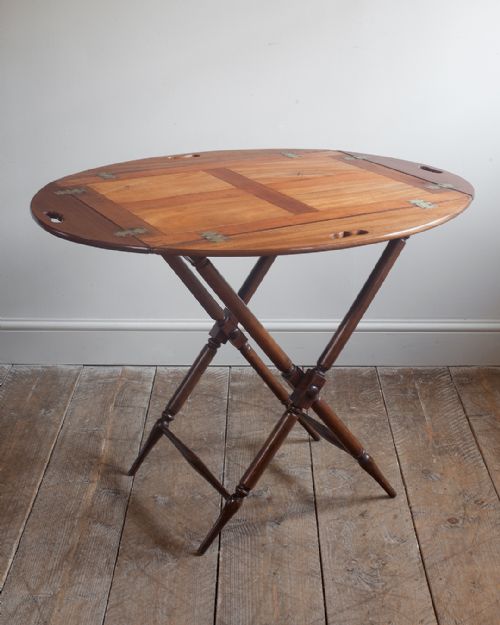
Superior execution shows in the selection of figured timber veneers, precise brass bound decoration, and hand-carved details on both the tray and the stand. The retention of an original folding stand alongside the tray elevates the integrity of the piece.
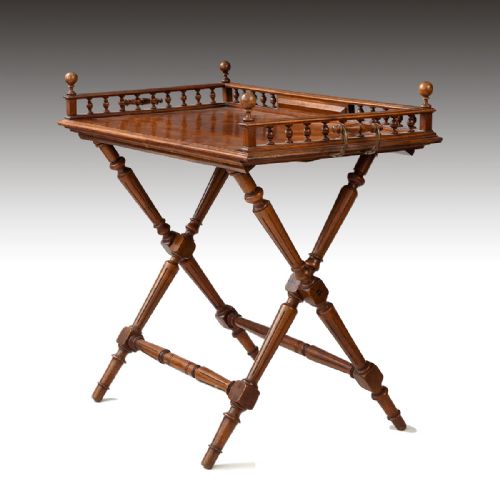
Differences in standard appear in the crispness of the gallery mouldings and the harmony between the tray and its base. Finishes that preserve the natural grain and original patination reflect superior historical care.
Butler Tray Coffee Table Retail Price Guide 2026
Typical asking prices for butler tray coffee table among the pieces listed under this phrase on Sellingantiques today, from the lower quarter to the upper quarter. They describe what is for sale here now, not the wider market.
Listings feature woods such as mahogany, oak, walnut, and papier-mâché, spanning periods from the 18th century to the 1930s.
The Butler Tray Coffee Table Glossary
- Gallery
- A raised wooden border surrounding the edge of a tray to prevent items from sliding off. This feature is often pierced with hand-grips for carrying.
- Drop-flap
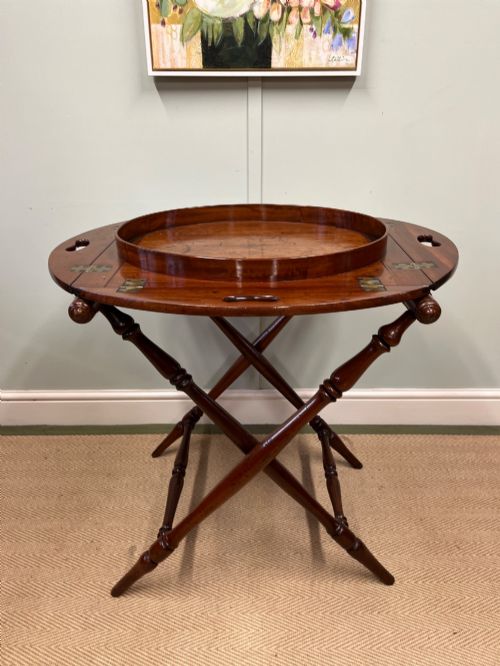
- A hinged side section on a tray that folds down flat or locks upright with wooden brackets. It allows the surface area to expand when serving.
- Papier-mâché
- A composite material made from paper pulp mixed with glue and resin, pressed in moulds and baked. It provides a smooth base for lacquer and painted decoration.
- Chinoiserie
- European artistic interpretation of Chinese and East Asian decorative motifs. It appears as painted or gilt scenes on lacquer and papier-mâché surfaces.
- Inlay
- A technique where pieces of contrasting wood, shell, or metal are inserted into depressions in the timber surface to form decorative patterns.
Butler Tray Coffee Table: Frequently Asked Questions
What is a butler tray coffee table?
A butler tray coffee table is a low table constructed from a removable wooden or papier-mâché tray resting on a folding or fixed stand.
Originally utilised for serving food and beverages in large houses, these tables now function as adaptable living room furniture.
How do I date a butler tray?
Dating relies on examining the timber species, construction joints, and decorative styles characteristic of periods such as the Georgian era or Victorian times.
Original hardware, hand-cut dovetails, and period specific painting techniques also help establish the approximate age of the piece.
Are the stands usually original?
Many trays survived alongside their original folding wooden stands, though some tables were paired with stands adapted or constructed at a later date.
Checking the timber uniformity and wear patterns between the tray and the base provides clues regarding their historical association.
How do I care for antique wood?
Antique timber surfaces benefit from regular dusting with a soft, dry cloth and occasional treatment with traditional beeswax to nourish the grain.
Keeping the table away from direct heat sources and moisture protects the polished finish and prevents the wood from warping.