

Mahogany Butler Table
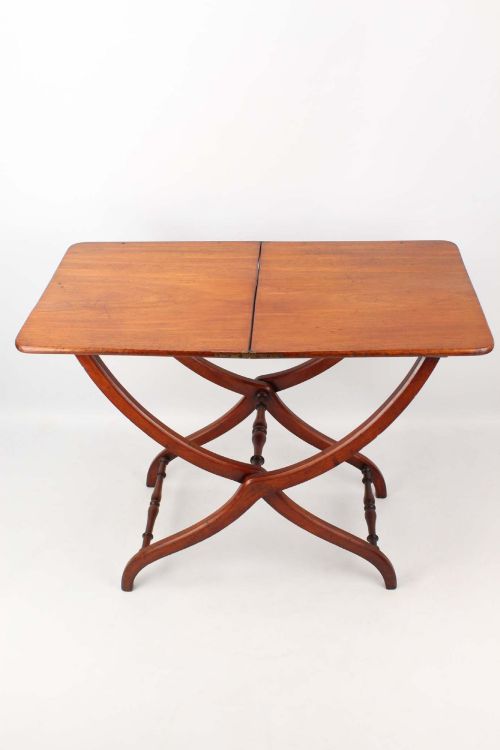
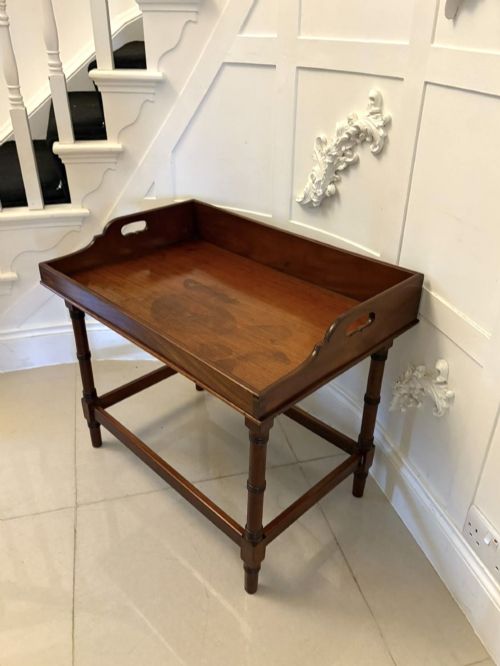
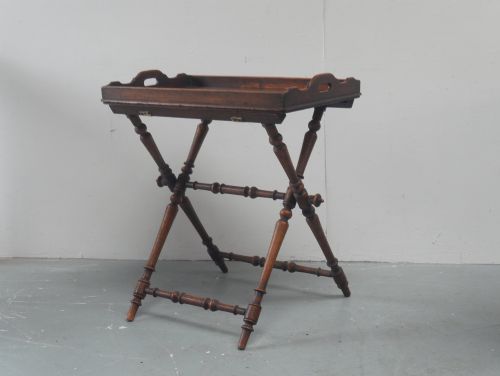
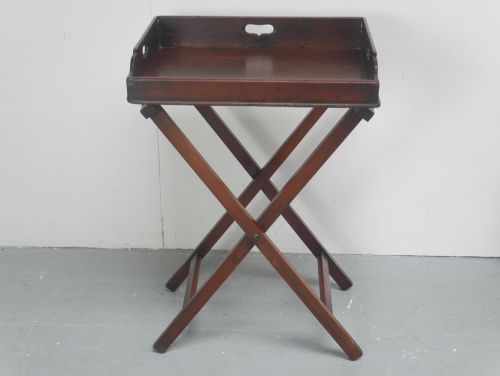
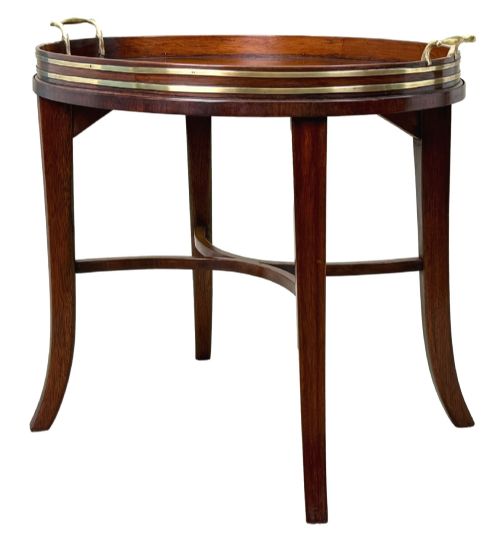
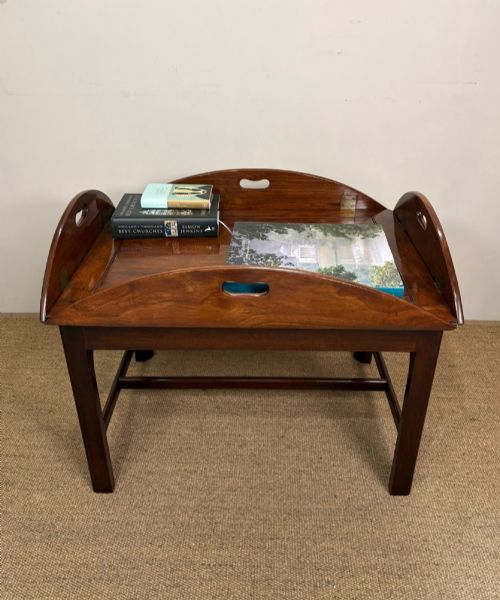
When you search for a mahogany butler table, you are looking at a portable serving tray paired with a folding stand.
Mahogany Butler Table
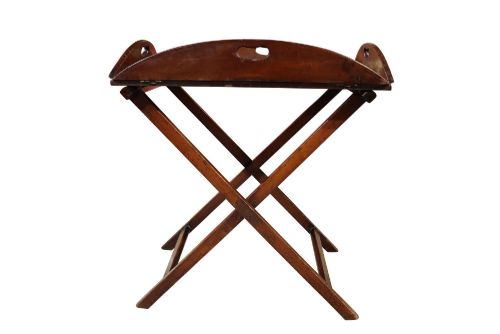
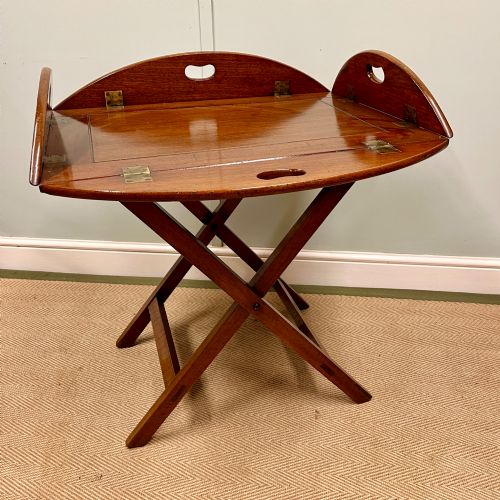
A mahogany butler table pairs a deep, removable tray with a folding timber stand, designed originally for portable domestic service. The form emerged strongly in the eighteenth century during the Georgian period and continued through the Victorian and Edwardian eras.
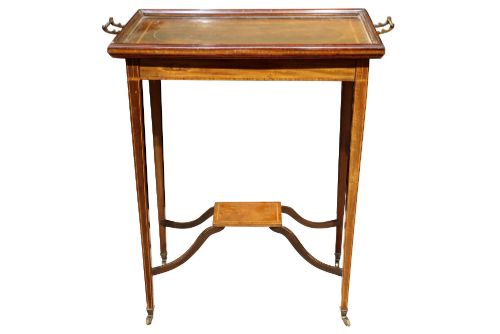
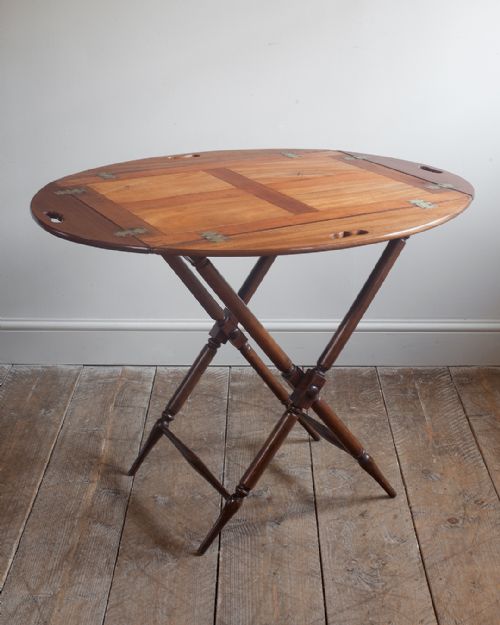
Originating largely in English workshops, the surviving examples range from plain utilitarian folding stands to finely inlaid oval designs intended for drawing rooms.
How they were made
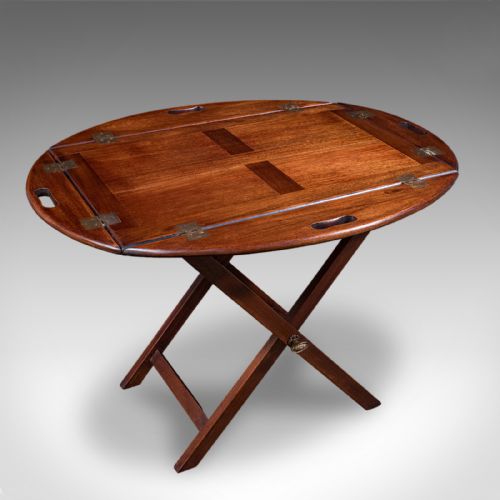
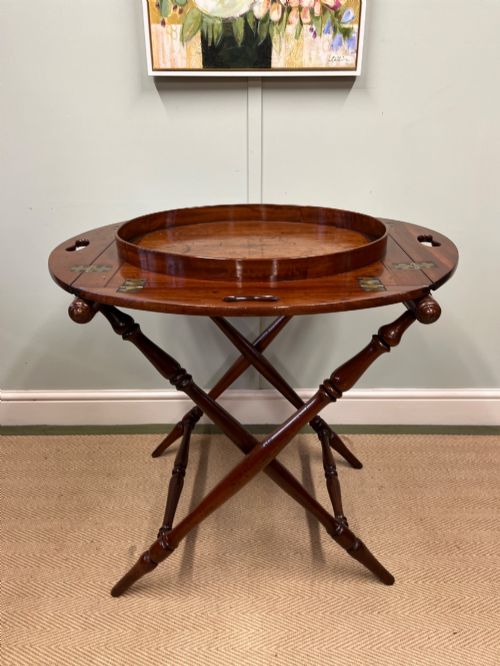
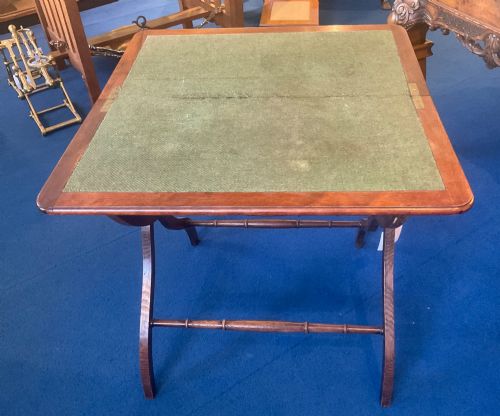
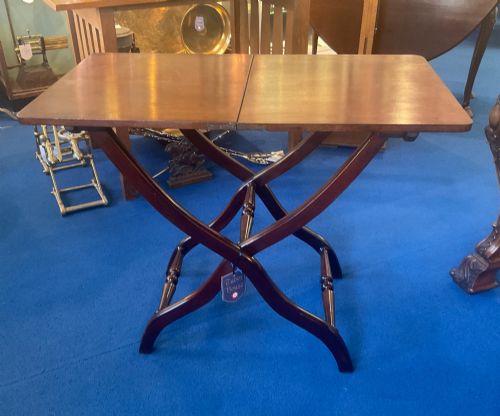
Makers relied primarily on solid mahogany and Cuban mahogany for the trays and stands, valued for durability and rich grain, sometimes supplemented by satinwood stringing and brass bound decoration or hinges. Stands were constructed to fold flat with hinged cross-framing or X-frame supports for efficient storage.
Surviving pieces incorporate thoughtful details such as hand-cut dovetail joints on tray corners, shaped gallery edges, and pierced handgrips designed to bear weight securely during service.
Some nineteenth-century trays double as miniature architectural maps, proving that Victorian guests enjoyed cartography with their afternoon tea.
What varies in quality
Quality rests upon timber selection and the crispness of the cabinetwork, distinguishing formal drawing-room pieces from plain utilitarian servants' equipment. Finer examples display dense Cuban mahogany grain, delicate satinwood inlay, and robust brass fittings that secure the folding action without looseness.
Proportion and the integration between tray and stand separate standard production from superior craftsmanship. A well-balanced piece maintains clean lines whether open as a table or folded away.
Thomas Butler of London·Army & Navy CSL
The Mahogany Butler Table Glossary
- Butler tray
- A portable wooden tray with raised sides, often hinged, designed to sit upon a separate folding stand. This form allowed domestic staff to clear rooms quickly.
- Coaching table
- A lightweight folding table with an X-frame base, frequently utilised during travel or military campaigns. These share a similar collapsible construction to butler stands.
- Tray top
- A table top designed with an elevated surrounding rim to prevent glassware and decanters from sliding off during service. This edge is frequently shaped with handgrips.
- Campaign table
- Collapsible furniture built for military officers on the move, typically fitted with brass corners and carrying handles. Mahogany was chosen for its resistance to warping in harsh climates.
- Stilton stand
- A specialised serving platform, often crescent-shaped or revolving, used historically for presenting cheese at the dining table.
Mahogany Butler Table: Frequently Asked Questions
How were mahogany butler tables originally used?
These tables served domestic households for carrying food, tea, and wine from kitchens to reception rooms. The removable tray allowed servants to clear or set out items efficiently before placing the top back onto its folding support.
In period homes, they moved easily from room to room as daily routines shifted, functioning as portable furniture rather than fixed room fixtures.
Can I use an antique butler table as a coffee table?
Many buyers today repurpose these pieces as coffee tables because their height and proportions suit modern seating layouts well. The raised gallery edge also helps contain everyday items.
To protect the timber finish from moisture, use coasters and avoid placing hot cups directly onto older polished mahogany surfaces.
How do I tell an 18th-century table from a later reproduction?
Early pieces from the Georgian era often feature hand-sawn timber boards, old joinery methods such as pegged joints, and heavy Cuban mahogany with deep patination. Later Victorian and Edwardian iterations show machine-cut precision and different secondary woods.
Examining the wear patterns around the handgrips and the interior of the folding stand will also reveal age-appropriate handling marks.