




Chippendale Low Table
A chippendale low table brings together classic Georgian proportion and low-slung utility, offering a sturdy surface with unmistakable cabinetmaking lineage.
Chippendale Low Table
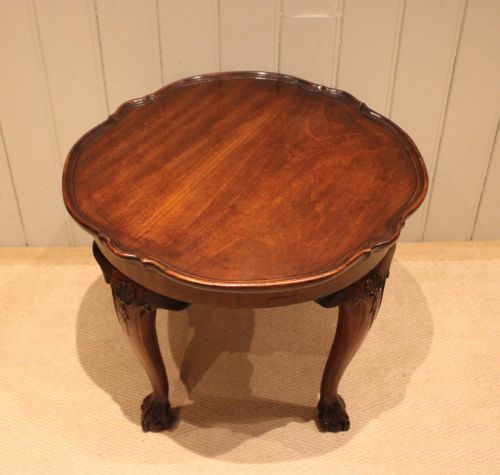
A chippendale low table encompasses low-slung coffee tables, lowboys, side tables, and occasional stools drawing on eighteenth-century design vocabulary. These pieces emerge across periods ranging from the Georgian era through nineteenth-century revivals and twentieth-century reproductions.
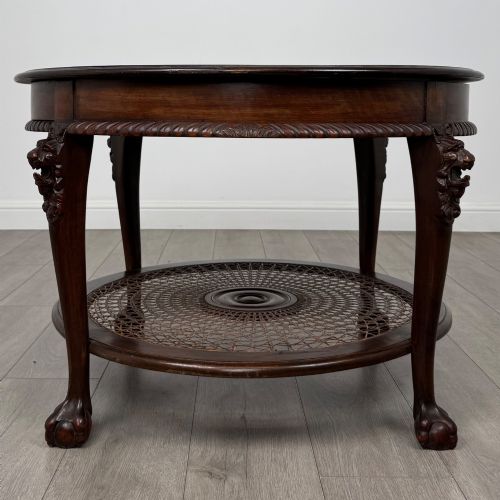
The versions most commonly met on this page are mahogany coffee tables and lowboys, often displaying revival styling from the Edwardian years or the 1920s and 1930s. Alongside these, related forms such as centre stools and dressing stools appear with similar stylistic influences.
Buyers look for these items to anchor a room with period character whilst serving modern domestic habits. The diverse origins span genuine eighteenth-century examples to later revival pieces created by firms like Waring and Gillow.
Materials and construction
Construction relies heavily on mahogany as the principal timber, complemented occasionally by oak and walnut for specific carcase work or regional variations. Timber selection dictates the weight and grain movement of each piece.
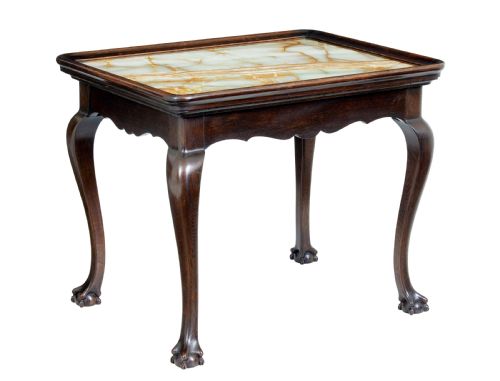
Decorative surfaces and secondary materials incorporate brass hardware, cane inserts, and upholstered elements featuring wool and tapestry fabric. Specific items integrate contrasting tops such as onyx to alter the visual texture.
Listings span the Georgian era through Edwardian and 1930s revivals, predominantly utilising mahogany alongside brass, cane, and onyx.
Judging the range of quality
Quality rests in the crispness of carved detail and the integrity of the timber joints rather than mere age alone. Finer examples exhibit confident proportion and precise execution in the style's characteristic motifs.
Later revival pieces from the twentieth century can match Georgian craftsmanship when executed by reputable makers using dense, well-figured timber. Lesser examples show mechanical uniformity in carving and lighter, less substantial secondary woods.
Waring and Gillow
The Chippendale Low Table Glossary
- Lowboy
- A small colonial or British dressing table or side table featuring drawers beneath the main surface, typically raised on tall legs. These forms heavily influenced later low table designs.
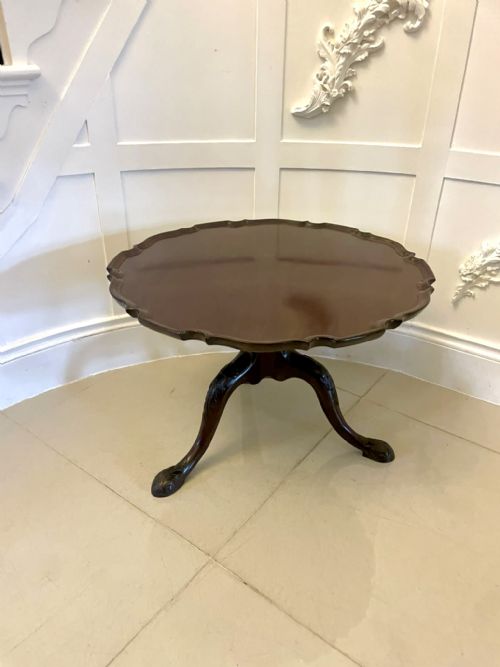
- Pie crust table
- A small round table featuring a raised, carved moulded edge resembling pastry work. This decorative rim is cut from the solid timber of the top.
- Chippendale revival
- A stylistic movement spanning the nineteenth and twentieth centuries where makers reinterpreted eighteenth-century designs. It draws directly on the pattern books associated with Thomas Chippendale.
- George III period
- The era spanning from 1760 to 1820, encompassing the height of the original Chippendale aesthetic. Pieces from this time demonstrate the proportion and carving that later revivals sought to copy.
Chippendale Low Table: Frequently Asked Questions
Are these tables solid mahogany?
The majority of pieces utilise solid mahogany for frames, legs, and primary surfaces, often selected for its strength and rich grain. Secondary timbers like oak may appear in internal framing.
Revival pieces from the Edwardian era and the 1930s maintain this traditional reliance on heavy hardwoods.
How do I spot a revival piece?
Twentieth-century revival items often display cleaner internal machine marks and standardised timber seasoning compared to eighteenth-century originals. The overall weight and patination of the wood help indicate the true era of manufacture.
Stylistic cues remain remarkably consistent across both antique periods and later reproductions.
How should I use a lowboy today?
Originally built as small dressing or side tables with drawers, these versatile pieces function well as compact writing desks or lamp tables. Their shallow depth suits placement in hallways or narrow reception rooms.
They provide enclosed storage through small drawers whilst maintaining an open floor plan appearance.