

Folding Side Tray Table
A folding side tray table offers a portable surface for serving or display, combining rigid timber frames with lift-off trays.
Folding Side Tray Table
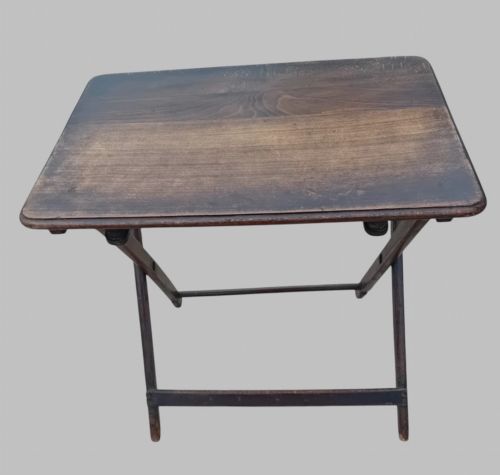
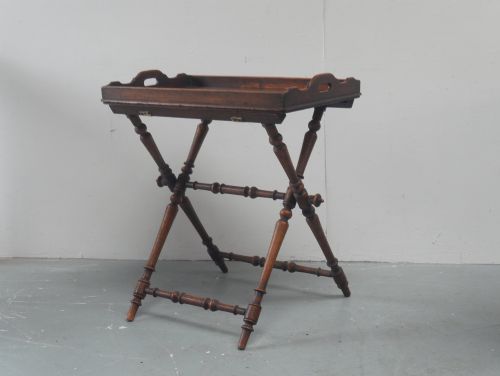
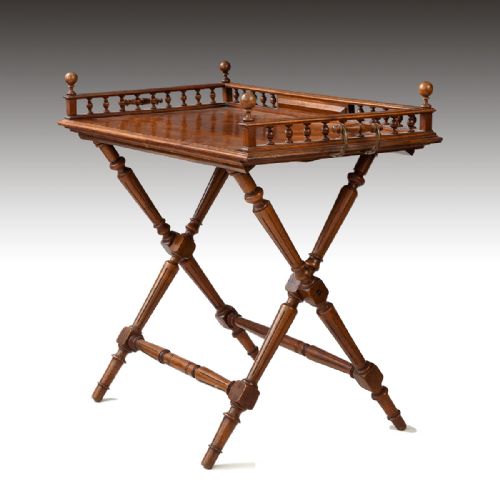
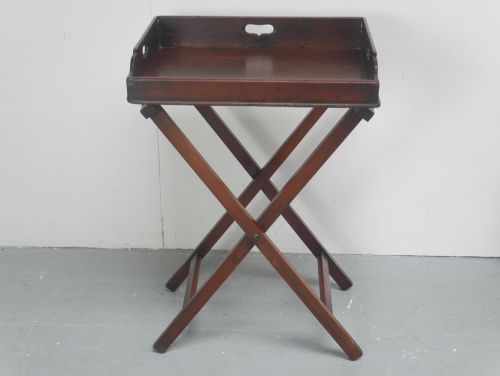
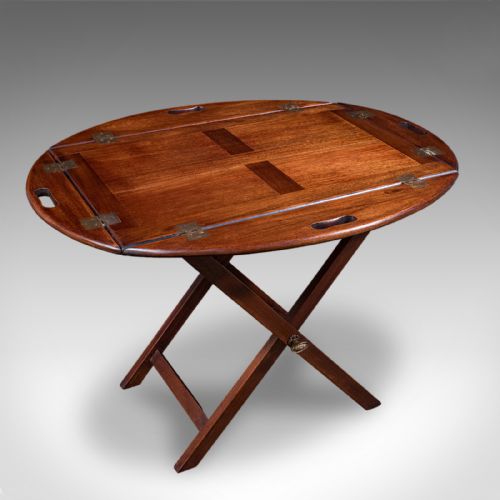
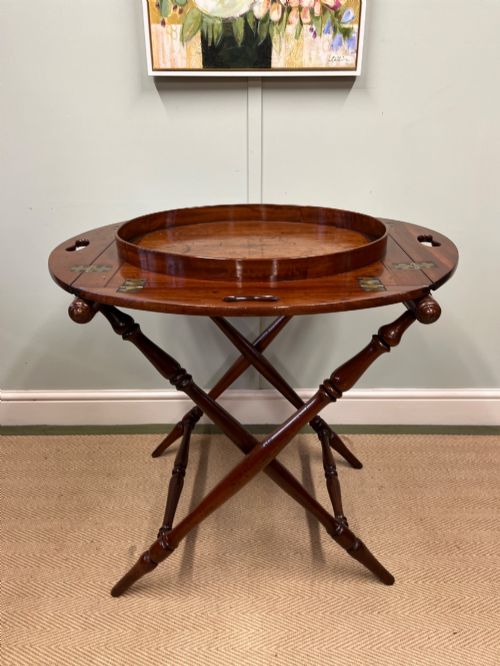
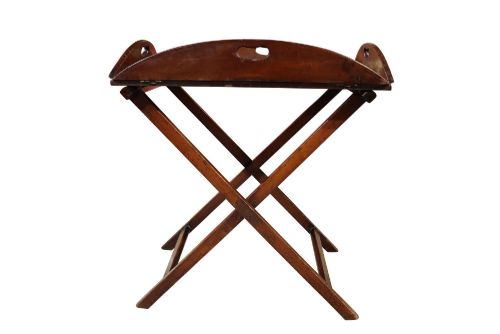
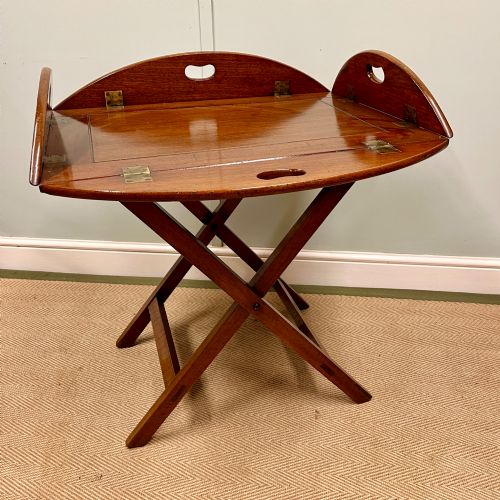
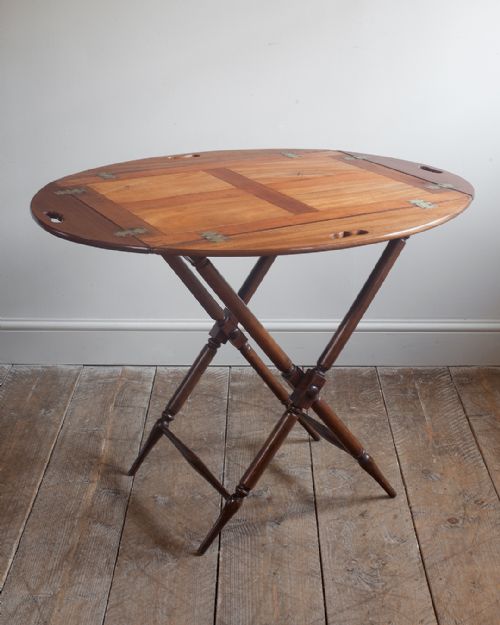
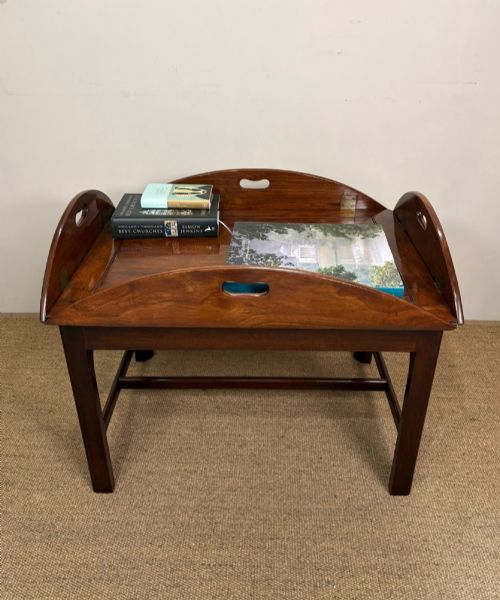
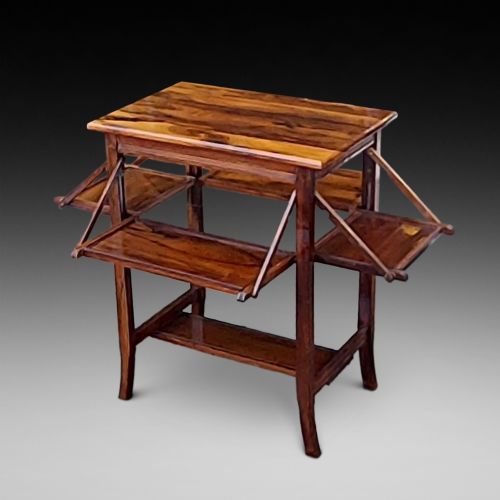
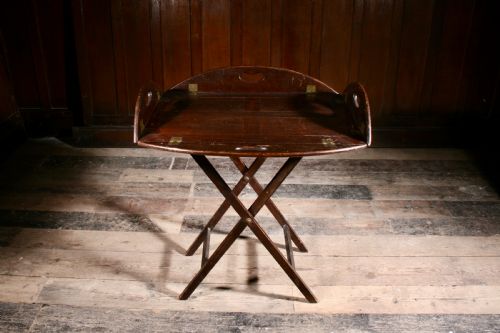
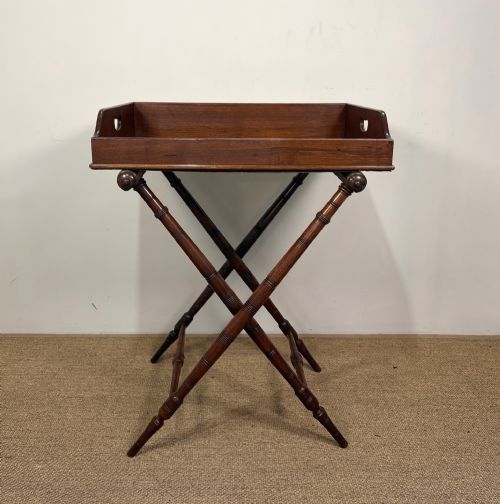
A folding side tray table appears most frequently in forms such as butler's trays on separate stands, occasional tables, and coaching tables dating from the Georgian period through to the Edwardian era. These pieces combine a portable serving tray with a folding timber X-frame or four-legged stand designed for easy storage or transport.
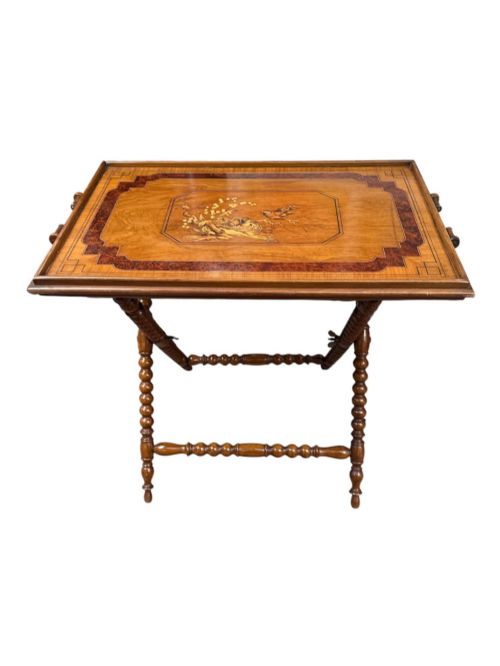
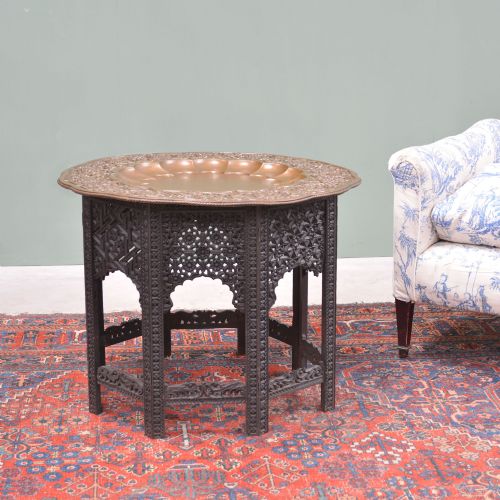
Mahogany and oak dominate the surviving examples from the eighteenth and nineteenth centuries, often showing oval or rectangular trays with cut-out handles. More specialised variants include Anglo-Indian Hoshiarpur tables with copper tops and Sorrento Ware marquetry trays from the late nineteenth century.
The inventory ranges from austere utility pieces built for campaign use to finely carved Victorian rosewood and walnut serving stands. Buyers encounter everything from simple folding card tables to elaborate drop-flap serving stands intended for drawing rooms and country houses.
Materials and construction methods
Cabinetmakers constructed these tables using dense hardwoods such as mahogany, oak, walnut, and rosewood, frequently selecting timber for stability and grain movement in folding components. Brass hinges, pins, and drop handles provide the necessary mechanical joints for frames that must collapse repeatedly without losing rigidity.
Surfaces often display intricate detail, from inlaid marquetry panels and carved borders to engraved brass tops mounted on collapsible wooden bases. Joinery relies on tightly fitted hinges and folding X-frame scissor actions that allow the entire stand to pack flat while supporting weight securely when open.
Listings feature periods spanning from the eighteenth-century Georgian era through Victorian, Edwardian, and 1930s revivals.
Judging the quality of construction and finish
Quality rests on the integrity of the folding mechanism and the thickness of the timber used for the tray base, where thinner panels warp over decades of service. Superior examples retain original brass hardware, tight joints in the folding stand, and crisp carving or inlay on the tray rim.
The relationship between the tray and its stand defines the piece, with better versions showing bespoke sizing and stable seating that prevents rocking during use. Wear on the inner pivot points indicates the frequency of past deployment, distinguishing daily utility items from grand drawing-room furnishings.
The Folding Side Tray Table Glossary
- Butler's tray
- A portable wooden tray with hinged or fixed sides, designed to lift off a folding stand for serving food or drink.
- Campaign style
- Furniture constructed with folding elements, brass corners, and recessed handles to facilitate transport by military officers.
- Sorrento Ware
- Decorative woodwork originating from Italy, characterised by intricate inlaid marquetry and mosaic patterns.
- X-frame
- A scissor-action folding support base formed by two intersecting wooden members that pivot at the centre.
Folding Side Tray Table: Frequently Asked Questions
How were folding side tray tables used originally?
These tables served primarily in domestic settings for carrying tea, wine, or food from the kitchen to the drawing room or garden. Servants used the removable tray to clear meals efficiently while the folding stand remained tucked away until needed.
In military or travel contexts, similar tables accompanied officers on campaign, offering a stable dining or writing surface that packed flat into baggage. Their dual function as portable trays and rigid stands made them indispensable for flexible entertaining.
How do I tell a Georgian tray from a Victorian one?
Georgian trays typically exhibit restrained mahogany construction with simple oval outlines, subtle hand-cut handles, and understated stands. The timber selection prioritises dense, dark grain without excessive carving.
Victorian and later pieces often introduce heavier ornamentation, including elaborate pierced galleries, carved walnut or rosewood frames, and exotic inlays like Sorrento Ware marquetry. The introduction of beech and oak in late-nineteenth-century examples also reflects broader industrial production shifts.
Are these tables stable enough for daily use?
Most surviving folding tables retain robust joinery and tight hinge mechanisms that support modern use as coffee tables or side surfaces. Regular inspection of the pivot pins and folding X-frame ensures they remain safe under normal loads.
Placing them on even flooring prevents undue strain on the folding joints and brass fittings. Their original construction for active service means they tolerate everyday placement of lamps, books, and cups quite well.
What maintenance do antique wooden trays require?
Maintenance involves protecting the timber from excessive moisture and direct heat sources that cause warping or split joints in the tray base. Periodic application of appropriate wax polish maintains the lustre of mahogany, walnut, and oak surfaces.
Avoiding abrasive cleaners protects original brass hinges and inlaid marquetry from premature wear. Gentle dusting with a dry cloth keeps the carved details clear of debris without disturbing the finish.