


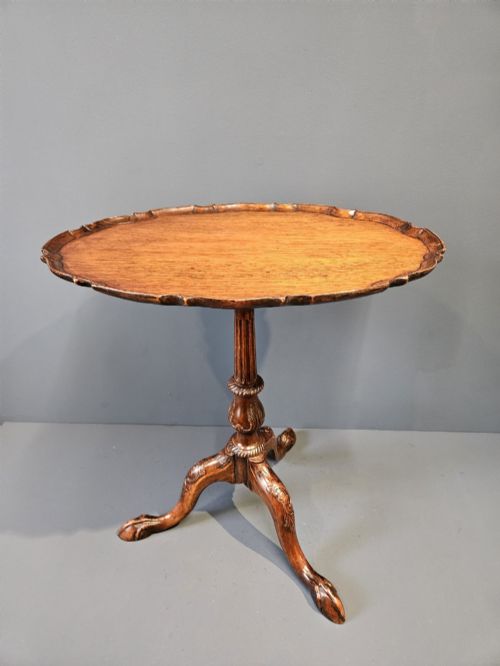
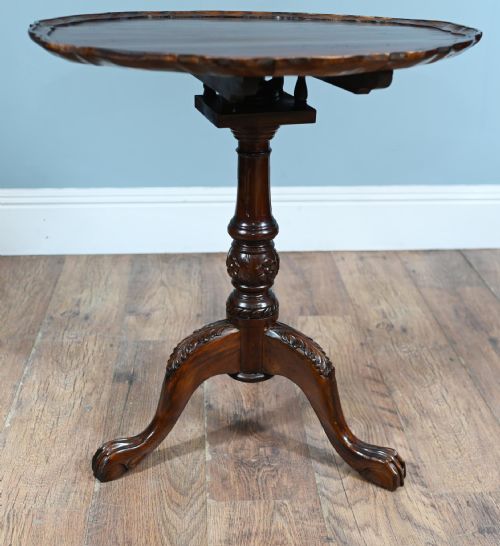
Piecrust Top Table
A piecrust top table brings sculptural carved edges and tilting tripod bases together in an essential Georgian form.
Piecrust Top Table
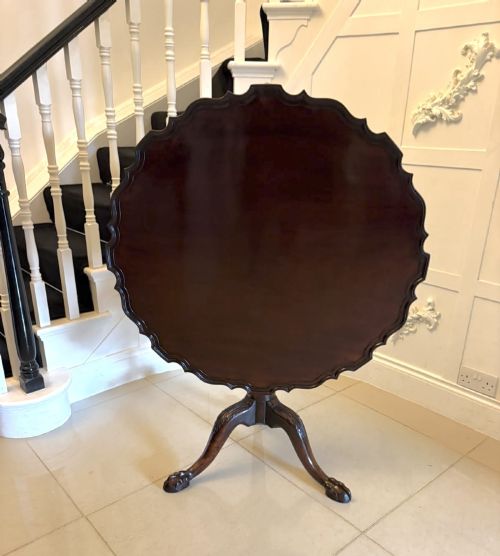
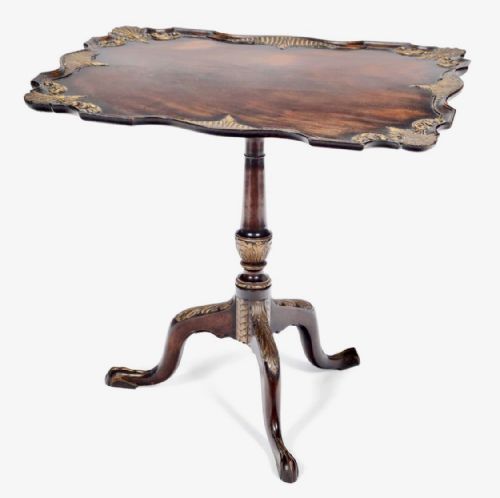
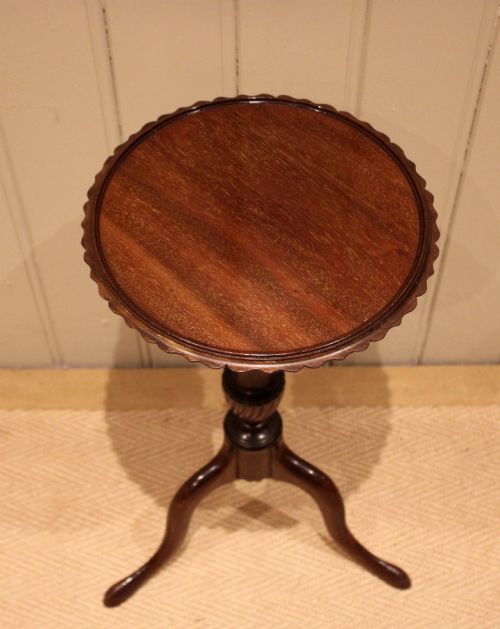
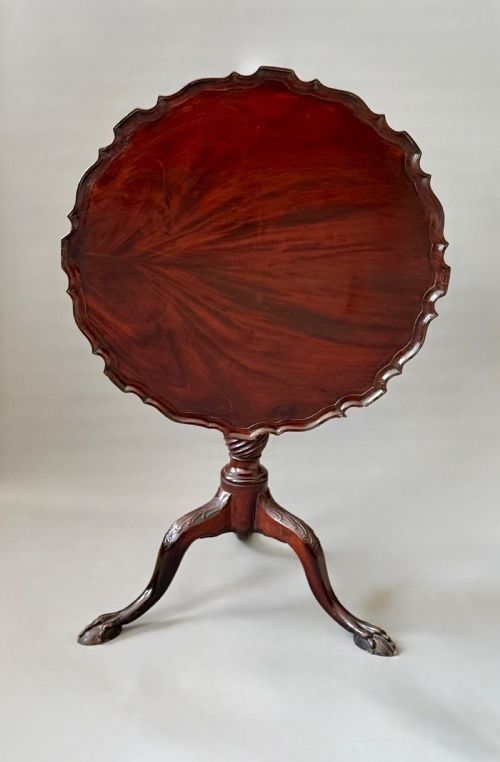
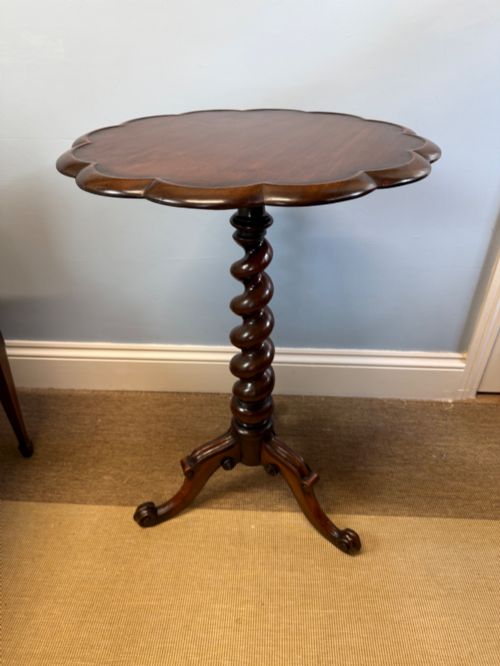
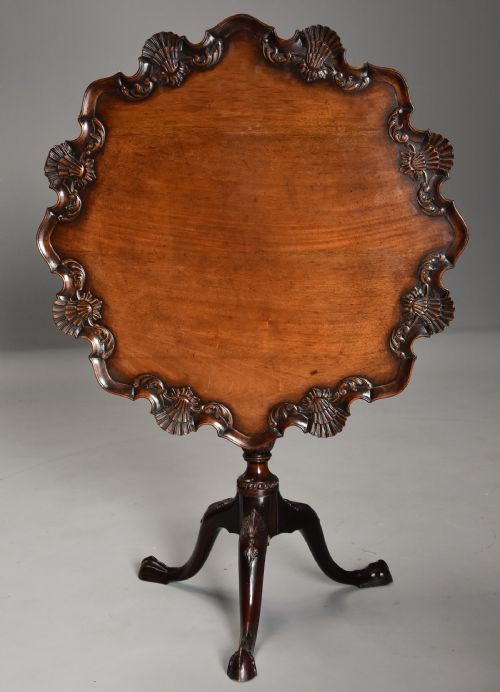
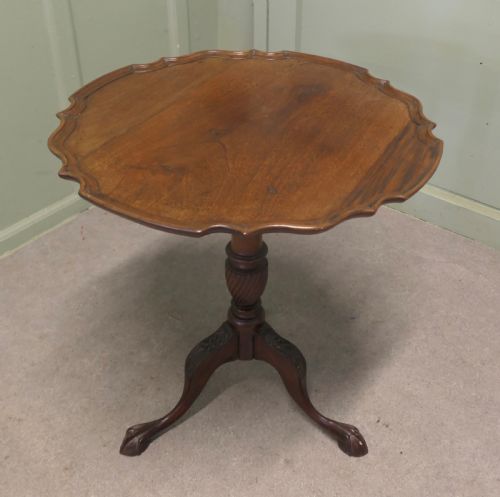
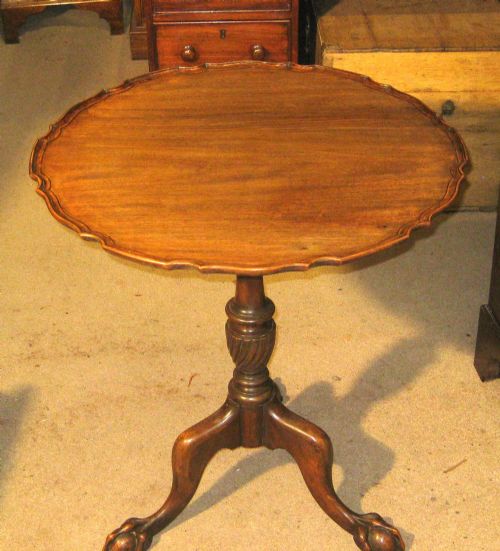
A piecrust top table is primarily a small occasional, wine, or centre table defined by its raised, scalloped rim carved directly from the solid timber. These pieces span the eighteenth century up to the Edwardian and early twentieth century revivals, drawing heavily on Chippendale designs. The version most commonly encountered on this page is the tripod table with a tilt-top mechanism, designed to stand compactly against a wall when not in use.
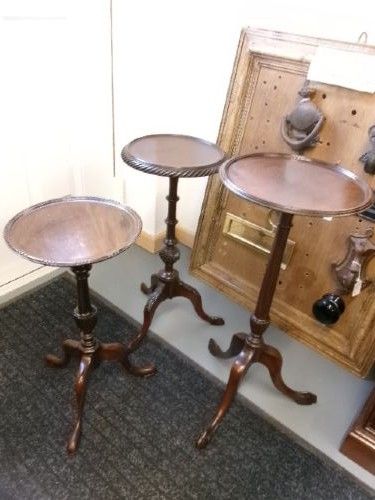
Makers often placed these tables in parlours and drawing rooms for tea, wine, or small displays. The format includes miniature wine tables, occasional tables, and larger tea or supper tables supported on slender stems and three-legged bases. Surviving examples demonstrate how English cabinet makers adapted the tripod form across the Georgian period and later nineteenth century revivals.
How they were made
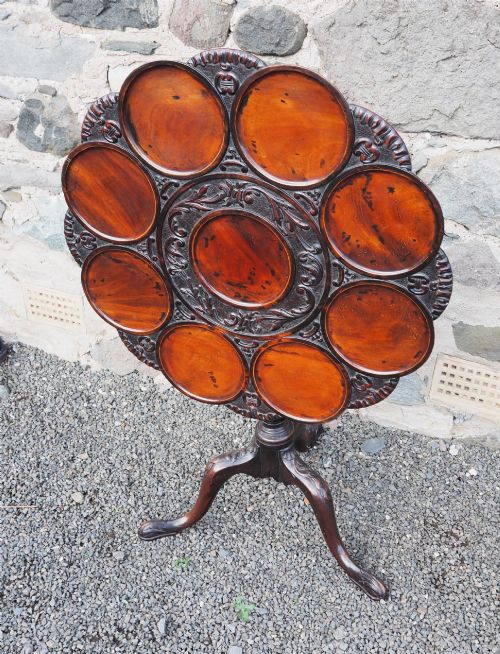
Makers predominantly worked in mahogany, selecting thick timber so the characteristic raised rim could be shaped by hand from the solid plank rather than applied as a separate moulding. Walnut, burr walnut, oak, and satinwood also appear, sometimes paired with brass hardware or parcel gilding. The timber is frequently turned on a lathe for the central pillar and carved with foliage, scrolls, or claw-and-ball motifs on the tripod legs.
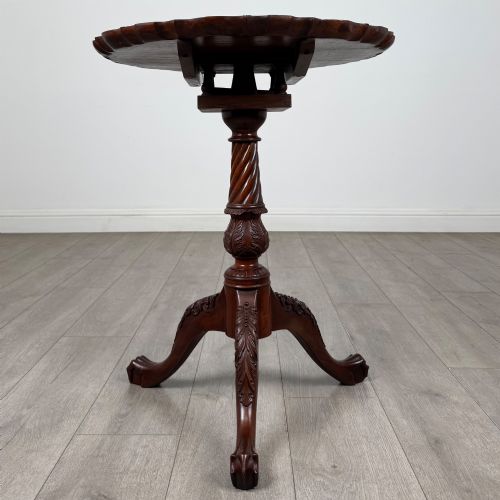
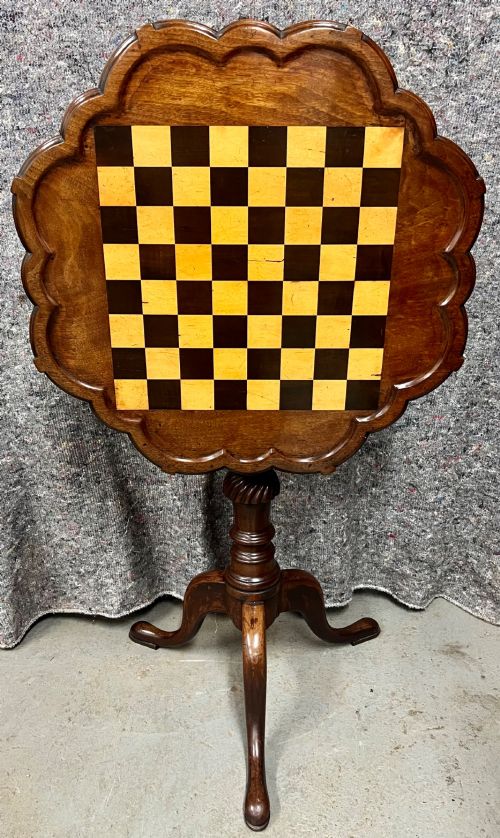
Many examples incorporate a birdcage mechanism beneath the top, allowing the surface to rotate and tilt vertically. This complex joinery required precise fitting so the tabletop locked firmly in place when horizontal. Wood inlay and marquetry occasionally decorate the surfaces of later occasional and chess tables.
Listings feature mahogany predominantly, alongside walnut, burr walnut, oak, satinwood, and brass elements across Georgian and Edwardian periods.
What varies in quality
Quality rests principally on the crispness and depth of the carving around the rim and the legs. A superior piece exhibits a fluid, hand-chiselled edge where the lobes of the piecrust transition smoothly, whereas lesser examples show flat, machine-like regularity or shallow profiling. The choice of timber grain also dictates distinction, with dense, deeply figured mahogany or burr walnut marking out the finer workshops.
The integrity of the tilt-top mechanism and the birdcage assembly separates standard utility tables from exceptional ones. Solid construction without excessive modern replacement parts ensures the top sits flat and true without wobbling on its column. Original surface patination accumulated over centuries adds considerable visual weight to eighteenth-century specimens.
The Piecrust Top Table Glossary
- Piecrust edge
- A raised, carved border with alternating curves and points resembling pastry crust. This decorative rim kept cups and vessels from sliding off when the table tilted.
- Tilt-top
- A hinged tabletop mechanism allowing the surface to fold vertical against the central pillar. This ingenious space-saving device let tables stand out of the way against room boundaries.
- Birdcage
- A wooden framework beneath the tabletop containing small spindles and a pivot block. It enables the surface both to rotate horizontally and tilt vertically.
- Tripod base
- A supporting structure comprising three spreading legs joined to a central turned column. This configuration provides stable footing on uneven floors.
- Snap-top
- An alternative term for a tilt-top table utilising a spring catch to lock the horizontal surface in place. It prevents accidental tipping during use.
- Patina
- The deep, lustrous surface sheen developed on old wood through decades of handling, waxing, and exposure to light. It serves as an indicator of age and careful preservation.
Piecrust Top Table: Frequently Asked Questions
How were piecrust tables used originally?
These pieces served primarily as tea, wine, or supper tables in fashionable eighteenth-century homes. Their portability meant servants could move them easily around the room for entertaining.
When the meal or gathering ended, owners tipped the surfaces upright to clear floor space, placing the decorative tops on display against the wall.
How do I spot an eighteenth-century original?
Authentic period pieces usually display hand-carved rims cut from solid timber rather than glued mouldings. Look closely at the underside construction and the wear patterns around the pivot joints.
Eighty-century examples also exhibit rich, dark patination and traditional joinery methods that differ markedly from later Edwardian revival copies.
What is a birdcage mechanism?
The birdcage is a small box-like wooden frame situated right beneath the tabletop. It consists of four turned columns holding the top above the main pillar.
This clever assembly allows the surface to swivel in a complete circle as well as tilt backward, offering dual movement.