

Piecrust Top Side Table
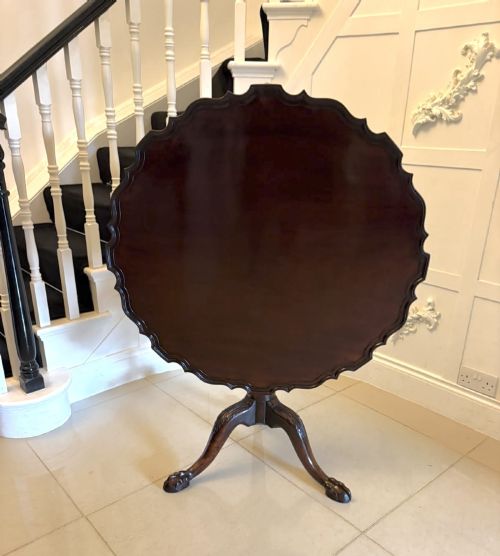
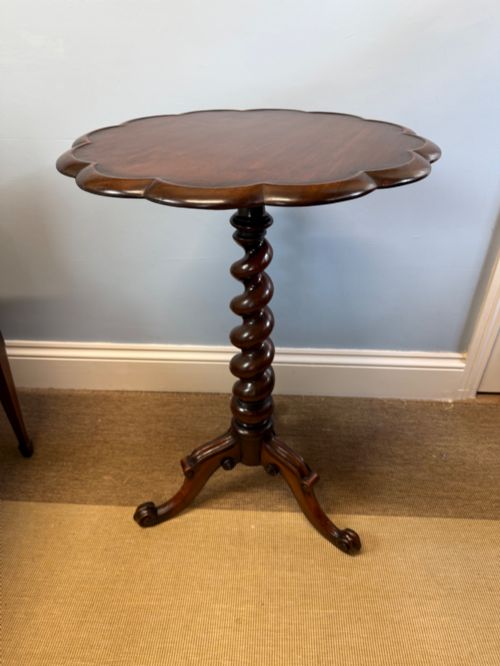
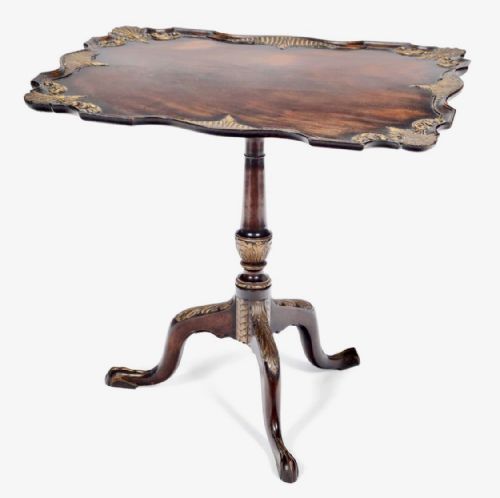
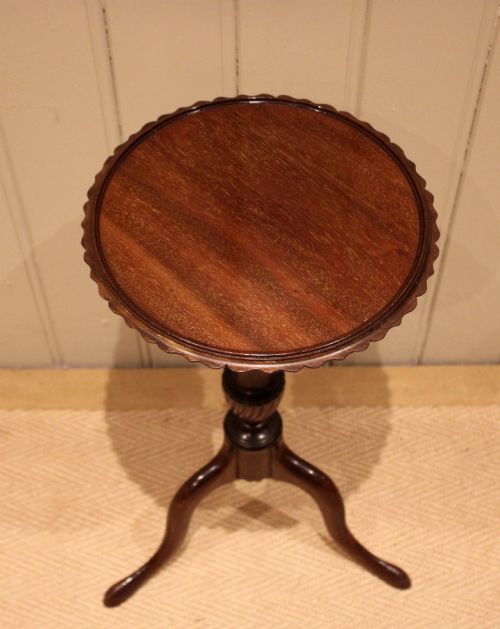
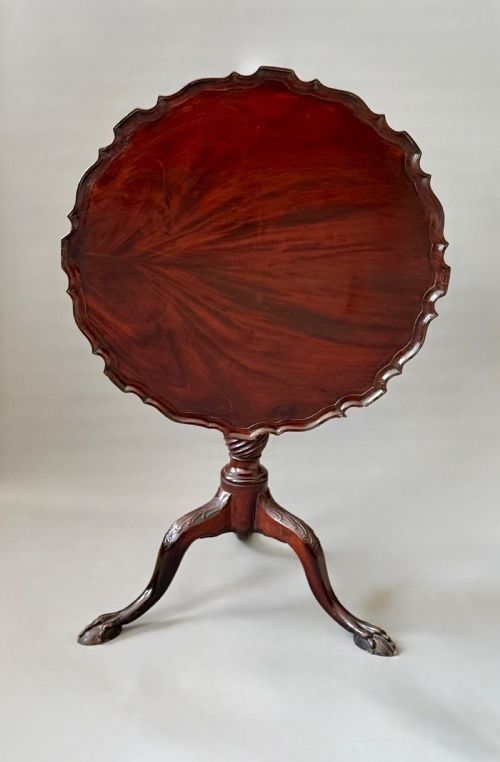
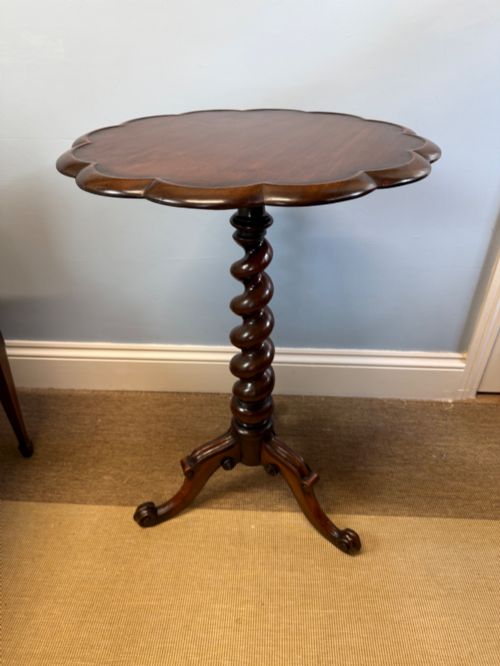
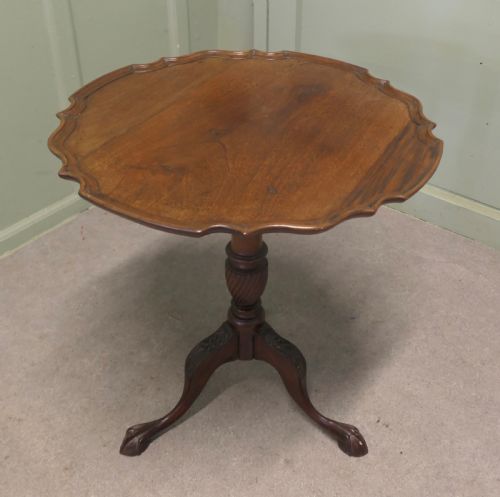
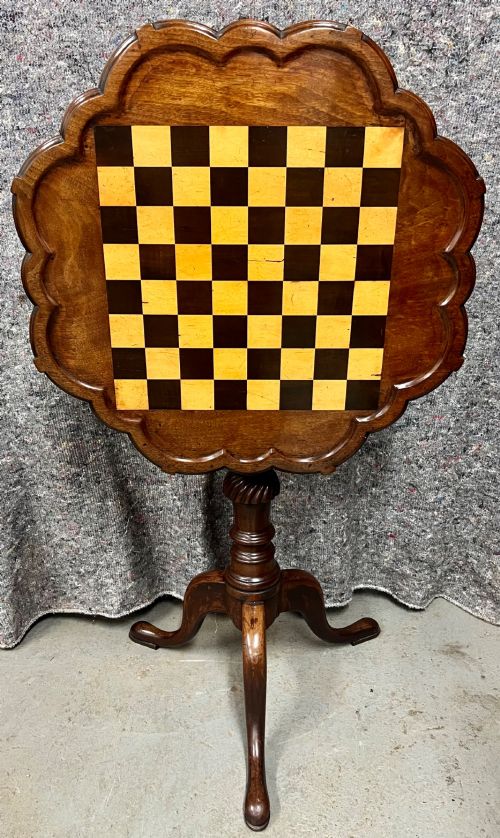
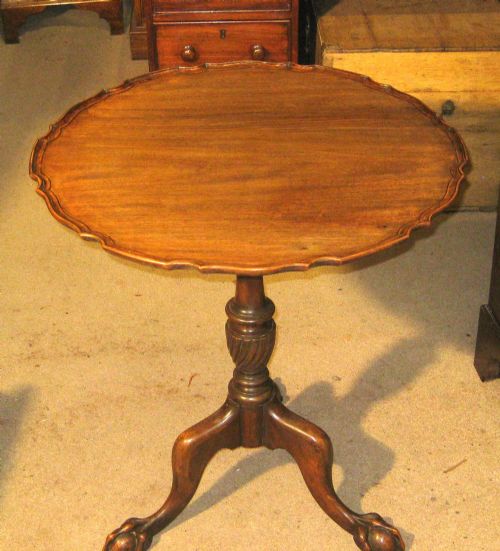
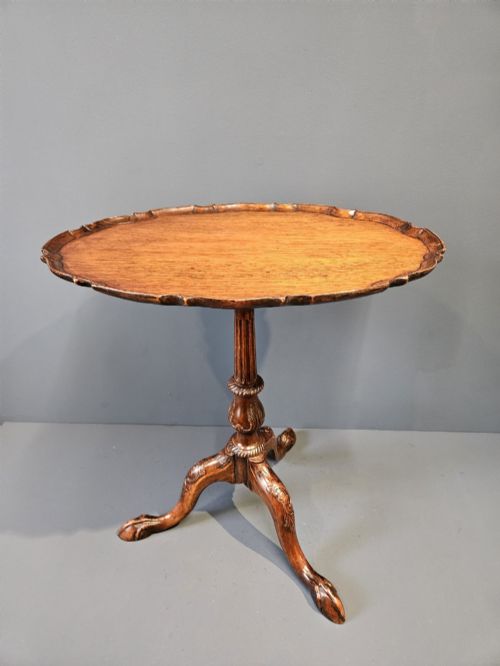
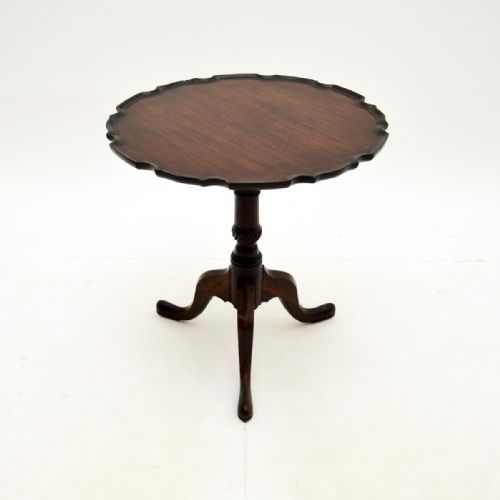
A piecrust top side table combines a raised scalloped edge with a tripod base, offering a neat surface for small objects and drinks.
Piecrust Top Side Table
When you search for a piecrust top side table, you are looking at small occasional surfaces defined by their raised, moulded borders. These pieces appear frequently in eighteenth-century George III forms, alongside later Victorian and Edwardian revivals.
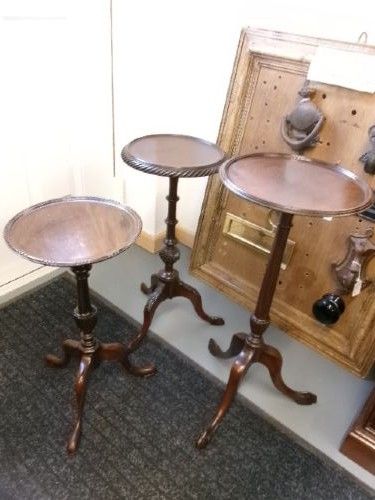
The format encompasses wine tables, tripod tables, and centre tables designed to occupy corners or sit beside seating. Most examples encountered here are constructed from mahogany, sometimes featuring tilt-top mechanisms or birdcage supports.
How they were made
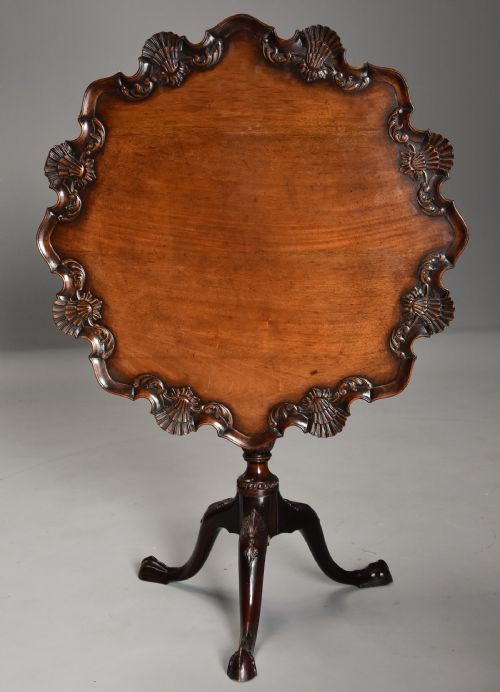
Cabinetmakers shaped the characteristic raised rims of a piecrust top side table directly from thick solid mahogany timber rather than attaching a separate moulding. This required careful carving around the scalloped perimeter to achieve the undulating edge.
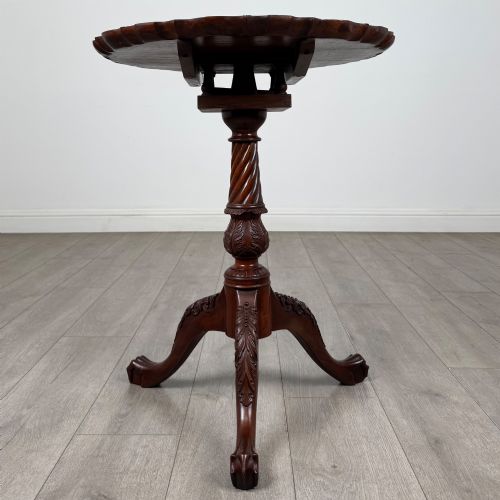
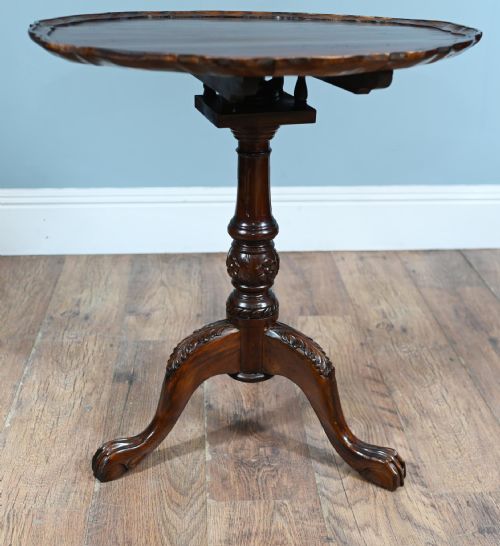
The tops frequently rest on a birdcage mechanism above a turned pillar and three-legged tripod base. Workshops utilised dense hardwoods like mahogany and walnut, occasionally incorporating brass fittings, parcel gilt, or delicate wood inlay.
Tilt-top mechanisms let tables fold flat against walls, serving as medieval-style space savers long before modern apartments were ever invented.
What varies in quality
Quality in a piecrust top side table rests on the crispness of the carved border and the proportional balance between the top and the pedestal. Earlier eighteenth-century examples display sharper detailing in the moulded edge and more fluid carving on the knees of the tripod legs.
The integrity of the tilt-top mechanism and the richness of the timber surface further distinguish finer pieces from later revivals. A well-preserved patina on the solid mahogany indicates how the wood has aged through handling and exposure over the centuries.
The Piecrust Top Side Table Glossary
- Piecrust edge
- A raised, carved border shaped with scrolls and curves resembling pastry crust. This decorative rim prevents items from sliding off the surface.
- Tilt-top
- A hinged tabletop that pivots to a vertical position when not in use. This mechanism allowed tables to be stored flat against a wall.
- Birdcage
- A wooden lattice framework beneath the tabletop that enables the surface to both rotate and tilt. It is typically found on better tripod tables.
- Tripod table
- A small freestanding table supported by a central pillar and three legs. The three-legged design ensures stability on uneven floors.
- Occasional table
- A small, movable table intended for specific, intermittent use in a room. These pieces serve as lamp stands or wine supports.
Piecrust Top Side Table: Frequently Asked Questions
What is a piecrust top side table used for?
These tables functioned historically as tea, wine, or supper surfaces where a raised edge prevented cups and glasses from sliding off. Today, they serve equally well beside a sofa or chair for holding lamps and small decorative objects.
Because of their compact tripod footprint, they fit easily into corners or tight spaces without dominating a room.
How do I spot an eighteenth-century table?
Eighteenth-century examples often display hand-carved mahogany with deep patination and subtle irregularities in the scalloped border. The timber used is typically dense and heavy, showing rich grain patterns developed over generations of use.
Later Edwardian or Victorian revivals tend to have more uniform machine-finished carving and different internal construction methods.
How does the tilt-top mechanism work?
The tabletop connects to a pivoting block or a revolving birdcage frame attached to the central pillar. A wooden catch or peg secures the top horizontally when in use, and releases to allow the surface to fold flat.
This clever design allowed historical households to tuck the furniture neatly against walls to clear floor space.
Are these tables stable on carpets?
Tripod bases provide natural stability on solid floors by resting firmly on three points rather than four. On thick carpets, however, the narrow feet can sink unevenly, so placing them on flat surfaces or using small coasters helps.
The light weight of the tables also makes them easy to reposition around a room as needed.