


Piecrust Side Table
A piecrust side table brings centuries of British cabinet-making directly to your room, offering a raised scalloped edge that originally held tea or wine secure.
Piecrust Side Table
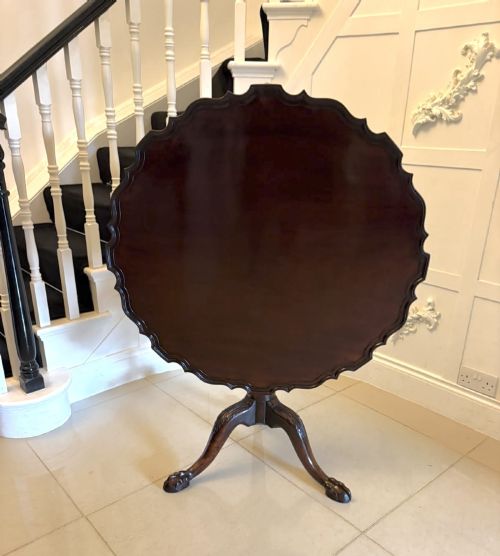
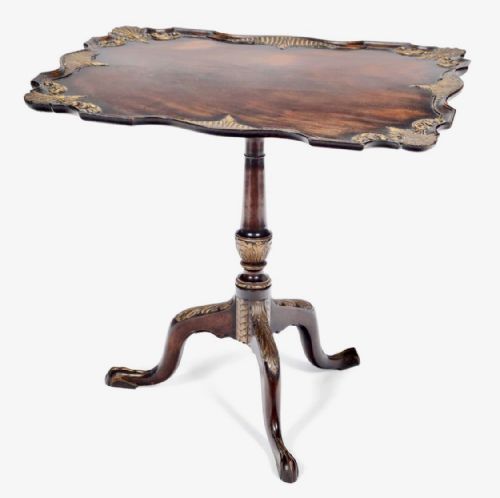
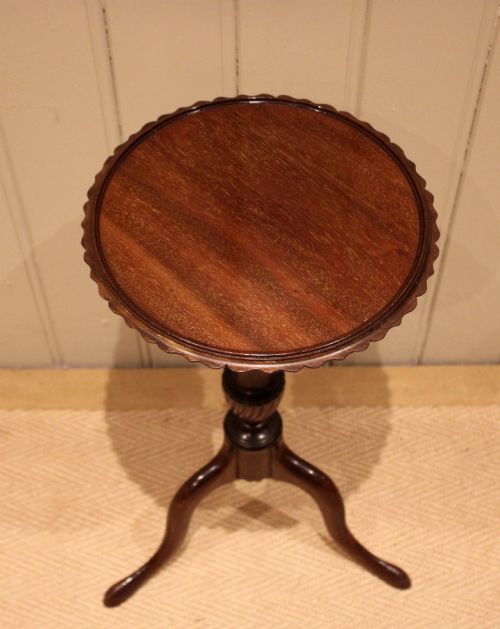
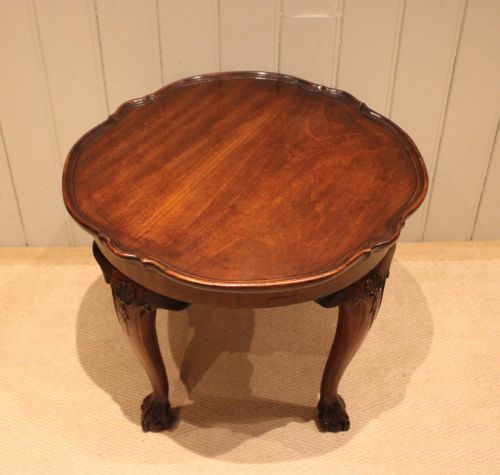
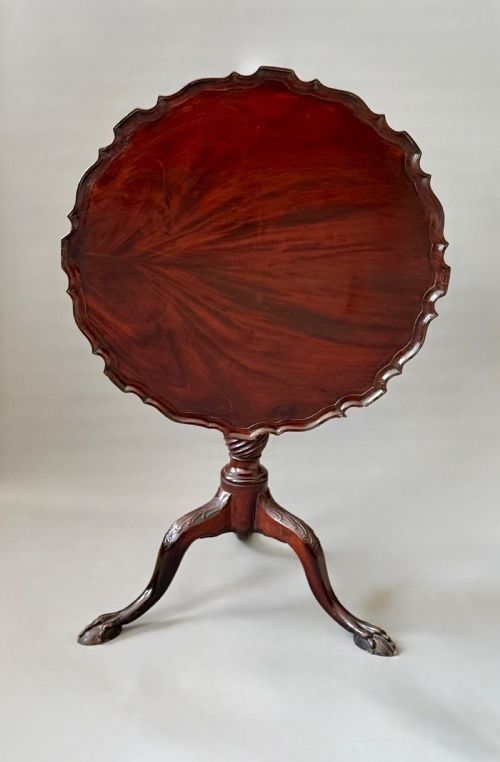
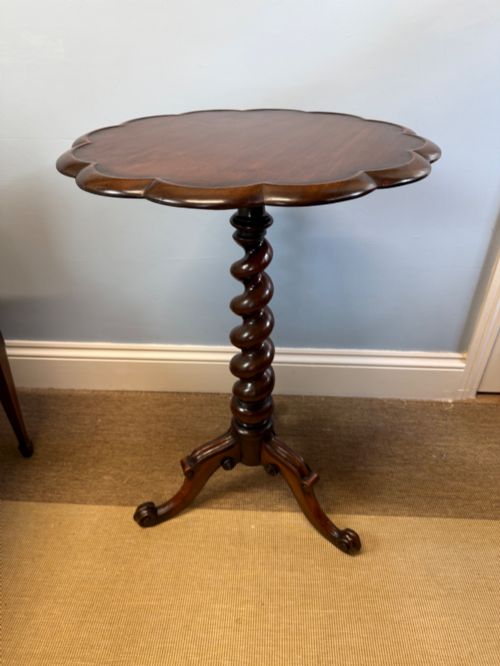
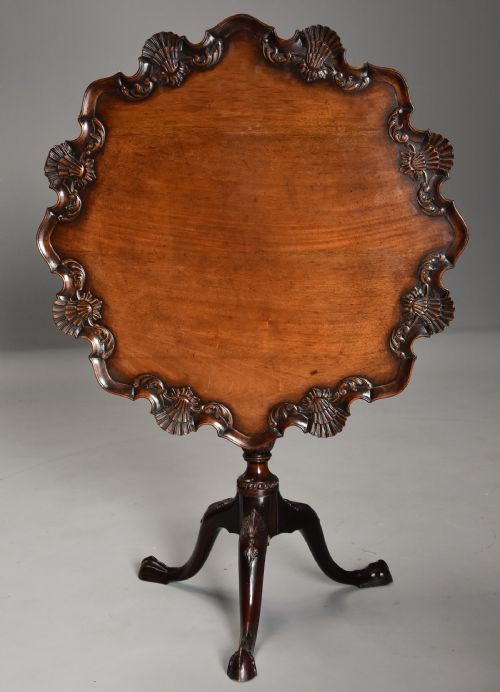
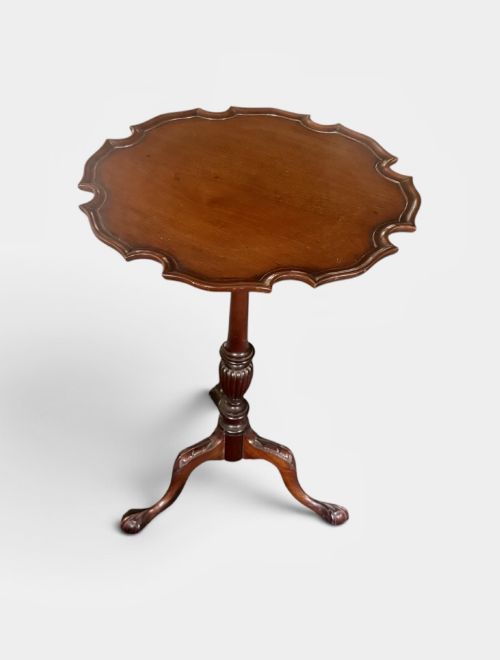
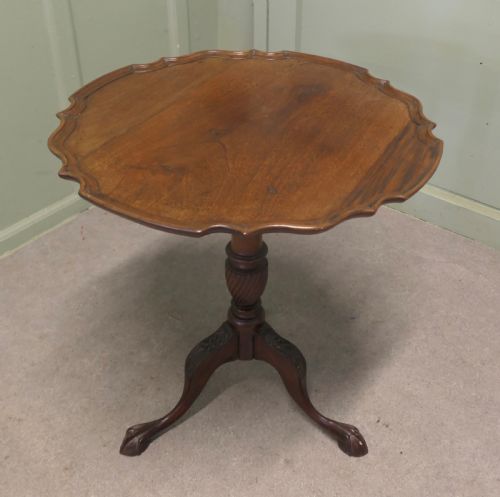
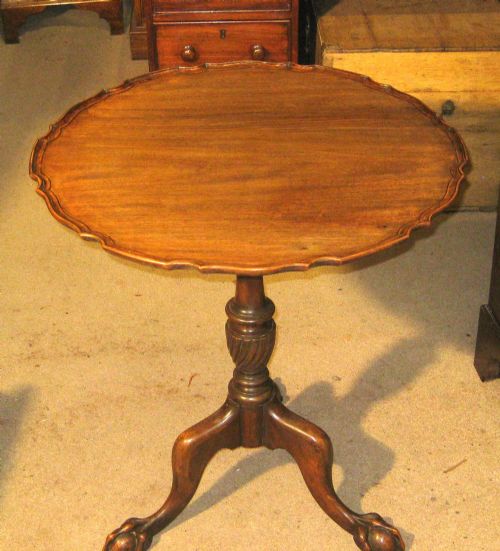
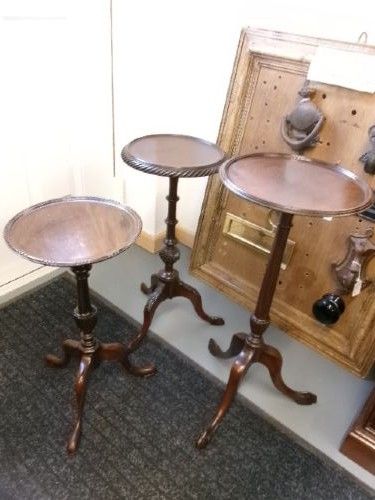
A piecrust side table is a compact surface defined by its distinctive raised, carved rim resembling pastry crust, typically supported by a central pillar and three legs.
The pieces you encounter most often span the 18th century through the Edwardian period, often taking the form of wine tables, occasional tables, or tilt-top designs.
Makers drew on Georgian and Chippendale styles, producing both grand examples from the 1700s and later revival pieces from the Victorian and Edwardian eras.
Assessing Quality and Craftsmanship
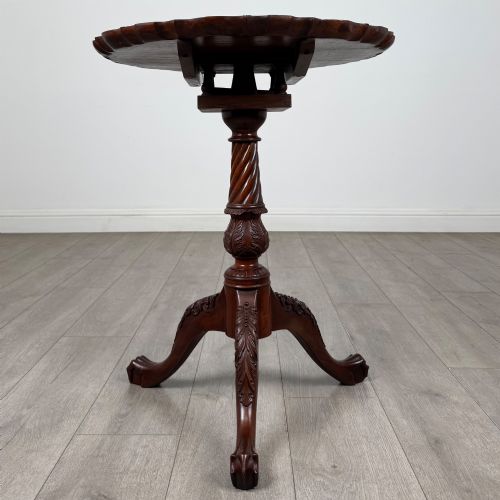
Quality rests in the crispness of the carved rim and the stability of the tripod base, where superior examples display hand-carved acanthus leaves or ball-and-claw feet.
The integration of the tilt mechanism and the depth of the timber's natural patina distinguish ambitious Georgian works from simpler later interpretations.
Piecrust Side Table Retail Price Guide 2026
Typical asking prices for piecrust side table among the pieces listed under this phrase on Sellingantiques today, from the lower quarter to the upper quarter. They describe what is for sale here now, not the wider market.
Shapland and Petter
The Piecrust Side Table Glossary
- Piecrust edge
- A raised, moulded tabletop border carved into alternating curves and points, resembling pastry work. This decorative feature required considerable skill with gouges to carve from solid timber.
- Tilt top
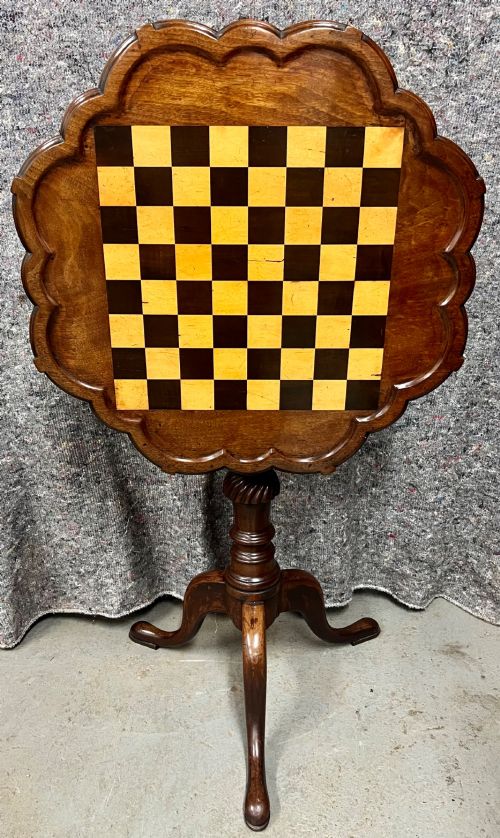
- A hinged tabletop mechanism that pivots vertically, enabling the table to stand flat against a wall when not in use. It is frequently found on tripod wine and centre tables.
- Birdcage
- A timber framework beneath the tabletop that allows the surface both to rotate and to tilt. This ingenious mechanism uses small spindles and blocks to secure the joint.
- Tripod base
- A support structure consisting of three curved legs radiating from a central pillar. It provides steady footing on uneven floors common in historic houses.
Piecrust Side Table: Frequently Asked Questions
What is a piecrust side table used for?
Originally, these small tables served as movable stands for tea service, wine decanters, or candlelight in formal sitting rooms. The raised rim prevented fragile ceramics and glassware from sliding off the edge.
Today, they function well as compact lamp tables, bedside stands, or decorative accents beside armchairs where surface space is limited.
How do I spot an 18th-century piece?
Authentic 18th-century examples usually exhibit deep, warm patination on the timber, hand-carved tripod legs, and construction marks appropriate for period hand tools. The piecrust edge on older tables is typically carved directly from the solid top plank rather than applied.
Revival pieces from the Victorian and Edwardian eras often show machine-finished uniformity or different joining methods beneath the tabletop when examined closely.
What does a tilt-top mechanism do?
The tilt-top mechanism uses a hinged block beneath the surface allowing the circular table top to pivot ninety degrees. This practical innovation meant servants could store multiple tables compactly against the perimeter of a dining room.
When buying, check that the brass catch or wooden peg securing the top in the horizontal position remains intact and operates smoothly.
Are these tables sturdy?
Tripod tables are surprisingly stable on uneven period floorboards because three points make firm contact without rocking. However, the central column relies on tight joints where the legs meet the pillar.
Avoid lifting a tilt-top table by the edge of the top alone, as this places unnecessary strain on the pivot mechanism and the supporting block.