



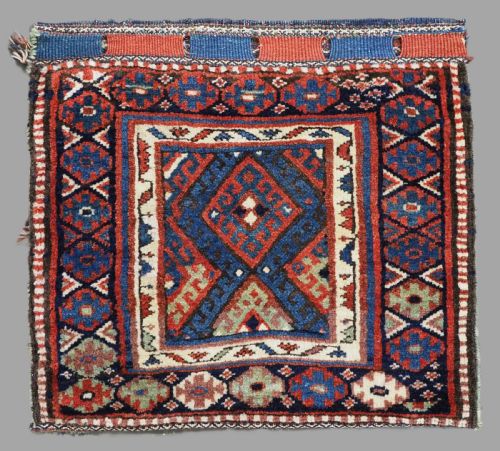
Persian Tribal Rug Bags
Persian tribal rug bags are woven utility containers created by nomadic and village communities for daily camp life.
Persian Tribal Rug Bags
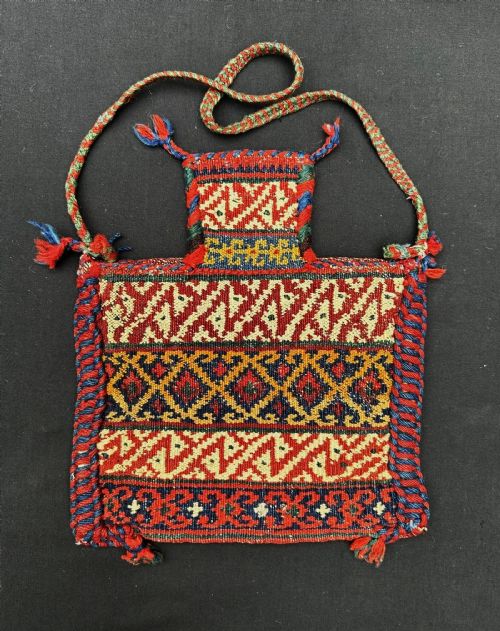
Persian tribal rug bags encompass functional items made by nomadic confederacies and tribal groups across the region. These containers served practical purposes in camp life, from storing salt and tobacco to carrying personal items and riding equipment.
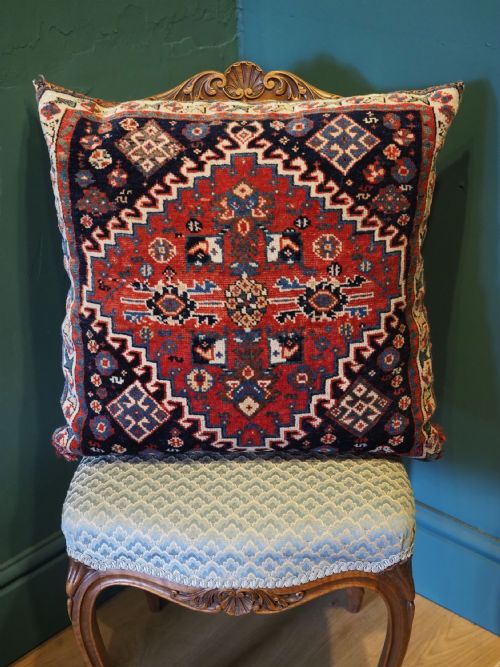
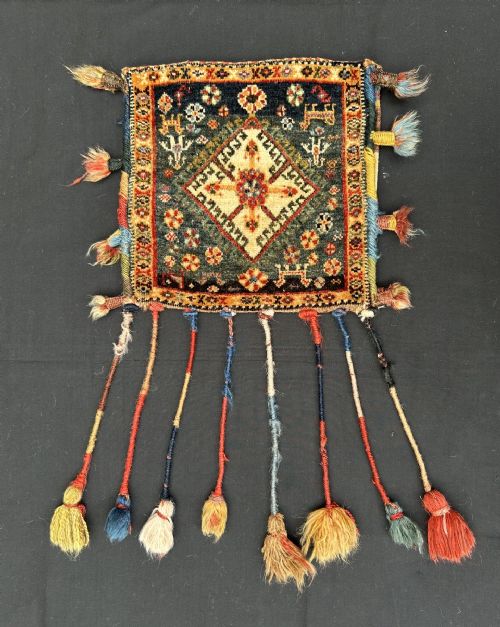
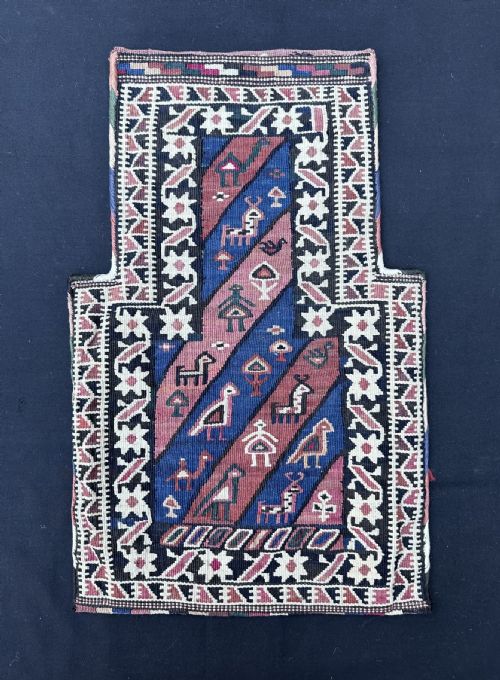
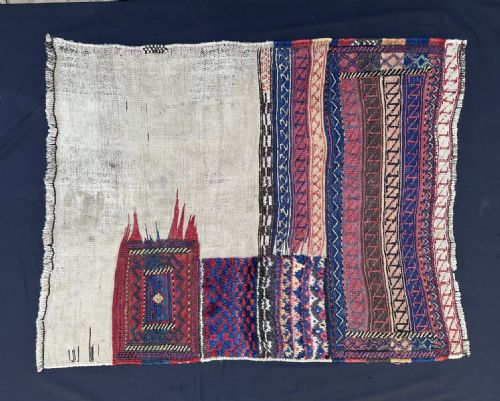
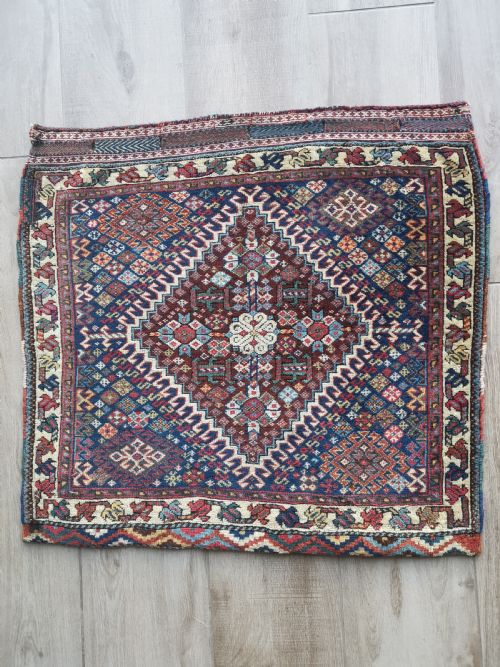
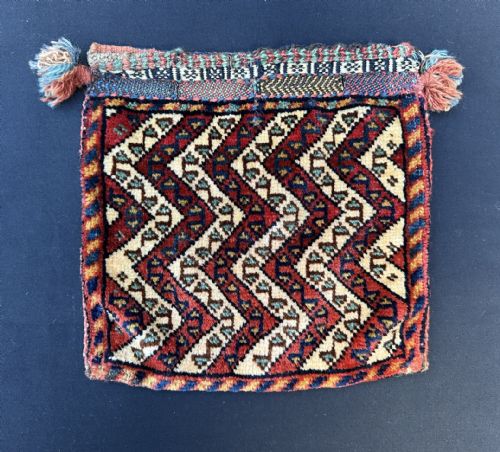
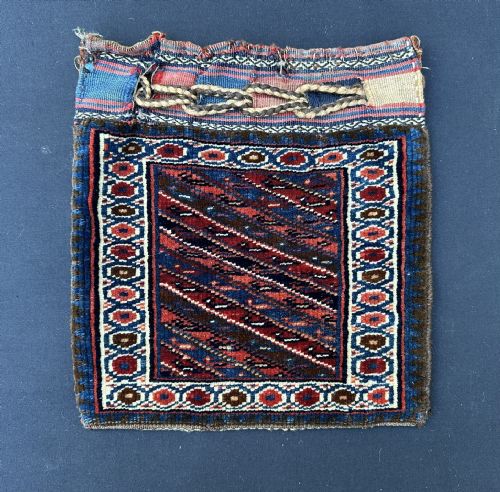
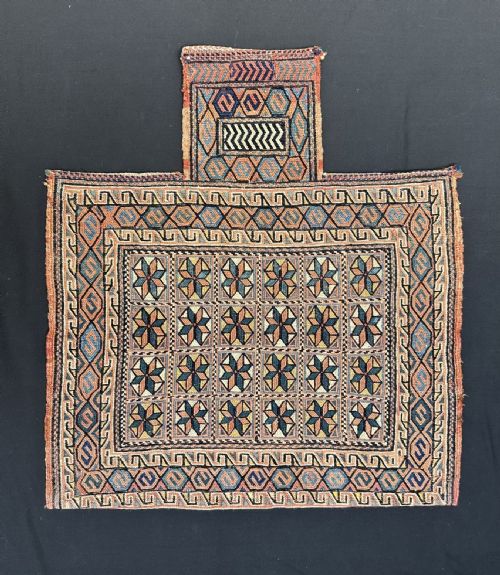
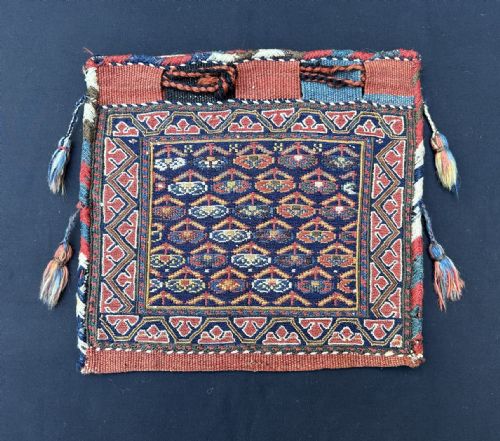
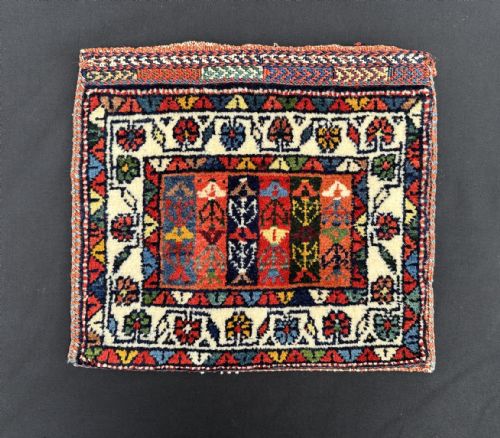
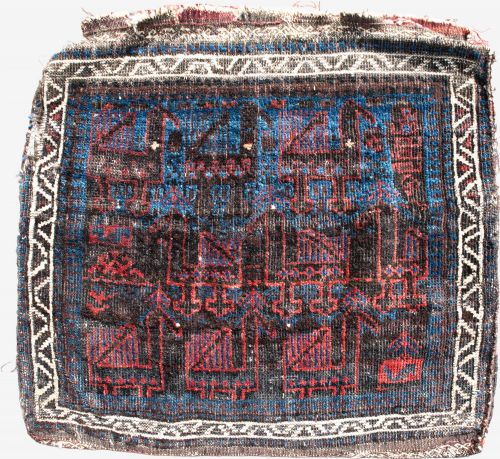
The pieces encountered most frequently on this page are vanity bags, salt bags, and saddle bag faces originating from groups such as the Qashqai, Afshar, Shahsavan, and Kurdish tribes. These surviving textiles represent the domestic weaving traditions of the nineteenth and early twentieth centuries.
Makers produced these containers using techniques suited to nomadic travel, constructing faces in pile or flatweave structures. Their compact dimensions reflect the portable nature of tribal possessions.
What varies in quality
Quality depends upon the tightness of the weave and the precision of the geometric or pictorial drawing. Finer knotting and well-proportioned motifs distinguish superior examples from simpler utilitarian pieces.
The depth and saturation of natural dye colours influence the visual success of the textile. Better specimens display harmonious secondary palettes and well-preserved structural edges.
Materials documented across the inventory include hand-spun wool, cotton, goat hair, and natural dyes, occasionally accented with cowrie shells.
The Persian Tribal Rug Bags Glossary
- Chanteh
- A small personal bag or vanity container woven by nomadic women for intimate use. These pieces often feature intricate miniature tribal designs.
- Khorjin
- A traditional double saddlebag used for transporting goods during migration. Surviving examples are frequently separated into individual bag faces.
- Soumak
- A flatweave technique involving wrapped weft threads that produce a durable surface resembling cable stitch. This method creates crisp geometric patterns without pile.
- Balisht
- A small pillow or cushion bag face utilised inside nomadic tents. They display dense tribal ornament across a compact format.
- Tacheh
- A large flatwoven storage container or wrapping cloth used by pastoral groups. These utilities accommodated bedding and household provisions.
Persian Tribal Rug Bags: Frequently Asked Questions
What were Persian tribal rug bags used for?
Nomadic groups utilised these containers for daily camp storage and transport during seasonal migrations. Specific forms accommodated salt, tobacco, spoons, and personal belongings.
They also functioned as saddle furniture on horses, camels, and donkeys. Their sturdy construction protected contents from dust and rough handling during travel.
How do I identify different tribal origins?
Attribution relies on characteristic structural traits, colour palettes, and specific geometric motifs associated with particular confederacies. Groups like the Qashqai, Afshar, and Shahsavan maintained distinct design vocabularies.
Edge finishes, wool characteristics, and specific weaving structures such as soumak work provide further clues. Regional dyeing habits also help separate northern workshops from southern nomadic outputs.
Are bag faces complete or cut from larger bags?
Many surviving examples are single bag faces that were once part of a paired saddlebag combination. When the connecting bridge wore out, the individual faces were often preserved separately.
Some pieces retain their original plain weave backs or complete construction elements. Both whole pairs and single faces appear frequently in historical collections.
How should I display a bag in my home?
These textiles adapt well to wall hanging using non-damaging display mounts or specialist textile Velcro. Their compact size suits smaller wall spaces where large carpets do not fit.
Sturdy flatweave pieces can also function safely as low-traffic table mats or cushion displays. Proper framing behind UV-filtered glass protects delicate wool fibres from excessive light.