



Persian Style Long Runner
A persian style long runner brings linear warmth and geometric tradition to a hallway or long space.
Persian Style Long Runner
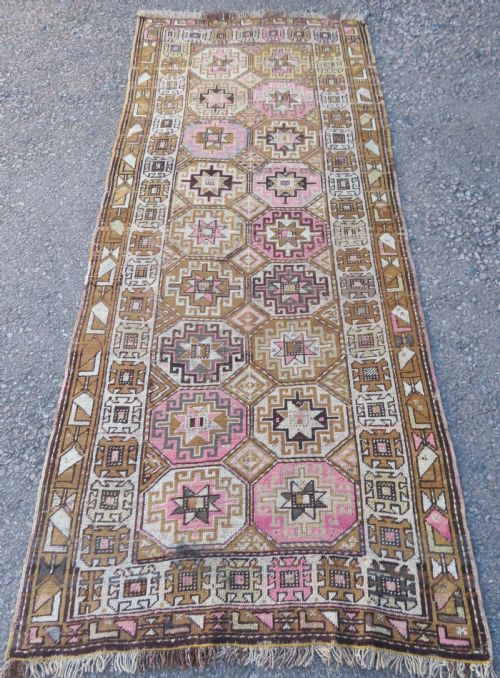
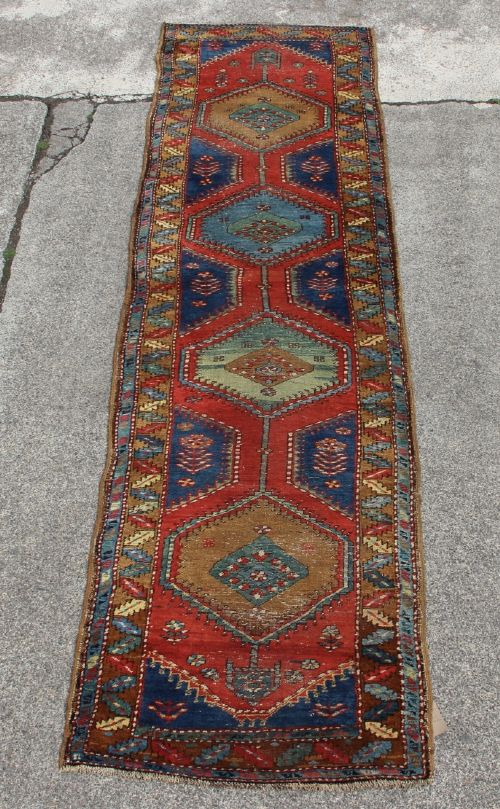
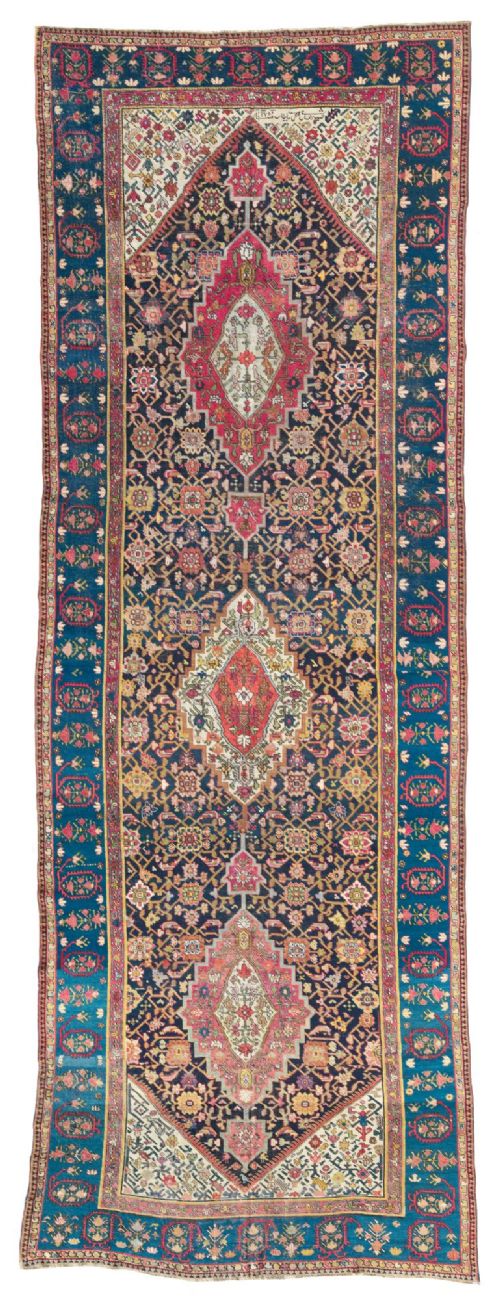
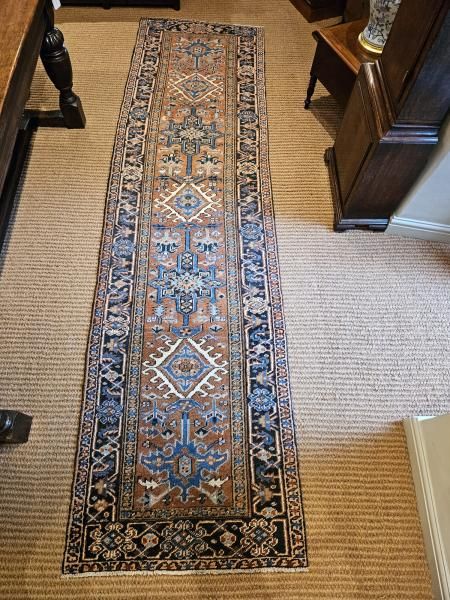
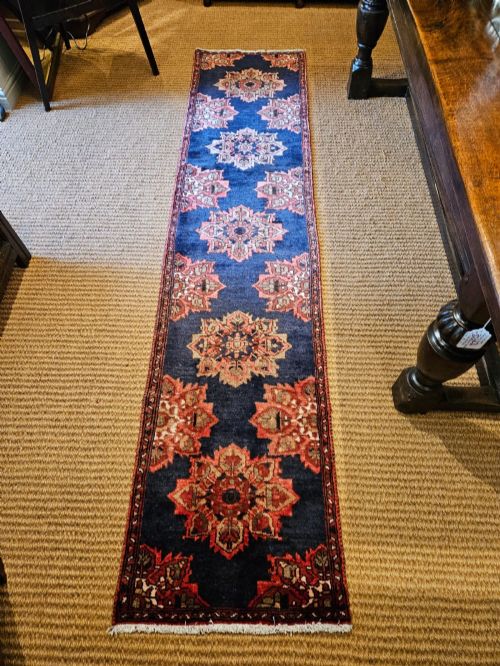
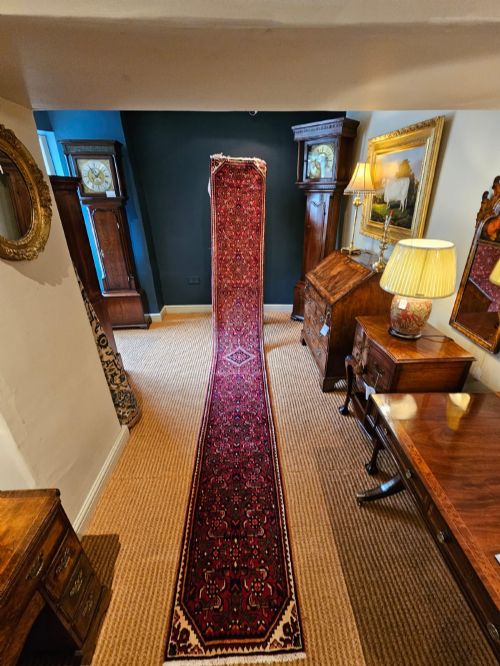
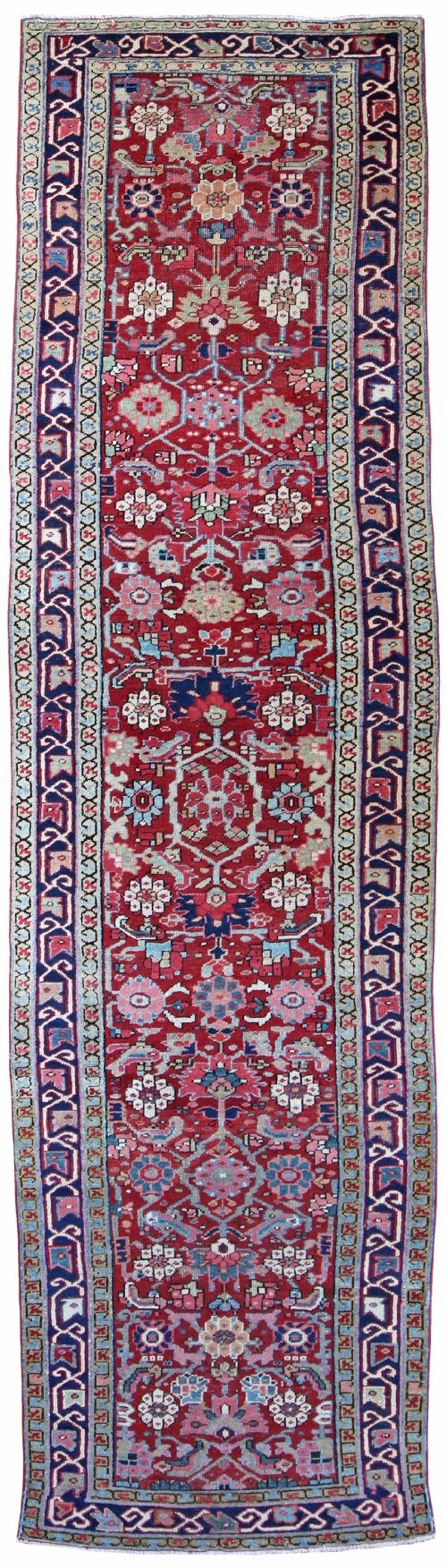
A persian style long runner provides a narrow and extended format designed specifically to fit corridors, hallways, and gallery spaces. These floor coverings draw upon traditional designs originating from various regions including Heriz, Sarab, Karaja, and Hamadan, spanning production dates from the mid-nineteenth century through the early twentieth century.
The pieces appearing on this page present distinct regional characteristics, such as the geometric medallions of Heriz or the camel hair fields typical of Sarab runners. Buyers will encounter formats ranging from compact hallway lengths exceeding two metres up to grand proportions stretching past five metres.
Choosing a runner means balancing length against the specific architectural constraints of a corridor while selecting a palette that complements existing interior woodwork and light levels. Each piece delivers a historic narrative through traditional motifs executed by tribal and village weavers.
Materials and Construction Techniques
These floor coverings utilise natural materials predominantly consisting of wool pile knotted onto cotton foundations, with occasional examples incorporating hand-spun wool and camel hair. The choice of resilient animal fibres ensures that the pile withstands the heavy foot traffic typically experienced in hallways.
Dyers employed natural and traditional colourants to achieve the deep olive greens, navy blues, and mellow tones visible across the selection. The combination of dense hand-knotting and durable foundation yarns accounts for the survival of these textiles over many decades.
Listings span production dates from eighteen-fifty to nineteen-thirty, incorporating wool, cotton, and camel hair materials.
Quality Variations
Quality in a persian style long runner depends upon the fineness of the knot density and the precision of the geometric or tribal drawing. Tighter knots allow intricate boteh and medallion patterns to maintain crispness and definition along the narrow axis of the rug.
The choice of materials also dictates the standard of the piece, where selections incorporating hand-spun wool or camel hair display greater depth of texture and tonal variation. Integrity of the original wool pile along the edges and ends separates well-preserved examples from those experiencing heavy historical wear.
The Persian Style Long Runner Glossary
- Kelleh
- A large format carpet or long rug traditionally proportioned longer than a standard room rug but wider than a corridor runner.
- Boteh
- A stylised almond or paisley motif representing a floral spray or cypress tree, frequently repeated across regional runner fields.
- Camel hair
- Undyed animal fleece producing a characteristic warm, golden-brown background tone found in specific village weavings.
- Medallion
- A central ornamental design motif placed symmetrically within the field of the rug.
- Pile
- The vertical or slanted cut loops of wool that form the upper usable surface of the woven textile.
Persian Style Long Runner: Frequently Asked Questions
How do I choose the right length for a hallway?
Measure your corridor while leaving an equal margin of exposed flooring around the perimeter of the rug to frame the space properly.
Ensure doors can swing freely over the thickness of the wool pile without catching on the edges.
Where should I place a long runner?
These narrow formats suit long entryways, narrow corridors, and passage spaces where linear decoration softens hard wooden or stone floors.
They also function effectively alongside long beds or within gallery landings to introduce warmth and texture.
How do I identify different regional village styles?
Heriz runners typically display bold geometric central medallions, whereas Sarab pieces often feature camel hair fields and understated Herati patterns.
Karaja and Hamadan weavings utilise distinct village palettes and rectilinear motifs that help separate them from workshop productions.
What underlay should I use?
Select a breathable, rubberised mesh underlay sized slightly smaller than the dimensions of the runner to prevent slipping on smooth floors.
This adds stability underfoot and protects the cotton foundation yarns from premature abrasion against hard surfaces.