


Persian Senneh Rug
A persian senneh rug brings woven West Persian artistry into a room, offering intricate patterns and durable materials that collectors seek.
Persian Senneh Rug
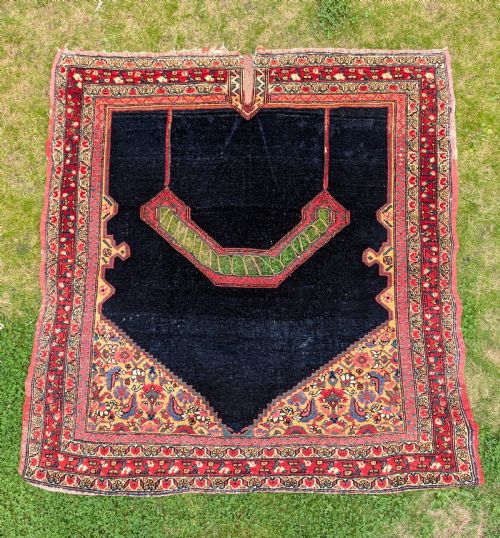
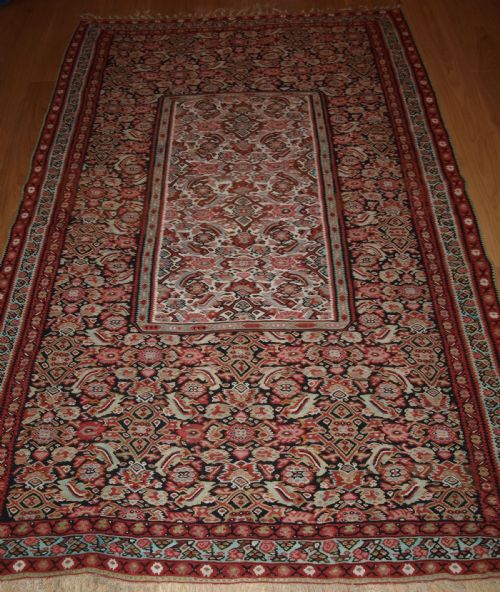
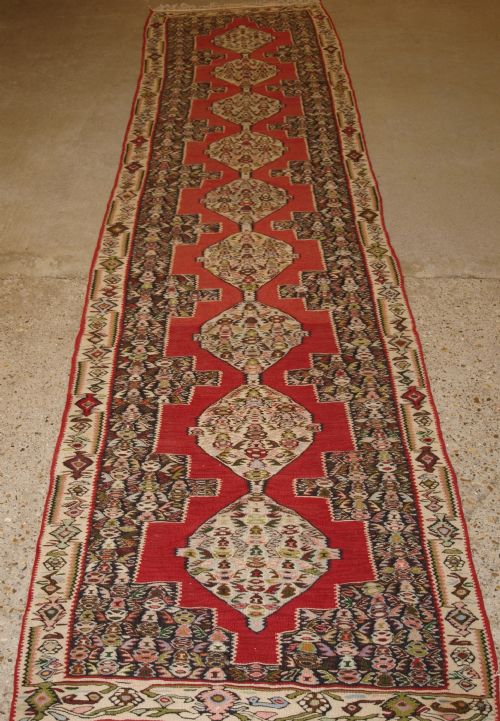
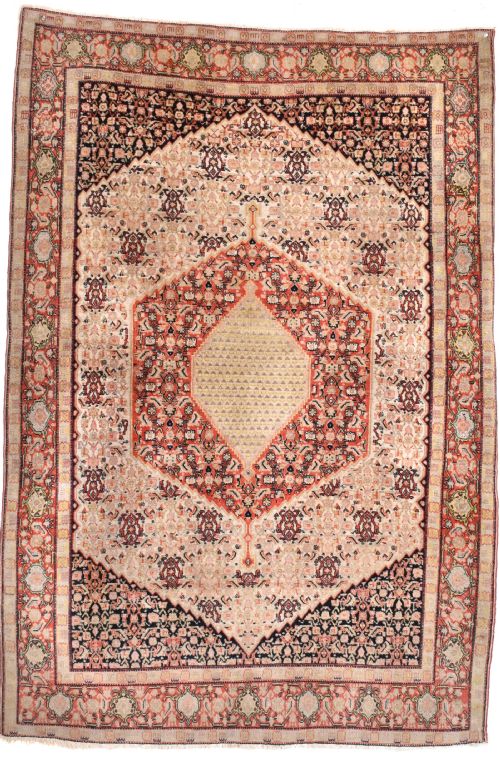
A persian senneh rug represents traditional weaving from Persian Kurdistan, created by Kurdish tribes in West Persia. These pieces include various formats such as standard rugs, runner rugs, saddle covers, and flatwoven kilims.
The pieces seen here range from small pushti sizes to larger area carpets, originating across the nineteenth and early twentieth centuries. Buyers frequently encounter woven formats featuring classic motifs like linked medallions and traditional patterns.
Originating from West Persian workshops and nomadic groups, these textiles combine regional design vocabulary with practical floor coverings. Each specimen reflects the specific weaving heritage of the Senneh region.
Materials and Construction Methods
Makers utilised wool, hand-spun wool, cotton, and silk to construct these knotted and flatwoven textiles. Wool forms the primary pile material, providing resilience, while cotton and wool frequently serve as foundation yarns for warps and wefts.
Weavers employed traditional techniques native to Persian Kurdistan to produce both pile carpets and flatwoven kilims. The careful manipulation of dyed yarns created structured geometric layouts and detailed floral elements like the gol farang design.
Surviving nineteenth-century saddle covers reveal that horses once travelled in considerably better decorative style than most humans.
Assessing Quality and Execution
Quality in these textiles depends on knot density, fineness of execution, and the precision of the woven design. Tighter knotting allows for sharper delineation of intricate medallion patterns and floral motifs.
The choice of materials also dictates overall caliber, with finely spun wool and occasional silk additions demonstrating superior craftsmanship. Preservation of the original borders, selvedges, and pile depth further distinguishes exceptional examples.
The Persian Senneh Rug Glossary
- Kilim
- A flatwoven textile produced without a pile, often featuring sharp geometric patterns and lightweight structure. These pieces function well as wall hangings or summer floor coverings.
- Pushti
- A small mat or rug designed for compact spaces or individual seating use. This term denotes format rather than a specific weaving technique.
- Kelleh
- A large rectangular carpet format, longer than it is wide, traditionally suited for specific room proportions. These formats provide substantial floor coverage.
- Gol Farang
- A recurring floral motif inspired by foreign garden designs, often featuring repeating rose patterns. This design element appears frequently in West Persian weaving.
- Warp
- The vertical foundation threads stretched lengthwise on the loom before weaving begins. Wefts are passed across these stationary threads to secure the knots.
Persian Senneh Rug: Frequently Asked Questions
How do I clean a vintage rug?
Gentle surface cleaning and professional textile care preserve the natural wool fibres without damaging the dyes. Avoid harsh chemical immersion.
Regular light vacuuming without a rotating brush prevents dust accumulation within the pile.
Where were these pieces made?
These textiles originate from Senneh and surrounding districts within Persian Kurdistan in West Persia. Local Kurdish tribes produced them using regional techniques.
Production spanned nomadic encampments and established weaving workshops throughout the nineteenth and early twentieth centuries.
Are these items durable for daily use?
Natural wool and cotton construction provides substantial durability for areas with moderate foot traffic. Placing an appropriate underlay beneath the textile prevents sliding and reduces friction.
Rotating the placement periodically ensures even wear across the surface over time.