


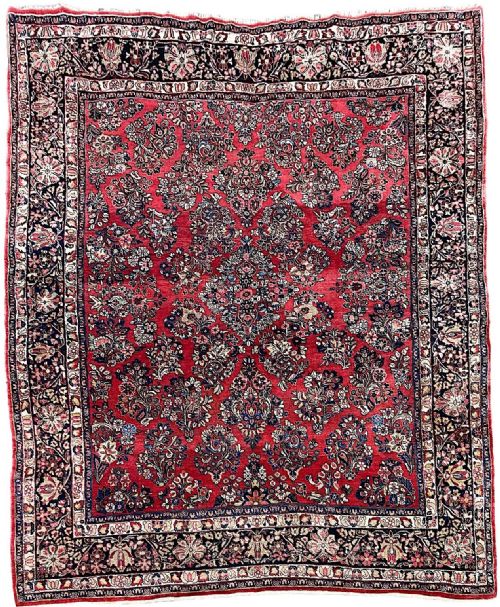


Persian Room Rug
A Persian room rug brings centuries of woven tradition into a modern space, offering substantial scale and rich geometric or floral motifs.
Persian Room Rug
When you search for a persian room rug, you encounter large-scale floor coverings originating from various distinct weaving centres across Persia and surrounding regions. These pieces date primarily from the late nineteenth century through to the mid-twentieth century, capturing a period of traditional craftsmanship.
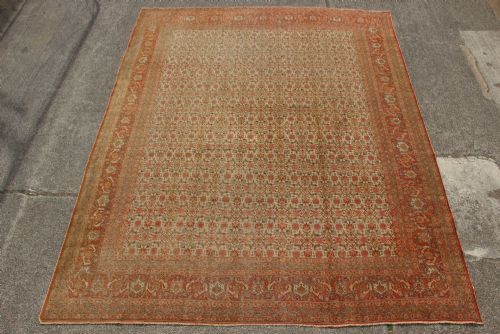
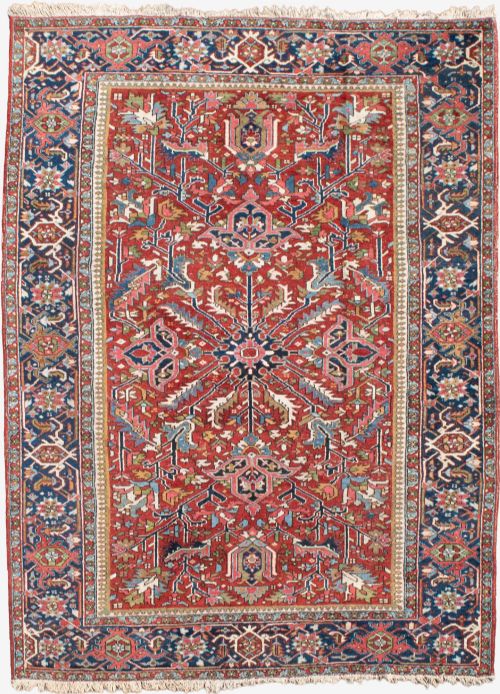
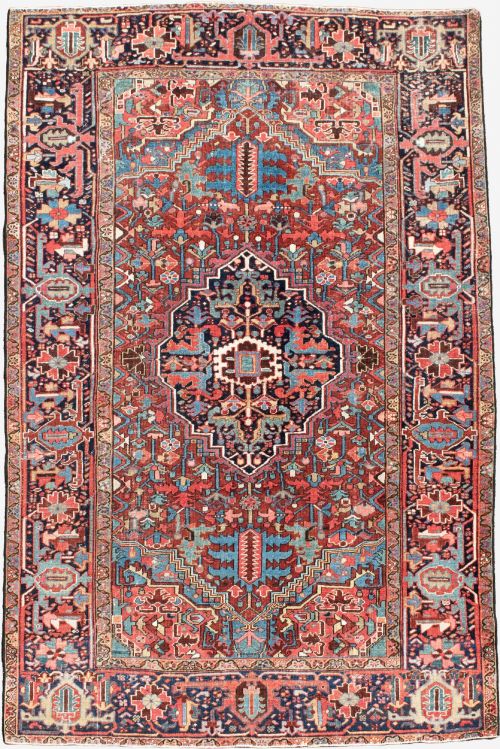
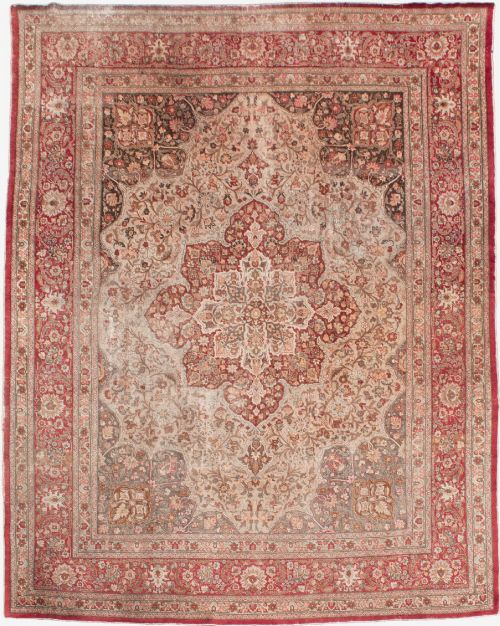
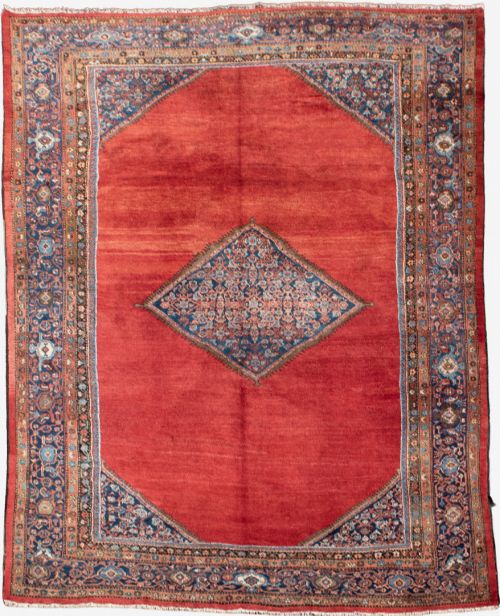
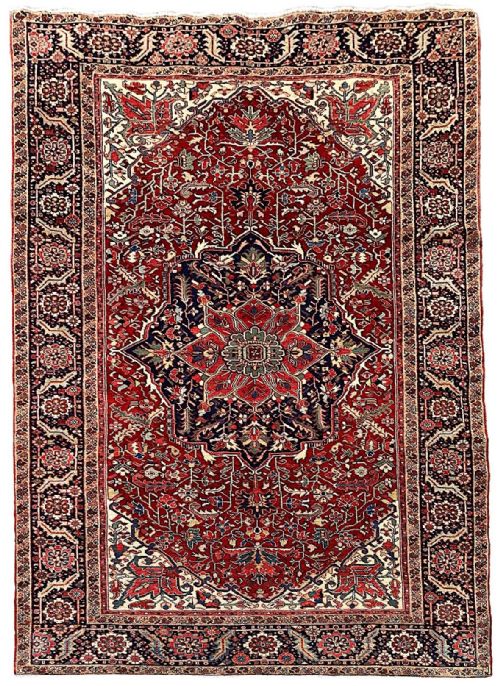
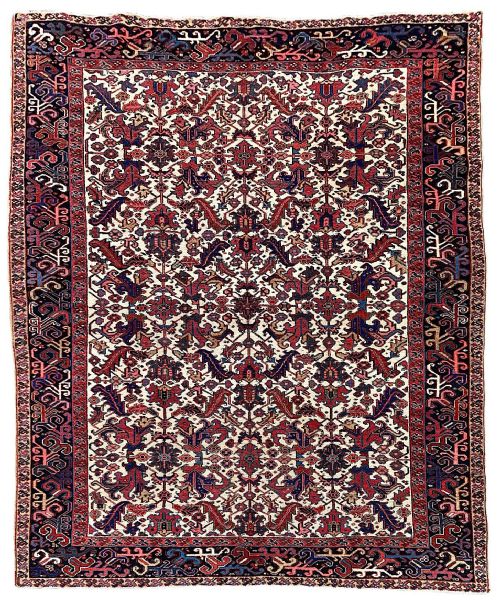
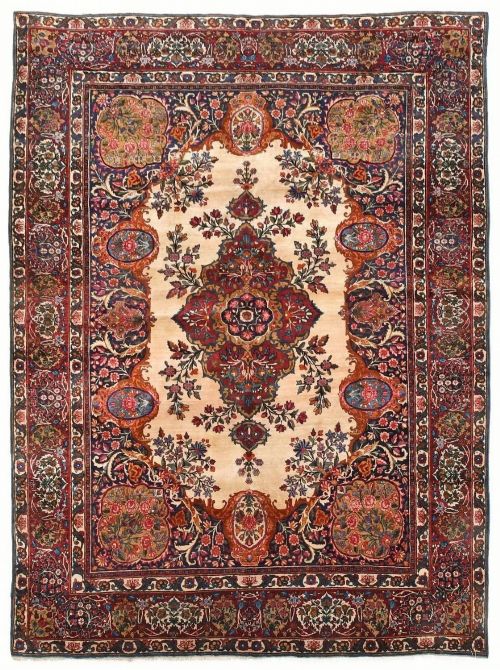
The most common forms on this page are generous room-size carpets rather than small scatter mats. Buyers regularly find substantial Heriz, Tabriz, Kirman, and Kashan carpets designed to anchor major living spaces and reception rooms.
Regional variations define the selection, ranging from the bold geometric medallions of Heriz to the intricate floral arrangements of Tabriz and Kirman. Each piece reflects the specific aesthetic and knotting traditions of its origin.
How they were made
The primary materials recorded in these listings are wool, cotton, and occasional silk highlights. Wool provides the durable, soft pile necessary for heavy foot traffic, while cotton serves as the sturdy foundation warp and weft.
Weavers hand-knotted these textiles onto vertical looms, utilising traditional techniques passed down through generations. Natural dye stuffs provided the deep reds, blues, and soft pastel tones seen across the surviving inventory.
Some carpets travelled thousands of miles by camel caravan before ever reaching a European country house floor.
What varies in quality
Quality in these carpets rests upon the fineness of the knot density and the precision of the design execution. Tighter knots allow for sharper detail in complex medallions and borders.
The grade of the wool also determines longevity and texture, with certain regions producing lanolin-rich fleece that retains a supple handle and natural sheen over decades of use.
Benlian Tabriz
The Persian Room Rug Glossary
- Warp
- The stationary vertical threads stretched on the loom that form the structural foundation of the rug. Fringe ends typically develop from these exposed threads.
- Weft
- The horizontal threads passed through the warp threads after each row of knots to compact and secure the pile. Proper tension ensures the carpet retains its geometric shape.
- Pile
- The vertical surface of cut or looped yarn that forms the usable soft top layer of the textile. Higher knot counts usually correlate with a denser pile.
- Medallion
- The large central ornamental design motif placed in the middle of the field. Many regional styles, particularly Heriz and Tabriz, organise their entire composition around this focal point.
- Kilim
- A flat-woven carpet or rug produced without a pile by tightly interweaving warp and weft strands. These pieces offer a lighter weight alternative to knotted wool carpets.
Persian Room Rug: Frequently Asked Questions
How do I clean an antique Persian rug?
Regular gentle vacuuming without a beater bar removes loose grit from the wool pile. Professional specialist cleaning remains essential for deep washing to protect the natural dyes.
Avoid household chemical detergents or excessive water immersion. Promptly blot liquid spills rather than rubbing them into the fibres.
Are these rugs suitable for high-traffic areas?
Traditional room rugs utilise dense hand-spun wool pile woven on sturdy cotton foundations. This construction withstands everyday domestic movement in hallways and sitting rooms.
Using a quality underlay prevents slipping and cushions the foundation fibres against premature wear. Rotating the carpet periodically ensures even exposure to light and foot traffic.
How do I identify a Heriz carpet?
Heriz carpets typically feature a bold, geometric central medallion balanced by robust corner spandrels. The colour palette often incorporates rich rust reds, deep indigos, and contrasting ivory.
Unlike curvilinear floral styles, Heriz designs employ stylized, angular botanical motifs. The heavy, durable handle distinguishes them from finer urban workshops.
What is the difference between Tabriz and Kashan rugs?
Tabriz rugs originate from a major northern weaving centre and showcase diverse designs, ranging from pictorial scenes to intricate Herati patterns. They often utilise a tighter, finer knot count.
Kashan rugs, by contrast, frequently display centralized floral medallions executed with exceptional curvilinear precision. Their wool pile tends to feel exceptionally soft and velvety.