


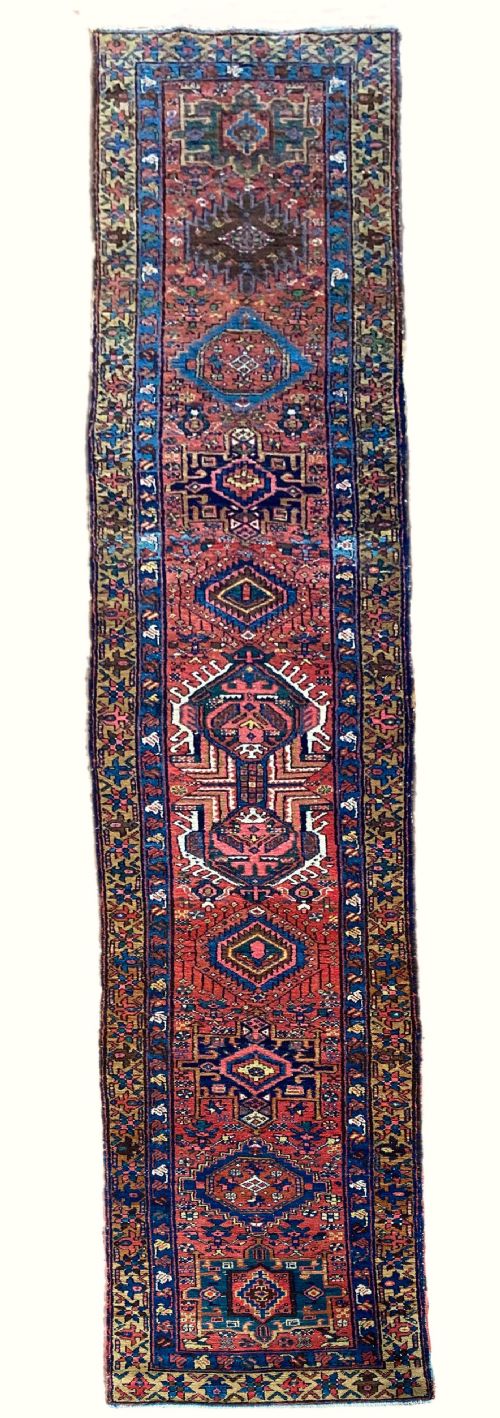

Persian Passage Rug
A persian passage rug brings structured pattern and deep texture to a corridor, anchoring long spaces with centuries of woven tradition.
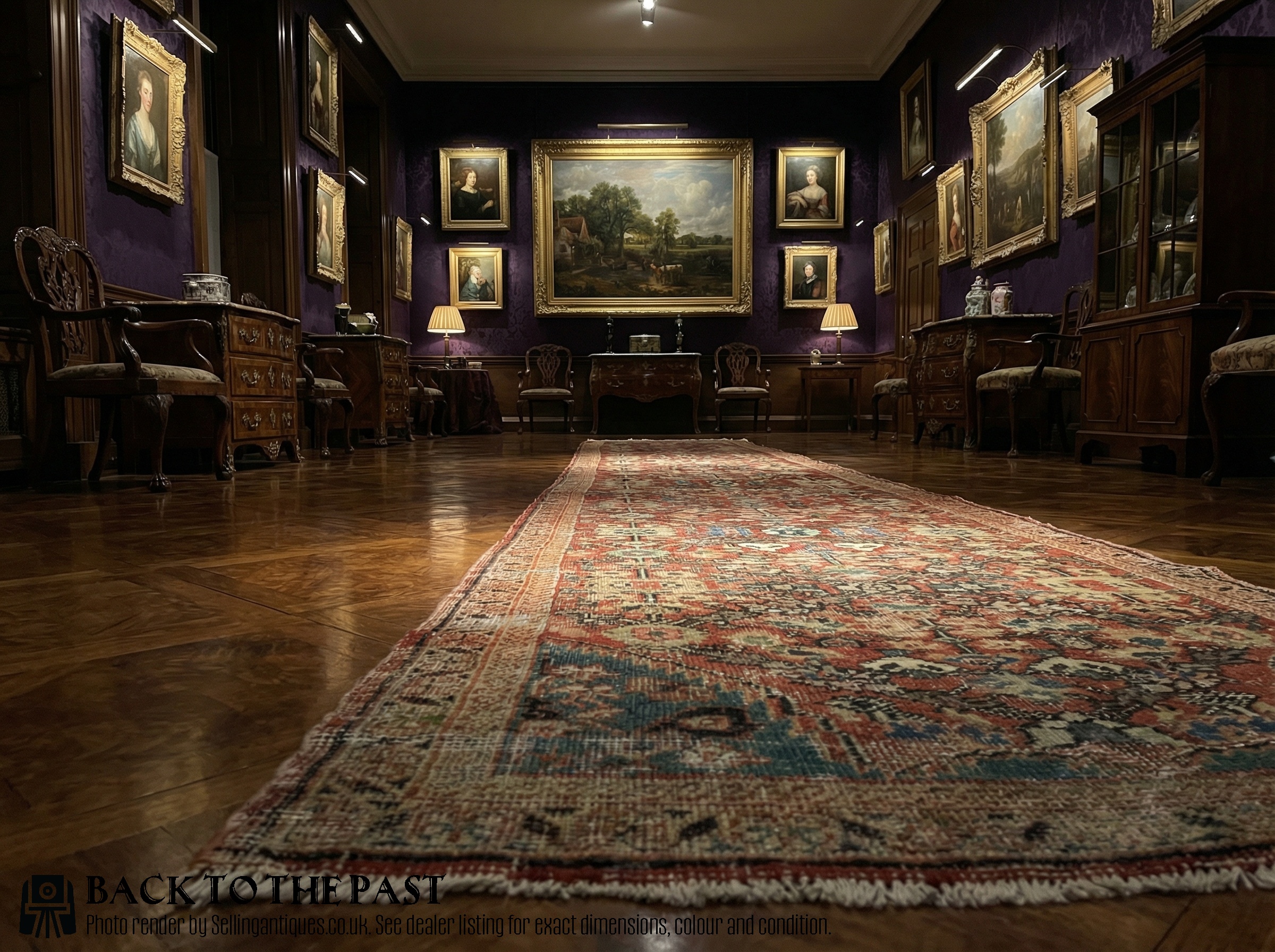
Persian Passage Rug
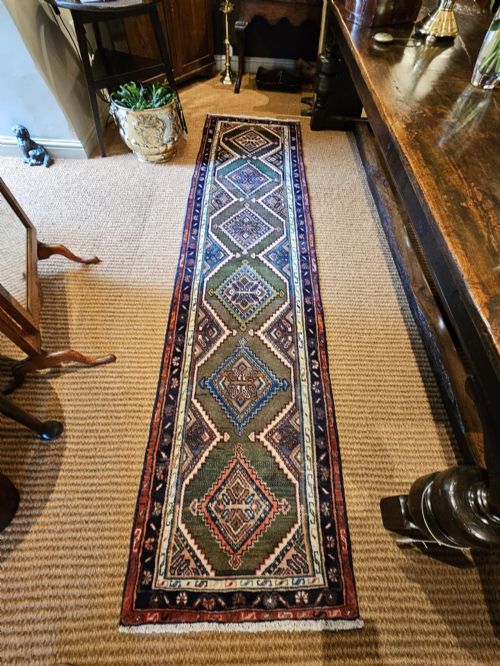
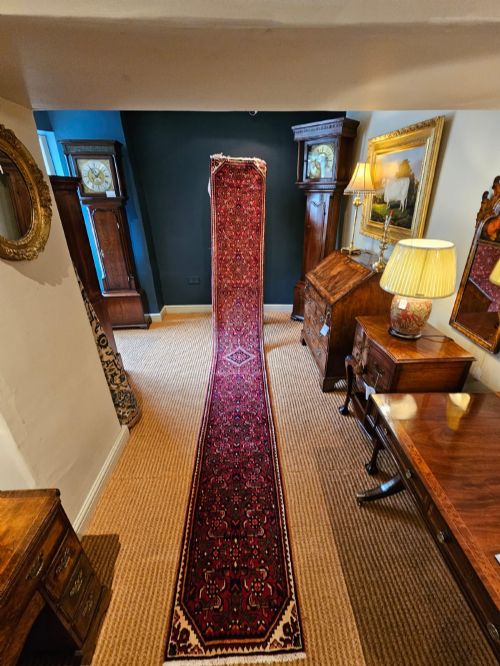
When you search for a persian passage rug, you encounter long, narrow floor coverings designed specifically for corridors, hallways and staircases. These pieces span from the late nineteenth century into the early decades of the twentieth century, bringing extended formats into domestic architecture. The listings show forms tailored for linear spaces, often categorised as runner rugs or gallery carpets.
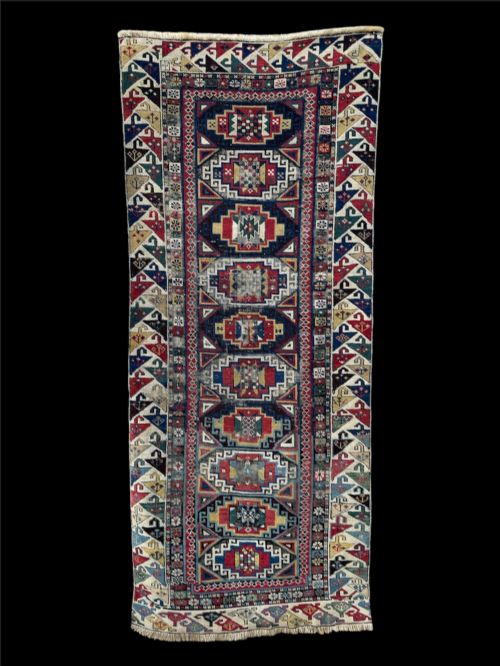
The regional origins of these runners trace deeply across Persia and the Caucasus, including specific workshops and tribal groups such as Heriz, Bidjar, Kurdish, Ferahan, Hamadan and Caucasian regions. Such pieces range from narrow strips spanning a metre or less in width to substantial gallery formats exceeding five metres in length. Each piece reflects the distinct weaving grammar of its specific origin.
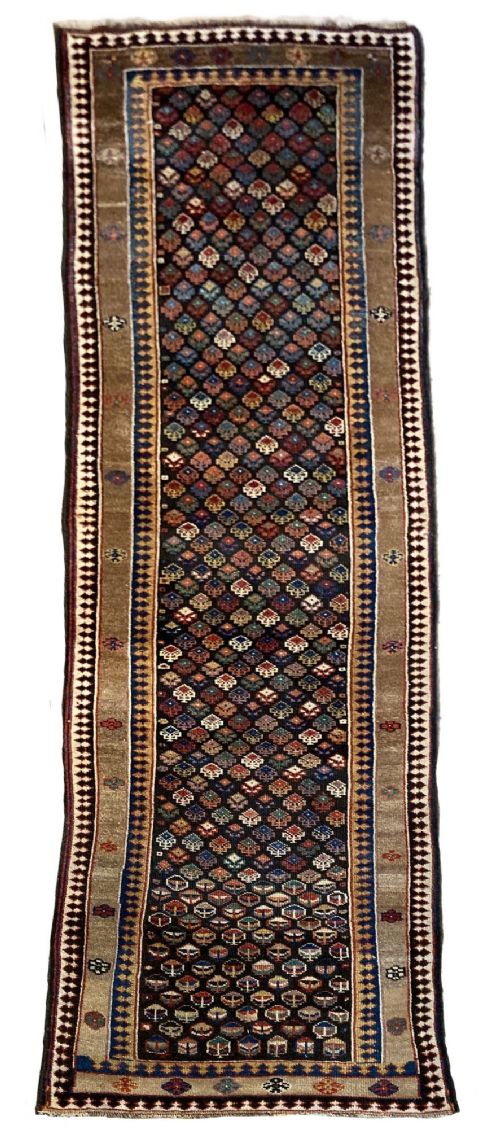
Traditional Persian and tribal styles dominate the selection, showing both geometric medallions and all-over repeating motifs such as the shrub design or boteh. These formats provide a practical solution for heavy foot traffic while introducing authentic period character to architectural transitions within a home.
Materials and construction
The construction of these pieces relies fundamentally on natural fibres, combining sturdy cotton foundations with resilient pure wool pile. This combination provides the structural stability required for long, narrow formats that must endure constant walking without distorting their linear shape.
Weavers utilised hand-knotted techniques on traditional vertical looms, employing durable knotting methods that lock the pile tightly against the warp and weft threads. Natural dye sources supplied the olive green, ivory and mellow chromatic backgrounds recorded across the nineteenth and early twentieth century examples.
Persian Passage Rug Retail Price Guide 2026
Typical asking prices for persian passage rug among the pieces listed under this phrase on Sellingantiques today, from the lower quarter to the upper quarter. They describe what is for sale here now, not the wider market.
The listings show runners spanning from the late nineteenth century through to the 1930s, constructed entirely from wool and cotton.
Evaluating quality and execution
The distinction between standard examples and superior pieces rests on the precision of the knotting and the fineness of the wool used in the pile. Tighter knot density allows for sharper definition in intricate geometric and floral patterns, ensuring the linear design remains crisp along the entire length of the runner.
Proportion and balance also govern quality, particularly in exceptionally long formats where maintaining a uniform width requires master craftsmanship. The integrity of the foundational cotton warp and weft determines how well the runner retains its straight alignment under sustained tension in a hallway.
The Persian Passage Rug Glossary
- Runner
- A long, narrow carpet format specifically woven for hallways, corridors and staircases. This shape directs movement through narrow architectural spaces.
- Warp
- The vertical foundation threads stretched lengthwise on the loom before weaving begins. The pile knots are tied around these structural strands.
- Weft
- The horizontal threads passed back and forth through the warp to secure each row of knots. They provide the transverse stability of the textile.
- Boteh
- A traditional teardrop or almond-shaped motif with a curved upper end, frequently seen in Persian and Kurdish designs. It symbolises life and eternity.
- Pile
- The dense, cut surface of wool yarn that forms the upper layer of the rug. Its quality and density dictate the tactile feel of the piece.
Persian Passage Rug: Frequently Asked Questions
Where should I place a long runner?
These pieces suit narrow domestic spaces such as hallways, corridors, landings and beside beds in larger bedrooms. Their elongated proportions naturally guide the eye and foot traffic down architectural transitions.
Ensure the chosen corridor allows adequate clearance for doors to open freely over the pile height. Using an appropriate underlay helps secure the rug on wooden or tiled hallway floors.
How do I care for an old wool rug?
Regular gentle vacuuming without a rotating brush bar removes surface dust before it settles into the wool pile. Professional cleaning suited to antique textiles preserves the natural lanolin in the fibres.
Protect the piece from prolonged direct sunlight to maintain the integrity of natural dyes. Rotating the runner periodically ensures even wear across high-traffic sections.
What defines a Kurdish runner?
Kurdish pieces originate from tribal weavers in western Persia, known for robust structures and distinctive geometric or boteh patterns. Their wool tends to be heavy and resilient, suited to demanding household use.
These tribal rugs often display spontaneous design shifts and rich, saturated palettes influenced by local generational traditions. They bring an authentic, earthy character to domestic interiors.
How do I measure my hallway?
Measure the clear floor space between skirting boards, leaving a uniform margin of exposed wood or stone on either side of the runner. Account for any doorway swings or radiator placements along the passage.
Check the length carefully to ensure the runner stops short of thresholds or stairs in a balanced manner. Long passages may accommodate exceptionally extended formats or a matched pair.