

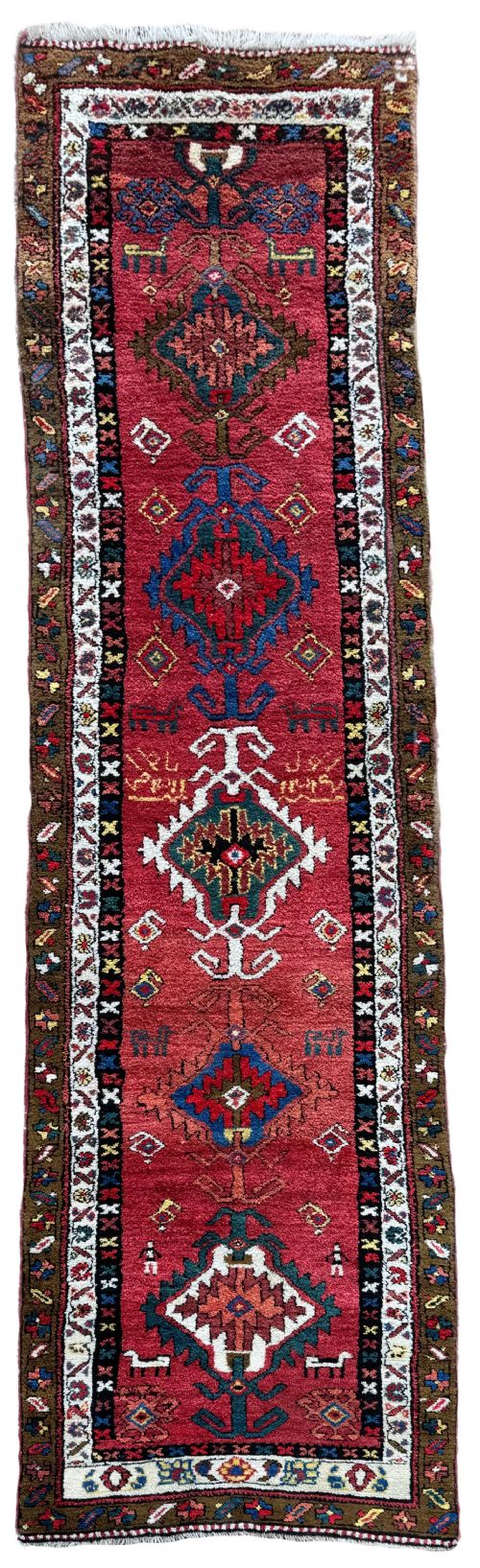
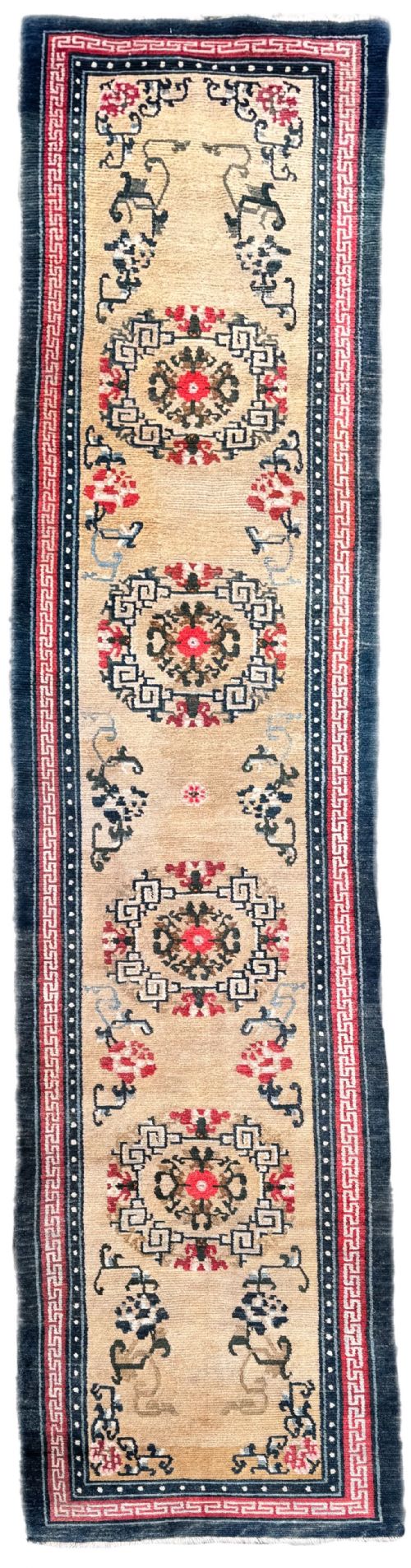

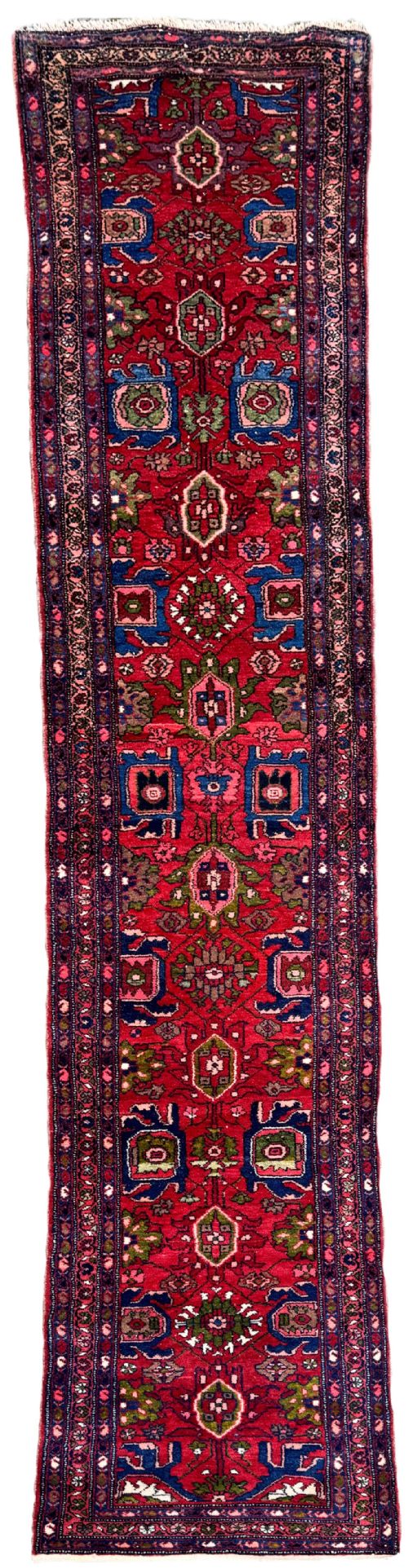
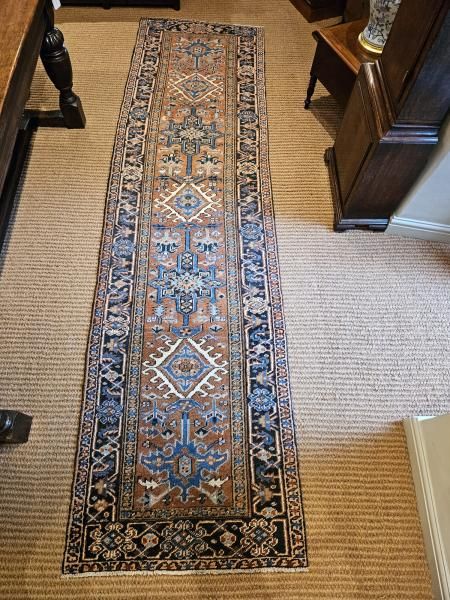

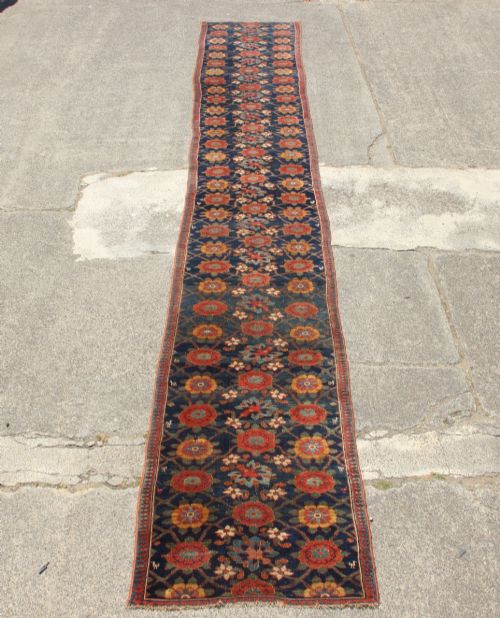
Long Hallway Rug
A long hallway rug draws the eye down an extended corridor, bringing warmth and character to otherwise bare floorboards.
Long Hallway Rug
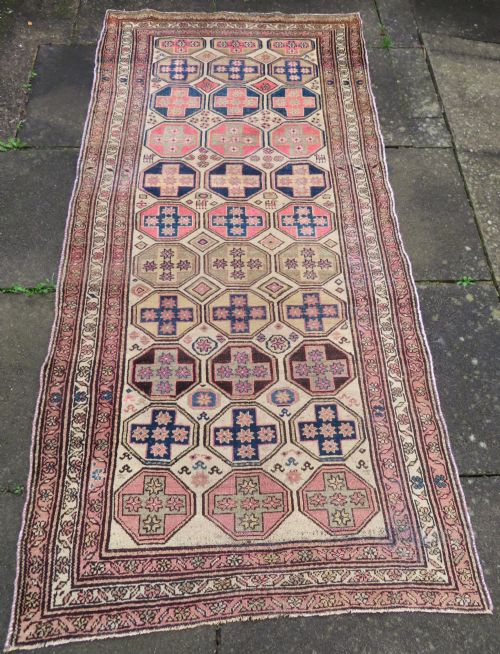
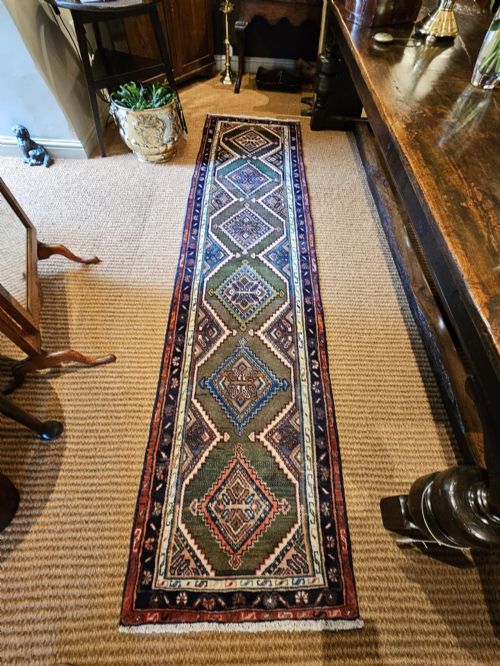
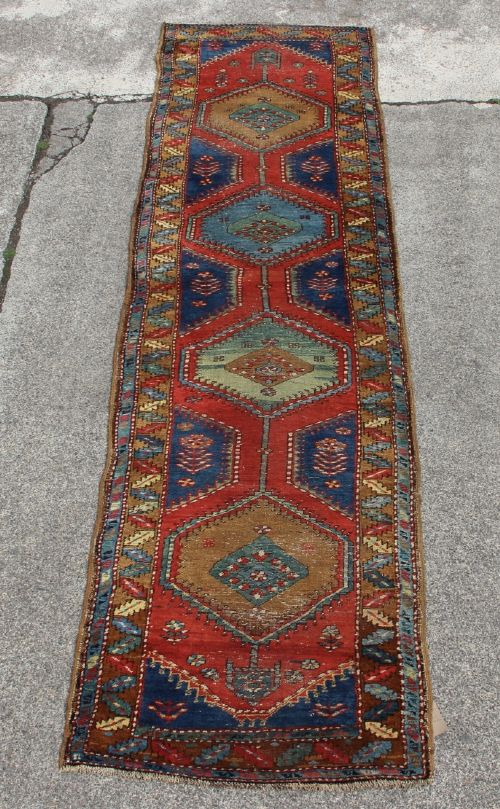
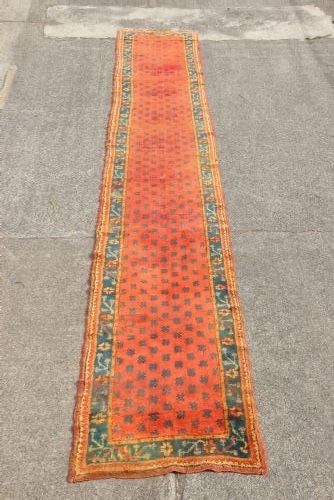
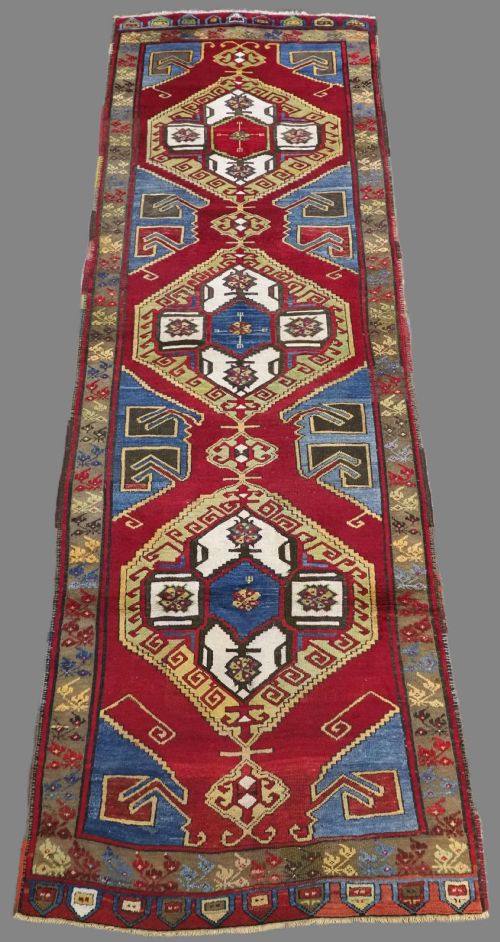
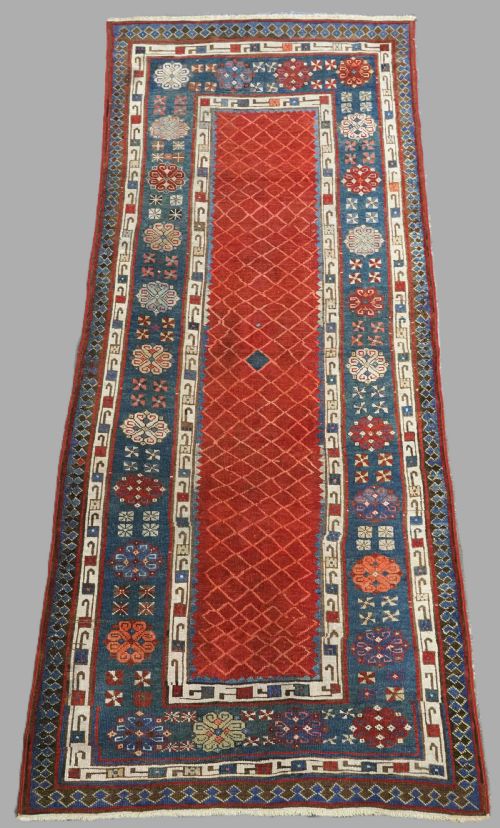
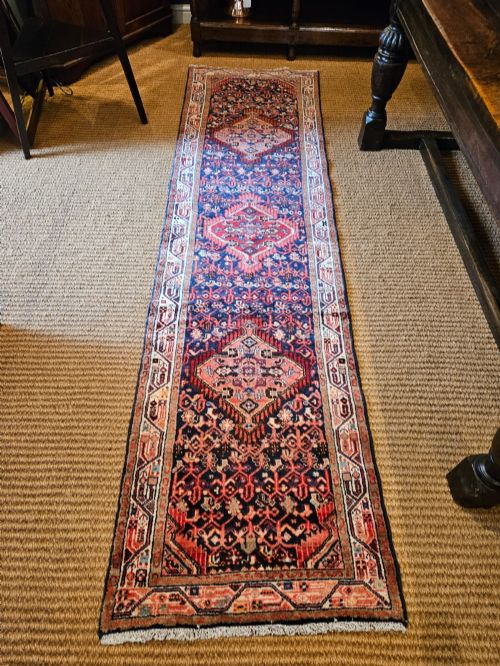
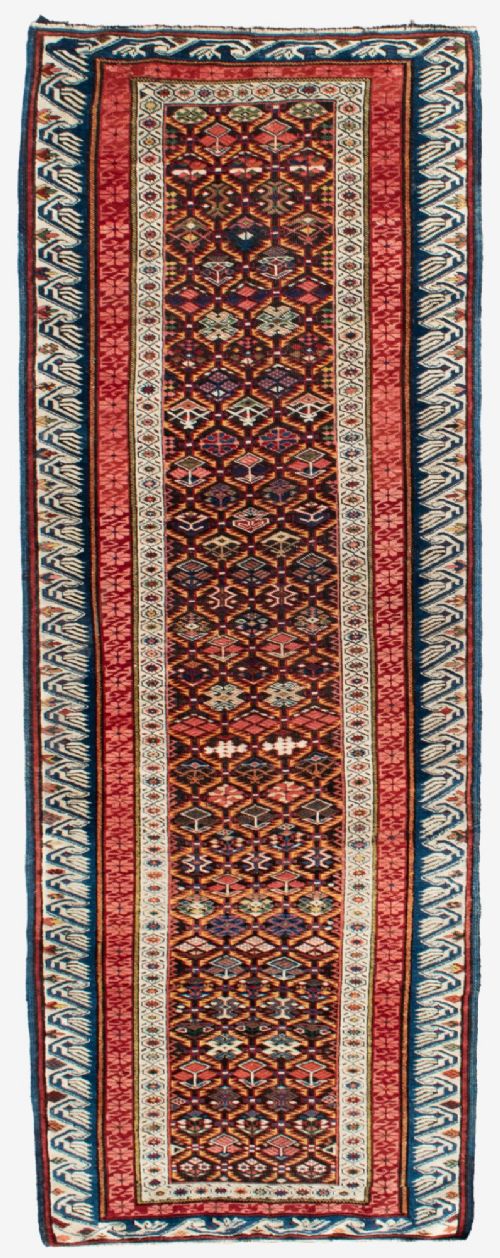
A long hallway rug provides a narrow, linear floor covering designed specifically for corridors, landings and extended passages within period properties. The selection centres heavily on nineteenth and early twentieth century pieces originating from Persian, Turkish and Caucasian weaving traditions.
Buyers will encounter traditional tribal and village formats such as Kurdish, Hamadan, Heriz and Shirvan runners. These textiles rely on elongated proportions to anchor narrow spaces while displaying rich geometric or floral motifs.
How they were made
The pieces listed here are constructed primarily from wool pile woven onto cotton foundations, utilising durable hand-tied knots that withstand heavy corridor footfall. Natural dye traditions govern the palette, producing deep tones of navy, olive green and terracotta that age gracefully over decades.
Village and tribal weavers employed upright vertical looms to create these elongated formats, often working from memory or traditional family designs rather than fixed paper cartoons.
Listings feature traditional wool runners spanning from the nineteenth century through to the 1930s, originating from Persian, Turkish and Caucasian weaving regions.
What varies in quality
Knot density and wool quality distinguish finer regional pieces from simpler utility runners, dictating both the crispness of the geometric lattice and the tactile handle of the pile. Better examples retain greater pile height and structural integrity along the original selvedges.
The artistry of the dye work and the coherence of the tribal design dictate desirability, with balanced proportions and saturated natural pigments marking out the superior specimens.
The Long Hallway Rug Glossary
- Runner
- A long, narrow carpet format specifically proportioned for corridors, hallways and staircases. It guides movement through a building.
- Selvedge
- The reinforced side edges of a rug formed by wrapping lateral warp threads to prevent fraying. Original selvedges indicate a well-preserved textile.
- Knot density
- The count of knots per square area on the reverse of a rug. Higher density generally permits finer, more detailed pattern work.
- Warp
- The stationary vertical foundation threads stretched tightly on the loom. Weft threads are beaten across them to lock the knots in place.
- Pile
- The upright cut or looped yarn surface of a rug forming the visible design. Wool is the traditional material for durability.
Long Hallway Rug: Frequently Asked Questions
How do I choose the right length?
Measure your corridor while leaving an equal margin of bare floorboards visible around the perimeter of the rug. This frames the textile properly within the space.
Account for doorways along the passage to ensure the runner does not obstruct them when opened.
Are these suitable for heavy foot traffic?
Traditional wool village runners were built for heavy domestic use in corridors and country houses. Their dense knotting handles daily passage well.
Use a quality underlay beneath the rug to prevent slipping and reduce friction against the floor.
How do I clean an antique runner?
Gentle surface brushing and careful vacuuming without a rotating power head removes embedded dust safely. Professional specialist cleaning is recommended for deep maintenance.
Avoid saturation and harsh chemical detergents that can damage natural wool fibres and traditional dyes.
How do I identify regional tribal designs?
Caucasian pieces frequently feature crisp geometric lattice patterns and primary colour palettes. Persian Heriz and Kurdish runners often display bolder tribal medallions and earthy tones.
Comparing the border arrangements and knot structures helps attribute a piece to its specific weaving origin.