


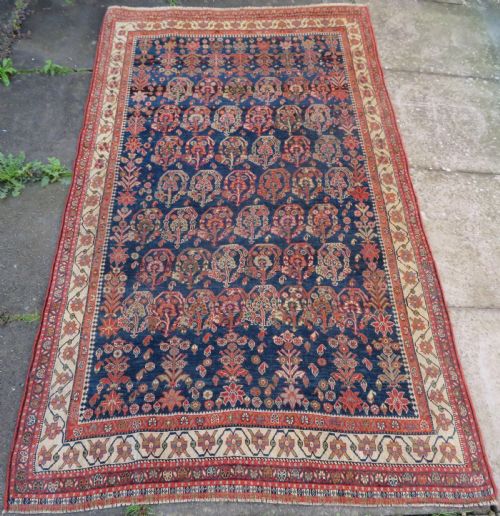
Persian Paisley Rug
These persian paisley rug pieces bring rich botanical motifs and deep history into a room, offering genuine texture through centuries of regional weaving traditions.
Persian Paisley Rug
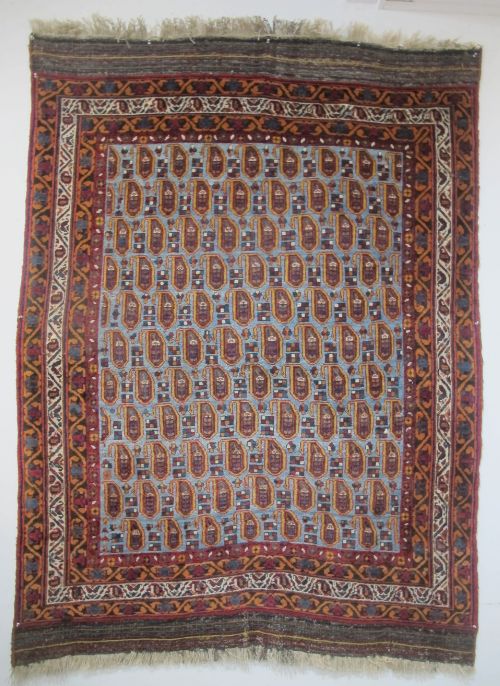
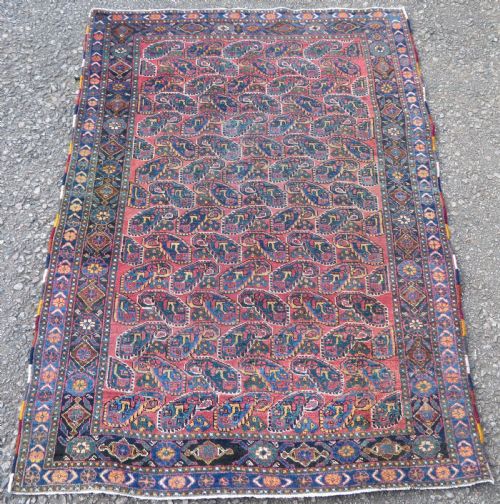
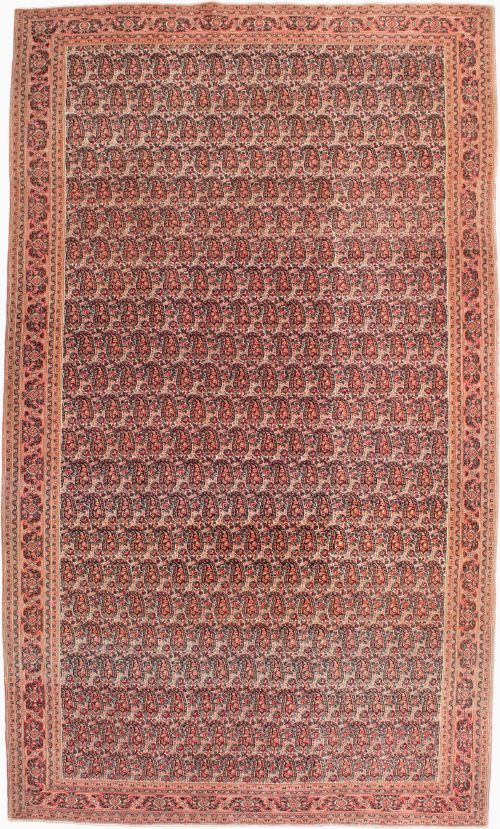
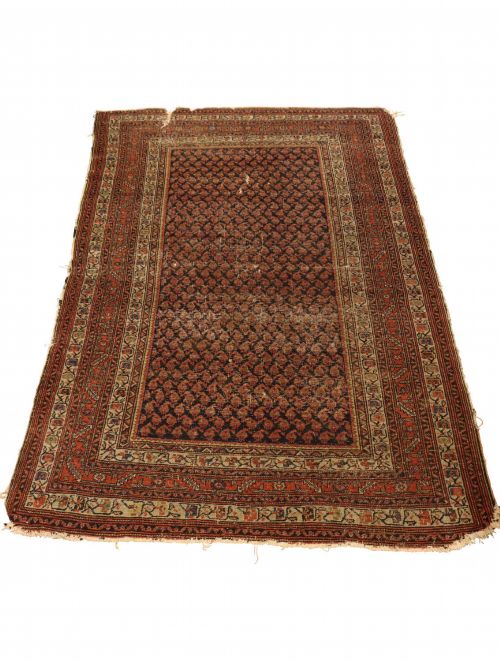
A persian paisley rug centres on the distinctive boteh motif, an ancient seed or almond-shaped symbol that appears repeatedly across field designs and borders. These floor coverings and textiles emerge from diverse regions including Khorassan, Kirman, and Serab, spanning the nineteenth and early twentieth centuries.
Buyers encounter village pieces alongside city carpets and tribal runners, each displaying distinct regional interpretations of the classic boteh pattern. Village workshops like Malayer and Hamadan produce expressive tribal variants, while urban centres like Tabriz and Qum deliver finely knotted formats.
The selection ranges from small area rugs to long gallery runners and embroidered wall hangings, incorporating wool, cotton, and silk materials. Many examples feature all-over repeating motifs, while others frame the design within structured medallion layouts.
Materials and construction
Weavers constructed these pieces predominantly using wool piles knotted onto sturdy cotton or wool foundations, utilising hand-knotted techniques to secure dense surface patterns. Certain textile variants employ intricate silk and felt appliqué work, stitching delicate fabrics onto dark felt backings.
Natural dye sources provided the rich palette of soft colours observed across the period, grounding the wool and silk fibres in enduring tones. Artisans integrated wool felt and embroidery threads with careful precision, ensuring the structural integrity of both pile carpets and flat textiles.
Geographic origins represented include major weaving regions such as Khorassan, Kirman, Tabriz, and Shiraz.
Judging quality and execution
Quality rests in the precision of the hand-knotting and the clarity of the boteh drawing, where tighter knots allow for sharper, more defined botanical outlines. Master weavers achieved superior handle and drape through careful selection of fleece and balanced foundation structures.
The sophistication of the palette dictates visual success, separating standard village production from exceptionally harmonious regional weaving. Depth of tone and skilled dye application create the subtle shifts in hue that elevate specific pieces above typical examples.
The Persian Paisley Rug Glossary
- Boteh
- A stylised almond, pear, or curved floral motif representing a seed, leaf, or flame. This iconic shape forms the central design element across these Persian rugs and embroideries.
- Serapi
- A specific regional designation associated with large-scale geometric interpretations of classic Persian carpet patterns. These rugs typically display bold, open fields and strong architectural borders.
- Kelleh
- A large format runner or extended carpet proportioned significantly longer than it is wide. This format served traditional room layouts requiring narrow, linear floor coverings.
- Applique
- A decorative needlework technique where pieces of fabric, such as silk, are stitched onto a larger background material like felt. Rasht embroideries frequently utilise this method to build layered pictorial designs.
- Kirman
- A city in south-central Persia renowned for sophisticated workshop carpets featuring floral compositions. Weavers from this region utilised fine wool and balanced colour palettes.
Persian Paisley Rug: Frequently Asked Questions
How do I clean a antique rug?
Professional specialist cleaning is essential for antique wool and silk textiles to protect natural dyes and fragile foundations.
Regular gentle surface vacuuming without a rotating beater bar helps remove trapped dust between the fibres without causing abrasion.
Where were these pieces made?
Production spans specific tribal territories, rural villages, and major weaving cities across nineteenth and early twentieth-century Persia.
Distinctive regional characteristics identify pieces from origins such as Afshar, Khorassan, Tabriz, and Qashqai.
What does boteh mean?
The boteh is a traditional Persian motif shaped like an almond, bent shoot, or cypress tree.
It symbolises life, eternity, and fertility, appearing as either a single focal point or repeated across the field.
Can I place a runner in a hallway?
Long gallery runners and narrow formats suit high-traffic corridors and staircases when paired with a quality underlay.
An appropriate rug pad prevents slipping and cushions the wool pile against heavy foot traffic.
How do I date a carpet?
Dating relies on analysing structural traits, knot density, dye chemistry, and regional design evolution across the nineteenth and twentieth centuries.
Comparative study of wool preparation and stylistic shifts helps narrow the period of origin.