


Hamadan Village Carpet
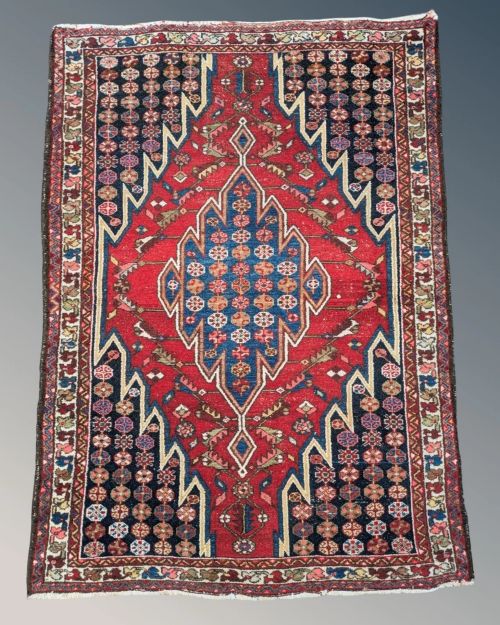
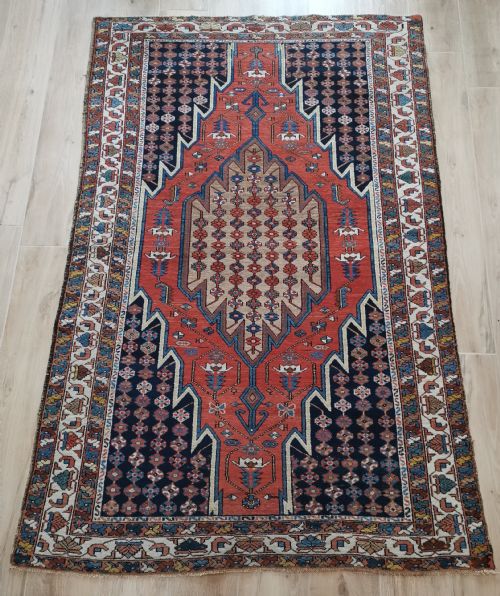
These hamadan village carpet pieces bring genuine Persian tribal warmth and practical durability to floors.
Hamadan Village Carpet
These items typically fall under Persian tribal and traditional Persian styles, often associated with specific weaving groups such as Kurdish weavers or specific districts like Mazlagan and Borodjert. Buyers frequently encounter room-sized pieces alongside smaller area rugs, all reflecting the domestic weaving traditions of the region.
The aesthetic is grounded in village production rather than city workshop output, displaying geometric motifs, floral lattices, and regional designs. Each piece carries the distinct character of the weavers who produced them in the early decades of the twentieth century.
What varies in quality
Quality in these textiles rests upon the density of the weave, the handling of the wool, and the integrity of the structural foundation. Finer knotting and well-preserved pile thickness separate robust examples from those showing heavy wear.
The visual appeal of the design work and the balance of the regional motifs also distinguish individual pieces. Variations in wool quality and the precision of the village weaving influence how well a rug retains its structure over decades.
Materials seen in these listings are strictly limited to wool and cotton across all recorded items.
The Hamadan Village Carpet Glossary
- Pile
- The upright yarn loops or tufts that form the usable surface of the carpet. In these listings, the wool pile provides the primary texture and warmth underfoot.
- Runner
- A long, narrow format of carpet suited for hallways and corridors. Several examples on this page are designated as runners or hallway runners.
- Foundation
- The underlying grid of warp and weft threads that supports the pile knots. Cotton is commonly used for this structural base in these village pieces.
- Kurdish
- Pertaining to the ethnic group of weavers in the Hamadan region. Certain pieces in the collection are specifically attributed to Kurdish weavers.
- Floral lattice
- A repeating geometric network of flower and plant motifs. This design structure appears across regional rugs from the nineteen twenties.
Hamadan Village Carpet: Frequently Asked Questions
Where were these rugs made?
These rugs were woven in the Hamadan region of Persia, encompassing various villages and settlements. Production often involves specific local traditions, including those of Kurdish weavers.
The geographical scope includes districts such as Mazlagan and Borodjert. Each village brought distinct regional patterns to their weaving.
How old are these carpets?
The pieces available date from the early twentieth century, spanning the decades between nineteen hundred and nineteen thirty. This period represents traditional village production before modern commercial methods dominated.
Dating is determined by stylistic elements, structural materials, and historical records associated with early Persian village weaving.
What materials are used?
The construction relies primarily on wool for the thick surface pile and cotton for the internal foundation threads. These natural materials provided the durability required for village floor coverings.
The combination ensures both flexibility and structural strength, allowing the textiles to endure heavy daily use over generations.
How do I choose a runner?
Selecting a runner involves measuring your hallway or narrow space to ensure the length and width fit the proportions of the room. Hamadan runners offer substantial pile and robust construction suited for corridors.
Consider the scale of the pattern and the dimensions of the specific piece to complement your hallway layout.