


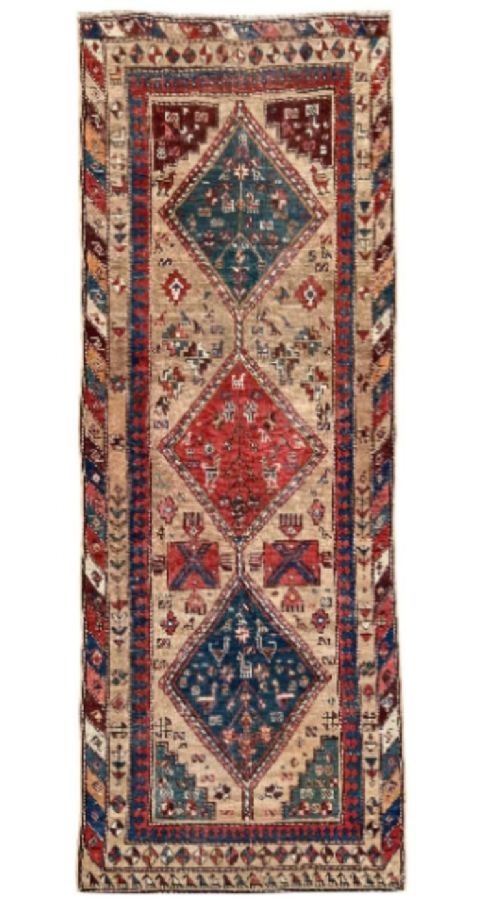
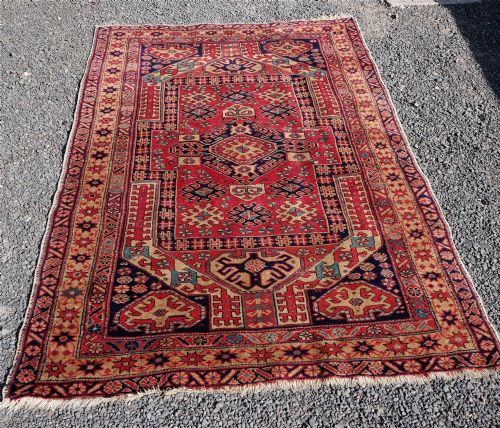
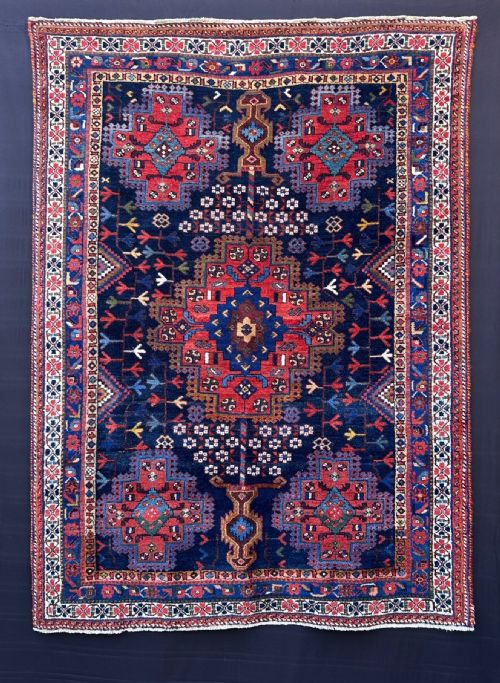
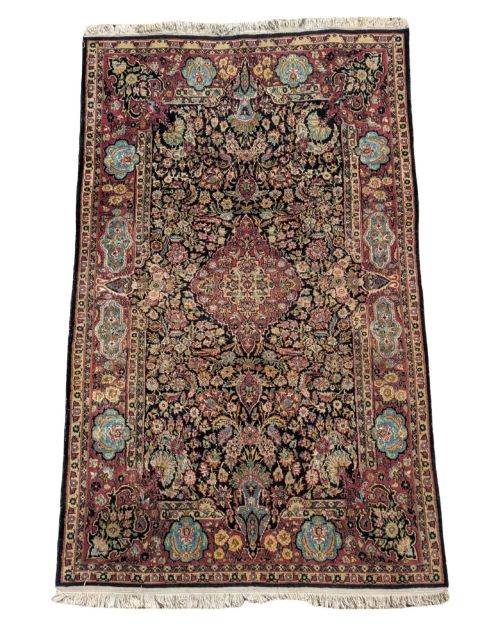
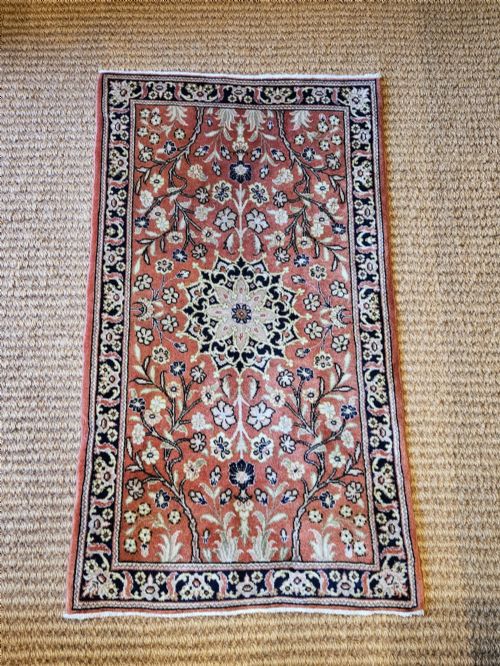
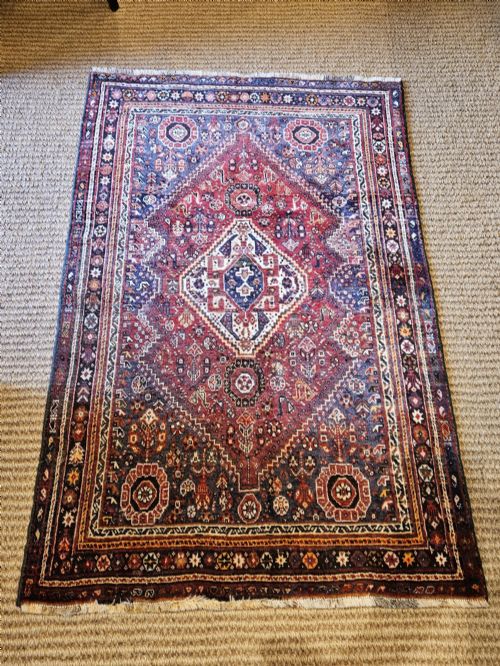
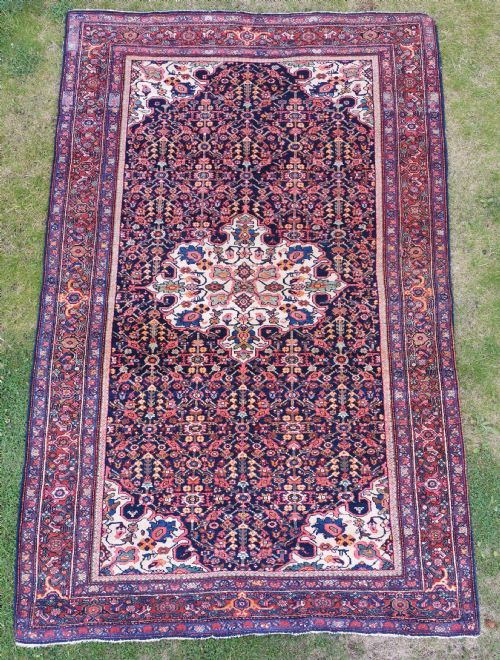
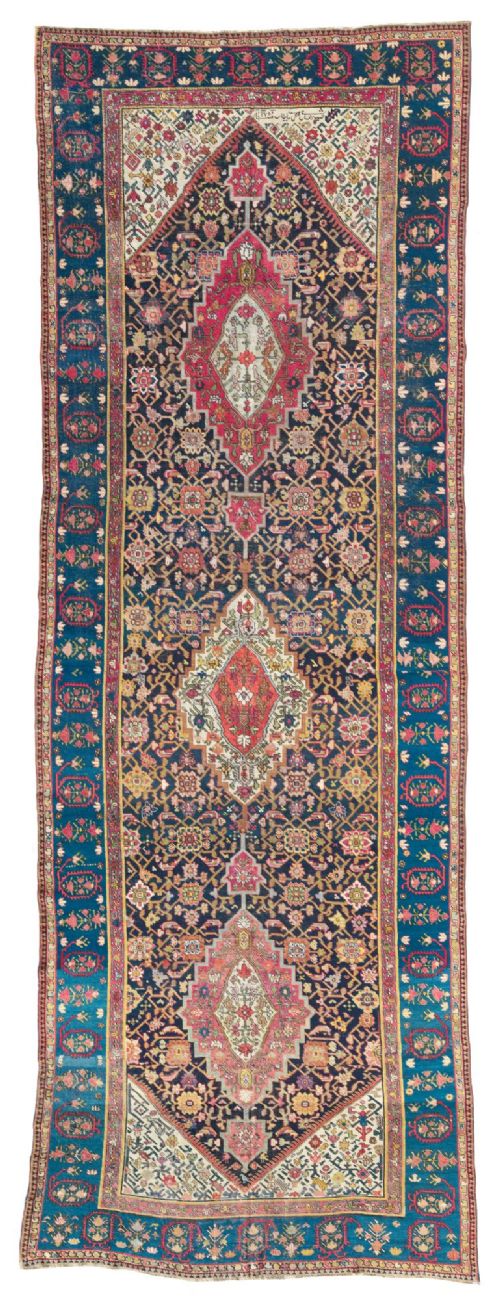
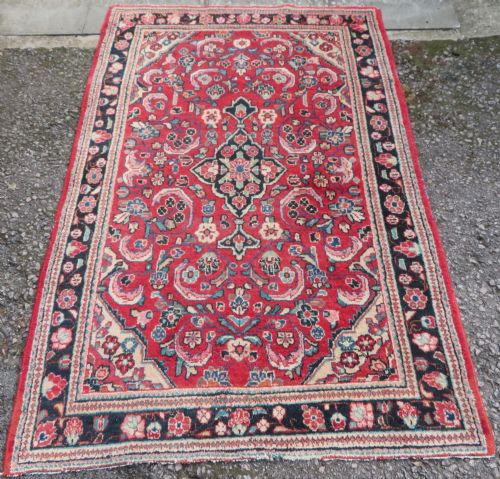
Persian Medallion Wool Carpet
A persian medallion wool carpet anchors a room with dense botanical or geometric motifs woven by hand over generations.
Persian Medallion Wool Carpet
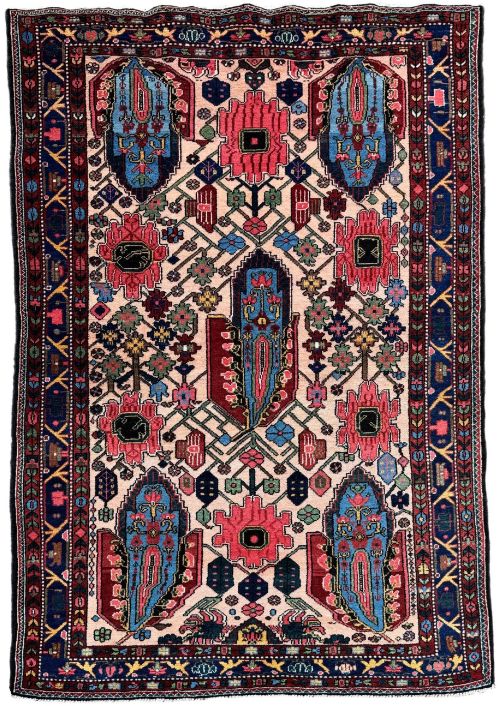
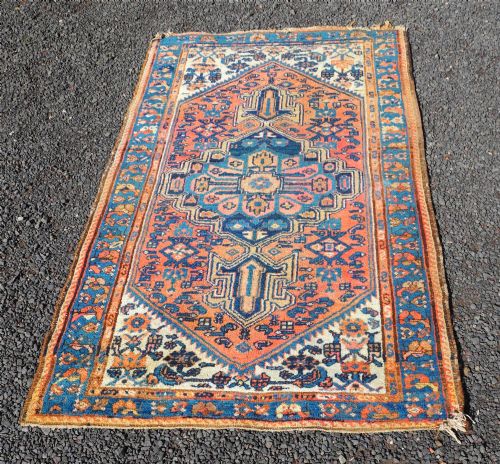
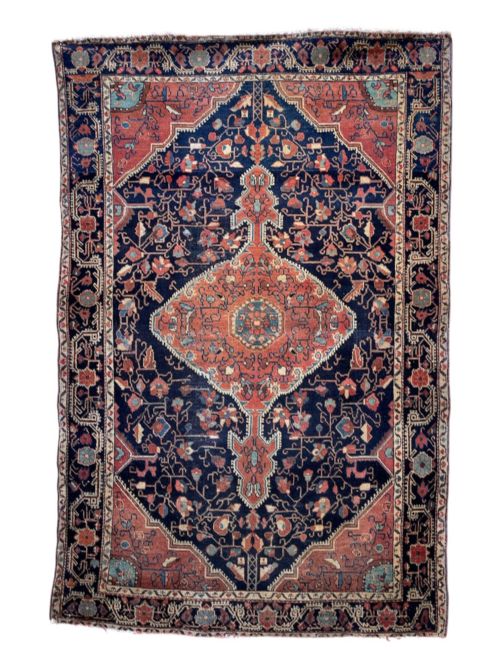
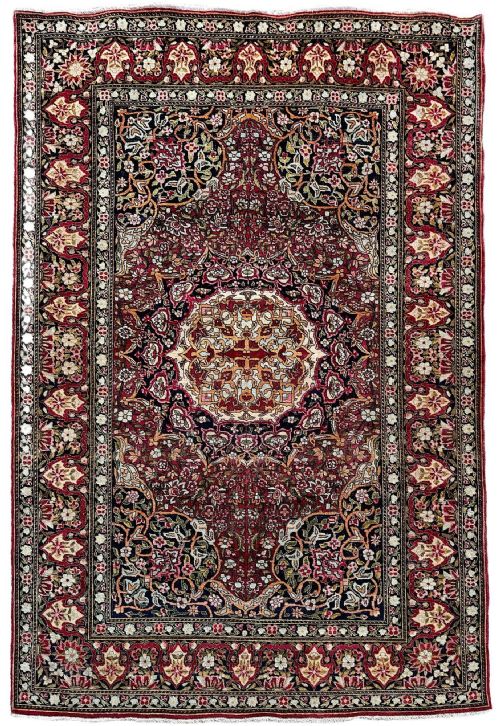
When you search for a persian medallion wool carpet, you encounter heavy hand-knotted floor coverings hailing from various villages, towns, and nomadic confederacies across Persia and the surrounding regions. These textiles range from room-sized carpets down to hearth rugs, runners, and large kellehs dating from the nineteenth century into the early decades of the twentieth century. The inventory on this page demonstrates styles spanning traditional Persian, tribal weaves, Heriz, and Anatolian designs.
The version you are most likely to meet on this page is a village or tribal rug originating from hubs such as Heriz, Hamadan, Bakhtiar, or Mahal, typically displaying a central geometric or floral medallion layout. Such pieces incorporate materials consistent with traditional regional production, offering robust wool piles on cotton or wool foundations. They serve as historical decorative elements built for domestic utility.
How They Were Made
These carpets rely on hand-knotted wool foundations, often combined with cotton or wool warps and wefts to create a durable textile structure. Artisans tied individual knots by hand onto vertical looms, building up dense piles designed to withstand decades of foot traffic.
Certain pieces integrate contrasting materials, such as silk highlights woven alongside the primary wool to accentuate specific botanical or geometric motifs within the design field.
Materials recorded across the current selections consist of wool, cotton, and silk.
What Varies in Quality
Knot density and structural tightness dictate the crispness of the medallion and the overall durability of the textile. Tighter knotting allows weavers to render intricate curvilinear or sharp geometric lines with greater precision.
The choice of dyestuffs and wool grade influences how the colour saturation holds over time. Superior examples exhibit harmonious tonal depth and resilient wool that maintains its handle through heavy use.
Saroukh Mahal·Khamseh·Heriz·Bakhtiar·Hamadan·Jozan·Isfahan·Afshar·Karabagh·Mahal·Bidjar·Luri·Mazlaghan·Tabriz
The Persian Medallion Wool Carpet Glossary
- Medallion
- A prominent central motif set into the field of a carpet, typically of floral, star, or geometric form. It serves as the primary focal point of the composition.
- Knot
- The individual loop of yarn tied around warp threads by hand. The density of these knots defines the clarity of the pattern.
- Warp
- The stationary vertical threads stretched onto a loom before weaving begins. The pile knots are tied around these foundational elements.
- Kilim
- A flat-woven textile produced without a pile. These pieces often feature sharp geometric patterns and serve as floor coverings or covers.
- Runner
- A long, narrow carpet format designed for hallways, corridors, or stairs. They mirror the decorative motifs of larger carpets in an elongated proportion.
Persian Medallion Wool Carpet: Frequently Asked Questions
How do I clean an antique wool carpet?
Gentle surface brushing and professional specialist washing help preserve the natural lanolin in the wool fibres.
Avoid harsh chemical treatments or soaking, which can weaken the foundation threads and alter the dye stability.
Can I place these carpets in high traffic areas?
Many of these pieces were constructed for everyday domestic utility using durable wool piles on sturdy cotton foundations.
Placing a quality rug underlay beneath the carpet prevents slippage and reduces friction against the floor.
How do I identify village rugs from city carpets?
Village and tribal rugs often display bolder geometric interpretations, heavier wools, and asymmetrical abrash colour variations.
City carpets tend to show finer curvilinear botanical drawings with higher knot counts and more uniform dyeing.
What is a kelleh format?
A kelleh is an elongated room-sized carpet, traditionally proportioned narrower and longer than a standard grand carpet.
This specific format suited the long reception rooms common in historic Persian domestic architecture.