



Persian Khorjin Saddlebag
When you search for a persian khorjin saddlebag, you meet hand-woven tribal containers made for nomadic life that bring rich geometry and history into a modern room.
Persian Khorjin Saddlebag
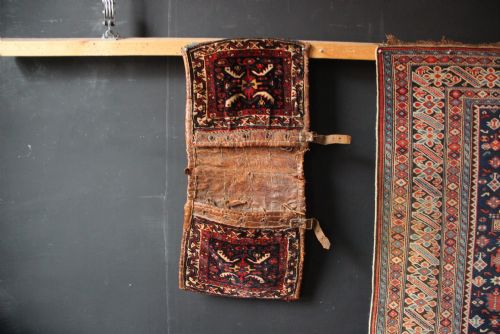
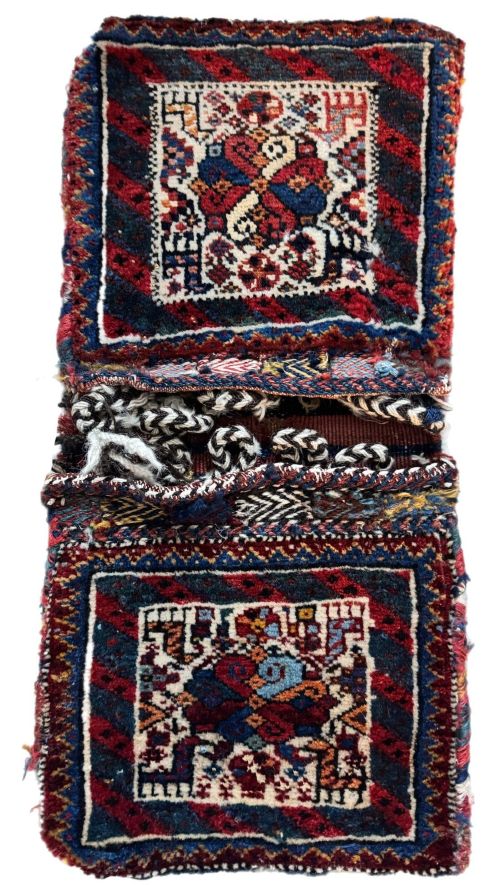
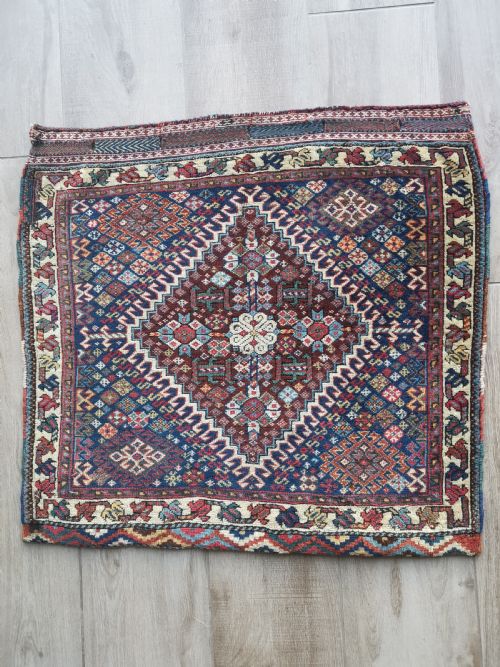
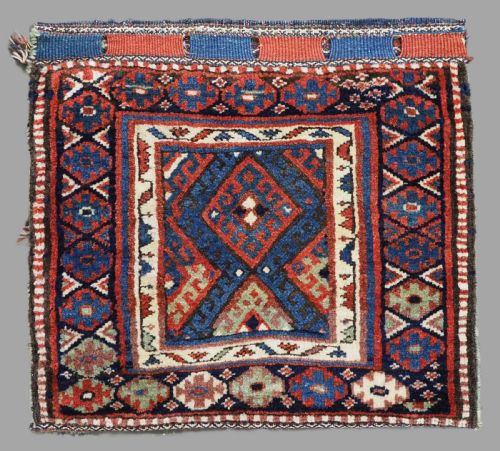
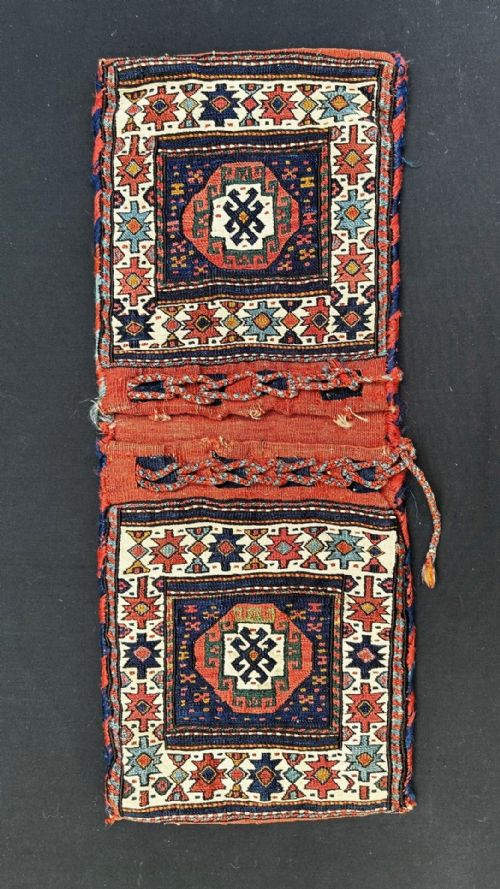
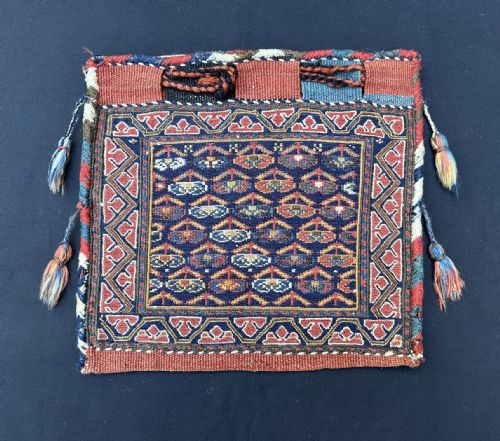
A persian khorjin saddlebag is a woven utility piece created by nomadic and village confederations across Persia for transport and storage. These items appear as complete double pouches, single bag faces, or half pieces that originally formed part of a paired set.
The objects frequently originate from tribal groups such as the Qashqai, Afshar, Shahsavan, Khamseh, and Kurdish weavers. Pieces range from full structures retaining their plain weave backs to individual panels framed as flat textiles.
Makers fashioned these textiles to carry household goods or personal items on pack animals during seasonal migrations. Their survival offers direct insight into the domestic craft traditions of nineteenth century tribal communities.
Materials and Construction
Weavers relied primarily on hand-spun wool for the pile and foundation, often supplemented by cotton for structural warps and tufts of metal or leather for reinforcement. Natural dyes provided the deep chromatic palette seen across the pieces.
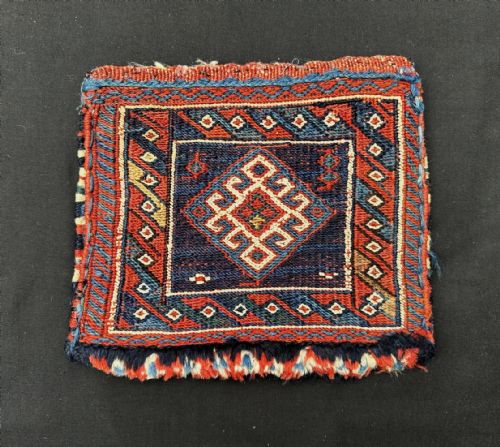
Construction techniques include pile knotting and flat-woven sumac or kilim structures. The back panels frequently feature utilitarian plain weaves that contrast with the intricate geometric ornamentation of the front faces.
Persian Khorjin Saddlebag Retail Price Guide 2026
Typical asking prices for persian khorjin saddlebag among the pieces listed under this phrase on Sellingantiques today, from the lower quarter to the upper quarter. They describe what is for sale here now, not the wider market.
Nomads wove these durable bags to survive the rigours of pack animals, unwittingly crafting miniature masterpieces for future collectors.
Assessing Craftsmanship
Quality rests upon the handled handle of the wool and the depth of the natural dyes used in the composition. Superior examples display high knot densities and crisp structural integrity within the geometric motifs.
The preservation of original elements, such as complete backing materials or functioning closures, distinguishes standard panels from complete surviving storage units.
The Persian Khorjin Saddlebag Glossary
- Khorjin
- A traditional double-sided saddlebag used by nomadic tribes for carrying possessions on animals. These items divide into two compartments connected by a central web.
- Bagface
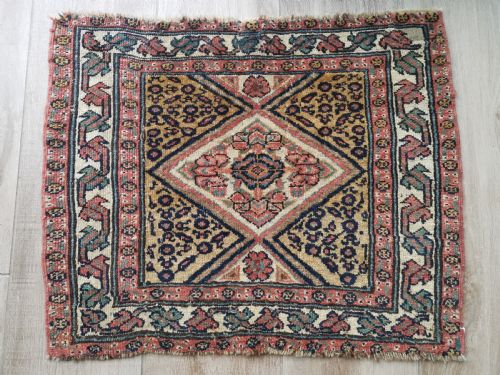
- The decorative front panel of a storage sack that survived after the plain utility back wore away or was cut apart. It functions independently as a small rug.
- Sumac
- A warp-wrapping flat-weave technique that creates a textured, durable surface without pile knots. Shahsavan weavers employed this method frequently.
- Plain weave
- A simple alternating interlacement of warp and weft threads producing a flat cloth. This structure forms the unadorned backs of many utility sacks.
- Boteh
- A stylised almond or paisley motif representing a floral shoot or cypress tree. Artisans repeated this shape across various tribal regions.
Persian Khorjin Saddlebag: Frequently Asked Questions
What is a khorjin?
A khorjin is a traditional double saddlebag woven by nomadic tribes for animal transport during seasonal migrations.
These textile containers served practical storage functions before surviving as decorative pieces of tribal art.
How were saddlebags used?
Nomads loaded these paired bags onto horses, camels, or donkeys to carry personal belongings, bedding, and provisions.
When camp was set up, the bags doubled as storage chests inside tents or portable dwellings.
How do I live with a bag face?
Bag faces adapt easily to modern interiors as small floor rugs, table mats, or wall hangings.
Their compact scale allows them to fit into hallways, studies, or intimate spaces where larger carpets will not work.
How do I identify different tribes?
Tribal attribution relies on specific structural traits, colour combinations, and repeating geometric motifs.
Qashqai, Afshar, and Shahsavan weavers each employed distinct palettes and structural methods that signal their origin.