






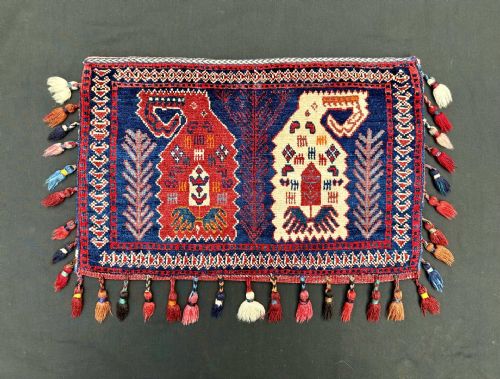

Persian Chanteh Rug
A persian chanteh rug is a small, woven tribal bag from nineteenth or early twentieth-century Persia, prized by collectors for its concentrated nomadic artistry.
Persian Chanteh Rug
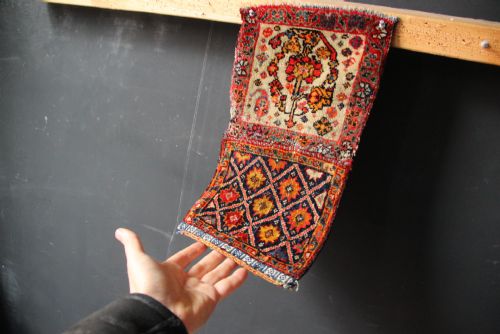
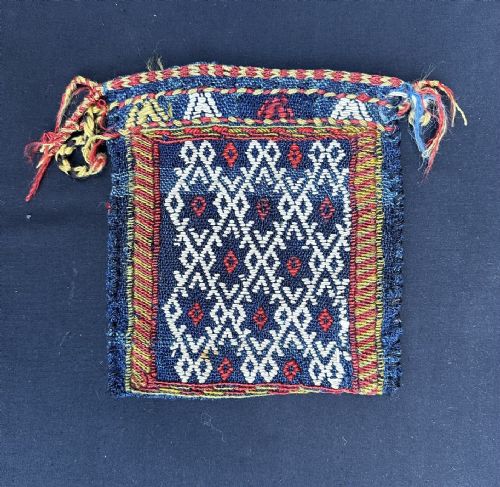
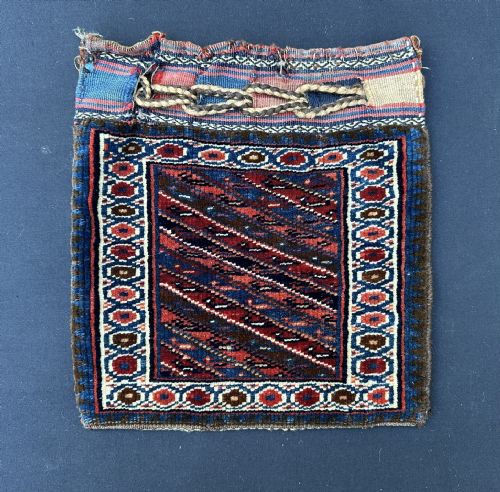
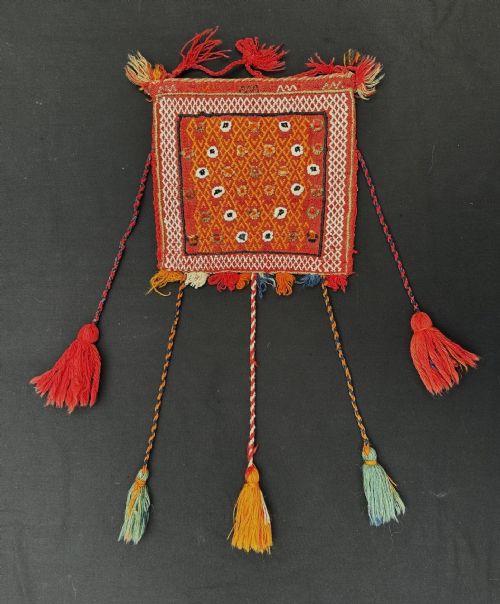
The persian chanteh rug encompasses small tribal bags, vanity bags, and utility pouches woven by nomadic and village confederacies across Persia. These pieces functioned primarily as personal containers for nomads rather than floor coverings, though their dense pile and structure share the properties of larger carpets.
Collectors frequently encounter Qashqai, Baluch, Kurdish, Bakhtiari, and Afshar examples dating from the late nineteenth century up to the 1920s. The Qashqai Confederacy in Fars Province provides several distinct variants, including pieces associated with the Darrehshuri and Kashkuli sub-tribes.
Formats remain compact, often measuring under half a metre square, designed for specific nomadic uses such as vanity storage or water-pipe bags. This portable scale allowed weavers to experiment with intricate geometric and tribal iconography in miniature.
Materials and construction
Construction relies on hand-spun wool for both the plush pile and the structural foundation, paired with cotton foundations in selected regional pieces. The interplay of wool and natural dyes creates a textured surface that responds well to traditional spinning methods.
Weavers utilised natural dyes to achieve rich colour palettes across various tribal regions, from the south-west of Persia up to Khorassan in the north-east. These organic colorants yield subtle tonal variations across the field of each bag.
Persian Chanteh Rug Retail Price Guide 2026
Typical asking prices for persian chanteh rug among the pieces listed under this phrase on Sellingantiques today, from the lower quarter to the upper quarter. They describe what is for sale here now, not the wider market.
Some nineteenth-century nomads carried their water-pipe equipment in these tiny bags, proving that even a smoke break deserved fine art.
Assessing quality and character
Quality rests upon the tightness of the weave and the precision of the tribal motifs executed within a restricted format. Finer knots allow complex geometric and symbolic patterns to remain crisp and legible.
The depth and brilliance of the natural dyes distinguish superior examples, as does the intact condition of the original selvedges and backing textiles. Pieces retaining their structural integrity from the nineteenth century command greater attention from purists.
The Persian Chanteh Rug Glossary
- Chanteh
- A small tribal bag or vanity pouch traditionally woven by nomadic women in Persia for personal use. These portable textiles often feature distinctive pile-woven faces and plain-weave backs.
- Qashqai
- A major confederacy of pastoral nomadic tribes based in the Fars province of south-west Persia. Their weaving is noted for saturated palettes and finely articulated geometric layouts.
- Baluch
- A grouping of tribes inhabiting the borderlands of eastern Persia and Baluchistan, known for dark, moody palettes and distinctive prayer and utility bags.
- Afshar
- A Turkic tribe settled largely in the Kerman province of southern Persia. Their textiles typically display bold medallion schemes and stylised floral motifs.
- Natural Dyes
- Colourants derived from plant, insect, and mineral sources prior to the introduction of synthetic aniline dyes in the late nineteenth century. These materials age with a characteristic patina.
Persian Chanteh Rug: Frequently Asked Questions
What was a persian chanteh rug used for?
These small woven pouches served nomadic families as personal containers for vanity items, tobacco, or small possessions during migration.
They were carried on pack animals or kept inside tents, combining practical utility with the maker's artistic expression.
How old are these tribal bags?
The examples seen here date from the mid-nineteenth century up to the early decades of the twentieth century, primarily spanning the 1860s to the 1920s.
Such dating is determined by structural traits, wool quality, and the specific deployment of natural dye palettes.
How do I display a small tribal bag?
Due to their modest scale, collectors frequently mount these textiles on neutral fabric or display them flat on small tables and cabinets.
They also work well mounted behind glass or hung securely on walls as miniature works of textile art.
How are different tribal origins told apart?
Distinctions rely on structural nuances, knotting habits, wool characteristics, and specific repertoires of geometric or zoomorphic motifs.
For instance, pieces from the Qashqai confederacy differ visibly in palette and drawing from those produced by Afshar or Baluch nomads.