




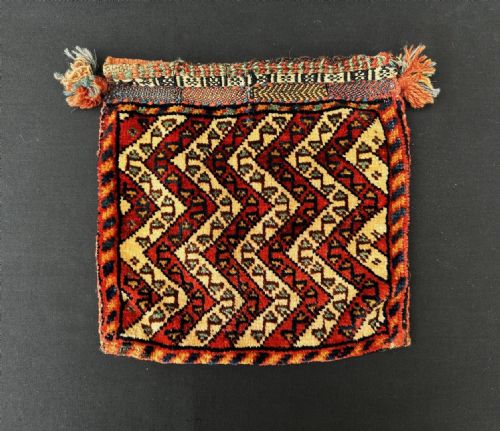
Tribal Rug Pouch
When searching for a tribal rug pouch, you enter the domain of nomadic weavers who crafted small, functional containers from hand-spun materials.
Tribal Rug Pouch
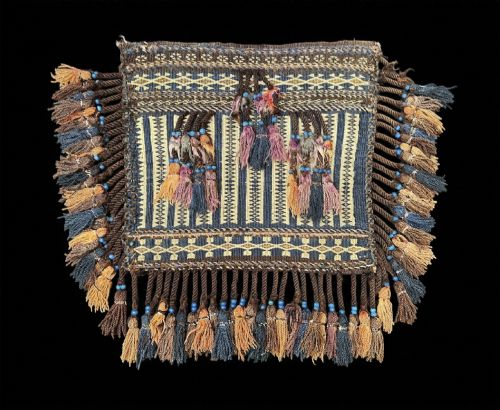
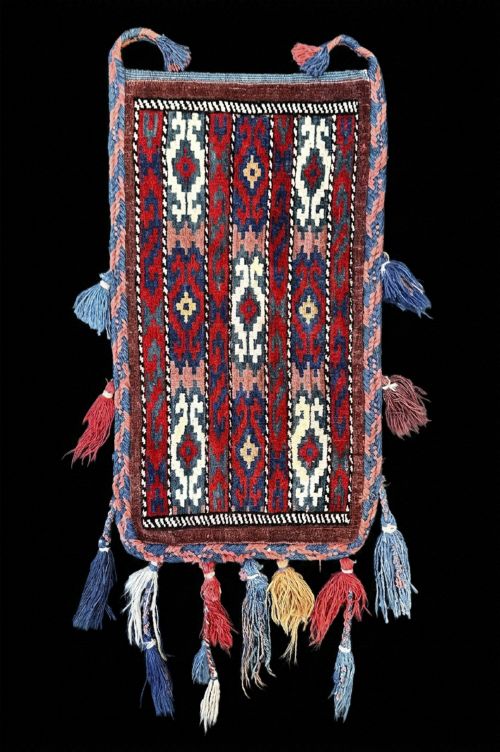
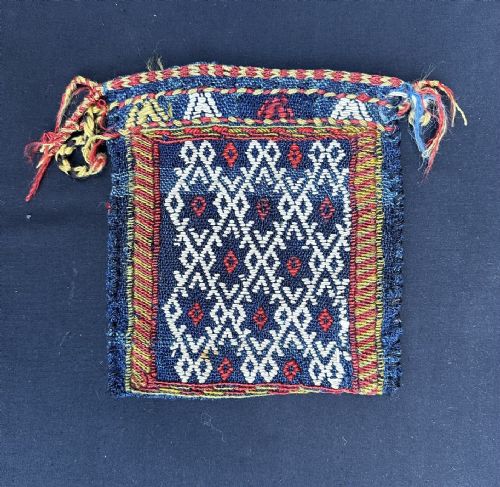
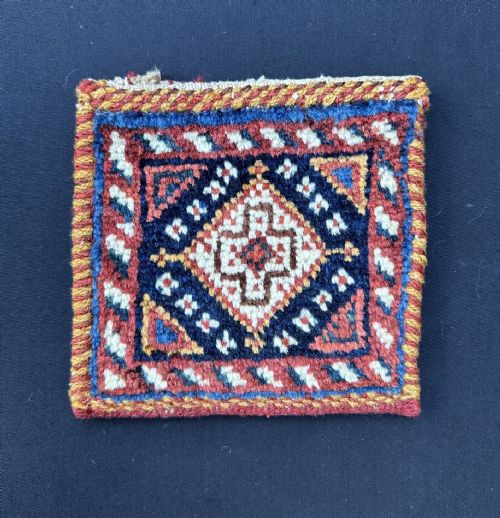
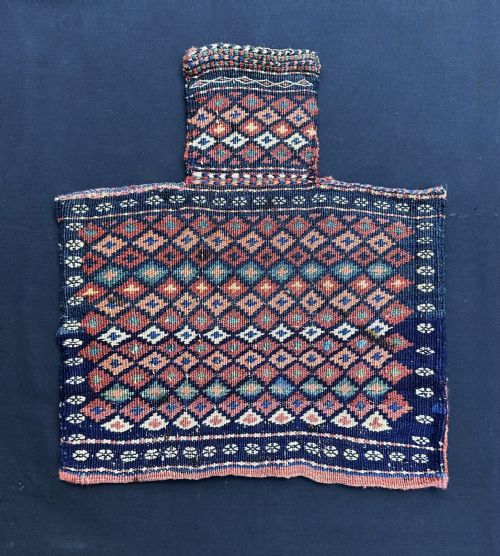
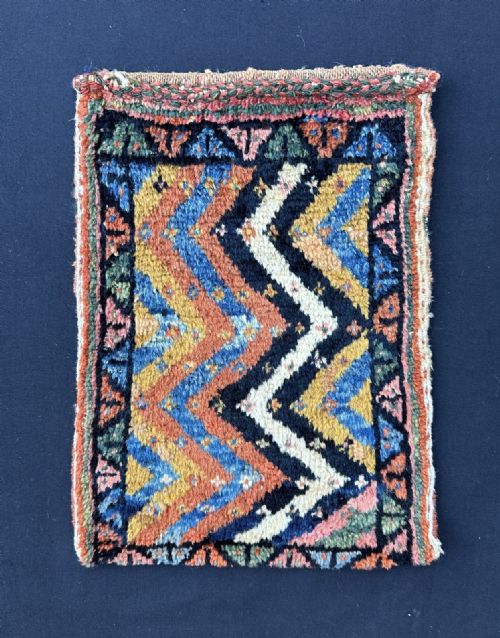
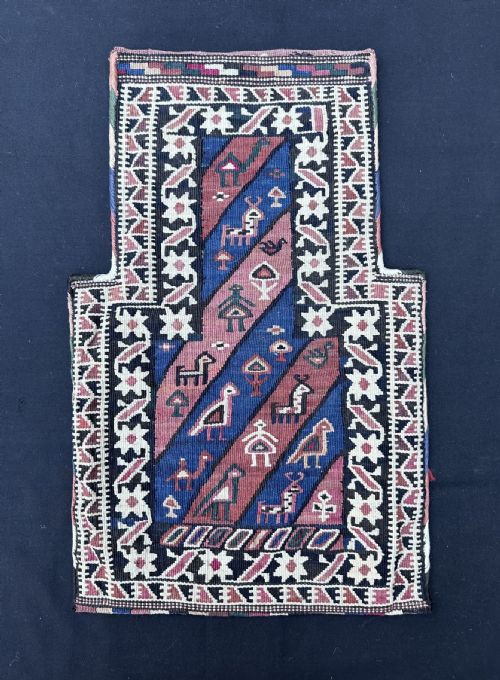
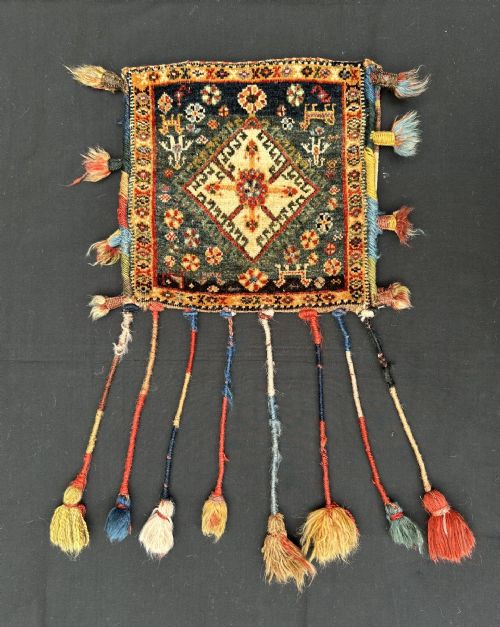
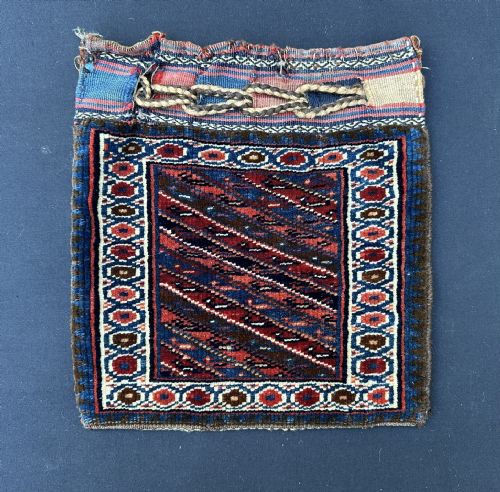
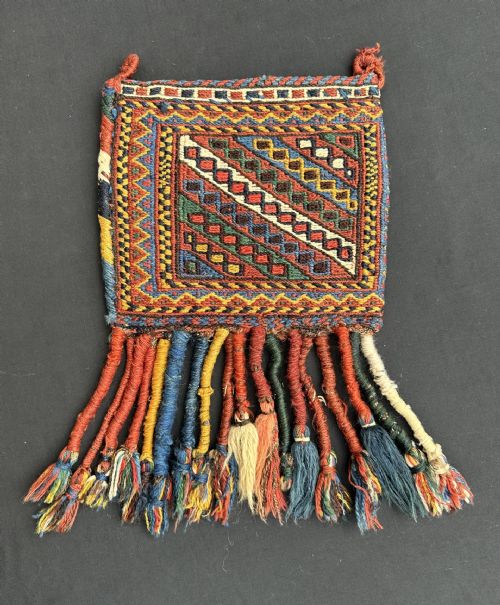
A tribal rug pouch encompasses small woven containers created by nomadic and village groups across Persia, Central Asia, and the Caucasus. These utilitarian objects served specific purposes within camp life, functioning as vanity bags, salt bags, spindle bags, and spoon bags.
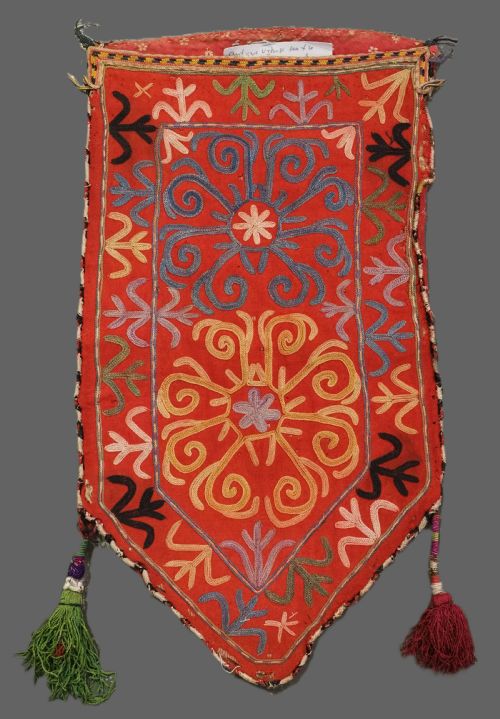
The pieces on this page originate from tribal confederacies and nomadic groups such as the Qashqai, Afshar, Baluch, Turkmen, Shahsevan, and Lakai Uzbek. Most examples date from the mid-nineteenth century through the early twentieth century.
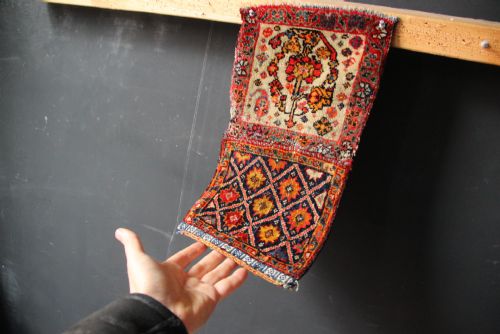
Buyers encounter forms ranging from miniature saddle-bags and chantehs to double-faced hanging bags and torbas. Each format reflects the daily domestic or pastoral requirements of the weavers who produced them.
Materials and Construction
Weavers utilised hand-spun wool and cotton as the foundation materials for these textiles, often incorporating natural dyes to achieve rich colour palettes. Certain pieces integrate silk highlights or supplementary structural techniques like soumak work.
Decoration occasionally extends beyond woolwork through the addition of cowrie shells and glass beads, particularly on Central Asian examples. Original plain-weave backs and complete construction survive on many preserved pieces.
Tribal Rug Pouch Retail Price Guide 2026
Typical asking prices for tribal rug pouch among the pieces listed under this phrase on Sellingantiques today, from the lower quarter to the upper quarter. They describe what is for sale here now, not the wider market.
Materials documented in current inventory include hand-spun wool, cotton, natural dyes, silk, glass beads, and cowrie shells.
Assessing Quality and Execution
Quality in a tribal rug pouch rests on the density of the weave, the handling of the pile or flatweave structure, and the clarity of the tribal motifs. Finer knotting and precise geometric layout distinguish superior tribal work.
The depth and permanence of natural dyes also dictate distinction, alongside the survival of original components such as complete backs, hanging loops, and edge finishes.
The Tribal Rug Pouch Glossary
- Chanteh
- A small woven bag or pouch produced by Persian and tribal groups, typically used for personal items or as a small container.
- Torba
- A small wall-hanging bag or storage sack used in Turkmen tents, often featuring prominent gul motifs.
- Soumak
- A flat-weave technique where coloured pattern wefts are wrapped over the warp threads, creating a textured surface resembling embroidery.
- Gul
- A medallion or repeating floral-like motif central to the design vocabulary of Turkmen and other Central Asian rugs.
- Mafrash
- A rectangular storage bag or valise used by nomads for bedding and household goods during migration.
Tribal Rug Pouch: Frequently Asked Questions
What were tribal rug pouches used for?
Nomadic groups used these small bags to store specific household or personal items within tents and during migrations. Common variants held salt, spoons, spindles, water pipes, or personal cosmetics.
Their sturdy construction suited the practical demands of camp life while displaying tribal identity through traditional patterns.
How do I identify the tribe that made a pouch?
Attribution relies on specific structural characteristics, colour palettes, and repeating geometric motifs unique to each weaving group. Regional identifiers often point to confederacies such as the Qashqai, Afshar, or Baluch.
Border designs and wool preparation further help narrow down the specific tribal subgroup or region of origin.
How should I display a textile pouch at home?
Many collectors mount these flat textiles or small bags on neutral fabric backgrounds for wall display. This protects the structure from the stretching forces that occur when hanging by a single loop.
Keeping them away from direct sunlight preserves the natural dyes used in the wool.
What is the difference between a salt bag and a vanity bag?
Salt bags generally feature a narrower neck or specific triangular flap designed to keep rock salt secure during transport. Vanity bags tend to be smaller rectangular containers intended for personal belongings.
Both forms utilise durable pile or flatweave techniques suited to their original functions.