



Period Queen Anne Furniture
Period queen anne furniture brings the restrained elegance of the early eighteenth century into a room through rich timbers and graceful cabriole forms.
Period Queen Anne Furniture
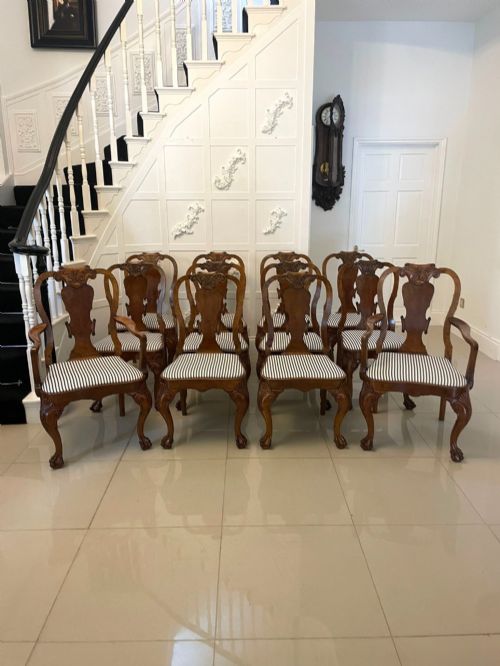
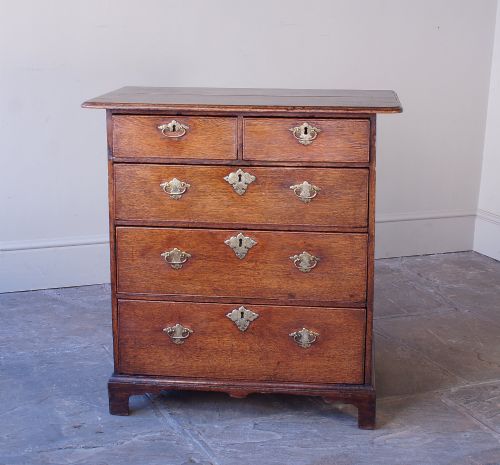
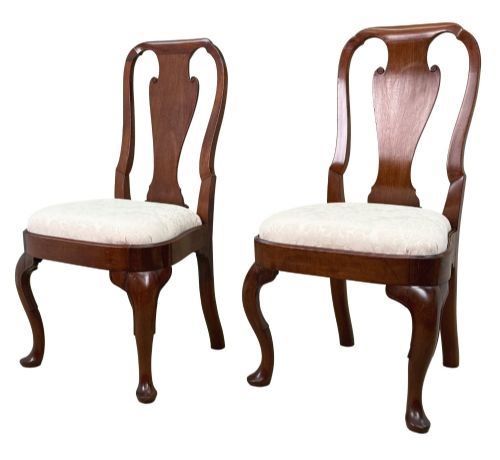
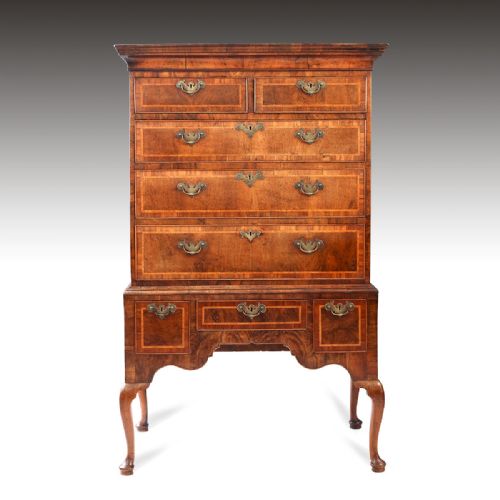
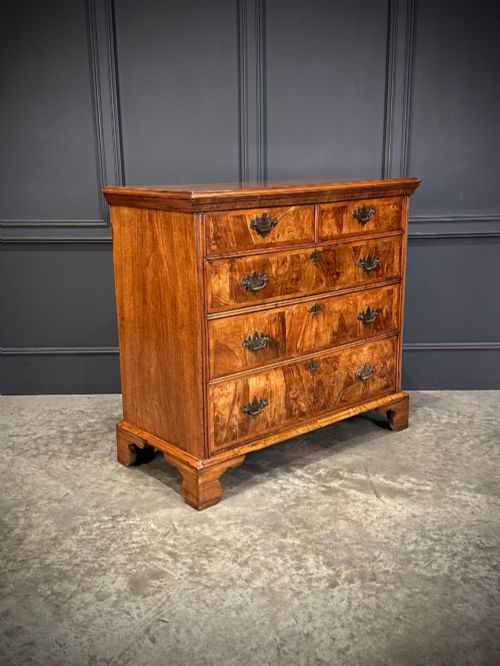
When you search for period queen anne furniture, you look at seating, storage, and tables from the early eighteenth century and its later revivals. The surviving pieces on this page span walnut chest of drawers, oak dressers, and high-backed chairs.
The aesthetic relies on clean lines, veneered surfaces, and subtle proportions rather than heavy carving. Regional variations appear in domestic timbers like yew wood and elm alongside metropolitan walnut.
How they were made
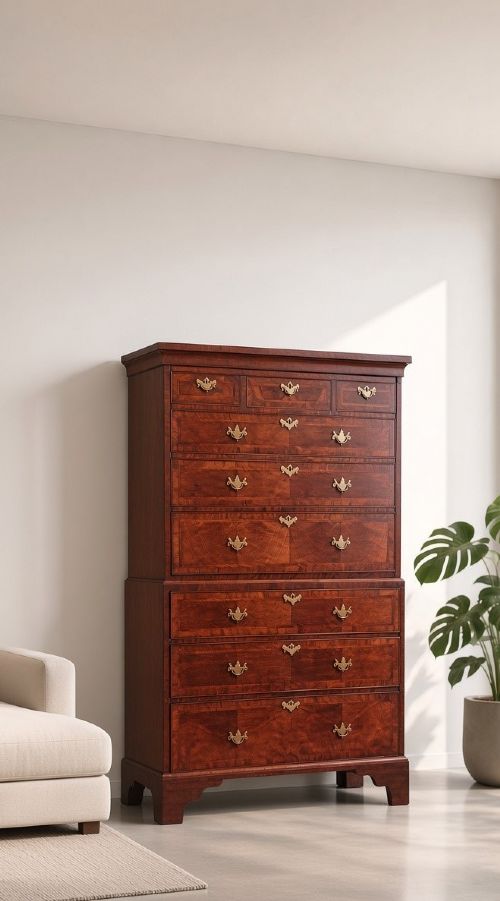
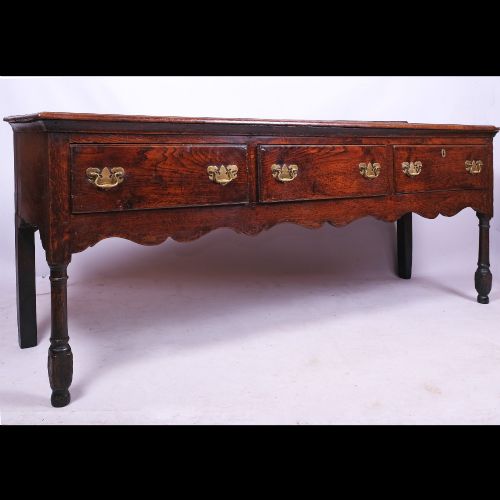
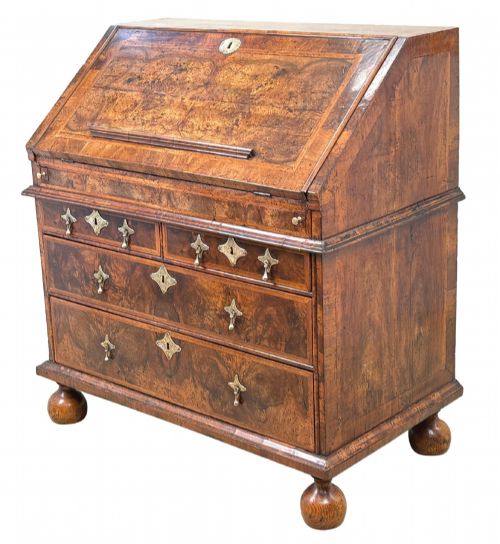
Cabinet makers utilised figured walnut and burr walnut veneers applied to secondary woods, securing them with brass handles and escutcheons. Solid oak and elm construction served sturdier items such as dresser bases and high-backed dining chairs.
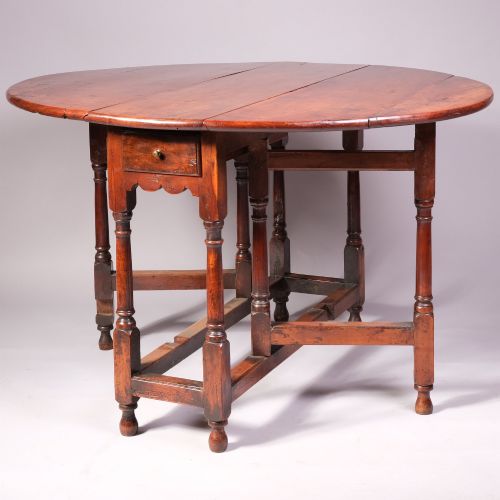
Joinery methods included mortise and tenon framing for tables and chairs, while chest of drawers relied on tight dovetail joints. Japanned finishes provided an alternative decorative surface on select chairs from the period.
What varies in quality
The fidelity of the timber selection dictates the visual appeal of a piece, particularly in how book-matched walnut veneers are arranged across drawer fronts. Superior examples display careful grain alignment and restrained inlay work that enhances the natural figuring.
Proportion and structural grace separate finer workshops from cruder rural production, especially in the sweep of a cabriole leg or the rake of a chair back. Original brass hardware and untouched surface patination elevate the standing of surviving items.
The Period Queen Anne Furniture Glossary
- Cabriole leg
- A furniture leg that curves outward and then tapers inward, mimicking an animal's limb. This silhouette defines much of the seating and table design from the era.
- Chest on stand
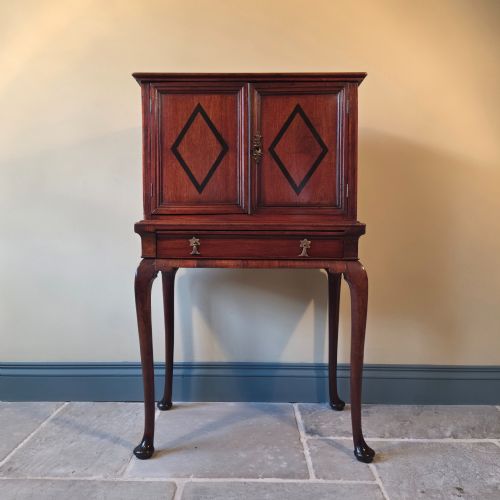
- A tall drawer section raised on a separate frame with legs. This form kept belongings away from damp floors.
- Japanned
- European imitation of East Asian lacquerwork using resin varnishes and raised metallic decoration. It appears on select fashionable chairs.
- Low boy
- A small dressing table or side table fitted with drawers beneath a flat top. They served domestic chambers as compact writing or grooming surfaces.
- Veneer
- A thin layer of figured wood adhered to a secondary carcase timber. Walnut veneers provided rich patterns without requiring solid logs of expensive wood.
Period Queen Anne Furniture: Frequently Asked Questions
What defines period queen anne furniture?
These pieces date primarily to the early eighteenth century, characterised by subdued ornamentation, cabriole legs, and veneered walnut surfaces. The style marks a shift away from heavy oak toward more graceful domestic proportions.
Later revivals in the Edwardian era and the 1920s also produced items following these exact design principles using traditional timbers.
How do I identify walnut veneer?
Walnut veneer involves slicing thin sheets of highly figured wood and applying them to a stable secondary timber like oak or pine. This technique allowed cabinet makers to display symmetrical grain patterns across large surfaces.
Examining the edges reveals the thickness of the timber layer applied to the underlying carcase.
Where were low boys used?
Low boys functioned primarily as dressing tables or small side tables in private bedchambers. Their modest footprint accommodated personal items and washing basins.
Drawers provided secure storage for documents or accessories while keeping the floor space open.
Are revival pieces considered authentic?
Revival items date from later periods such as the Edwardian era or the 1920s while faithfully copying eighteenth-century forms. They utilise period construction methods and appropriate materials like walnut or oak.
These pieces offer a practical alternative for daily use while maintaining the visual language of the original era.