
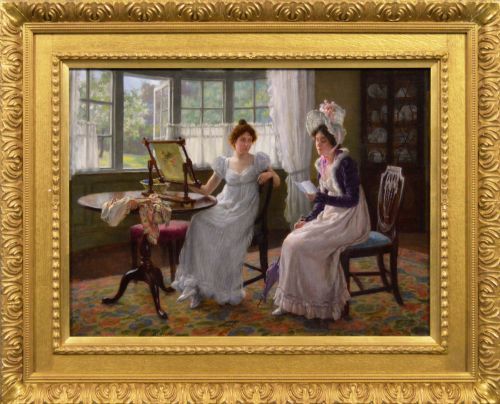


Period Portrait of Woman
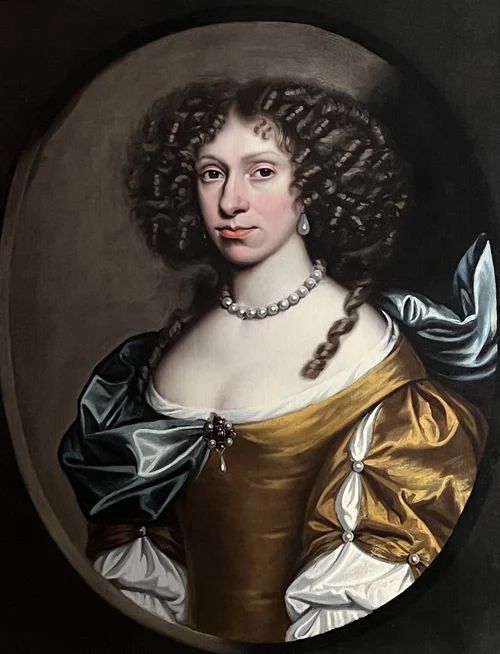
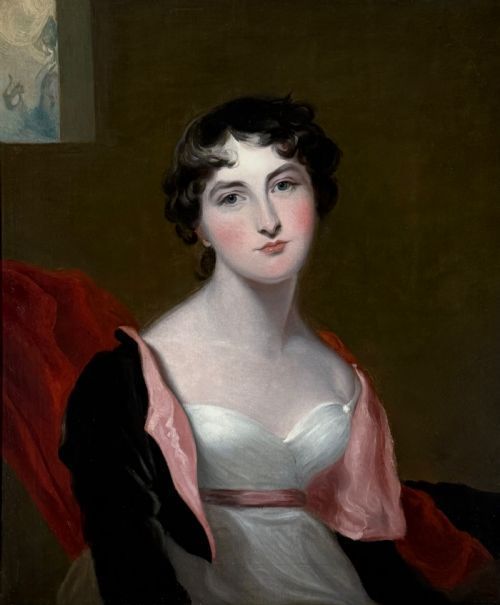
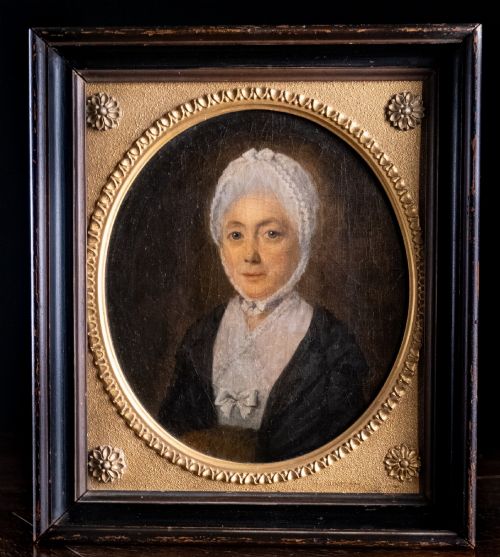
A period portrait of woman captures a sitter from past centuries, offering a direct encounter with historical character through oil paint or watercolour.
Period Portrait of Woman
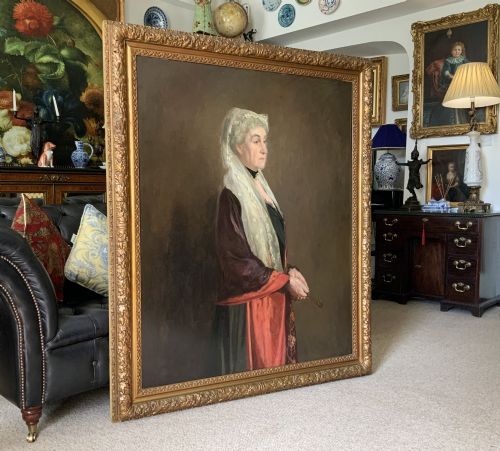
Most examples originate from the Victorian, Edwardian, and eighteenth-century periods, showing aristocratic ladies, young society figures, and domestic interior scenes. Artists range from named portraitists of the English and European schools to anonymous hands working within established regional traditions.
Buyers encounter subjects holding props like baskets of flowers or trays, accompanied by dogs, or captured in specific attire such as period costume and feathered hats. These works record evolving social roles, artistic tastes, and sitter self-presentation over four distinct centuries.
Materials and technique
Painters typically applied oil paint onto woven canvas substrates, building up layers of pigment to model flesh tones and textiles. Watercolours and gouache were similarly utilised on paper surfaces, particularly for intimate portrait miniatures and detailed studies.
Surviving works frequently retain their original or period frames constructed from wood and gesso, finished with applied gold leaf to create a reflective giltwood border. The physical support often reveals stretcher marks, artist signatures, or contemporary inscriptions identifying the sitter.
Listings span eight distinct decades and centuries, ranging from seventeenth-century oil paintings to 1930s art deco drawings on paper.
Evaluating the standard
Quality rests in the handling of the sitter's expression, bone structure, and gaze, where skilled draughtsmanship separates lifelike presence from stiff mechanical rendering. Hand placement, drapery folds, and the depiction of light across fabrics further indicate the hand of a trained portraitist.
The integrity of the canvas, the preservation of the original pigment layers, and the retention of a period giltwood frame contribute significantly to the standing of any given piece.
David Scougall·Charles Haigh Wood·John Robert Dicksee·Emma Kendrick·Robert Edward Morrison·Robert Kemp·Tilly Kettle·John Michael Wright·Joseph Highmore·George Henry Harlow·Franz Russ The Elder
The Period Portrait of Woman Glossary
- Oil on Canvas
- Pigments bound in drying oil applied to a stretched fabric support. This combination allowed artists to achieve subtle tonal gradations and rich surface textures.
- Giltwood
- Wood carved and coated with gold leaf or metallic powder. It provides a decorative and protective border for traditional paintings.
- Gesso
- A paint mixture consisting of a neutral binder mixed with chalk, gypsum, or pigment. It prepared wooden panels and frames before gilding or painting.
- Portrait Miniature
- A small, highly detailed painting executed on paper, vellum, or ivory. These portable likenesses were frequently kept as personal mementoes.
- English School
- A classification for artists trained or working primarily within England. It groups together stylistic tendencies across generations of domestic painters.
Period Portrait of Woman: Frequently Asked Questions
How are these portraits dated?
Datings rely on costume details, hair styling, artist lifespan documentation, and occasionally contemporary inscriptions on the reverse of the canvas.
Style shifts in portraiture across the seventeenth, eighteenth, and nineteenth centuries provide comparative benchmarks for unrecorded works.
Were these painted from life?
Many formal works record actual sitters sitting for commissioned portraits in artist studios, while others represent genre studies or studio copies.
Sitter names are frequently preserved through family provenance, exhibition records, or painted cartouches on the canvas edges.
How should oil paintings be cleaned?
Surface dust should be removed gently using a soft, dry brush without applying moisture or household cleaning agents.
Professional conservators handle varnish removal and canvas repairs to prevent permanent damage to underlying pigment layers.
What frames are original?
Period frames typically show age-appropriate wear to the gesso and gold leaf that matches the era of the canvas.
Re-framing was common practice in past centuries, meaning many older portraits inhabit later nineteenth or twentieth-century giltwood housings.