

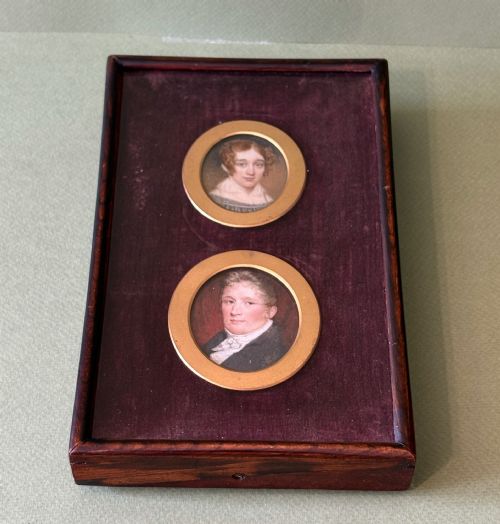
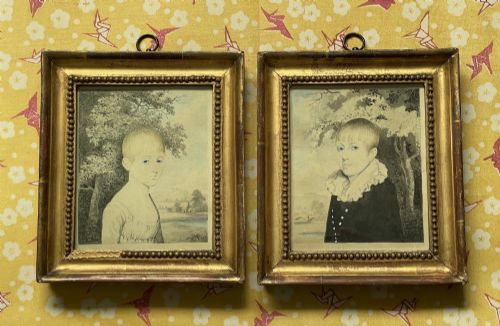
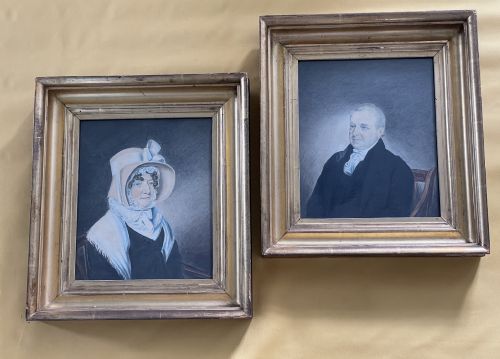


Period Portrait Miniatures
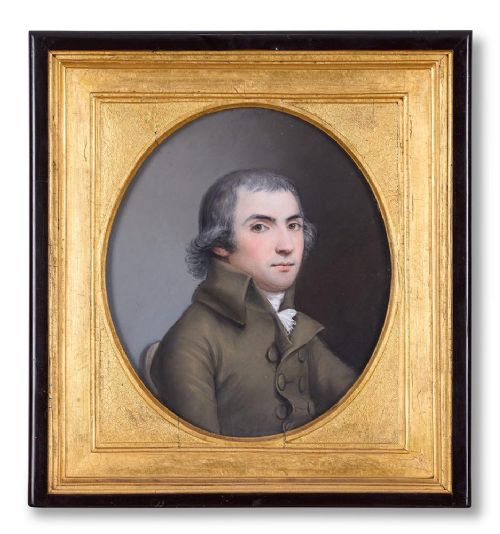
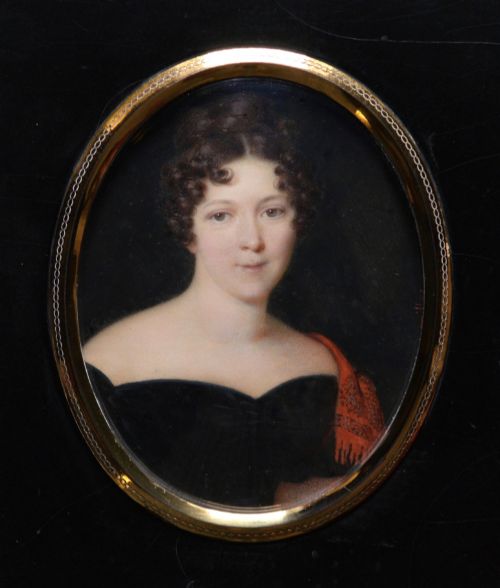
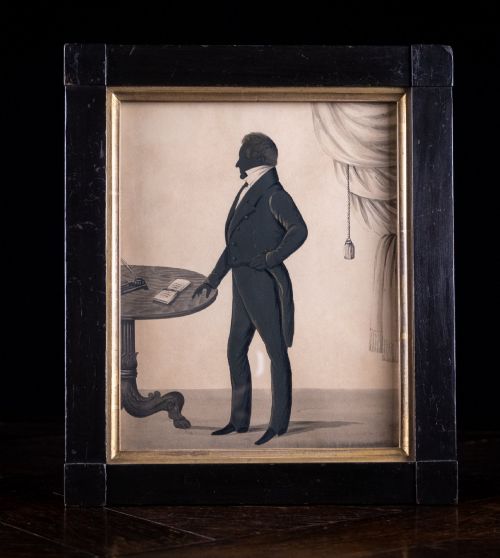
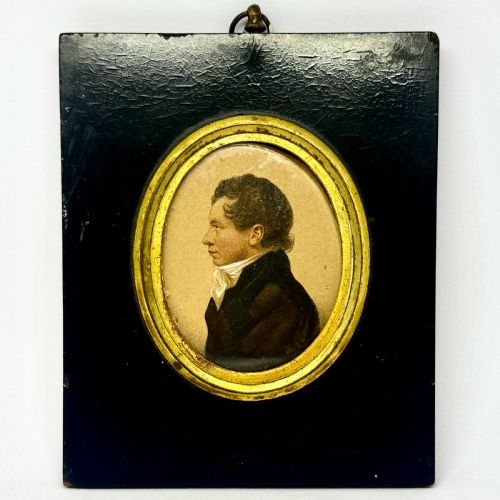
Period portrait miniatures capture the intimate scale of Georgian and Regency life through delicate watercolour, silhouette, and glass.
Period Portrait Miniatures
These period portrait miniatures encompass small-scale framed artworks, silhouette portraits, and watercolour paintings originating mainly from the Georgian and Regency eras. Buyers searching for period portrait miniatures will discover subjects ranging from individual gentlemen and ladies to children and families, rendered with striking immediacy. The selection spans single studies to pairs and larger sets, often housed in original ebonised wood or gilt metal frames.
Most pieces date from the late eighteenth century through the nineteenth century, reflecting stylistic shifts from 18th Century reverse glass mezzotints to Regency silhouettes and Victorian watercolours. English Regency works sit alongside French 19th Century examples, offering diverse interpretations of personal likeness. These objects served as private tokens of affection or family record before the widespread adoption of photography.
How they were made
Artists painted these works using watercolour and gouache on paper or card, and occasionally applied ink and pencil for fine detail. Many Regency and Georgian examples utilise glass as a primary support, employing reverse glass painting or silhouette techniques enhanced with gold leaf and colour. Supporting structures combine wood, brass, and gilt metal to create protective miniature frames.
Specialised practitioners handled distinct mediums, such as reverse glass mezzotints or delicate watercolour washes to capture facial expressions and garments. The handling of silhouettes involved cutting paper or painting directly onto glass and card, sometimes supplemented by delicate highlights in white or gold.
Period Portrait Miniatures Retail Price Guide 2026
Typical asking prices for period portrait miniatures among the pieces listed under this phrase on Sellingantiques today, from the lower quarter to the upper quarter. They describe what is for sale here now, not the wider market.
Listings span the 18th Century, Georgian, Regency, and 19th Century periods, incorporating watercolour, glass, paper, and gold leaf.
What varies in quality
The finesse of the brushwork and the precision of the facial likeness distinguish finer examples from standard decorative pieces. Superior works demonstrate meticulous control in watercolour and gouache, capturing textiles, hair, and expression with distinct clarity.
The preservation of the original framing, whether ebonised wood, brass, or gilt metal, heavily influences the integrity of the piece. Intact glass supports and well-preserved paper without excessive fading maintain the visual impact intended by the artist.
Thomas London·Thomas Woolnoth·Emma Kendrick·Francis Alleyne
The Period Portrait Miniatures Glossary
- Silhouette portrait
- A profile likeness cut from black paper or painted onto card, glass, or plaster. These profiles often feature highlights in gold leaf or colour.
- Reverse glass mezzotint
- An image applied directly to the underside of a glass pane, viewed from the front. This technique produces a distinct depth and gloss.
- Ebonised frame
- A wooden frame stained or painted black to imitate ebony. These dark surrounds were widely used during the Regency period to contrast with gilt highlights.
- Gouache
- An opaque watercolour medium used by artists to build solid areas of colour and sharp detail. It provides greater coverage than standard transparent watercolour washes.
- Regency
- A stylistic period spanning the early nineteenth century defined by classical restraint and elegance. Works from this era often exhibit refined proportions and distinct costume details.
Period Portrait Miniatures: Frequently Asked Questions
How were period portrait miniatures displayed?
These small artworks were traditionally hung in intimate domestic spaces like private chambers or studies, grouped in small clusters on walls.
Owners also kept them stored in protective cases or carried them as personal tokens of family members and loved ones.
What materials did artists use for silhouettes?
Makers constructed silhouettes using cut black paper mounted against pale backgrounds, or by painting directly onto card.
Some practitioners applied pigment and gold leaf to glass panels to create reflective profile portraits.
How can I distinguish Regency from Georgian pieces?
Georgian works, particularly from the late eighteenth century, often feature softer watercolour washes and specific period costume like powdered hair and elaborate lace.
Regency examples transition toward sharper profiles, simplified neo-classical hairstyles, and distinct attire such as high-collared coats and white dresses.
Are these portraits usually found in pairs?
Many listings include pairs or sets representing family members, husbands and wives, or groups of children.
Artists frequently painted companion pieces simultaneously to record multiple members of a household within matching frames.