



18th Century Artwork Pair
An 18th century artwork pair brings balanced symmetry and period character to a room through matched dual compositions.
18th Century Artwork Pair
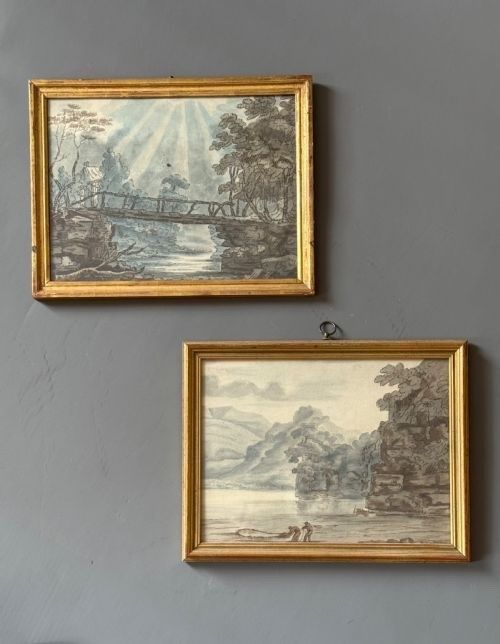
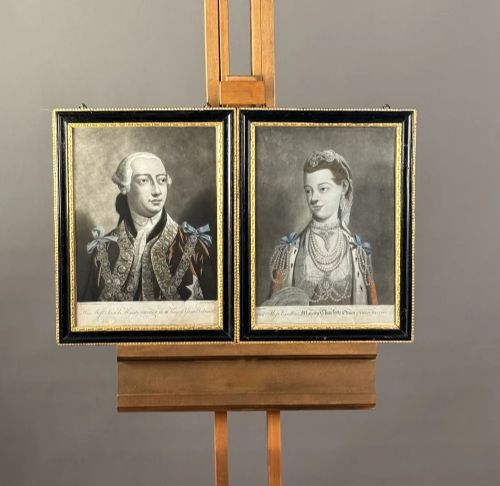
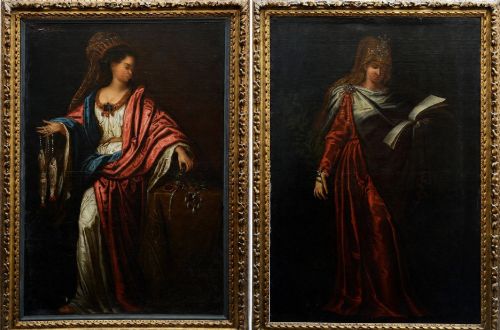
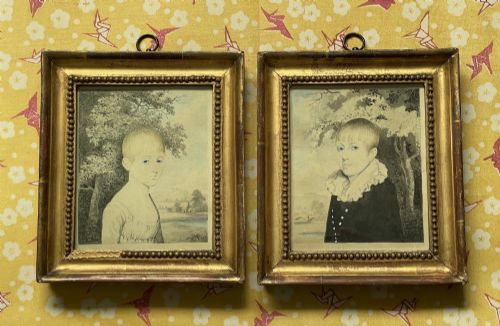
When searching for an 18th century artwork pair, collectors encounter dual compositions designed to hang together in balanced symmetry. These matching works appear across several distinct forms, including oil paintings on canvas, pastel portraits, reverse glass prints, and delicate paper engravings.
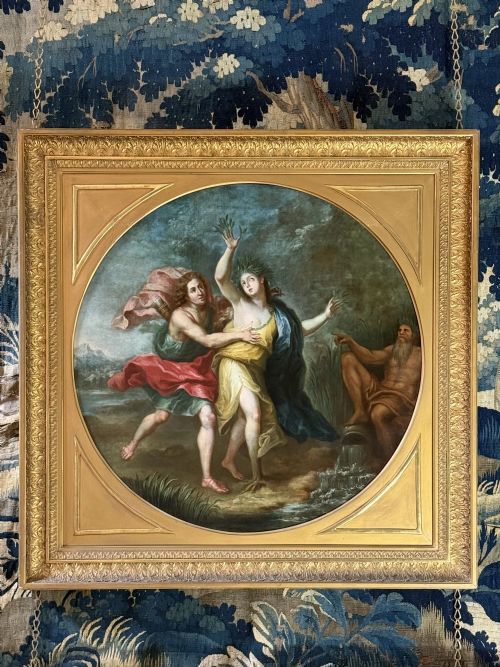
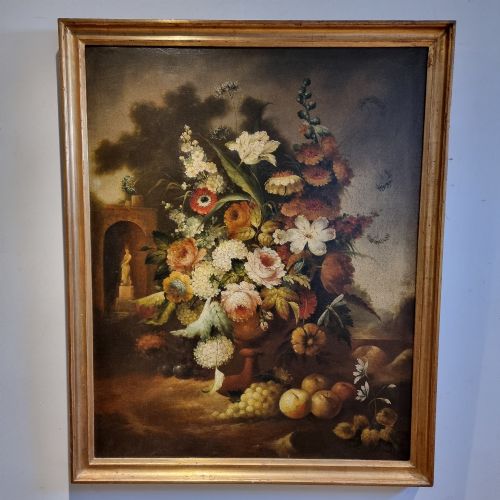
The pieces on this page span portraits of individuals and children, classical mythology, topographical landscapes, and still life compositions. Buyers frequently meet English and continental European schools, reflecting the varied origins recorded in the inventory.
Dating ranges from the late 17th century through the Georgian era and into the Regency period, with later revival interpretations also represented. Dual groupings often depict complementary subjects such as husband and wife, seasonal changes, or narrative sequences.
Materials and Techniques
Canvas and paper serve as the primary supports, carrying mediums such as oil, pastel, watercolour, and ink. Artists applied pigments by hand for unique painted works, while printmakers utilised copper plates to produce fine line engravings and mezzotints.
Framing materials play a significant role, with giltwood, gold leaf, and glass protecting and defining the works. Reverse glass techniques require painting directly onto the back of the glass panel to achieve a luminous finished surface viewed from the front.
18th Century Artwork Pair Retail Price Guide 2026
Typical asking prices for 18th century artwork pair among the pieces listed under this phrase on Sellingantiques today, from the lower quarter to the upper quarter. They describe what is for sale here now, not the wider market.
Subjects recorded in the inventory range from classical mythology and topographical views of Sussex to botanical studies and anatomical rhinoceros skeletons.
Factors That Separate Examples
The distinction between tiers rests upon the execution of the hand, the preservation of the material surface, and the clarity of the composition. Skilled draughtsmanship and confident brushwork elevate painted portraits and landscape scenes above stiffer, more formulaic workshop output.
Condition of the medium significantly shapes the standing of a piece, particularly with delicate paper, pastel, and reverse glass prints where fading, foxing, or loss can detract from the visual harmony. Original frames matching the period of the artwork contribute to historical integrity.
Charles Antoine Coypel·Jacobus Houbraken·Robert Sayer·Jan Evert Morel·Francois Boucher·Henry Edridge
The 18th Century Artwork Pair Glossary
- Mezzotint
- A printmaking process where the copper plate is roughened to achieve rich tonal gradations and dark backgrounds. This method allows for subtle shading well suited to portraiture.
- Reverse Glass Painting
- An artwork created by applying paint or ink to the reverse side of a glass sheet and viewing it from the front. This technique produces a distinct glossy finish.
- Pastel
- A dry painting medium consisting of powdered pigment and a binder, frequently utilised for intimate 18th century portraits. Works executed in this medium require glass protection.
- Line Engraving
- A sharp metal tool technique used to cut lines directly into a copper plate for printing. The resulting impressions display precise linear detail.
- Classical Ruin
- A pictorial subject featuring dilapidated ancient architecture, popular in European landscape painting. These compositions often include small figures for scale.
18th Century Artwork Pair: Frequently Asked Questions
How were 18th century artwork pairs displayed?
Matched pairs were traditionally hung symmetrically on either side of a fireplace, doorway, or window in formal reception rooms. This arrangement demonstrated balance and order during the Georgian period.
Owners often commissioned complementary subjects, such as husband and wife or allegorical seasons, to be viewed in tandem across a shared wall space.
What subjects are common in these pairs?
Portrait pairs depicting husbands and wives, parents and children, or prominent historical figures appear frequently in the inventory. Mythological narratives and topographical landscapes also form major categories.
Allegorical themes representing seasonal transitions, such as autumn and winter, or moral narratives like a sailor's departure and return, offer narrative depth to the pairing.
How do I care for antique works on paper?
Works executed on paper or pastel require protection from direct sunlight to prevent fading of the delicate pigments. Archival framing materials and stable indoor humidity levels ensure long-term preservation.
Keeping glazed pieces away from areas of high moisture prevents foxing spots and damage to the underlying paper supports.
How do I identify a Georgian frame?
Georgian frames often feature hand-carved wooden profiles finished with genuine gold leaf over a prepared gesso layer. Profiles tend to be simpler and heavier than later Victorian interpretations.
Examining the corner joints and the backboards can reveal period construction methods, including old fixings and hand-cut timber.