




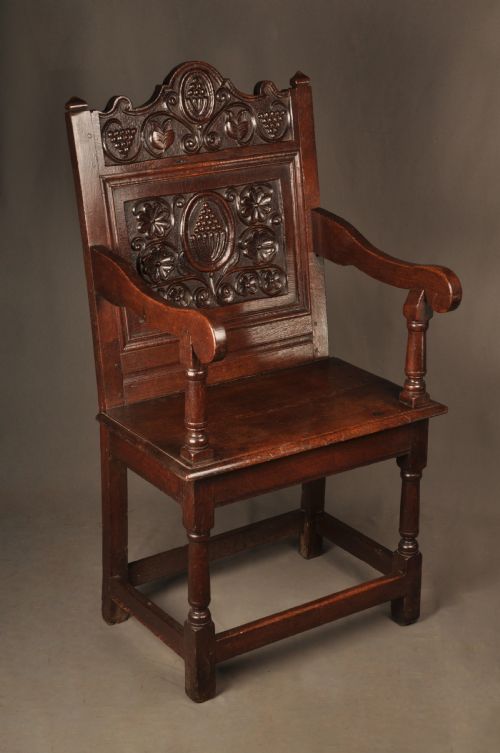
Period Oak Panelled Chair
A period oak panelled chair offers solid timber construction and early joinery, representing centuries of domestic history in the home.
Period Oak Panelled Chair
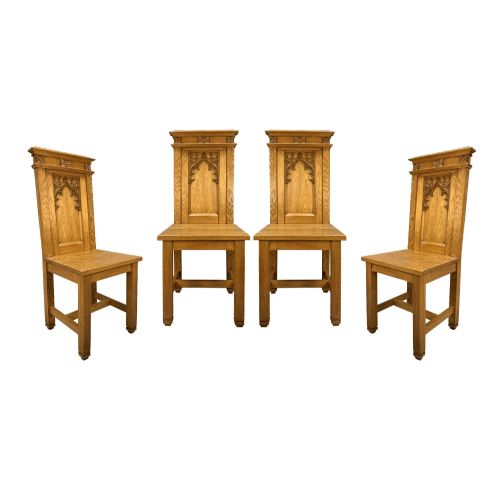
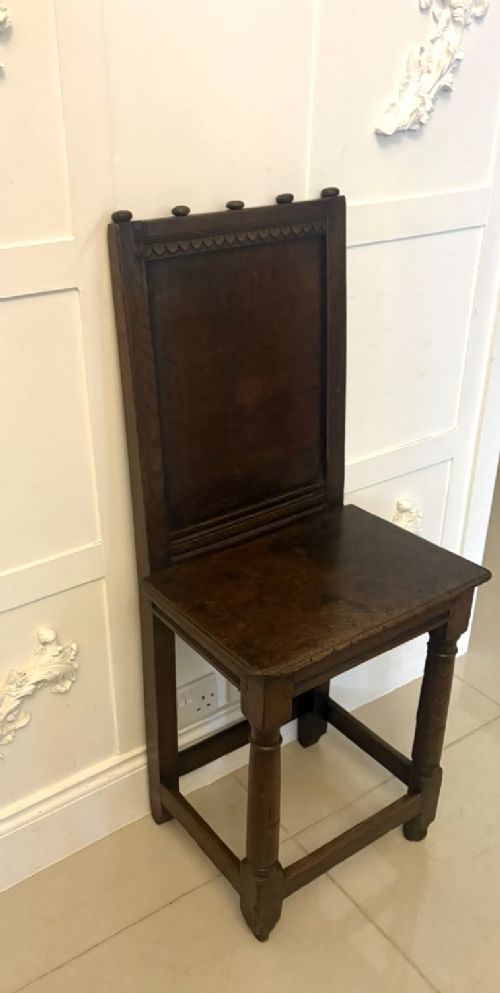
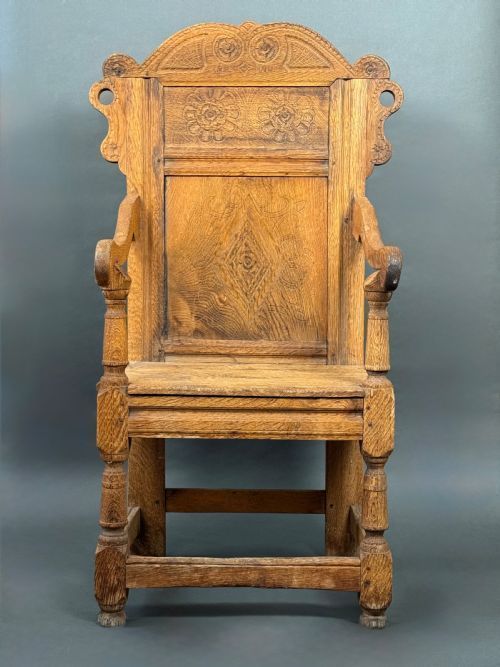
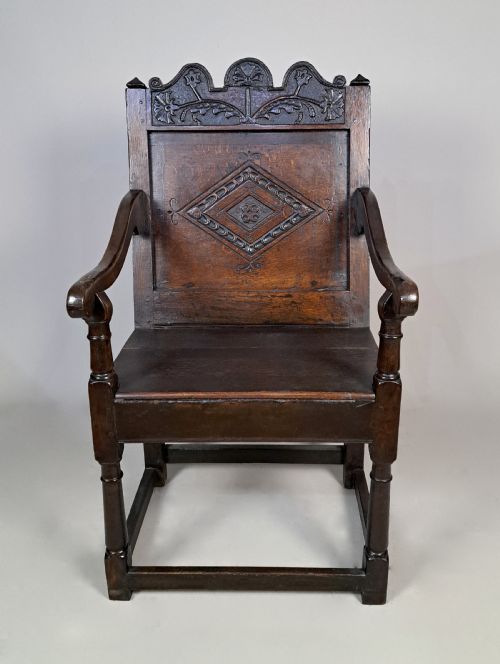
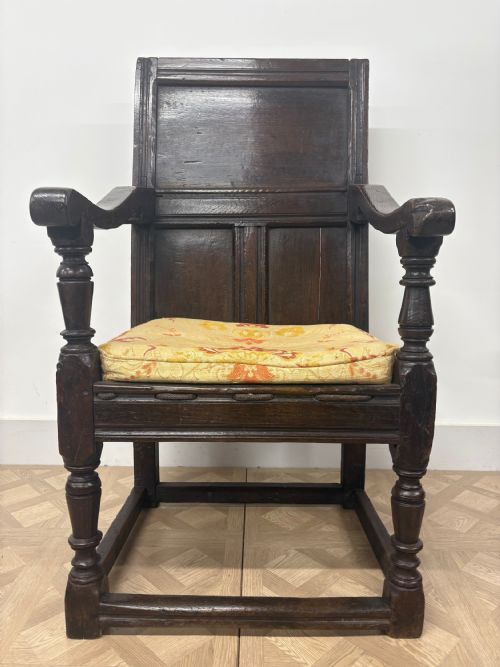
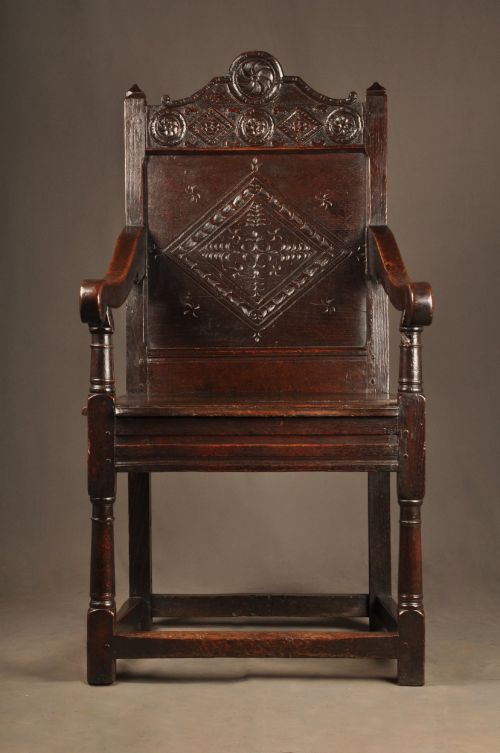
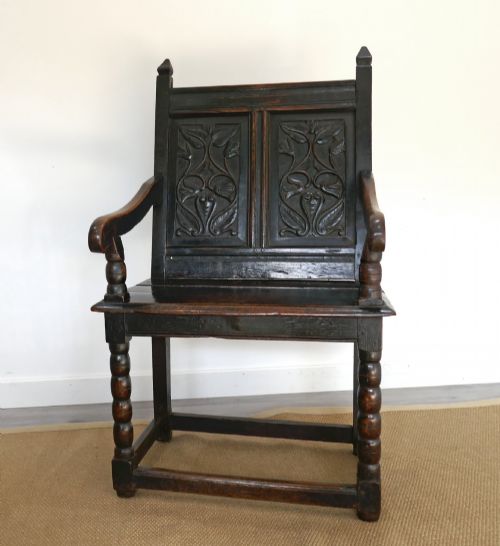
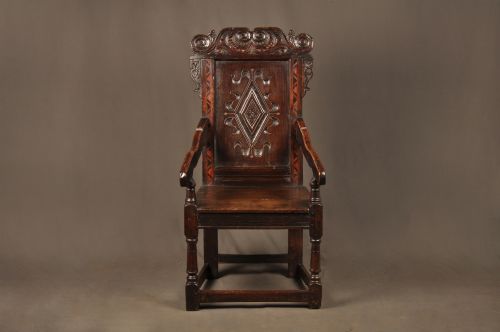
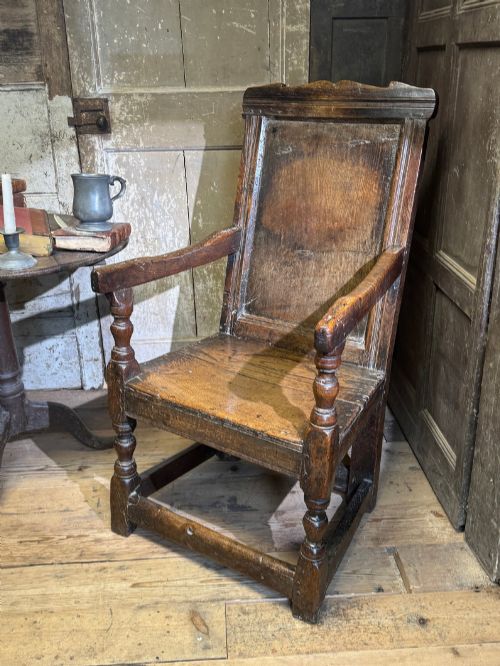
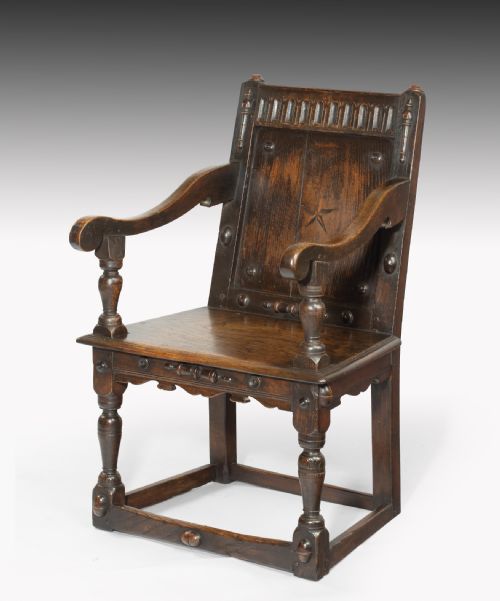
A period oak panelled chair most commonly appears as a wainscot armchair or side chair originating from the seventeenth or eighteenth century. These heavy timber seats include enclosed backs, solid wooden panels, and sturdy armrests designed for domestic interiors of the period.
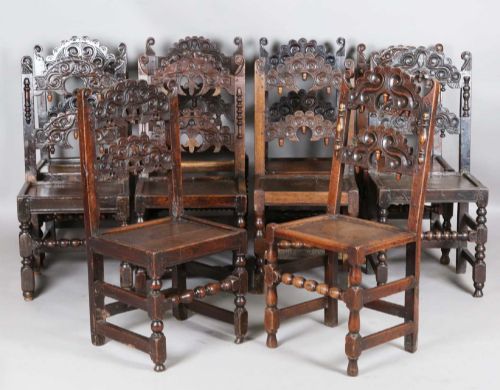
Regional variations span English and Welsh workshops, with Lancashire, Yorkshire, and the West Country producing distinct structural characteristics. Examples range from full-sized master armchairs down to smaller child or ladies variants.
Later Victorian interpretations also exist alongside pieces dating back to the Jacobean era, giving buyers a span of eras from the sixteen-twenties onward.
Quality factors
The standard of carving and the depth of surface patination largely determine the standing of an individual piece. Crisply articulated panels and untouched timber surfaces display greater integrity than heavily restored examples.
Proportion and regional character also dictate distinction, with well-balanced armchairs from specific northern or Welsh centres holding particular interest for collectors.
Period Oak Panelled Chair Retail Price Guide 2026
Typical asking prices for period oak panelled chair among the pieces listed under this phrase on Sellingantiques today, from the lower quarter to the upper quarter. They describe what is for sale here now, not the wider market.
Some diminutive panelled seats were made specifically for children, proving that even toddlers in the sixteen-thirties required proper architectural support.
The Period Oak Panelled Chair Glossary
- Wainscot chair
- A solid wooden armchair constructed with panelled backs, originating when oak furniture was a significant household investment. The term historically denoted panelling of wainscot grade timber.
- Backstool
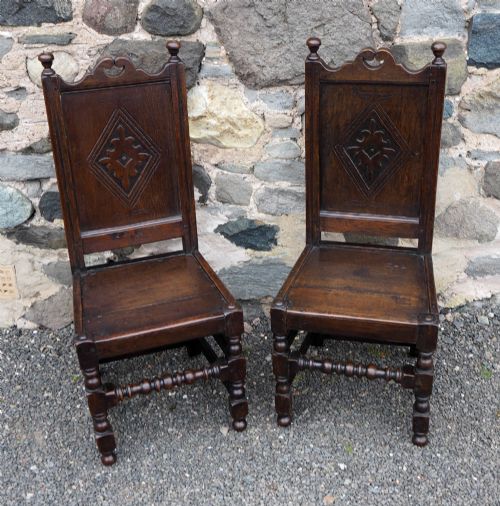
- An early form of side chair without arms, sharing the solid panelled or jointed construction of contemporary armchairs. These pieces provided upright seating at dining tables or desks.
- Joint chair
- A chair built using tight joinery and pegged mortise and tenon joints rather than turned or glued connections. They demonstrate the fundamental framing methods of seventeenth-century carpenters.
- Bobbin turning
- A decorative lathe-turned moulding resembling a string of bobbins or spools, applied to the legs and stretchers of seventeenth and eighteenth-century seating.
Period Oak Panelled Chair: Frequently Asked Questions
How do I date an oak panelled chair?
Dating relies on examining the construction methods, tool marks, and wood shrinkage patterns visible across the frame. Early pieces utilise pegged mortise and tenon joints and hand-cleaved timber.
Stylistic cues such as carved cresting rails, regional motifs, and the evolution of arm supports help narrow the period of manufacture between the seventeenth and eighteenth centuries.
Where were these chairs used originally?
These heavy wooden seats served primarily in the principal rooms of manor houses, farmhouses, and merchant dwellings. The master of the house typically occupied the main wainscot armchair.
Smaller side chairs and hall chairs stood against walls or around dining tables until needed for formal gatherings or daily meals.
How should I care for historic oak?
Historic oak requires stable indoor humidity levels and protection from direct sunlight and heat sources to prevent timber splitting. Applying a suitable microcrystalline wax helps nourish the dry surface.
Avoid liquid polishes or silicone-based sprays, which can penetrate open-grain oak and alter the natural patina developed over centuries.
What is the difference between an armchair and a backstool?
An armchair includes structural armrests built into the frame, designed for primary household figures. A backstool functions as an early side chair without arms.
Both types share similar panelled backs and heavy oak construction, but the backstool offered a more compact footprint for dining or secondary seating.