



Period Oak Drop Leg Table
A period oak drop leg table brings centuries of British domestic life into a room, offering sturdy timber and folding leaves that adapt to changing space.
Period Oak Drop Leg Table
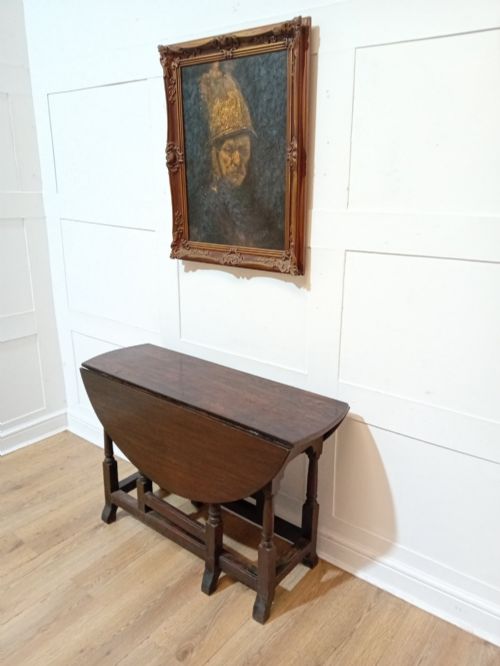
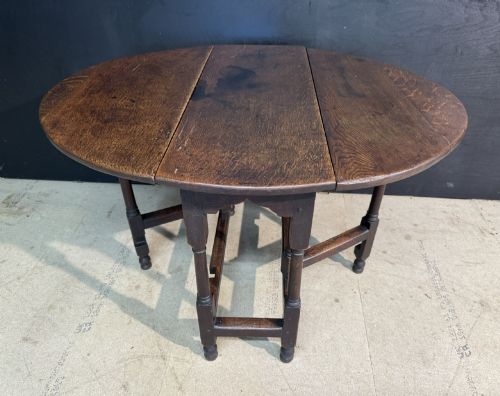
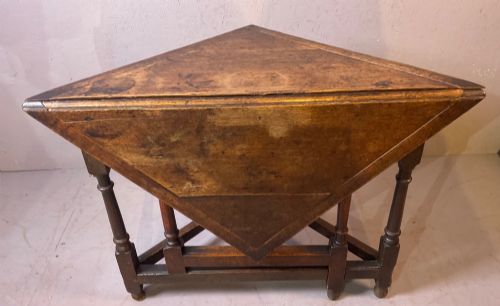
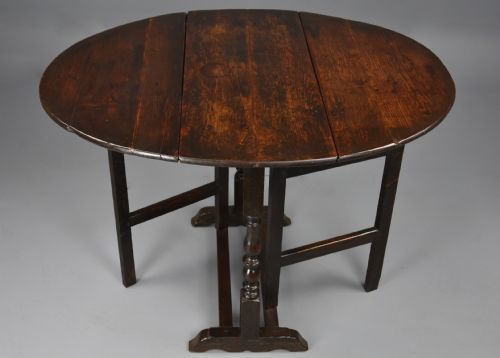
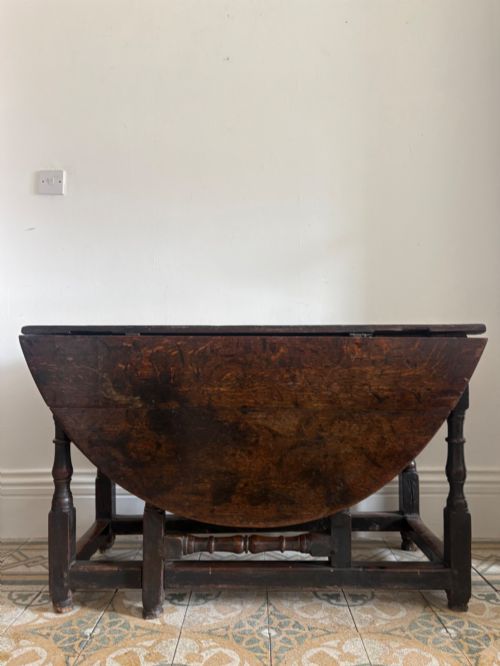
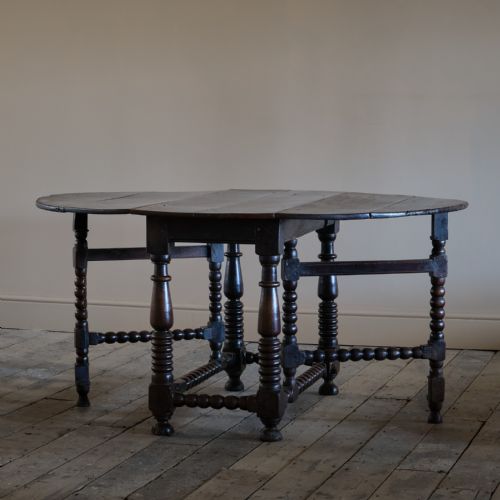
When you search for a period oak drop leg table, you encounter forms built primarily as gateleg dining tables, side tables, and occasional tables spanning the seventeenth to nineteenth centuries. These pieces rely on hinged flaps supported by swinging legs to expand their surface area when needed.
The selections here range from compact small proportions to large dining tables, reflecting centuries of utilitarian domestic furniture. Seventeenth-century and eighteenth-century examples dominate the inventory, accompanied by occasional nineteenth-century interpretations and Regency variations in pollard or burr oak.
Markers of Distinction
Quality separates tables by the integrity of their timber selection and the precision of their structural framing. Examples retaining original untouched surfaces and clear patination command greater interest than those altered over time.
Proportion and scale also define the hierarchy, with smaller proportions or six-leg configurations representing distinct levels of craftsmanship within seventeenth-century and Queen Anne periods.
Materials recorded across the inventory include solid oak, burr oak, pollard oak, ash, iron, and brass.
The Period Oak Drop Leg Table Glossary
- Gateleg table
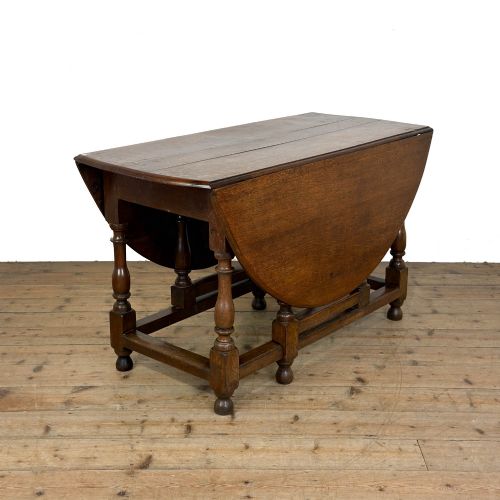
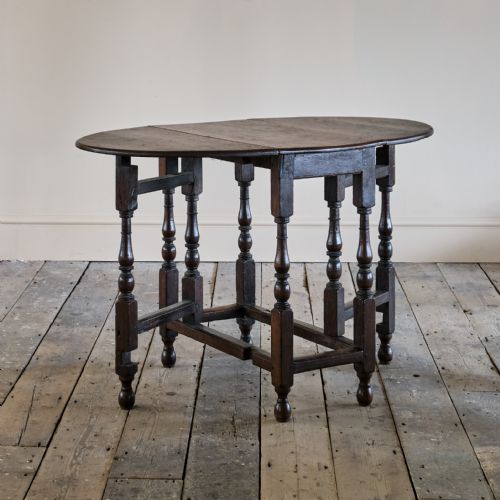
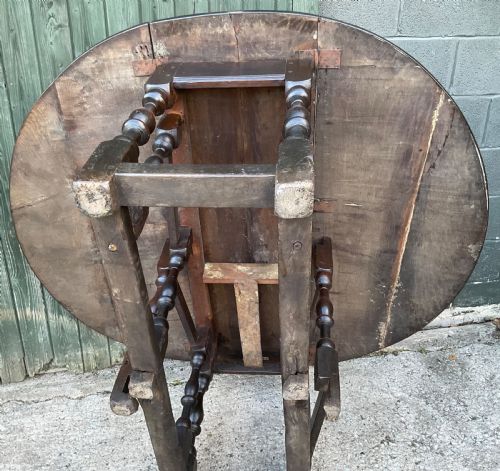
- A table with hinged leaves supported by legs that swing outward like gates. This design provides maximum surface area when open and minimal footprint when closed.
- Baluster leg
- A turned vertical support shaped like a vase or column. These structural elements frequently define seventeenth-century British dining tables.
- Bobbin turning
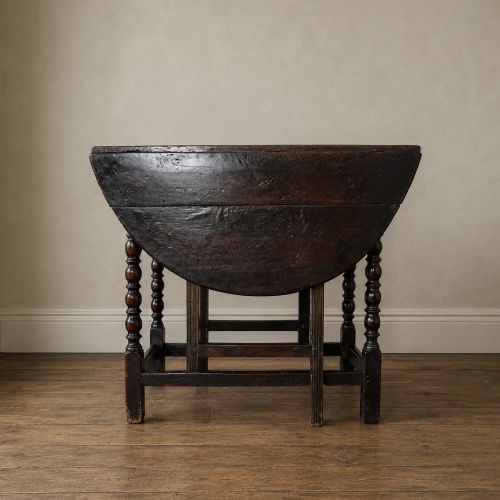
- A decorative lathe-turned moulding resembling a string of spools or bobbins. It appears on seventeenth-century frames to add texture and visual rhythm.
- Plank top
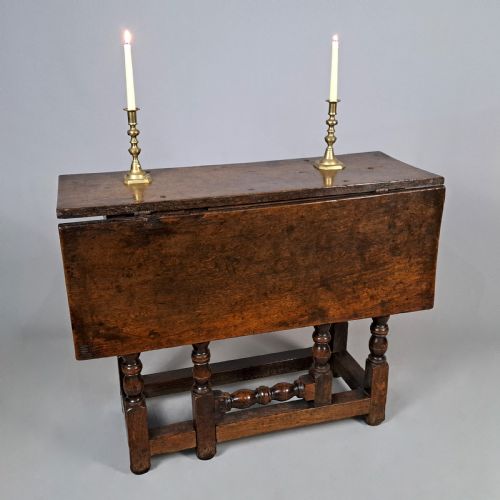
- A table surface constructed from solid boards joined edge to edge. Early examples utilise wide boards hewn from mature timber.
- Pollard oak
- Timber taken from trees that have been pollarded, producing dense and highly figured grain patterns. This material appears in later Regency occasional tables.
Period Oak Drop Leg Table: Frequently Asked Questions
How do I date a drop leg table?
Dating relies on identifying leg turnings, joinery techniques, and timber characteristics such as solid oak versus burr oak.
Seventeenth-century pieces typically feature heavy baluster or bobbin turnings, whereas eighteenth and nineteenth-century examples show stylistic shifts toward simpler lines or regional variations.
Were these tables used for dining?
Many large seventeenth and eighteenth-century examples served primarily as supper and dining tables in communal rooms.
Smaller variants functioned as side tables or occasional tables for specific domestic tasks.
How should I care for an oak table?
Protect the timber surface from excessive moisture and direct heat to preserve the original patina and wax finishes.
Regular dusting with a dry cloth maintains the historical finish without stripping the grain.
What is the difference between a gateleg and drop leaf table?
A gateleg table specifically uses pivoting legs attached to a central frame to support the folding flaps.
Other drop leaf designs might utilise different swing brackets or hinged supports rather than a complete swinging leg.