


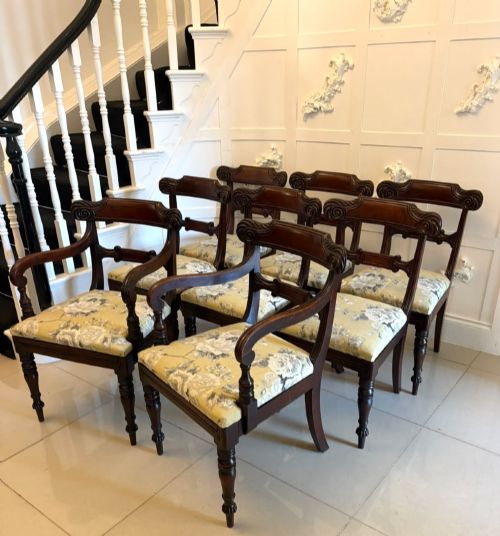
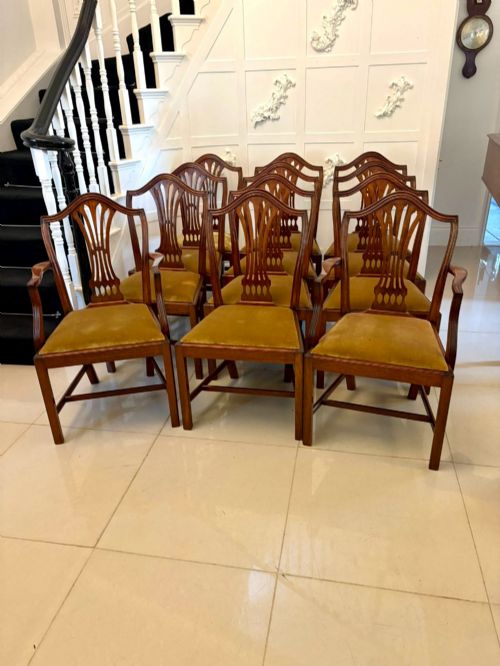
Period Mahogany Side Chairs
Period mahogany side chairs bring robust timber, carved rails and disciplined proportions into modern dining rooms.
Period Mahogany Side Chairs
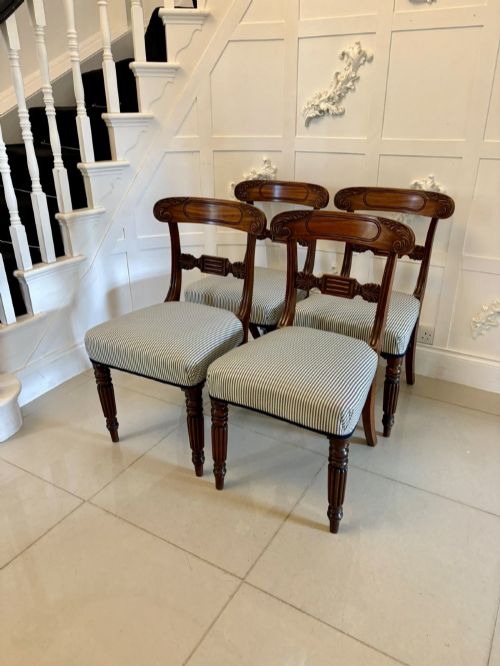
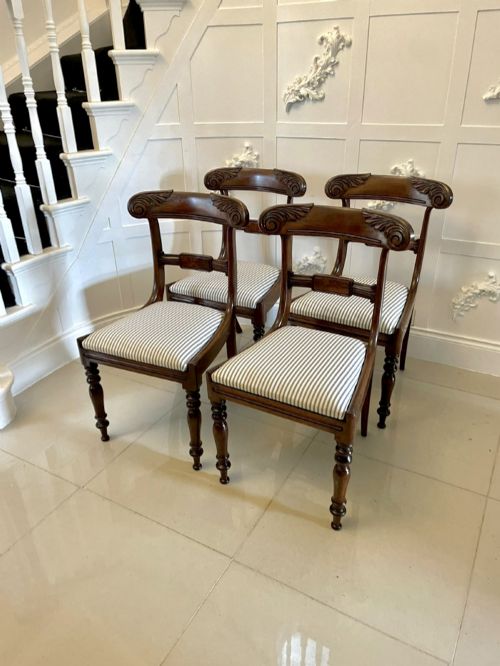
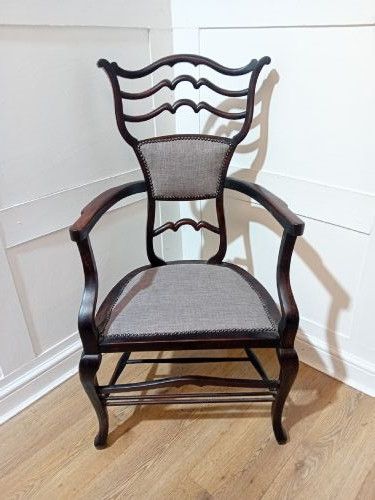
Period mahogany side chairs comprise dining and occasional seating originating from the eighteenth, nineteenth, and early twentieth centuries. These pieces were built primarily for formal dining rooms, drawing rooms, and domestic parlours across Britain and Ireland.
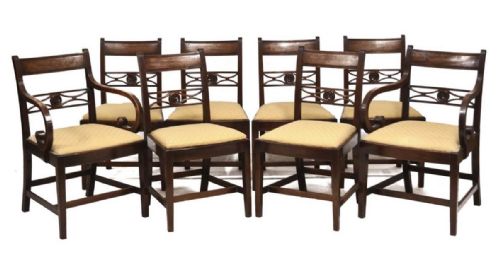
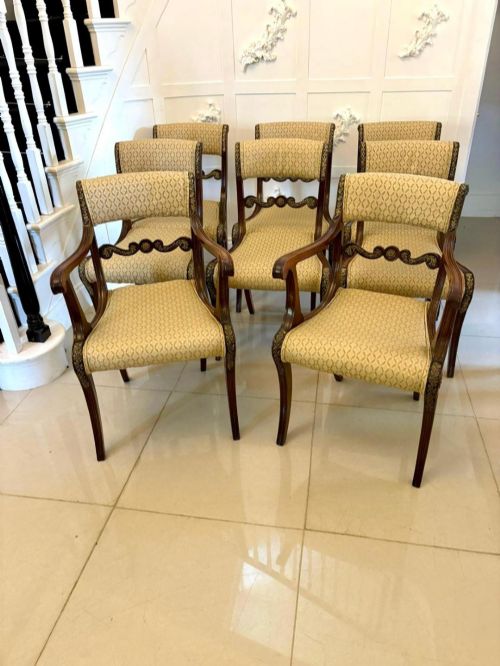
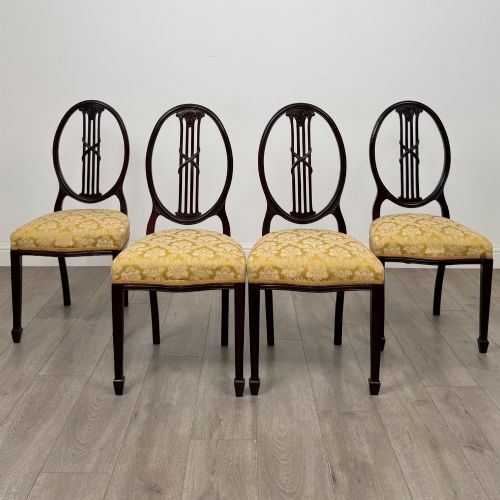
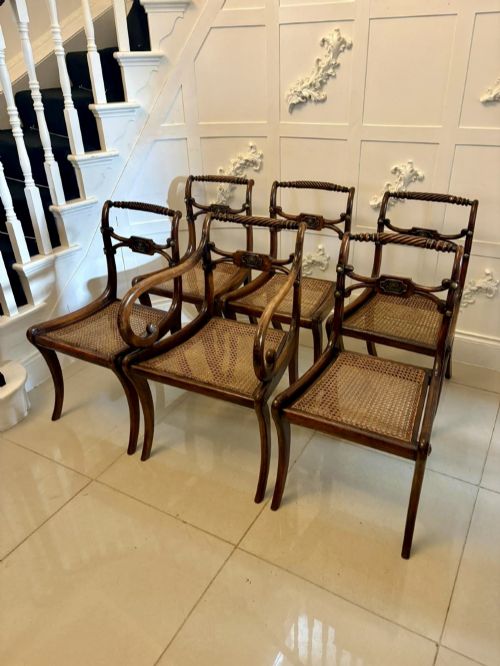
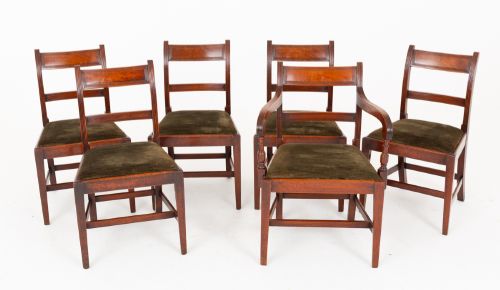
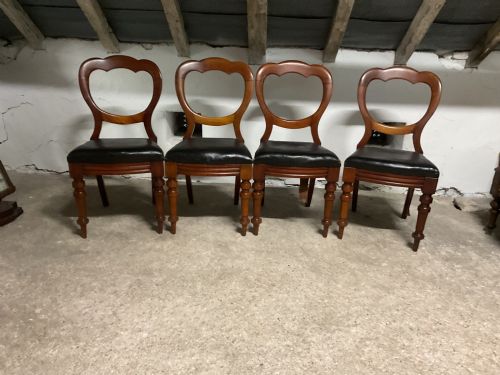
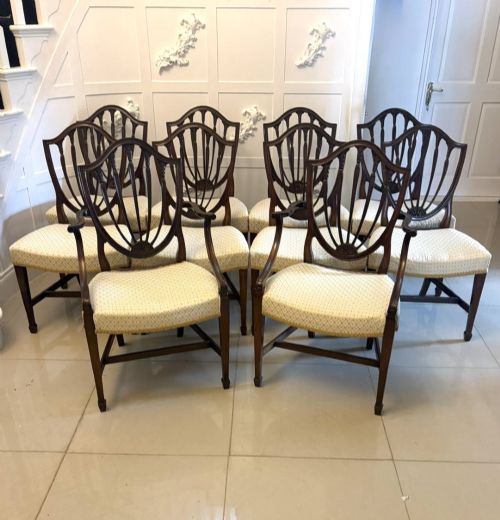
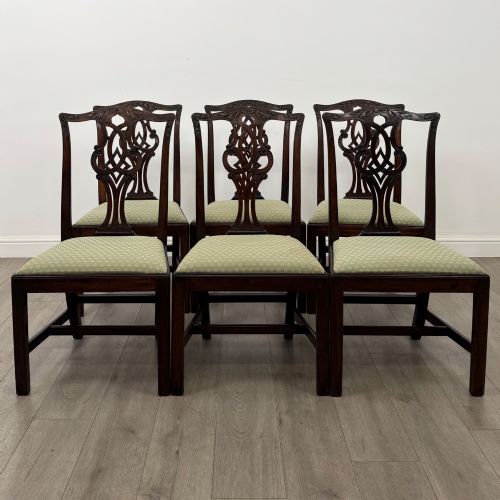
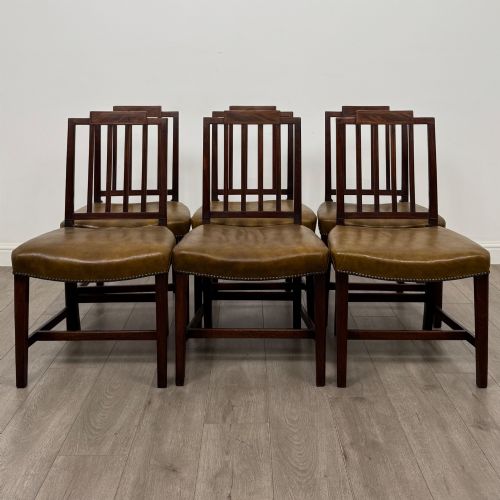
The selections available here range from austere George III shield-back models to elaborately carved Regency and Victorian variations. Buyers encounter everything from single pairs to large matched sets of ten or twelve chairs.
Most examples function as dining seating, designed to slide neatly beneath a mahogany dining table without arms obstructing the user. The timber frames rely on dense tropical hardwoods shaped into splat backs, balloon backs, and bar backs.
Materials and Construction
Makers utilised dense tropical mahogany for structural frames, jointed with mortise and tenon joinery to withstand daily sitting. Timber surfaces were planed, scraped, and finished with wax or polish to highlight the deep grain patterns.
Seats incorporate fabric, velvet, and textile upholstery stretched over webbing or drop-in frames. Brass pins and woven textiles frequently secure the padding to wooden seat rails.
Period Mahogany Side Chairs Retail Price Guide 2026
Typical asking prices for period mahogany side chairs among the pieces listed under this phrase on Sellingantiques today, from the lower quarter to the upper quarter. They describe what is for sale here now, not the wider market.
Early dining chairs often survived because dinnertime etiquette required upright posture without slouching.
Assessing Quality
Quality rests upon the crispness of carved details in the wood, such as anthemion motifs or fluted stiles. Superior sets display uniform timber selection across every chair, showing consistent grain patterns and rich dark hues.
Structural integrity depends on tight joints and original blocking beneath the seat frame. Chairs that retain untouched timber surfaces and minimal timber shrinkage command greater attention from collectors.
Gillows of Lancaster·Maple and Co
The Period Mahogany Side Chairs Glossary
- Shield-back
- A chair back shaped like a rounded shield, popularised by eighteenth-century designers. This silhouette tapers toward a moulded base rail.
- Carver
- An armchair designed to match a set of smaller side chairs, usually placed at the head of a dining table. These include supporting arm rests integrated into the upright stiles.
- Bar back
- A horizontal transverse rail across the upper back of a chair, often curved to fit the user. This form dominates nineteenth-century Regency and William IV dining seats.
- Splat
- The vertical central strip of wood connecting the seat to the top rail of a chair back. Pierced splats carved into ribbons or urns appear frequently in Georgian designs.
- Stile
- The vertical side post of a chair back that supports the top rail and descends to the seat. These members bear much of the structural load during use.
Period Mahogany Side Chairs: Frequently Asked Questions
How do I identify a George III chair?
George III pieces typically exhibit restrained classical carving, straight or channelled legs, and pierced wooden splats.
Look for robust proportions in the mahogany frame and traditional joinery methods underneath the drop-in seat.
Can I mix side chairs with carvers?
Mixing side chairs with armchairs follows historical dining customs where heads of the household sat in matching carvers.
Ensure the wood tone and back height align closely when pairing them around a single dining table.
How should I care for antique mahogany?
Maintain mahogany frames by applying natural beeswax sparingly and buffing with a soft cloth to preserve the finish.
Keep wooden furniture away from direct heat sources and strong sunlight to prevent the timber from drying out.
What defines a Regency period chair?
Regency seating draws inspiration from classical Greek and Roman forms, featuring sabre legs and bold carved brass or wood details.
These models often showcase horizontal bar backs and darker polished timber surfaces.