
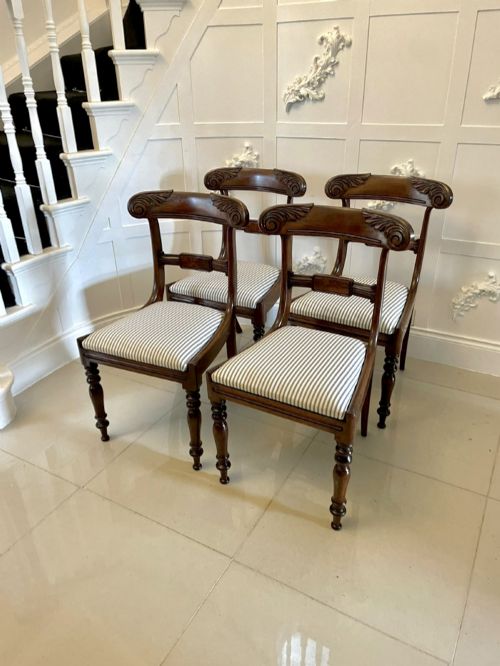
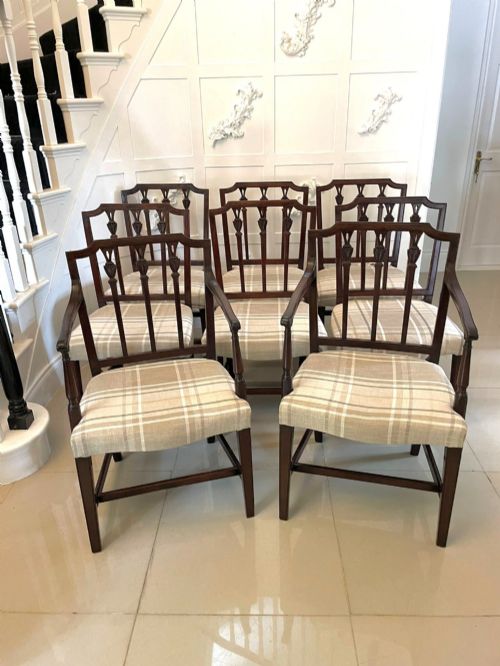
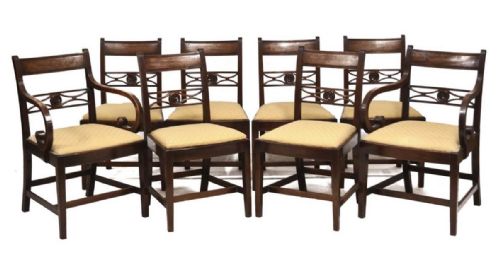
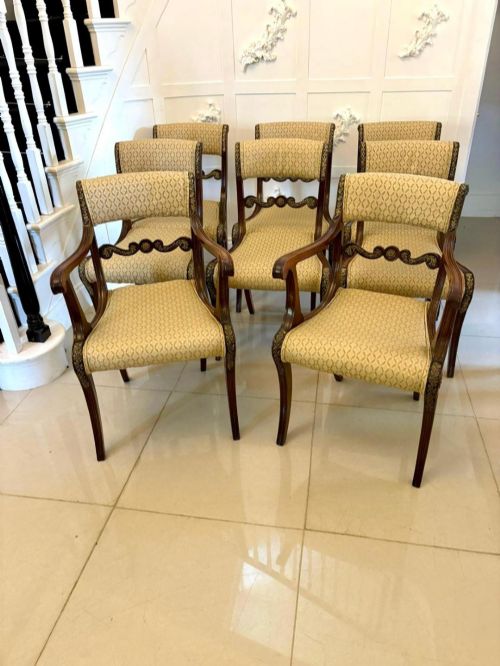


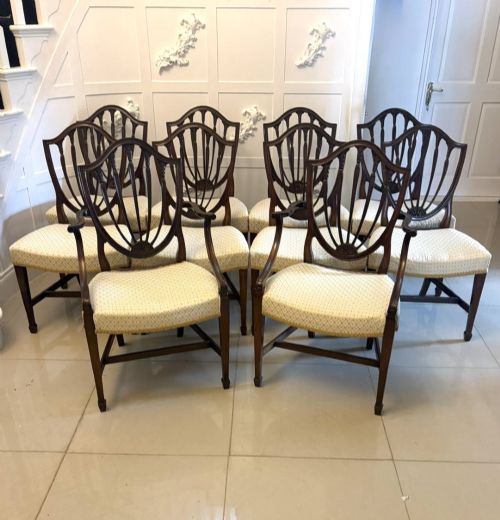
Period Mahogany Dining Chair
These period mahogany dining chair examples combine rich cabinet timber with traditional seating forms to ground a dining room in history.
What these chairs represent
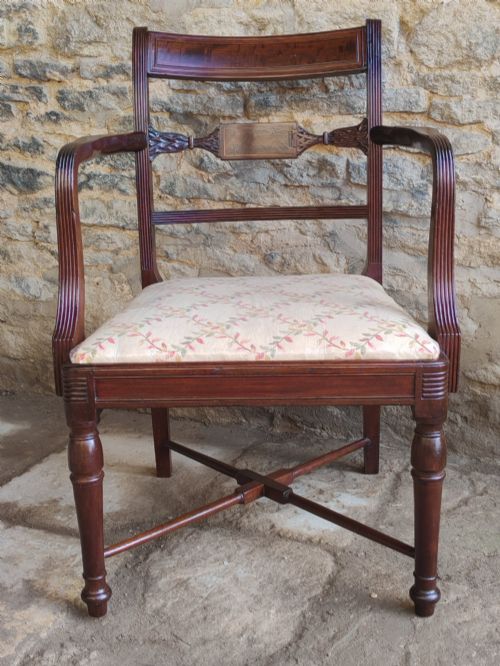
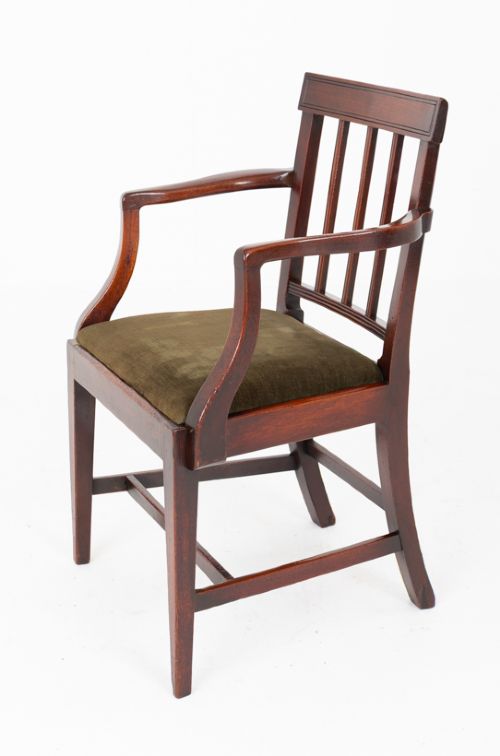
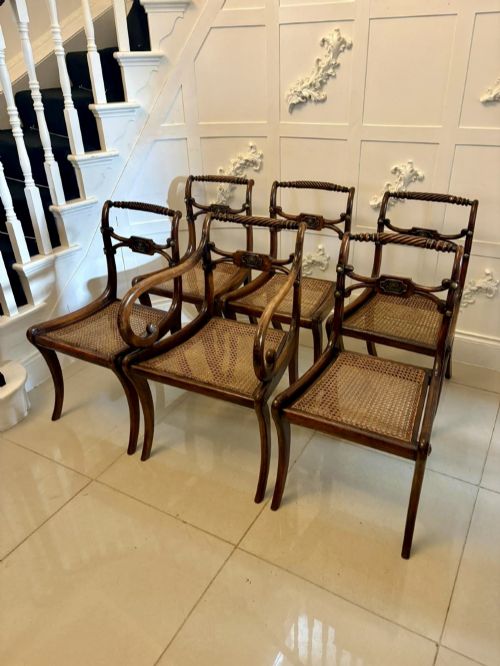
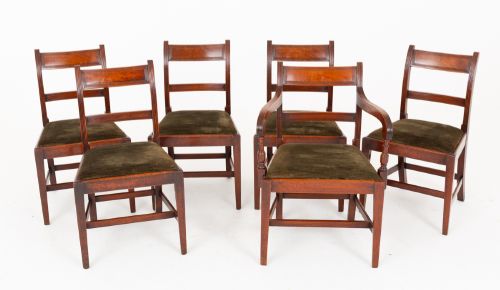
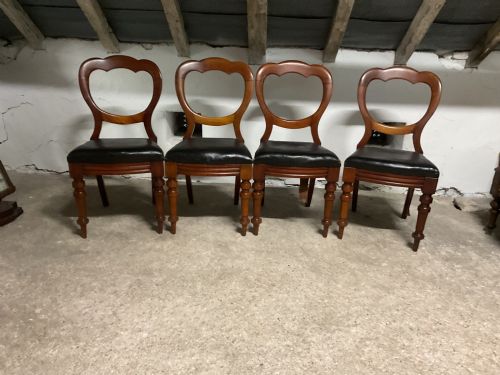
A period mahogany dining chair is a seat constructed from dense tropical hardwood intended for formal dining tables across the eighteenth and nineteenth centuries. These chairs arrive in single examples, pairs, or larger matched sets numbering up to twelve pieces, spanning armchairs, carvers, and side chairs. Most pieces meet the eye in forms defined by Georgian, Regency, and Victorian aesthetics, with George I, George II, George III, and William IV periods heavily represented.
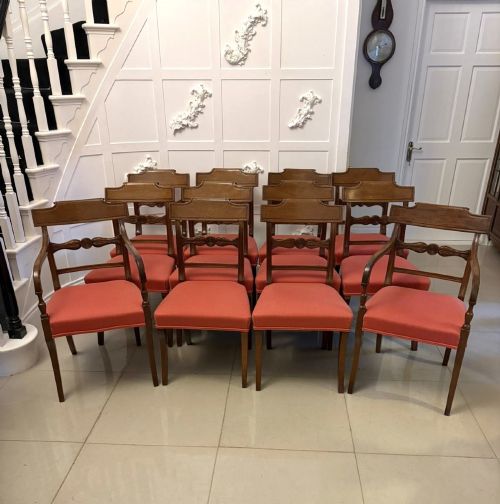
Buyers searching this phrase encounter both single conversation pieces and expansive suites designed to seat large dining parties. Single carver chairs and pairs of side chairs appear frequently alongside substantial sets of six or eight matching dining seats. Regional variations emerge through Scottish examples and Irish pieces, alongside distinct cabinetmaker attributions such as Gillows of Lancaster.
Materials and construction methods
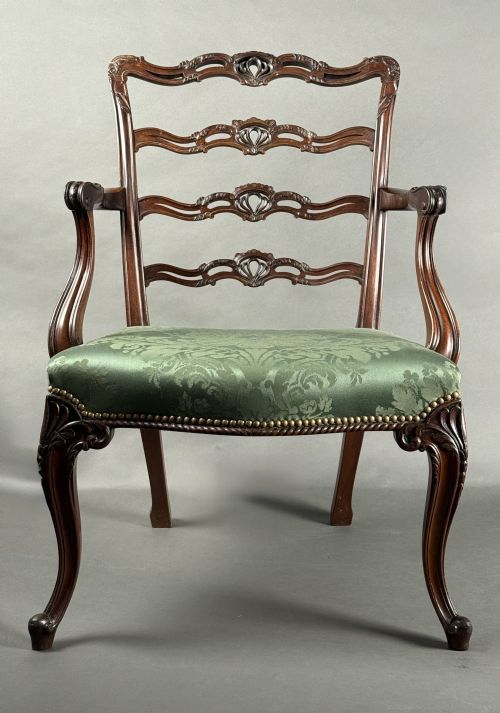
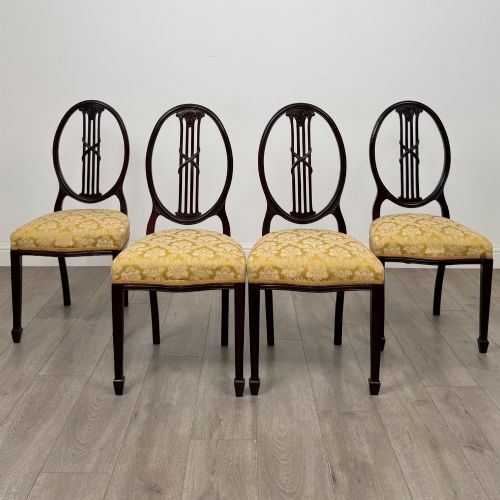
Makers utilised solid mahogany and flamed mahogany veneers over secondary timbers, exploiting the deep natural grain and rich colour of the wood. Timber sections were shaped, turned, and carved into ladderbacks, shield backs, and scrolled arms, bringing sculptural depth to the dining room.
Upholstery completed the framework, utilising leather, hand-dyed green leather, tapestry, and various upholstery fabrics secured over webbing and horsehair stuffing. Brass accents sometimes appear as decorative tacks or structural fittings, complementing the dark timber tones.
Retail Price Guide 2026
Typical UK retail prices for period mahogany dining chair, calculated from the Sellingantiques database of over a million retail prices indexed since 2003. This retail price guide relies exclusively on Sellingantiques data; no external sources or auction records are used, so the figures do not describe the wider market.
The listings show dining chairs spanning the 18th century through the Victorian era, utilising mahogany, leather, brass, and tapestry.
Distinctions in craftsmanship and survival
Quality rests in the crispness of the timber carving and the integrity of the structural joinery across the frame. Master workshops achieved fluid lines in splats and crest rails without relying on excessive glue or clumsy reinforcement.
Survival of original finish and cohesive matching within a set determines the standing of a suite. Uniformity across a set of eight or ten chairs carries greater weight than isolated brilliance in a single mismatched seat.
Gillows of Lancaster
The Period Mahogany Dining Chair Glossary
- Carver
- An armchair designed with low arms to fit under a dining table while offering seated support. These often accompanied matching sets of side chairs for the head of the table.
- Side chair
- A dining chair built without arms to allow efficient placement around a dining table. These form the numerical majority in larger antique dining suites.
- Ladderback
- A chair back featuring horizontal transverse slats resembling the rungs of a ladder. This form provides robust structural support while displaying symmetrical timber grain.
- Regency
- An English design period spanning the early nineteenth century defined by classical restraint and archaeological revival motifs. Chairs from this era often incorporate bold scrollwork and brass inlays.
- Mahogany
- A durable tropical hardwood prized for its stability, deep reddish-brown colour, and capacity for fine carving. It served as the primary material for high-status eighteenth and nineteenth-century dining furniture.
Frequently Asked Questions
How do I care for antique mahogany chairs?
Keep wooden surfaces away from direct heat sources and strong sunlight to prevent the timber from drying out or splitting. Apply traditional beeswax sparingly to nourish the grain and maintain the natural patina.
Inspect the seat frame joints periodically to ensure structural stability remains sound under daily use. Professional upholstery conservation protects historic stuffing materials and preserves the original fabric integrity.
Are these chairs suitable for daily use?
These dining chairs were constructed for functional domestic dining and retain sturdy timber frames capable of handling regular seating. Historic joinery requires mindful treatment to avoid sudden stress on delicate carved splats or slender legs.
Matching antique chairs with a modern dining table creates a striking interior contrast while restoring functional purpose to historic seating. Regular light usage preserves both the mechanical joints and the historic finish.
How can I identify a Georgian period chair?
Georgian chairs display proportional balance, restrained carved details such as acanthus leaves or ball-and-claw feet, and solid mahogany construction. Stylistic markers include pierced splats and distinct regional interpretations from English and Scottish workshops.
Examining the underside reveals tool marks, timber shrinkage, and construction methods consistent with eighteenth-century cabinetmaking. Comparing piece geometry against documented examples helps confirm period authenticity.
What is the difference between a carver and a side chair?
A carver includes integrated armrests designed to provide a commanding seat position at the head of the dining table. These wider chairs require specific clearance beneath table aprons.
Side chairs omit arms entirely to allow compact placement along the length of the dining table. Dining suites typically paired multiple side chairs with a matched pair of carvers.