
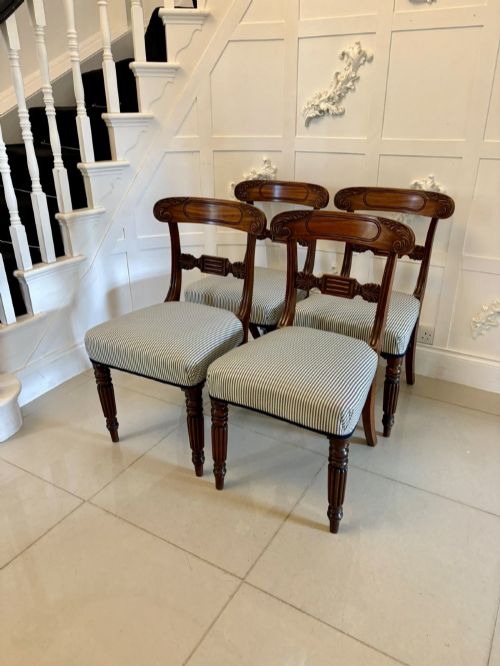
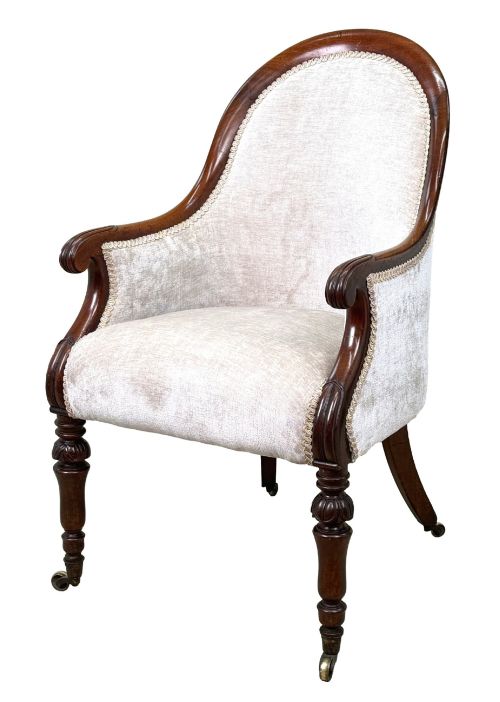
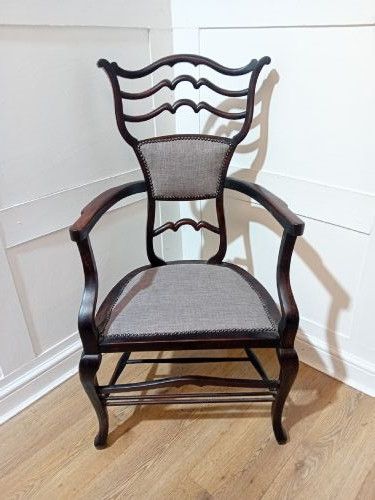
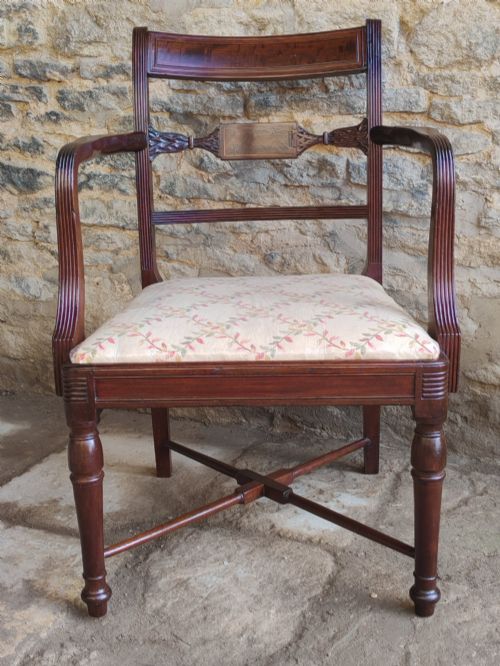
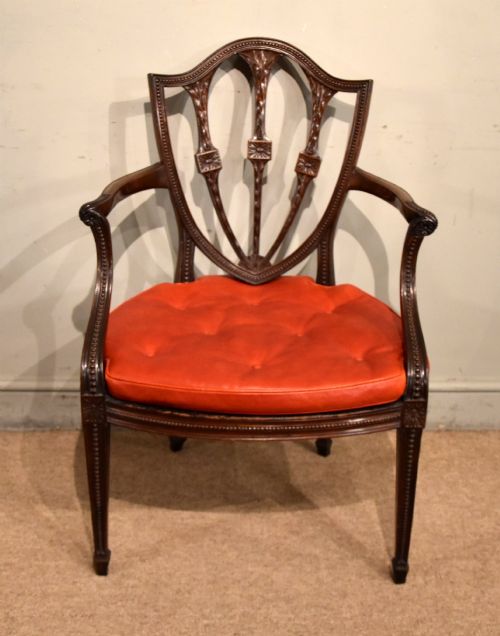
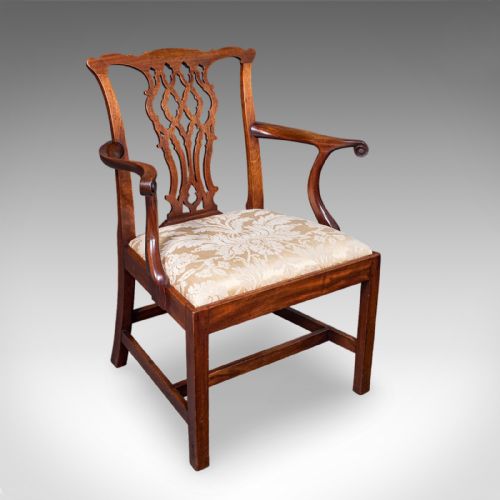
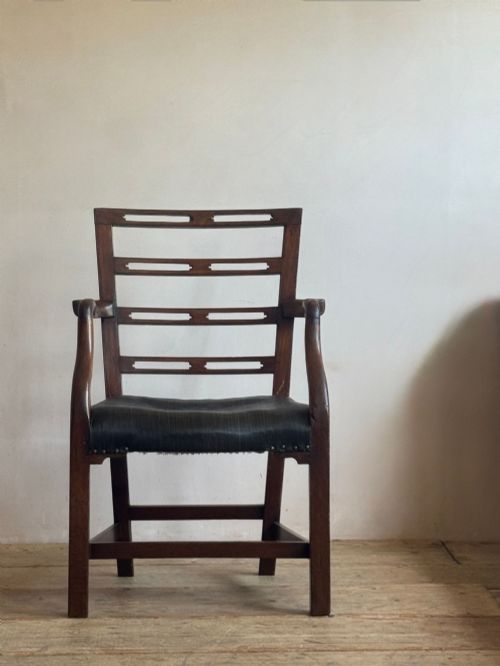
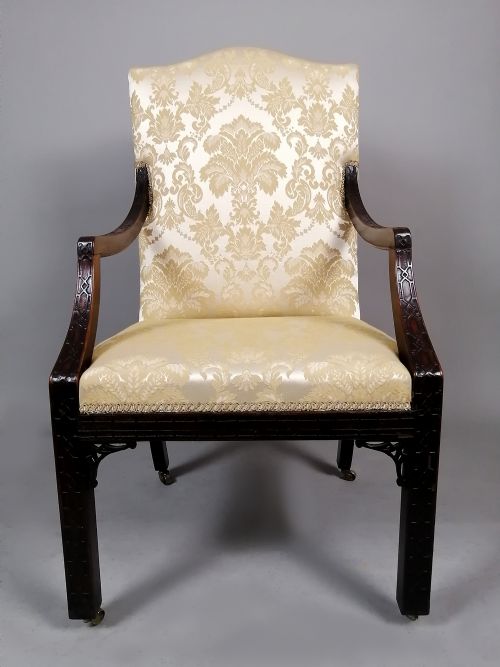
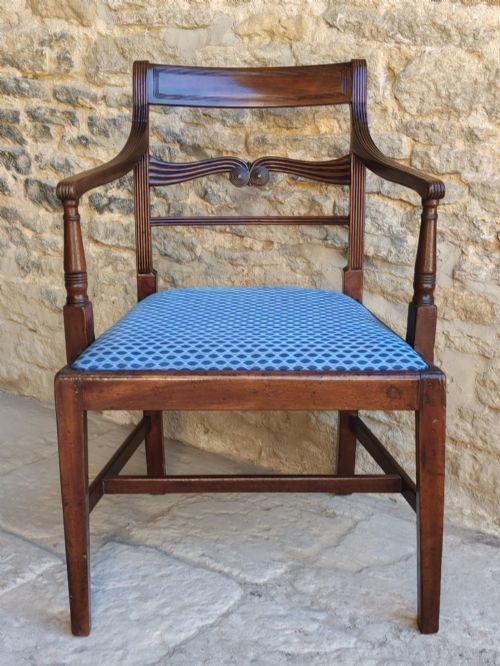
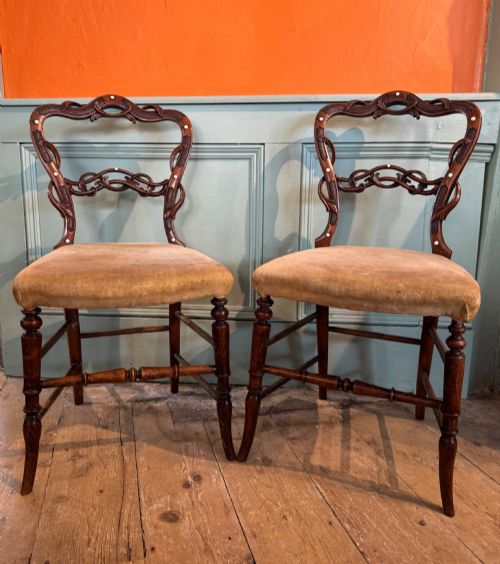
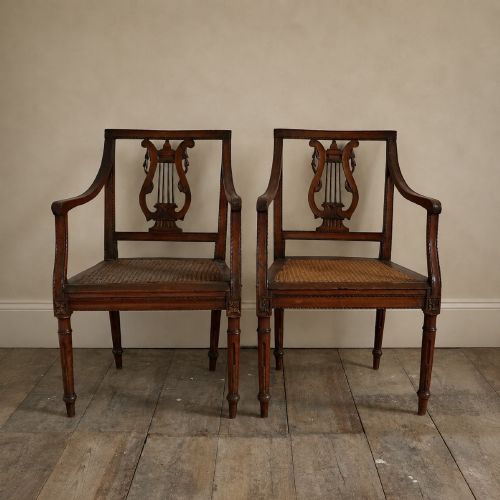
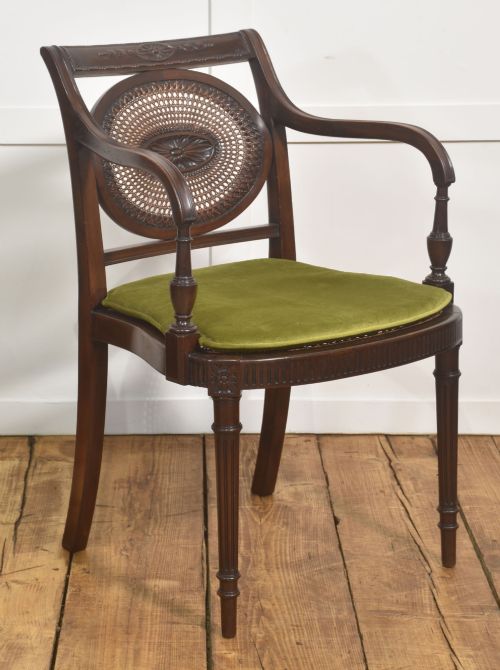
Period Mahogany Desk Chair
When you seek a period mahogany desk chair, you are hunting for timber work that balances firm support with the rich grain of past centuries.
Period Mahogany Desk Chair
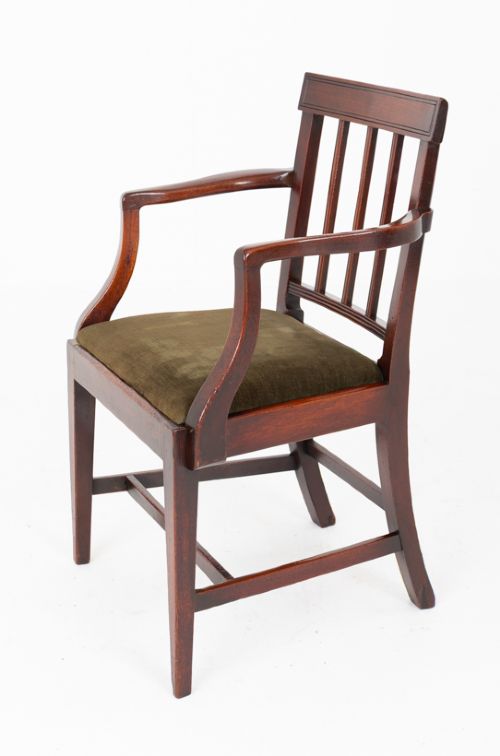
A period mahogany desk chair is a sturdy seat designed for writing, reading, or working at a table, often appearing as an armchair, carver, or library seat. You will frequently encounter examples spanning the Georgian, Regency, and Victorian eras, alongside later Edwardian interpretations.
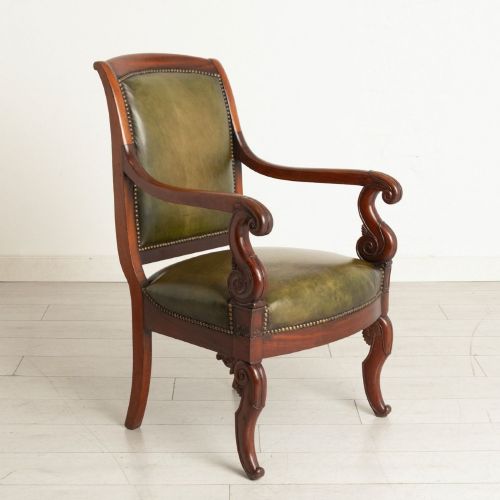
The forms range from open-arm library chairs upholstered in leather or velvet to robust carvers with carved backs and cane seats. Many pieces bridge the gap between dining furniture and study seats, reflecting how rooms were used in the eighteenth and nineteenth centuries.
How they were made
Cabinet makers constructed these frames primarily from dense mahogany, occasionally pairing the dark timber with brass inlays or brass fittings. Seats frequently incorporate supple leather, velvet, woven cane, or traditional upholstery fabric stretched over supportive internal webbing.
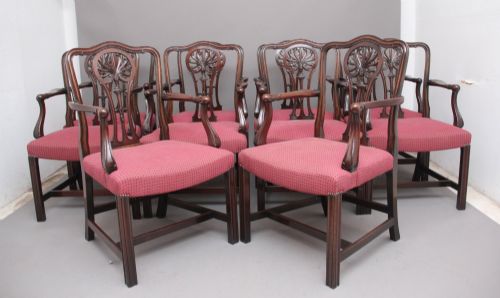
Joinery techniques relied on mortise and tenon joints to withstand daily movement, while decorative elements such as scroll arms and carved back splats were shaped by hand. Frames were polished to bring out the natural depth and reddish-brown tone of the wood.
Some desk chairs feature subtle ink stains on the mahogany arms, left behind by busy writers centuries ago.
What varies in quality
The calibre of a desk chair depends heavily on the crispness of its woodwork and the integrity of its frame construction. Superior examples show deeply defined carvings, balanced proportions, and timber with an active, varied grain rather than a flat surface.
The survival of original elements, from leather upholstery to brass castors and cane panels, elevates a piece significantly. Better workshops invested greater care in joint stability and comfort, ensuring the arms and back withstand long hours of use.
Alfred Allen of Birmingham·James Peddle
The Period Mahogany Desk Chair Glossary
- Carver
- An armchair, typically designed to match a set of dining chairs, with more substantial armrests. These often double as comfortable desk seats.
- Bergere
- An enclosed armchair with an upholstered seat and cane or upholstered sides. The back is usually filled with woven cane for lighter support.
- Library chair
- A heavy, wide armchair designed for reading rooms, frequently fitted with leather upholstery. They offer robust proportions for prolonged sitting.
- Splat
- The vertical wooden strip down the middle of a chair back. It receives intricate carving or shaping depending on the prevailing style.
Period Mahogany Desk Chair: Frequently Asked Questions
How do I spot a true Georgian desk chair?
Authentic Georgian examples rely on dense mahogany timber, traditional joinery without modern metal screws, and hand-carved details such as interlaced splats or claw and ball feet.
Look closely at the underside and joints to confirm age-appropriate wear and tool marks that match eighteenth-century workshop practices.
Were these chairs originally meant for desks?
Many chairs described as desk chairs today started life as library armchairs, dining carvers, or parlor seats. Their sturdy armrests and comfortable proportions made them naturally suited for writing tables and study rooms.
Over generations, owners repurposed these versatile timber seats to serve administrative tasks in offices and home studies.
How should I care for the leather and wood?
Feed the mahogany timber occasionally with quality wax to keep the surface nourished and protect the grain from drying out. Keep antique leather supple by applying appropriate balms rather than modern chemical cleaners.
Position the chair away from direct heat sources and strong sunlight to prevent the wood from splitting and the upholstery from fading.
What is the difference between Regency and Victorian styles?
Regency pieces often draw inspiration from classical antiquity, featuring sabre legs, brass inlay, and restrained, elegant lines. They favor a lighter, architectural grace derived from the early nineteenth century.
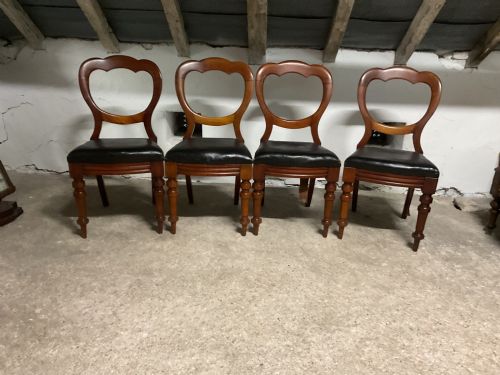
Victorian chairs tend to be heavier and more robust, displaying scroll-carved backs, balloon shapes, and denser proportions designed for comfort in late nineteenth-century rooms.